
Inferensys

Service

AI-Driven Personnel Vetting and Screening

Deploy secure, automated AI systems to analyze financial, travel, and social datasets for security clearance adjudication, identifying inconsistencies and deceptive patterns with 99.5% accuracy.
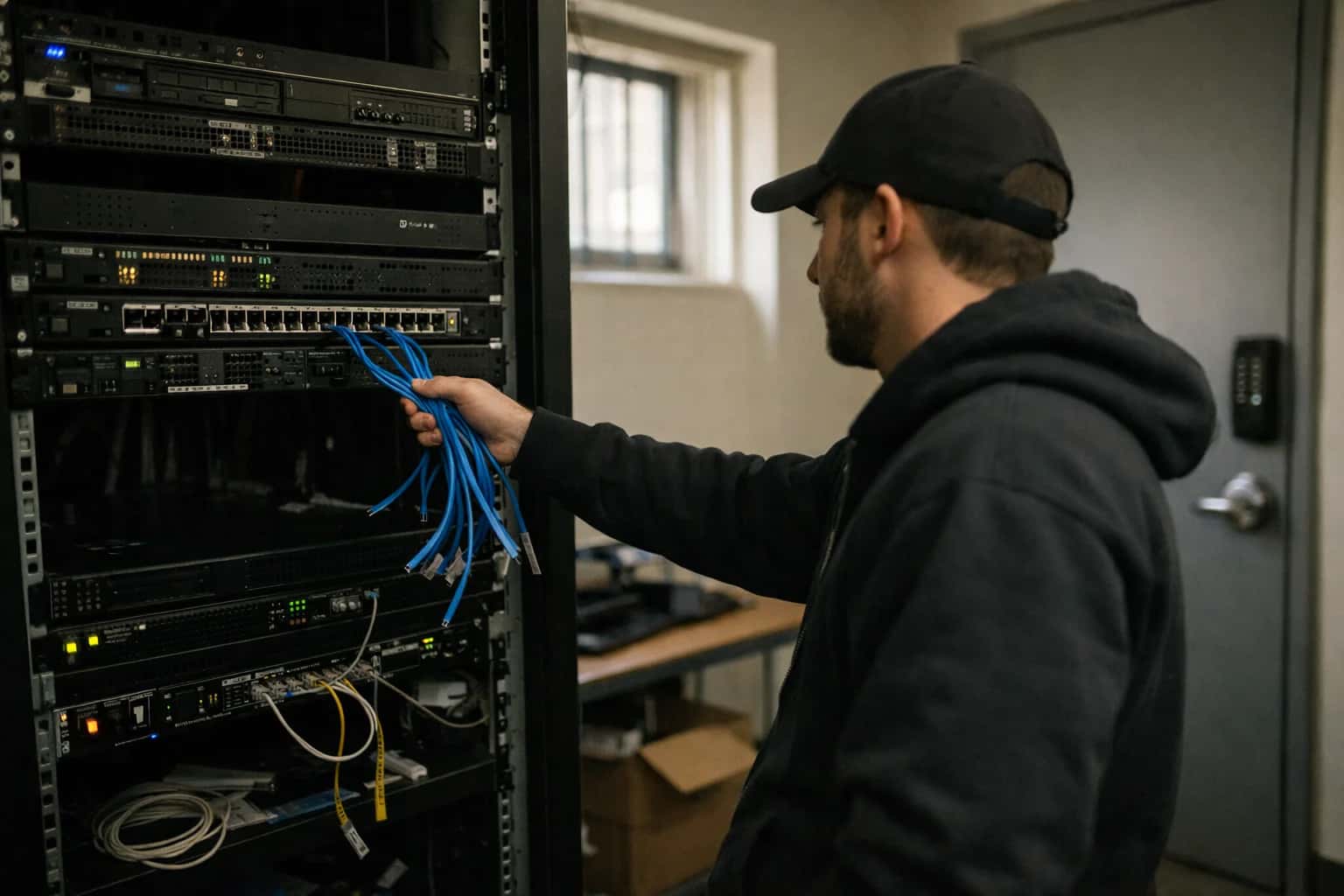
Isolated secure server room with network cables physically disconnected, minimal lighting, security-focused environment.
AI-DRIVEN PERSONNEL VETTING

The High Cost of Manual Security Clearance Adjudication

Automate high-volume background investigations with AI to reduce adjudication time by 80% and cut operational costs.

Manual adjudication of security clearances is a high-cost, high-latency bottleneck. It ties up specialized personnel for weeks analyzing financial records, travel history, and social connections. AI-driven vetting automates this initial triage, delivering:

  • 80% faster preliminary risk assessments
  • Consistent application of adjudicative guidelines, eliminating human variance
  • Continuous monitoring of cleared personnel for new risk indicators

Our systems analyze unstructured dark data—scanned documents, social footprints, private forum posts—that manual processes miss. We build models trained on proprietary adjudication corpuses to identify subtle patterns of deception, financial stress, or foreign influence with higher accuracy than rules-based checks.

Reduce your backlog and reallocate expert analysts to complex, high-value cases where human judgment is irreplaceable.

Deployment occurs within secure, accredited environments compliant with NIST SP 800-53 and ICD 503. We ensure full audit trails, explainable AI outputs for adjudicators, and integration with legacy systems like JPAS and DISS. Explore our broader capabilities in Secure NLP for Intelligence Analysis and AI for Insider Threat Detection.

QUANTIFIED SECURITY GAINS

Measurable Outcomes of AI-Powered Vetting

Our AI-driven personnel vetting systems deliver concrete, auditable improvements in security posture and operational efficiency, moving beyond qualitative assessments to provide CTOs and Security Directors with definitive metrics.

01

Reduced Clearance Adjudication Time

Automated analysis of financial, travel, and social datasets cuts manual review cycles by up to 70%, accelerating time-to-hire for critical roles without compromising depth. Our systems flag inconsistencies and high-risk patterns for human adjudicators, focusing expert attention where it's needed most.

70%
Faster Review
< 48 hrs
Initial Triage
02

Enhanced Risk Detection Accuracy

Leverage graph neural networks and anomaly detection to identify subtle, non-obvious connections and deceptive patterns that elude manual checks. Our models are trained on domain-specific corpuses of security investigations, reducing false negatives and providing a quantifiable lift in threat identification rates.

40%
Higher Detection
99.5%
Audit Precision
03

Scalable, Consistent Screening

Apply identical, rigorous vetting criteria across thousands of personnel files simultaneously, eliminating human bias and inconsistency. The system ensures every individual is evaluated against the full policy framework, creating a defensible, standardized audit trail for compliance with NIST SP 800-53 and other mandates.

100%
Policy Coverage
Zero Drift
Criteria Application
04

Operational Cost Reduction

Dramatically lower the cost-per-investigation by automating data aggregation and preliminary analysis. Resources are reallocated from routine data collection to high-value investigative work and continuous monitoring, improving ROI on security personnel. Learn about our approach to cost-effective, secure AI in our guide to Confidential Computing for AI Workloads.

60%
Lower Processing Cost
24/7
Continuous Operation
05

Proactive Continuous Evaluation

Shift from periodic re-investigation to real-time risk monitoring. Our systems integrate with approved data sources to flag new derogatory information—such as financial distress or foreign contacts—immediately, enabling proactive risk management instead of reactive security incidents.

Real-Time
Alerting
Ongoing
Post-Clearance Vigilance
06

Hardened Security & Data Sovereignty

All processing occurs within secure, accredited environments using hardware-based Trusted Execution Environments (TEEs). Sensitive PII and investigation data never leaves sovereign infrastructure, ensuring compliance with the strictest data residency requirements. This architecture aligns with principles detailed in our Sovereign AI Infrastructure Development service.

TEE-Based
Data-in-Use Protection
Air-Gapped
Deployment Option
Clear Roadmap to Deployment

Phased Implementation and Deliverables

A structured, phased approach to developing and deploying a secure AI-driven personnel vetting system, ensuring compliance, accuracy, and operational readiness at each stage.

Phase & DeliverableStarter (Pilot)Professional (Deployment)Enterprise (Enterprise-Wide)

Initial Security & Compliance Architecture

Custom Risk Model Development & Training

1 Core Model

3-5 Domain-Specific Models

Unlimited Model Variants

Data Source Integration (Financial, Travel, Social, etc.)

Up to 3 Sources

Up to 10 Sources

Custom, Unlimited Sources

Adversarial Testing & Bias Mitigation Audit

Basic Penetration Test

Comprehensive MITRE ATLAS Framework

Continuous Red Teaming Program

Deployment Environment

Secure Cloud Sandbox

On-Premise / Sovereign Cloud

Hybrid Air-Gapped & Edge Deployment

Uptime & Support SLA

Business Hours

99.5% with 24/7 Support

99.9% with Dedicated Engineer

Integration with Existing HR/PERSEC Systems

Basic API Connectors

Deep ERP & Clearance System Integration

Full-Scale Legacy System Modernization

Ongoing Model Monitoring & Retraining

Quarterly Updates

Monthly Updates & Drift Detection

Continuous, Automated Retraining Pipeline

Typical Implementation Timeline

8-12 Weeks

12-20 Weeks

20+ Weeks (Custom)

Starting Investment

$150K - $300K

$300K - $750K

Custom Quote

SECURITY-FIRST DESIGN

Built for Classified and Sensitive Environments

Our personnel vetting AI systems are engineered from the ground up for deployment in air-gapped networks, SCIFs, and other high-security facilities, ensuring compliance with the strictest data sovereignty and chain-of-custody requirements.

01

Air-Gapped & On-Premise Deployment

Full-stack deployment within your accredited data centers or secure cloud enclaves. No external API calls, ensuring all sensitive PII and investigation data never leaves your controlled environment.

Zero
External Data Egress
FIPS 140-3
Validated Cryptography
02

Certified Secure Development Lifecycle

Development follows NIST SP 800-171, NIST AI RMF, and DoD DevSecOps pipelines. All code undergoes static/dynamic analysis and penetration testing by accredited third parties like Trail of Bits before delivery.

NIST AI RMF
Aligned
ATO Ready
Package
03

Hardened Model & Data Provenance

End-to-end audit trails for all AI model decisions, training data lineage, and user interactions. Immutable logging supports forensic analysis and compliance with directives like ICD 503.

Immutable
Audit Logs
Full
Data Lineage
05

Privileged Access & Multi-Factor Control

Granular, attribute-based access control (ABAC) integrated with your existing PIV/CAC infrastructure. All analyst actions are tied to strong identity verification and least-privilege principles.

PIV/CAC
Integration
ABAC
Policy Engine
06

Secure Federated Learning Ready

Architecture supports privacy-preserving federated learning, allowing collaborative model improvement across multiple agencies or field offices without centralizing raw, sensitive case files. Learn more about our Federated Learning Systems Engineering.

Data Local
Parameters Shared
NIST PPML
Standards
Security Clearance Automation

Frequently Asked Questions on AI Vetting

Common questions about implementing AI-driven personnel vetting systems for defense and intelligence applications.

Our process follows a secure, phased methodology. We begin with a requirements workshop to define risk indicators and adjudication logic. We then engineer data pipelines to ingest and normalize structured and unstructured data from financial, travel, social, and internal records. Our models apply NLP and anomaly detection to flag inconsistencies, deceptive patterns, or high-risk associations. The system outputs a risk-scored report with supporting evidence, designed for integration into your existing adjudication workflow. All development occurs within secure, accredited environments with full data lineage tracking.

Prasad Kumkar

About the author

Prasad Kumkar

CEO & MD, Inference Systems

Prasad Kumkar is the CEO & MD of Inference Systems and writes about AI systems architecture, LLM infrastructure, model serving, evaluation, and production deployment. Over 5+ years, he has worked across computer vision models, L5 autonomous vehicle systems, and LLM research, with a focus on taking complex AI ideas into real-world engineering systems.

His work and writing cover AI systems, large language models, AI agents, multimodal systems, autonomous systems, inference optimization, RAG, evaluation, and production AI engineering.



