CIOs face a critical trust deficit: AI models make high-stakes decisions in credit scoring, hiring, and patient triage, but their 'black box' nature creates regulatory and reputational risk. When a model denies a loan or rejects a candidate, the inability to provide a clear, immediate reason erodes stakeholder confidence and exposes the enterprise to compliance penalties under frameworks like the EU AI Act. This opacity blocks AI adoption at scale.

Use Case
Real-Time Model Explainability Dashboards
Executive dashboards that provide instant, interpretable explanations for AI-driven decisions, building stakeholder trust, ensuring regulatory compliance, and unlocking measurable ROI.
FROM BLACK BOX TO BUSINESS CASE
What is Real-Time Model Explainability Used For?
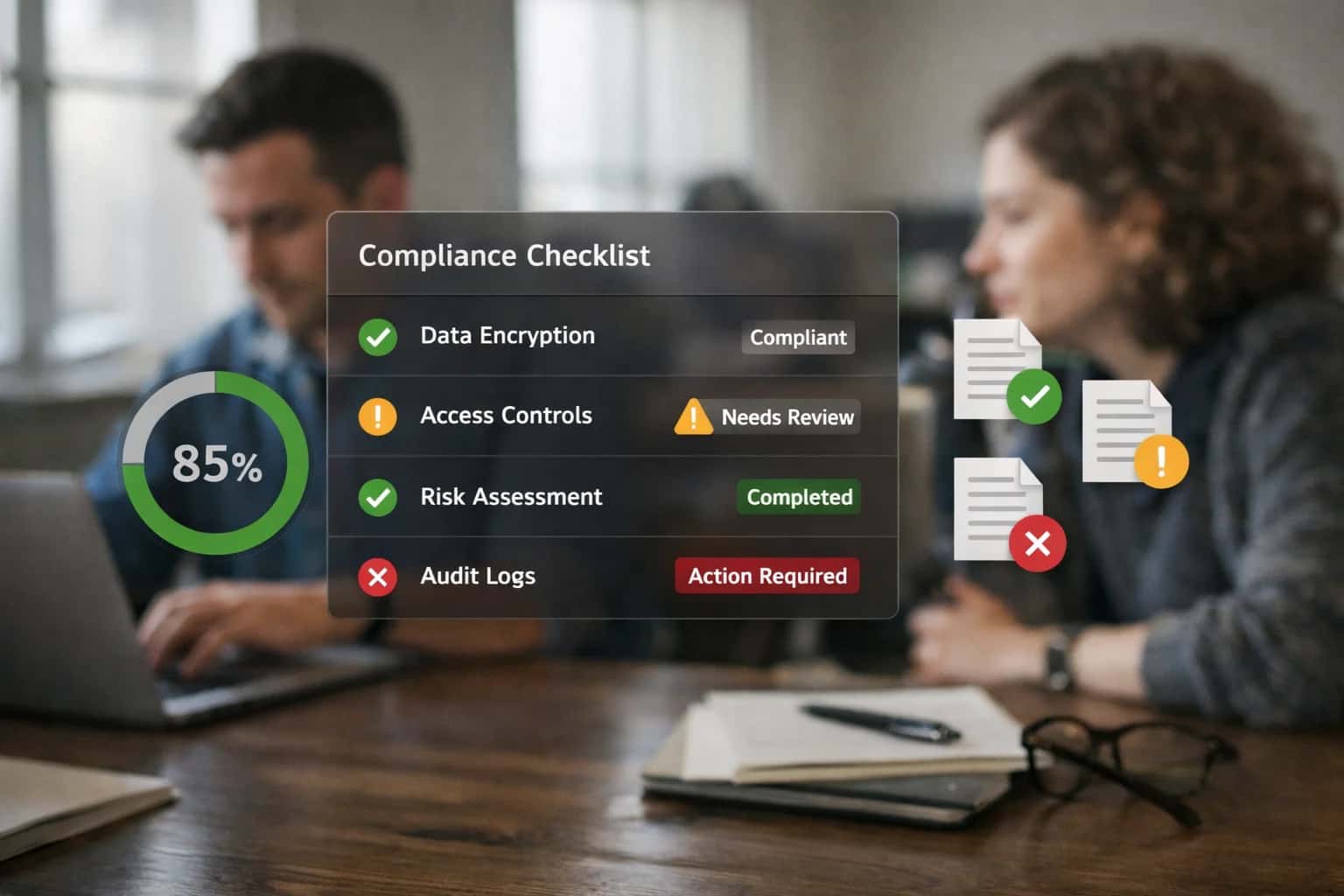
Real-time explainability dashboards transform opaque AI decisions into transparent, actionable business intelligence. They are the critical bridge between complex model outputs and stakeholder trust.
Real-time dashboards fix this by delivering instant, interpretable explanations for every AI-driven decision. This allows compliance officers to validate fairness, loan officers to justify denials with specific factors, and innovation teams to debug model drift. The measurable outcome is accelerated AI deployment with built-in audit trails, reducing regulatory filing time by up to 70% and turning AI from a liability into a defensible competitive asset. For deeper frameworks, see our guide on Algorithmic Fairness Certification for Enterprise Models.
ETHICS & COMPLIANCE
High-ROI Use Cases for Explainable AI Dashboards
Executive dashboards that demystify AI decisions, building stakeholder trust and delivering measurable ROI through risk reduction, efficiency gains, and regulatory compliance.
01
Automated Regulatory Audit Trails
Manual compliance reporting for regulations like the EU AI Act is a costly, error-prone bottleneck. An explainability dashboard automates the generation of comprehensive audit logs, documenting every model decision, its rationale, and the data used. This slashes the time and cost of regulatory filings by up to 70%, turning a compliance burden into a defensible asset. For example, a financial institution can instantly generate evidence for a regulator, proving a denied loan was based on objective financial factors, not bias.
70%
Reduction in compliance reporting time
02
Fair Credit Scoring & Loan Origination
Unexplained credit denials expose banks to regulatory fines and reputational damage. A real-time dashboard provides transparent, feature-level explanations for every credit decision. It allows risk officers to see exactly why an applicant was scored a certain way and dynamically flags potential bias against protected attributes. This enables fairer access to capital while maintaining portfolio performance, directly reducing legal risk and building customer trust. The dashboard becomes the single source of truth for internal audits and regulatory inquiries.
03
Bias Detection in Hiring Algorithms
AI-driven recruitment tools can inadvertently perpetuate discrimination, leading to costly lawsuits and damaged employer brands. An explainability dashboard continuously monitors your hiring AI, providing real-time alerts on discriminatory patterns. It visualizes how candidate attributes influence rankings, allowing HR and legal teams to audit for fairness. This proactive oversight can reduce legal exposure by providing documented proof of bias mitigation efforts, while ensuring a more equitable and effective talent acquisition process.
04
Transparent Clinical Decision Support
In healthcare, clinician adoption of AI fails without trust. A dashboard for triage or diagnostic AI provides clear, interpretable reasoning behind each recommendation—highlighting key symptoms, lab values, or imaging features. This transforms the AI from a 'black box' into a collaborative diagnostic partner, improving care equity and accelerating treatment decisions. Hospitals using such systems report higher clinician satisfaction and reduced diagnostic errors, directly impacting patient outcomes and operational efficiency.
05
C-Suite AI Ethics & Risk Oversight
Boards and executives are accountable for AI ethics but lack visibility into model operations. A centralized executive ethics dashboard provides a real-time health monitor for all deployed AI, tracking key metrics like fairness drift, compliance status, and anomaly rates. It translates technical performance into business risk, enabling data-driven governance. This allows leadership to proactively manage reputational and regulatory risks, justify AI investments with clear ROI, and demonstrate responsible innovation to stakeholders.
360°
Enterprise-wide AI risk visibility
06
Explainable Financial Risk Models
When AI flags a transaction for fraud or assesses counterparty risk, investigators need to act fast on reliable intelligence. A dashboard that explains the 'why' behind every high-risk alert—pinpointing unusual patterns, geographic anomalies, or behavioral shifts—cuts investigation time by over 50%. This increases operational efficiency, reduces false positives, and provides auditable reasoning for regulators. It turns complex model outputs into actionable intelligence, protecting revenue and ensuring regulatory compliance.
Enabling Efficiency, Speed & Accuracy
Intelligent Analysis, Decision & Execution
We build AI systems for teams that need search across company data, workflow automation across tools, or AI features inside products and internal software.
Talk to Us
Search across company data
Give teams answers from docs, tickets, runbooks, and product data with sources and permissions.
Useful when people spend too long searching or get different answers from different systems.
Enterprise searchRAGPermissions
Read more
Automate internal workflows
Use AI to route work, draft outputs, trigger actions, and keep approvals and logs in place.
Useful when repetitive work moves across multiple tools and teams.
AI agentsWorkflow automationGovernance
Read more
Add AI to products and internal tools
Build assistants, guided actions, or decision support into the software your team or customers already use.
Useful when AI needs to be part of the product, not a separate tool.
AI integrationDecision supportModel routing
Read moreIMPLEMENTATION ROADMAP
Real-Time Model Explainability Dashboards
Deploying transparent AI isn't just an ethical choice—it's a business imperative for compliance and trust. This roadmap details how to move from a pilot dashboard to a production-scale system that delivers clear ROI through reduced regulatory risk and accelerated decision-making.
A real-time explainability dashboard is an executive-facing interface that provides instant, interpretable reasons for every AI-driven decision. It solves the critical business problem of the "black box"—where stakeholders cannot understand or trust AI outputs. This lack of transparency creates massive compliance risk under regulations like the EU AI Act, slows internal adoption, and can lead to costly, biased outcomes. The dashboard translates complex model logic into clear, actionable insights, building stakeholder trust and providing the audit trail required for regulatory filings. For example, in loan underwriting, it can show the top three factors (e.g., debt-to-income ratio, payment history) that led to a denial, instantly justifying the decision to both the customer and the compliance officer.

About the author
Prasad Kumkar
CEO & MD, Inference Systems
Prasad Kumkar is the CEO & MD of Inference Systems and writes about AI systems architecture, LLM infrastructure, model serving, evaluation, and production deployment. Over 5+ years, he has worked across computer vision models, L5 autonomous vehicle systems, and LLM research, with a focus on taking complex AI ideas into real-world engineering systems.
His work and writing cover AI systems, large language models, AI agents, multimodal systems, autonomous systems, inference optimization, RAG, evaluation, and production AI engineering.
LinkedIn
Limited slotsGet a Free AI Consultation
Partnered with leading AI, data, and software stack.





How We Work
Custom AI workflows for your Business
One-fit-all AI don't work for modern businesses. At Inferensys, we aim to understand your business & custom requirements; which we use to define most efficient agentic workflows, the data, and the tools for your business.
01
Review the use case
We understand the task, the users, and where AI can actually help.
Read more02
Pick the right approach
We define what needs search, automation, or product integration.
Read more03
Build the first useful version
We implement the part that proves the value first.
Read more04
Improve from there
We add the checks and visibility needed to keep it useful.
Read moreThe first call is a practical review of your use case and the right next step.
Talk to Us