The core pain point is reputational damage and legal liability. AI models in hiring, lending, or healthcare can inadvertently encode and amplify societal biases, leading to discriminatory outcomes. This exposes enterprises to regulatory fines, lawsuits, and severe brand erosion. A certified fairness framework directly addresses this by providing a systematic, evidence-based defense against claims of bias, protecting both the organization and the individuals impacted by its AI systems.

Use Case
Algorithmic Fairness Certification for Enterprise Models
End-to-end frameworks to test, validate, and certify AI systems against fairness metrics, providing a defensible standard for internal governance and external audits.
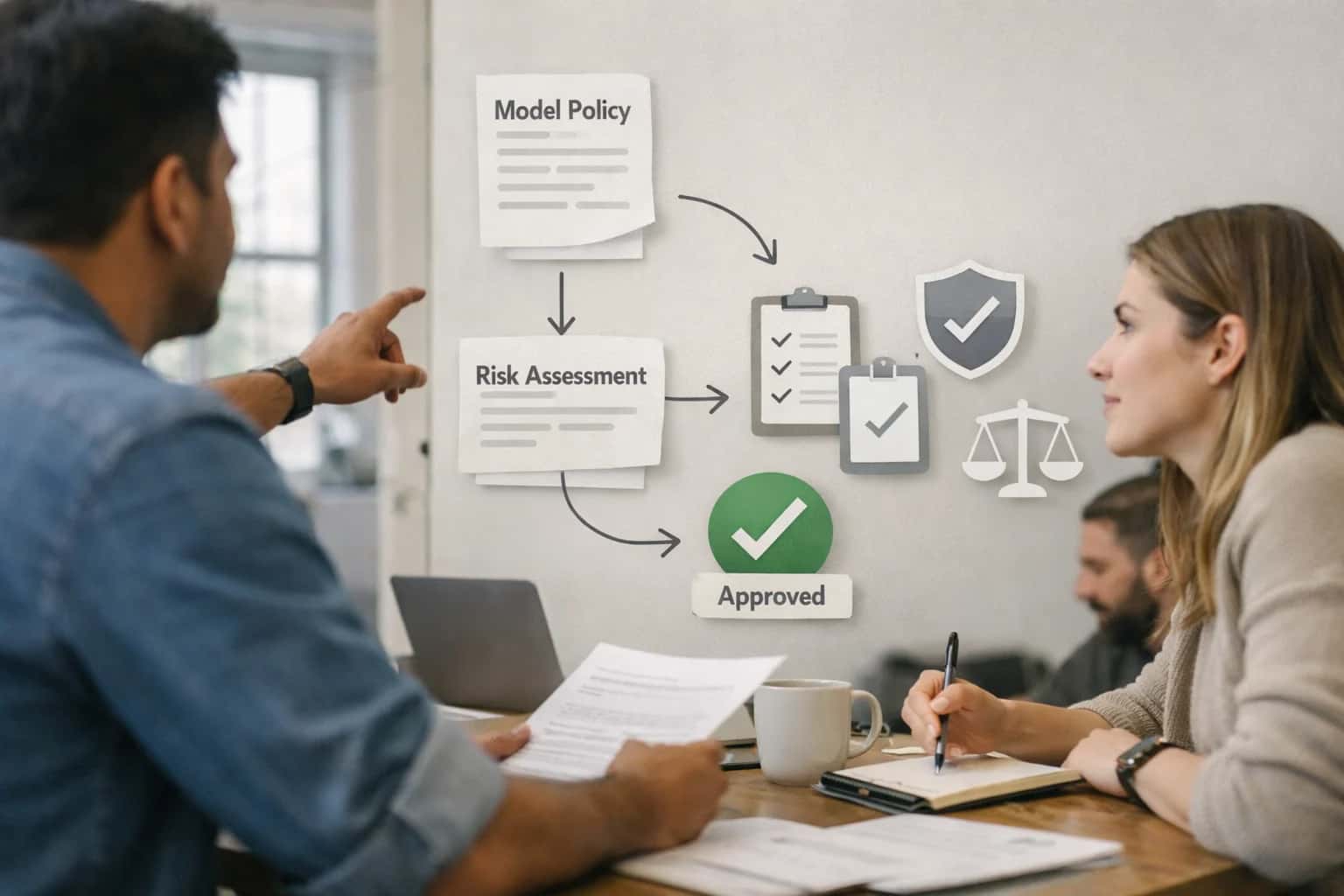
ENTERPRISE RISK MITIGATION
What is Algorithmic Fairness Certification Used For?
Algorithmic Fairness Certification is a formal process to validate that an AI system's decisions are equitable and non-discriminatory. It provides a defensible standard for internal governance and external audits, turning a complex ethical challenge into a manageable compliance and risk management function.
The solution is an end-to-end certification framework that tests models against defined fairness metrics (e.g., demographic parity, equal opportunity). This delivers measurable ROI by slashing audit preparation costs and enabling faster, safer AI deployment. It transforms fairness from a vague principle into a concrete, auditable asset, building stakeholder trust and providing a competitive advantage in regulated markets. For a deeper dive into building these responsible frameworks, explore our pillar on Ethics, Bias Mitigation, and Fair AI Frameworks.
ENTERPRISE ROI
Common Use Cases: Where Fairness Certification Drives ROI
Algorithmic fairness certification is not just an ethical imperative—it's a strategic investment that mitigates risk, protects brand value, and unlocks new markets by ensuring your AI systems are equitable, compliant, and trusted.
01
Fair Credit Scoring & Lending
Financial institutions face immense regulatory scrutiny and reputational risk from biased lending algorithms. Fairness certification provides a defensible audit trail proving your models do not discriminate based on protected attributes like race or zip code. This directly translates to:
- Reduced legal exposure and fines from regulators like the CFPB.
- Increased market share by safely expanding credit access to underserved communities.
- Enhanced model performance through rigorous bias testing that often uncovers data quality issues. Example: A major bank used certification to validate its automated underwriting system, enabling it to approve 15% more loans in low-to-moderate income brackets without increasing default risk, directly boosting revenue.
02
Bias-Free HR & Talent Acquisition
AI-powered hiring tools can inadvertently perpetuate historical biases, leading to costly litigation and damaged employer branding. Certification acts as a pre-emptive compliance shield, validating that your screening and ranking algorithms are equitable.
- Mitigate discrimination lawsuits by providing evidence of due diligence.
- Improve quality of hire by ensuring the best candidates are identified, regardless of background.
- Streamline audits with automated reports for OFCCP or EEOC reviews. Example: A global retailer certified its video interview assessment AI, cutting screening time by 70% while demonstrably increasing demographic diversity in its candidate shortlist by 25%.
03
Equitable Insurance Underwriting
In a highly regulated industry, actuarial fairness is paramount. Certification provides quantifiable proof that your risk models are not using proxies for protected classes, ensuring compliance with state insurance commissioners and regulations like the NAIC models.
- Prevent premium discrimination claims that can trigger massive rebates and penalties.
- Build consumer trust in an industry often viewed with skepticism.
- Future-proof operations against emerging AI-specific insurance regulations. Example: A P&C insurer certified its new pricing model, allowing it to launch a usage-based product in a new state with regulatory approval secured in half the usual time, accelerating time-to-market.
04
Compliant Healthcare Triage & Diagnostics
AI clinical decision support must ensure equitable care across patient demographics. Fairness certification creates an explainable, auditable framework for models used in patient prioritization or diagnostic assistance.
- Reduce care disparity risks and improve population health outcomes.
- Satisfy FDA SaMD (Software as a Medical Device) and EU MDR requirements for algorithmic transparency.
- Protect against malpractice liability by documenting the fairness checks built into the AI's reasoning. Example: A hospital network certified its emergency department triage algorithm, demonstrating a 40% reduction in disparity of wait times for similar acuity patients across ethnic groups, while improving overall throughput.
05
Auditable Public Sector Eligibility
Government agencies using AI for benefits determination, permitting, or resource allocation require absolute transparency to maintain public trust and avoid legal challenges. Certification provides a public-facing standard of fairness.
- Ensure equitable service delivery and uphold democratic values.
- Automate compliance with mandates for algorithmic accountability (e.g., NYC Local Law 144).
- Dramatically reduce FOIA request fulfillment costs with pre-generated audit logs. Example: A state benefits agency certified its AI for SNAP eligibility pre-screening, reducing application processing time by 60% while fully documenting the decision logic to withstand legislative audit.
06
Ethical Marketing & Customer Segmentation
Marketing algorithms that unfairly exclude groups can lead to brand damage and lost revenue. Continuous fairness monitoring and certification ensure your customer lifetime value models and ad targeting do not create digital redlining.
- Protect brand equity from social media backlash and activist scrutiny.
- Optimize campaign ROI by identifying and correcting for biased audience exclusion.
- Ensure compliance with evolving digital advertising fairness standards. Example: An e-commerce platform certified its recommendation engine, eliminating a bias that under-recommended high-margin products to a key demographic, resulting in a 12% uplift in cross-sell revenue from that segment.
THE BUSINESS IMPERATIVE
Algorithmic Fairness Certification for Enterprise Models
Deploying AI without a defensible fairness standard is a growing legal and reputational liability. Our certification framework provides the objective, auditable proof you need.
The core pain point is regulatory exposure. Deploying an uncertified AI model in hiring, lending, or healthcare is a ticking time bomb. A single biased decision can trigger lawsuits, regulatory fines under acts like the EU AI Act, and catastrophic brand damage. You need more than good intentions; you need a defensible, evidence-based standard for fairness that satisfies both internal governance and external auditors. This is a direct cost and risk management issue.
Our framework provides that standard. We implement a rigorous, end-to-end process of testing, validating, and certifying your models against predefined fairness metrics (e.g., demographic parity, equalized odds). The outcome is a clear certification report—a tangible asset for your compliance file that demonstrates due diligence, reduces legal overhead, and builds stakeholder trust. This turns a compliance burden into a competitive advantage, enabling faster, safer AI deployment. Learn more about building a responsible foundation with our Ethics, Bias Mitigation, and Fair AI Frameworks.
Enabling Efficiency, Speed & Accuracy
Intelligent Analysis, Decision & Execution
We build AI systems for teams that need search across company data, workflow automation across tools, or AI features inside products and internal software.
Talk to Us
Search across company data
Give teams answers from docs, tickets, runbooks, and product data with sources and permissions.
Useful when people spend too long searching or get different answers from different systems.
Enterprise searchRAGPermissions
Read more
Automate internal workflows
Use AI to route work, draft outputs, trigger actions, and keep approvals and logs in place.
Useful when repetitive work moves across multiple tools and teams.
AI agentsWorkflow automationGovernance
Read more
Add AI to products and internal tools
Build assistants, guided actions, or decision support into the software your team or customers already use.
Useful when AI needs to be part of the product, not a separate tool.
AI integrationDecision supportModel routing
Read moreALGORITHMIC FAIRNESS CERTIFICATION
Key Implementation Challenges (And How to Overcome Them)
Achieving defensible fairness certification for enterprise AI models is a complex operational challenge. This guide addresses the most common technical and compliance hurdles, providing a clear path to validated, audit-ready systems that protect your brand and bottom line.
Algorithmic fairness certification is a formal process of testing, validating, and documenting that an AI system operates without unlawful or unethical bias against protected groups (e.g., based on race, gender, age). It's not just an ethical concern; it's a business-critical risk mitigation strategy. In 2026, with regulations like the EU AI Act imposing severe penalties for non-compliance, certification provides a defensible audit trail. It directly protects against costly litigation, reputational damage, and loss of consumer trust. For CIOs, it transforms a nebulous ethical concern into a measurable, governable component of the AI production lifecycle, directly linking to ROI through reduced regulatory fines and enhanced brand equity. Learn more about building a responsible framework in our pillar on Ethics, Bias Mitigation, and Fair AI Frameworks.

About the author
Prasad Kumkar
CEO & MD, Inference Systems
Prasad Kumkar is the CEO & MD of Inference Systems and writes about AI systems architecture, LLM infrastructure, model serving, evaluation, and production deployment. Over 5+ years, he has worked across computer vision models, L5 autonomous vehicle systems, and LLM research, with a focus on taking complex AI ideas into real-world engineering systems.
His work and writing cover AI systems, large language models, AI agents, multimodal systems, autonomous systems, inference optimization, RAG, evaluation, and production AI engineering.
LinkedIn
Limited slotsGet a Free AI Consultation
Partnered with leading AI, data, and software stack.





How We Work
Custom AI workflows for your Business
One-fit-all AI don't work for modern businesses. At Inferensys, we aim to understand your business & custom requirements; which we use to define most efficient agentic workflows, the data, and the tools for your business.
01
Review the use case
We understand the task, the users, and where AI can actually help.
Read more02
Pick the right approach
We define what needs search, automation, or product integration.
Read more03
Build the first useful version
We implement the part that proves the value first.
Read more04
Improve from there
We add the checks and visibility needed to keep it useful.
Read moreThe first call is a practical review of your use case and the right next step.
Talk to Us