
Comparisons
AI Governance and Compliance Platforms
AI Governance and Compliance Platforms
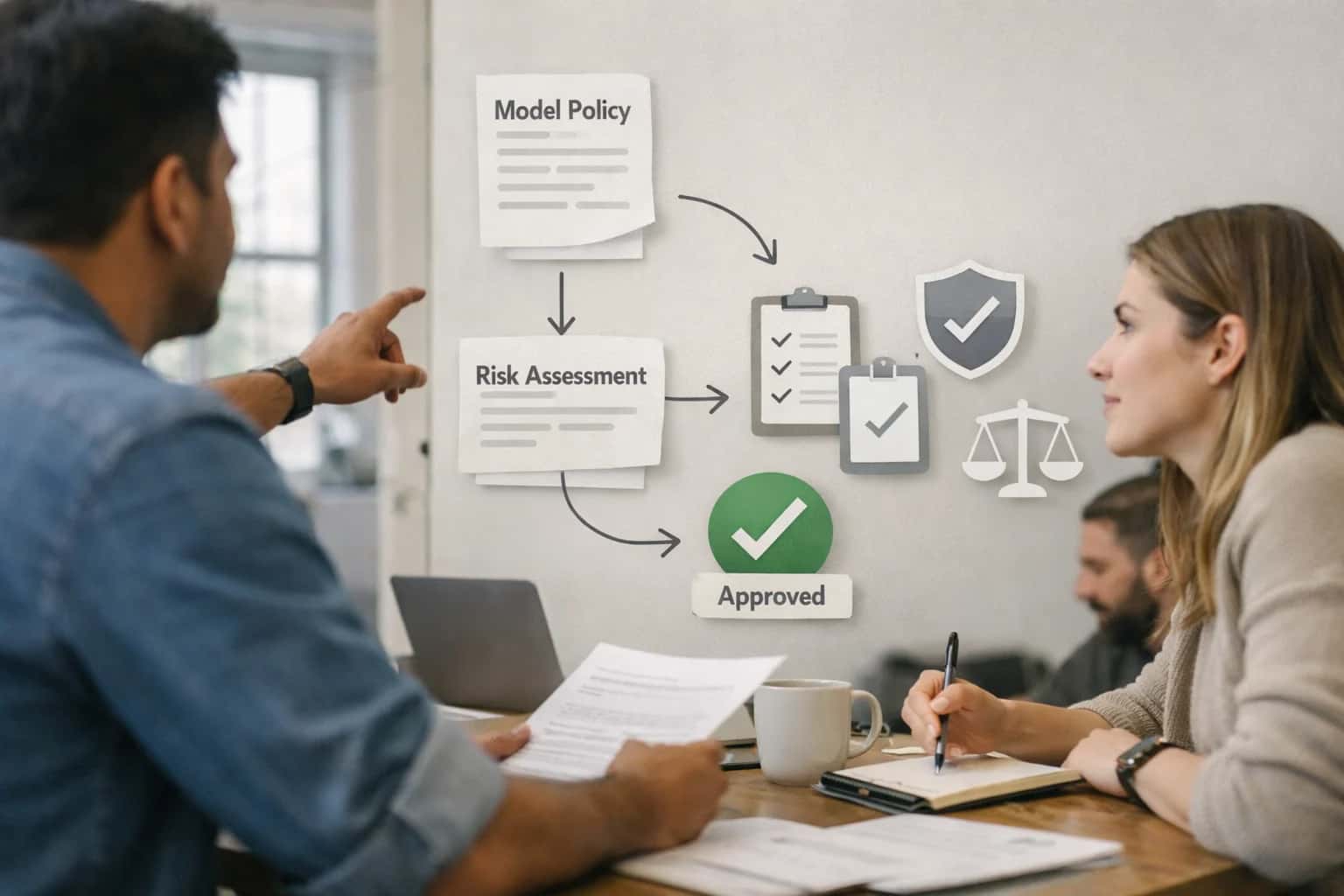
As the EU AI Act's high-risk provisions take effect in 2026, AI governance is no longer optional. This pillar covers comparisons between platforms like OneTrust, Microsoft Purview, and IBM watsonx.governance that track model drift, enforce access controls, and maintain audit trails. Comparisons include 'Shadow AI Discovery' capabilities, the ability to monitor 'Agentic Decisions,' and compliance with ISO/IEC 42001 and NIST AI RMF frameworks.
OneTrust vs Microsoft Purview
A head-to-head comparison of the leading integrated risk management platform against Microsoft's unified data governance and compliance solution for AI workloads in 2026.
OneTrust vs IBM watsonx.governance
Evaluating the trade-offs between a broad privacy and governance suite and IBM's specialized AI governance platform for model lifecycle management and compliance.
Microsoft Purview vs IBM watsonx.governance
Comparing Microsoft's cloud-native data and AI governance ecosystem with IBM's enterprise-focused AI governance toolkit for regulated industries in 2026.
Collibra vs Alation
Analysis of two leading data intelligence platforms, focusing on their capabilities for AI data cataloging, lineage, and governance policy enforcement.
Google Cloud Vertex AI Model Registry vs AWS SageMaker Model Governance
A technical comparison of model registry, lineage tracking, and approval workflows within Google Cloud's and AWS's flagship AI/ML platforms.
AWS SageMaker Model Governance vs Azure Machine Learning Responsible AI
Contrasting AWS's model governance framework with Azure's integrated suite of tools for responsible AI, including fairness, interpretability, and error analysis.
Fiddler AI vs Arize Phoenix
Comparing two prominent AI observability and monitoring platforms on their capabilities for model performance tracking, drift detection, and explainability in production.
Privacera vs Immuta
Evaluating data security and access governance platforms for AI, focusing on fine-grained policy management, data masking, and compliance with regulations like GDPR.
Vectara Trust & Safety vs Azure AI Content Safety
A technical analysis of safety and moderation APIs for generative AI, comparing Vectara's platform-agnostic filters with Azure's integrated content safety services.
Seldon Alibi vs SHAP
Comparing a dedicated model explainability library (Alibi) against the widely-used SHAP framework for generating local and global explanations in governed AI systems.
Great Expectations vs Deequ
A comparison of data quality and testing frameworks critical for AI governance, evaluating Python-based Great Expectations against AWS's Scala-based Deequ.
OpenMetadata vs DataHub
Analysis of open-source metadata platforms for AI governance, focusing on data discovery, lineage, and integration with modern data stacks.
Kubeflow Pipelines vs MLflow
Comparing MLOps platforms for pipeline orchestration and governance, evaluating Kubeflow's Kubernetes-native approach against MLflow's experiment tracking and model registry.
Drata vs Vanta
Evaluating automated compliance platforms for AI infrastructure, focusing on continuous control monitoring, evidence collection, and audit readiness for frameworks like SOC 2 and ISO 42001.
Wandb vs Neptune.ai
A detailed comparison of experiment tracking and model registry tools, essential for governed AI development, focusing on collaboration, visualization, and reproducibility.
SailPoint vs Saviynt
Comparing identity governance and administration (IGA) platforms for managing human and non-human (AI agent) access to sensitive data and systems.
Hashicorp Vault vs CyberArk
Analysis of privileged access management and secrets governance solutions for securing API keys, tokens, and credentials used by AI models and agents.
Snyk vs Mend
Comparing software composition analysis (SCA) tools for AI software supply chain security, focusing on vulnerability detection in open-source dependencies and containers.
Prometheus vs Datadog APM
Evaluating monitoring and observability stacks for AI systems, contrasting the open-source Prometheus ecosystem with Datadog's integrated APM and AI monitoring features.
Partnered with leading AI, data, and software stack.





How We Work
Custom AI workflows for your Business
One-fit-all AI don't work for modern businesses. At Inferensys, we aim to understand your business & custom requirements; which we use to define most efficient agentic workflows, the data, and the tools for your business.
01
Review the use case
We understand the task, the users, and where AI can actually help.
Read more02
Pick the right approach
We define what needs search, automation, or product integration.
Read more03
Build the first useful version
We implement the part that proves the value first.
Read more04
Improve from there
We add the checks and visibility needed to keep it useful.
Read moreThe first call is a practical review of your use case and the right next step.
Talk to Us