AWS SageMaker Model Governance excels at infrastructure-native control and automation because it is deeply integrated with the AWS ecosystem. Its strength lies in programmatically enforcing model deployment pipelines, tracking lineage via AWS CloudTrail, and automating approval workflows with AWS Step Functions. For example, its integration with AWS IAM and AWS Config provides granular, audit-ready access controls and compliance checks that are familiar to cloud operations teams, reducing the overhead of managing separate governance tools.

Comparison
AWS SageMaker Model Governance vs Azure Machine Learning Responsible AI
A technical, data-driven comparison for CTOs and engineering leads evaluating AI governance platforms. We break down the core features, compliance frameworks, and trade-offs between AWS's integrated model lifecycle governance and Azure's suite of responsible AI tools.
THE ANALYSIS
Introduction: The 2026 AI Governance Imperative
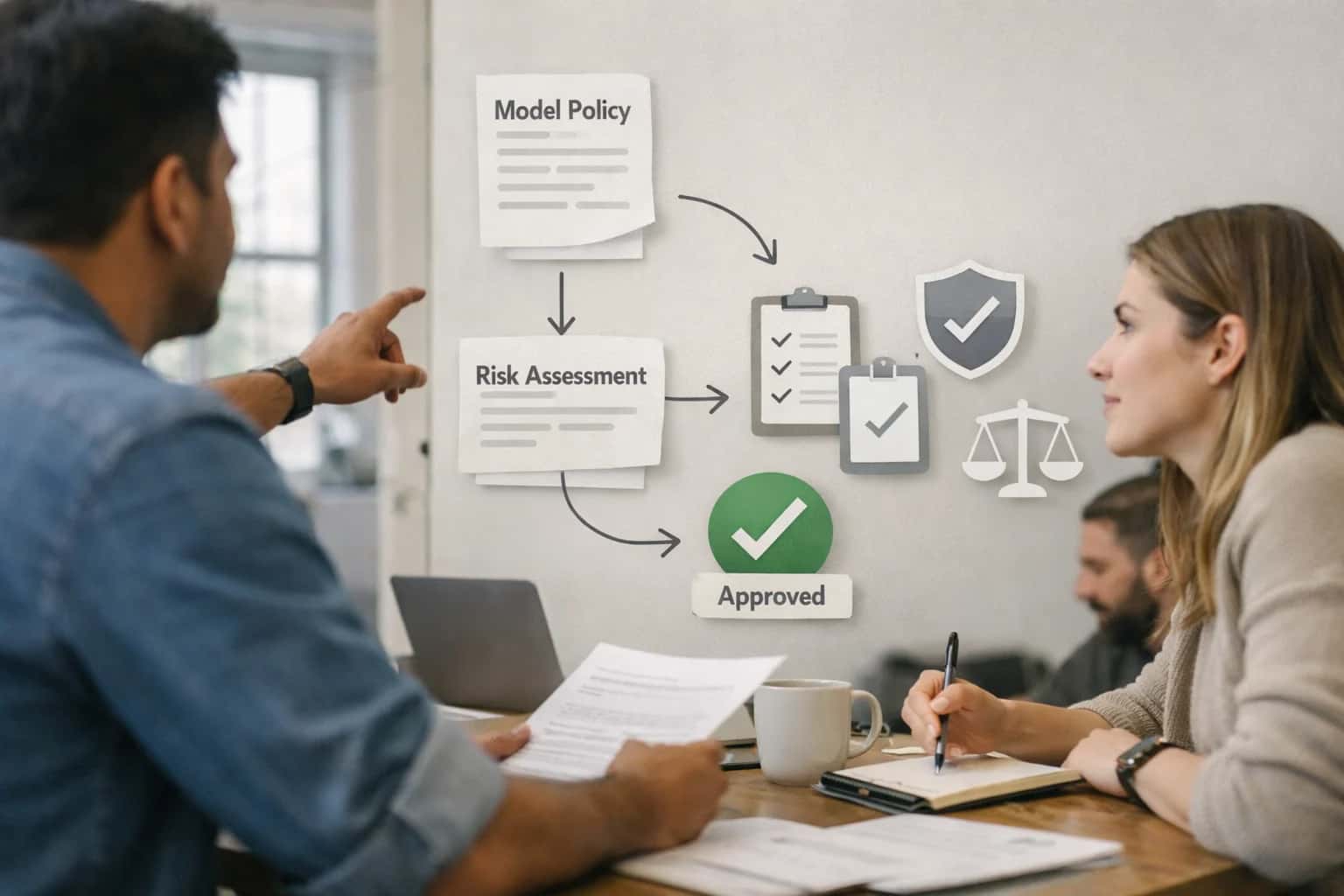
A data-driven comparison of AWS SageMaker Model Governance and Azure Machine Learning Responsible AI, framing the critical trade-offs for CTOs under the EU AI Act.
Azure Machine Learning Responsible AI takes a different approach by baking ethical AI principles directly into the model development lifecycle. This suite provides an integrated dashboard with specialized tools for Fairlearn, InterpretML, and Error Analysis. This results in a more developer-centric experience for identifying and mitigating model bias and understanding model decisions, but can require deeper integration work to connect with broader enterprise IT governance systems like Microsoft Purview for a unified data estate view.
The key trade-off: If your priority is enforcing rigorous, automated compliance gates and audit trails within a predominantly AWS infrastructure, choose SageMaker Model Governance. Its strength is operational control. If you prioritize empowering data scientists with built-in tools for fairness, interpretability, and error analysis during the development phase, choose Azure ML Responsible AI. Its strength is ethical design. For a holistic strategy, consider how these platforms integrate with broader AI Governance and Compliance Platforms like IBM watsonx.governance or dedicated LLMOps and Observability Tools for end-to-end traceability.
HEAD-TO-HEAD COMPARISON
AWS SageMaker Model Governance vs Azure Machine Learning Responsible AI
Direct comparison of core governance, compliance, and responsible AI features for model lifecycle management.
| Feature / Metric | AWS SageMaker Model Governance | Azure Machine Learning Responsible AI |
|---|---|---|
Integrated Fairness Assessment & Mitigation | ||
Automated Model Lineage Tracking | ||
Drift Detection (Data & Concept) | ||
Native Error Analysis Dashboard | ||
Model Card Generation & Management | ||
Approval Workflow Automation | ||
NIST AI RMF 1.0 Compliance Mapping | ||
Cost per 1M Model Invocations (est.) | $4.00 - $8.00 | $5.00 - $10.00 |
AWS SageMaker Model Governance vs Azure Machine Learning Responsible AI
TL;DR: Key Differentiators
A balanced look at the core strengths of each platform to guide your choice for AI governance and compliance.
01
AWS SageMaker Model Governance: Deep MLOps Integration
Specific advantage: Tightly coupled governance workflows within the SageMaker ecosystem, including model registry, lineage tracking, and approval gates. This matters for teams already invested in AWS's MLOps stack who need governance as a native extension of their CI/CD pipelines, not a separate tool. It excels at enforcing model versioning and deployment approvals.
02
AWS SageMaker Model Governance: Granular IAM & Cost Control
Specific advantage: Leverages AWS Identity and Access Management (IAM) for precise control over who can train, register, or deploy models, integrated with AWS Cost Explorer. This matters for enterprises with strict budgetary controls and multi-tenant data science environments where tracking spend per model or team is critical. It provides a unified security and FinOps layer.
03
Azure Machine Learning Responsible AI: Integrated Fairness & Error Analysis
Specific advantage: Offers a unified dashboard with built-in tools for fairness assessment, model interpretability (SHAP, LIME), and error analysis. This matters for regulated industries like finance or healthcare where you must proactively detect and mitigate algorithmic bias and explain model decisions to auditors without integrating third-party libraries.
04
Azure Machine Learning Responsible AI: Microsoft 365 & Purview Synergy
Specific advantage: Seamlessly connects with Microsoft Purview for data lineage and sensitivity labeling, and integrates compliance signals from the broader Microsoft 365 ecosystem. This matters for organizations standardized on Microsoft's stack, as it creates a holistic governance chain from raw data in SharePoint or SQL Server to the final AI model's predictions.
CHOOSE YOUR PRIORITY
When to Choose: Decision Guide by Persona
AWS SageMaker Model Governance for ML Engineers
Verdict: The definitive choice for teams deeply integrated into the AWS ecosystem who need granular, API-driven control over the model lifecycle. Strengths: SageMaker Model Governance provides a comprehensive, programmatic framework. Key features include the SageMaker Model Registry for versioning and approval workflows, SageMaker Pipelines for reproducible, auditable training, and SageMaker Model Monitor for drift detection. It excels at enforcing MLOps best practices through infrastructure-as-code (IaC) with CloudFormation or CDK, allowing engineers to codify governance rules. Its deep integration with AWS IAM and AWS KMS offers fine-grained access control and encryption for model artifacts. Considerations: It is inherently AWS-centric. Extending governance to models trained or deployed outside SageMaker requires custom integration work.
Azure Machine Learning Responsible AI for ML Engineers
Verdict: Ideal for teams prioritizing a unified, studio-based experience with powerful, out-of-the-box interpretability and fairness tooling. Strengths: Azure ML's Responsible AI dashboard is its crown jewel, bundling Error Analysis, Fairness assessment (using metrics like demographic parity), Interpretability (via SHAP and LIME), and Counterfactual analysis into a single interactive interface. The Azure ML Model Registry and MLflow integration provide solid lineage tracking. For engineers, the ability to generate Responsible AI scorecards programmatically via the Azure ML SDK is a key asset for embedding compliance into CI/CD pipelines. Considerations: While powerful, some advanced customization may require deeper engagement with the underlying open-source libraries (e.g., Fairlearn, InterpretML) rather than the managed service layer.
Enabling Efficiency, Speed & Accuracy
Intelligent Analysis, Decision & Execution
We build AI systems for teams that need search across company data, workflow automation across tools, or AI features inside products and internal software.
Talk to Us
Search across company data
Give teams answers from docs, tickets, runbooks, and product data with sources and permissions.
Useful when people spend too long searching or get different answers from different systems.
Enterprise searchRAGPermissions
Read more
Automate internal workflows
Use AI to route work, draft outputs, trigger actions, and keep approvals and logs in place.
Useful when repetitive work moves across multiple tools and teams.
AI agentsWorkflow automationGovernance
Read more
Add AI to products and internal tools
Build assistants, guided actions, or decision support into the software your team or customers already use.
Useful when AI needs to be part of the product, not a separate tool.
AI integrationDecision supportModel routing
Read moreTHE ANALYSIS
Final Verdict and Recommendation
A decisive comparison of AWS SageMaker Model Governance and Azure Machine Learning Responsible AI, guiding CTOs based on core architectural priorities.
AWS SageMaker Model Governance excels at providing a centralized, auditable control plane for the entire ML lifecycle because it is built as an extension of SageMaker's core MLOps capabilities. For example, its Model Registry enforces a mandatory, linear approval workflow (draft -> pending approval -> approved -> rejected -> archived) with immutable versioning, which is critical for regulated industries needing to demonstrate strict process adherence for audit trails. This governance is deeply integrated with AWS IAM for fine-grained access control and AWS CloudTrail for comprehensive API logging.
Azure Machine Learning Responsible AI takes a different approach by integrating a suite of specialized fairness, interpretability, and error analysis tools directly into the model development and monitoring workflow. This results in a trade-off where governance is more developer-centric and diagnostic-focused, enabling data scientists to proactively identify and mitigate issues like demographic bias using metrics (e.g., disparate impact ratio) or visualize model decisions with SHAP and LIME explanations within a single studio interface.
The key trade-off is between process rigor and proactive risk mitigation. If your priority is enforcing a strict, auditable gated workflow for model deployment and access within a predominantly AWS ecosystem, choose SageMaker Model Governance. Its strength is structural control. If you prioritize empowering data science teams with integrated tools to diagnose and improve model fairness, explainability, and reliability before governance gates, choose Azure Machine Learning Responsible AI. For a broader view of the governance landscape, explore our comparisons of OneTrust vs Microsoft Purview and Fiddler AI vs Arize Phoenix.

About the author
Prasad Kumkar
CEO & MD, Inference Systems
Prasad Kumkar is the CEO & MD of Inference Systems and writes about AI systems architecture, LLM infrastructure, model serving, evaluation, and production deployment. Over 5+ years, he has worked across computer vision models, L5 autonomous vehicle systems, and LLM research, with a focus on taking complex AI ideas into real-world engineering systems.
His work and writing cover AI systems, large language models, AI agents, multimodal systems, autonomous systems, inference optimization, RAG, evaluation, and production AI engineering.
LinkedIn
Limited slotsGet a Free AI Consultation
Partnered with leading AI, data, and software stack.





How We Work
Custom AI workflows for your Business
One-fit-all AI don't work for modern businesses. At Inferensys, we aim to understand your business & custom requirements; which we use to define most efficient agentic workflows, the data, and the tools for your business.
01
Review the use case
We understand the task, the users, and where AI can actually help.
Read more02
Pick the right approach
We define what needs search, automation, or product integration.
Read more03
Build the first useful version
We implement the part that proves the value first.
Read more04
Improve from there
We add the checks and visibility needed to keep it useful.
Read moreThe first call is a practical review of your use case and the right next step.
Talk to Us