A non-situational AI system operates in dynamic environments where tasks and data distributions shift unpredictably. The core architectural principle is the separation of stable world knowledge from a dynamic adaptation layer. The stable core contains foundational models and principles, while the adaptation layer uses techniques like meta-learning and online Bayesian inference to perform real-time context switching. This enables the system to generalize to novel tasks without full retraining, moving closer to true zero-shot learning. Guardrails for safe exploration are implemented as a parallel monitoring system.

Guide
How to Architect a Non-Situational AI System for Dynamic Environments
A first-principles guide to building AI that operates in unpredictable environments. Learn to design a core that separates stable world knowledge from a dynamic adaptation layer, implement real-time context switching, and establish guardrails for safe exploration.
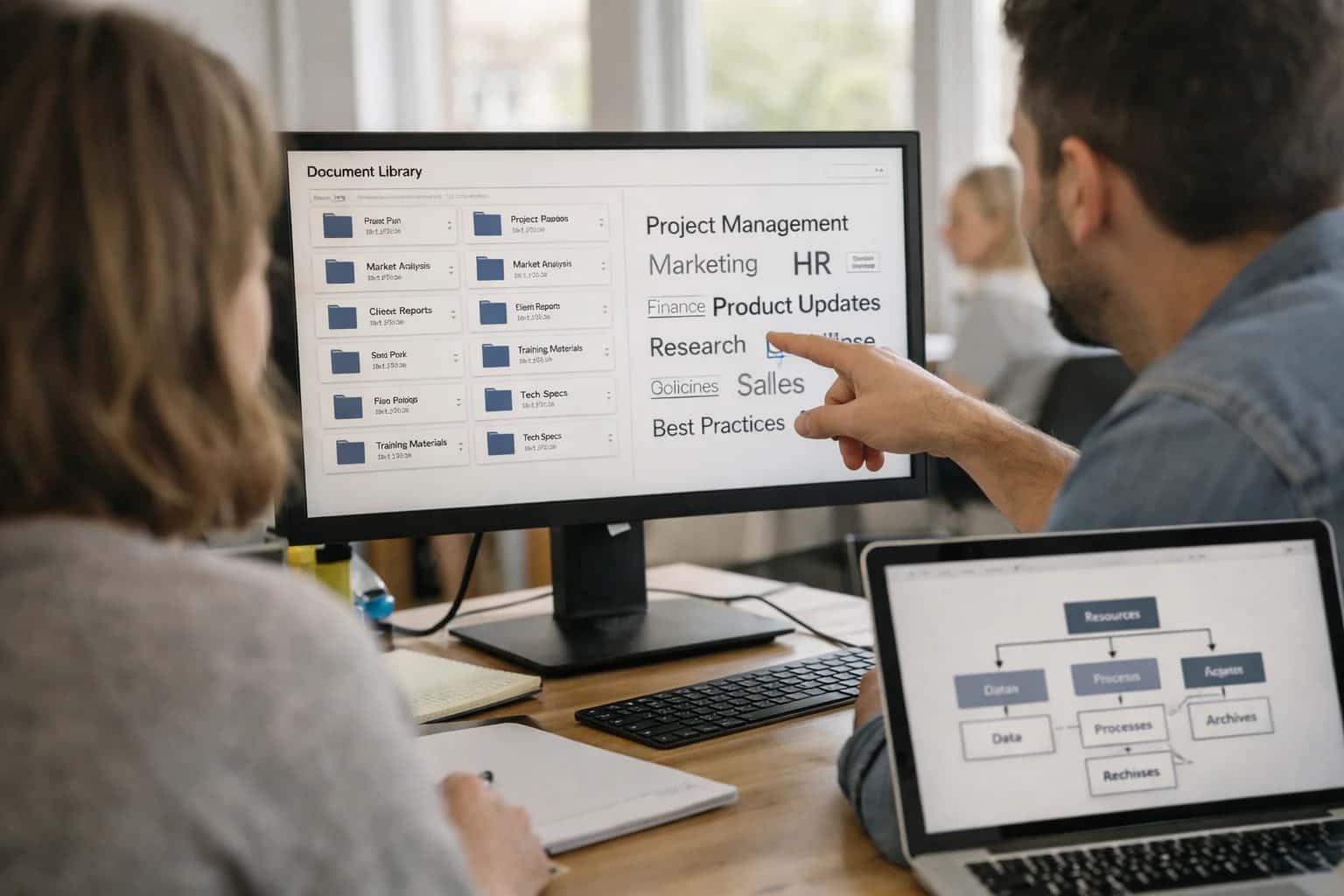
This guide provides a first-principles architecture for AI systems that must operate in unpredictable, non-stationary environments.
To implement this, start by defining your system's immutable first principles. Next, build the adaptation layer using a Model-Agnostic Meta-Learning (MAML) framework to enable rapid learning from few examples. Integrate a real-time feedback loop using stream processors like Apache Flink to update the model's context. Finally, establish a canary deployment system with Seldon Core to validate adaptations safely. For related concepts, see our guides on incremental learning and real-time model adaptation.
ARCHITECTURE PRIMER
Key Architectural Concepts
To build a non-situational AI system, you must separate stable knowledge from dynamic adaptation. These core concepts form the foundation for systems that learn in real-time without retraining.
01
Stable Core & Dynamic Adaptation Layer
The first principle is a dual-layer architecture. A Stable Core contains immutable world knowledge and fundamental reasoning principles. A Dynamic Adaptation Layer handles real-time learning and context switching. This separation prevents catastrophic forgetting and allows the system to apply core logic to novel situations. For example, a supply chain agent's core knows logistics principles, while its adaptation layer learns new port delays on the fly.
02
Meta-Learning for Rapid Task Generalization
Meta-learning (learning to learn) is the engine for zero-shot capability. Instead of training for one task, you train on a distribution of tasks. This produces a model that can adapt to new tasks with minimal data.
- Implement Model-Agnostic Meta-Learning (MAML) to find optimal initial parameters.
- Use Reptile for a simpler, more scalable approximation.
- Apply to scenarios like classifying new product types with just a few examples.
03
Online Bayesian Inference
For true real-time updating, use Online Bayesian Inference. This framework treats model parameters as probability distributions updated continuously as new data arrives.
- Key Benefit: Quantifies uncertainty, which is critical for safe exploration.
- Implementation: Use variational inference or particle filtering for streaming data.
- Use Case: A financial risk model that updates its confidence in predictions with each new market tick.
04
Context Engine & Semantic Alignment
A Context Engine interprets multimodal signals (sensor data, user intent, environmental state) to create a situational understanding. Semantic Alignment ensures the AI's internal representation matches the real-world problem space.
- Map data relationships into a knowledge graph.
- Use clear, executable objective statements to guide agent behavior.
- This is foundational for our guide on Context Engineering and Semantic Alignment.
05
Safe Exploration Guardrails
Dynamic learning requires the freedom to explore new actions, but with constraints. Guardrails are programmable boundaries that prevent harmful or irrational behavior.
- Confidence Thresholds: Block actions where uncertainty is too high.
- Simulation Sandbox: Test adaptations in a digital twin before real-world deployment.
- Human-in-the-Loop (HITL) Triggers: Escalate decisions that fall outside learned parameters, a concept detailed in our HITL Governance Systems pillar.
06
Incremental Learning Architecture
Avoid full retraining by designing for incremental learning. This architecture incorporates new knowledge while preserving old skills.
- Techniques: Elastic Weight Consolidation, Progressive Neural Networks, Memory-Augmented Networks.
- Data Pipeline: Use stream processing (Apache Flink, Kafka) to feed live data.
- MLOps Integration: Requires specialized pipelines for agent lifecycle management, as explored in MLOps for Agents.
ARCHITECTURAL FOUNDATION
Step 1: Design the Core Knowledge Separation
The first and most critical step in building a non-situational AI is to architecturally separate stable, foundational knowledge from a dynamic, context-aware adaptation layer. This separation enables zero-shot generalization and safe real-time learning.
A non-situational AI system must distinguish between universal priors and situational context. The core knowledge base contains stable, verified facts and general skills—like physics, grammar, or common-sense reasoning—that rarely change. This is implemented using a frozen foundation model or a curated knowledge graph. The dynamic adaptation layer, in contrast, is a lightweight, updatable module that handles real-time signals, novel environments, and task-specific adjustments. This separation prevents catastrophic forgetting and allows the system to apply core principles to new scenarios without retraining the entire model.
To implement this, create two distinct model components. The core uses a pre-trained model like Llama 3 or a vector database for Retrieval-Augmented Generation (RAG) to access verified knowledge. The adaptation layer uses techniques like online Bayesian inference or a small recurrent neural network to process live data streams. They communicate through a well-defined API: the core provides embeddings and reasoning, while the adaptation layer modulates attention and injects contextual prompts. This design is the backbone for systems described in our guide on Setting Up a Real-Time Learning Pipeline for Industrial AI.
CORE PATTERNS
Architecture Pattern Comparison
A comparison of foundational architectural patterns for building non-situational AI systems, evaluating their suitability for dynamic, unpredictable environments.
| Architectural Feature | Monolithic Model | Modular Pipeline | Meta-Learning Core |
|---|---|---|---|
Adaptation Speed |
| 1-6 hours | < 1 sec |
Zero-Shot Generalization | |||
Incremental Learning | |||
Catastrophic Forgetting Risk | High | Medium | Low |
Operational Complexity | Low | High | Medium |
Infrastructure Cost | $1-10K/month | $10-50K/month | $50-100K/month |
Explainability & Traceability | Low | Medium | High |
Enabling Efficiency, Speed & Accuracy
Intelligent Analysis, Decision & Execution
We build AI systems for teams that need search across company data, workflow automation across tools, or AI features inside products and internal software.
Talk to Us
Search across company data
Give teams answers from docs, tickets, runbooks, and product data with sources and permissions.
Useful when people spend too long searching or get different answers from different systems.
Enterprise searchRAGPermissions
Read more
Automate internal workflows
Use AI to route work, draft outputs, trigger actions, and keep approvals and logs in place.
Useful when repetitive work moves across multiple tools and teams.
AI agentsWorkflow automationGovernance
Read more
Add AI to products and internal tools
Build assistants, guided actions, or decision support into the software your team or customers already use.
Useful when AI needs to be part of the product, not a separate tool.
AI integrationDecision supportModel routing
Read moreARCHITECTURE PITFALLS
Common Mistakes
Architecting a non-situational AI system requires a fundamental shift from static, batch-trained models. These are the most frequent and costly mistakes developers make when building for dynamic environments.
This is catastrophic forgetting, where learning new information erases previously learned knowledge. It occurs because you're using a monolithic neural network that updates all parameters for every new task.
The Fix: Architect with a dual-core system. Separate stable, long-term knowledge (stored in a frozen base model or a vector database) from a dynamic adaptation layer (a smaller, tunable network or a context-aware router). Use techniques like Elastic Weight Consolidation (EWC) or progressive neural networks to protect critical weights. For a deeper dive on managing model knowledge, see our guide on How to Architect a Non-Situational AI System for Dynamic Environments.

About the author
Prasad Kumkar
CEO & MD, Inference Systems
Prasad Kumkar is the CEO & MD of Inference Systems and writes about AI systems architecture, LLM infrastructure, model serving, evaluation, and production deployment. Over 5+ years, he has worked across computer vision models, L5 autonomous vehicle systems, and LLM research, with a focus on taking complex AI ideas into real-world engineering systems.
His work and writing cover AI systems, large language models, AI agents, multimodal systems, autonomous systems, inference optimization, RAG, evaluation, and production AI engineering.
LinkedIn
Limited slotsGet a Free AI Consultation
Partnered with leading AI, data, and software stack.





How We Work
Custom AI workflows for your Business
One-fit-all AI don't work for modern businesses. At Inferensys, we aim to understand your business & custom requirements; which we use to define most efficient agentic workflows, the data, and the tools for your business.
01
Review the use case
We understand the task, the users, and where AI can actually help.
Read more02
Pick the right approach
We define what needs search, automation, or product integration.
Read more03
Build the first useful version
We implement the part that proves the value first.
Read more04
Improve from there
We add the checks and visibility needed to keep it useful.
Read moreThe first call is a practical review of your use case and the right next step.
Talk to Us