
Comparisons
Model Context Protocol (MCP) Implementations
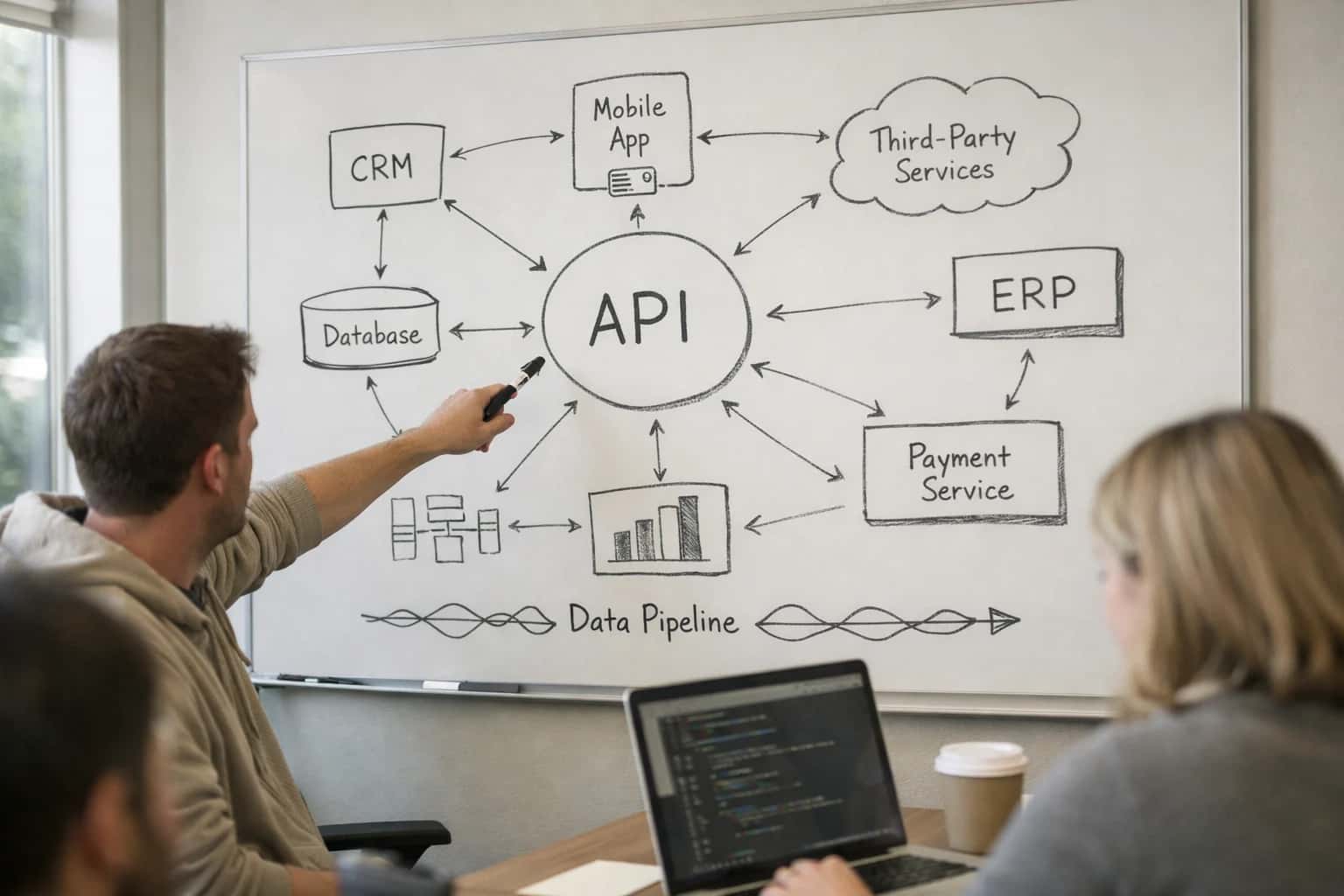
Model Context Protocol (MCP) Implementations
The Model Context Protocol (MCP) has become the 'USB-C for AI,' providing a universal interface between AI models and enterprise tools like CRMs and ERPs. This pillar covers implementation comparisons between MCP servers and custom API connectors or older standards like LSP. Key comparisons involve evaluating MCP against custom API connectors, the security trade-offs of 'shadow MCP' servers, and the performance of different MCP client implementations for enterprise tool integration.
MCP vs Custom API Connectors for Enterprise CRM Integration
Comparison of the Model Context Protocol (MCP) against hand-built API connectors for integrating AI with enterprise CRMs like Salesforce in 2026. Evaluates development speed, security, and long-term maintainability.
MCP vs Language Server Protocol (LSP) for AI Tooling
Analysis of MCP as a tooling protocol for AI assistants versus the established Language Server Protocol (LSP) for code intelligence. Focuses on protocol design, extensibility, and suitability for dynamic AI workflows.
Anthropic's MCP vs Google's A2A Protocol
Head-to-head evaluation of Anthropic's Model Context Protocol and Google's Agent-to-Agent (A2A) protocol for multi-agent coordination and tool integration. Focuses on interoperability, security models, and ecosystem maturity.
MCP over SSE vs MCP over WebSockets
Technical comparison of Server-Sent Events (SSE) and WebSockets as transport layers for the Model Context Protocol. Analyzes latency, scalability, and client compatibility for real-time AI tool interactions.
MCP Client in Claude Desktop vs MCP Client in Cursor IDE
Comparison of MCP client implementations within Anthropic's Claude Desktop application and the Cursor AI-native IDE. Evaluates tool discovery UX, performance, and integration depth for developer workflows.
MCP for Jira vs Custom Jira Webhook Integration
Analysis of using an MCP server to connect AI agents to Atlassian Jira versus building a custom webhook and API integration. Covers setup complexity, real-time update handling, and permission modeling.
MCP Tool Calling vs Direct Function Calling in Agents
Comparison of the MCP's standardized tool-calling mechanism against direct, model-specific function calling (e.g., OpenAI tools). Focuses on portability, type safety, and agent orchestration overhead.
MCP with OAuth2 vs MCP with API Key Authentication
Security and usability comparison of implementing OAuth2 flows versus simple API key authentication within MCP servers for enterprise tool access. Covers user context, token management, and security best practices.
MCP Server Deployment: Docker vs Serverless Functions
Infrastructure comparison for deploying MCP servers using Docker containers versus serverless functions (e.g., AWS Lambda). Analyzes cold-start latency, scalability, and operational complexity in 2026.
MCP for GitHub Actions vs Custom GitHub Apps
Evaluation of using an MCP server to power AI-driven GitHub Actions versus developing a traditional GitHub App. Focuses on permission scope, event handling, and integration into CI/CD pipelines.
MCP for Slack Bots vs Slack's Bolt Framework
Comparison of building AI-powered Slack integrations using an MCP server versus Slack's native Bolt framework. Analyzes development speed, middleware support, and real-time event processing capabilities.
MCP with Local LLMs vs MCP with Cloud LLMs
Architectural comparison of MCP implementations designed for local, on-premise LLMs (e.g., Llama 3) versus those connecting to cloud-based models (e.g., Claude, GPT-5). Focuses on latency, data privacy, and cost profiles.
MCP for Database Querying: Direct Connectors vs MCP Adapters
Analysis of using MCP servers as a secure adapter for database queries (Snowflake, PostgreSQL) versus allowing AI agents direct connector access. Evaluates security, query governance, and performance overhead.
Partnered with leading AI, data, and software stack.





How We Work
Custom AI workflows for your Business
One-fit-all AI don't work for modern businesses. At Inferensys, we aim to understand your business & custom requirements; which we use to define most efficient agentic workflows, the data, and the tools for your business.
01
Review the use case
We understand the task, the users, and where AI can actually help.
Read more02
Pick the right approach
We define what needs search, automation, or product integration.
Read more03
Build the first useful version
We implement the part that proves the value first.
Read more04
Improve from there
We add the checks and visibility needed to keep it useful.
Read moreThe first call is a practical review of your use case and the right next step.
Talk to Us