MCP with Local LLMs excels at data sovereignty and predictable operating costs by keeping all processing on-premise. For example, deploying an MCP server with a quantized Llama 3.1 405B model on private infrastructure can eliminate egress fees and ensure sensitive CRM or ERP data never leaves the corporate network. This architecture is ideal for industries with strict compliance mandates, such as healthcare under HIPAA or finance under GDPR, where data residency is non-negotiable. The primary trade-off is the significant upfront capital expenditure for GPU hardware and the ongoing operational burden of model maintenance and updates.

Comparison
MCP with Local LLMs vs MCP with Cloud LLMs
An architectural and operational comparison of implementing the Model Context Protocol (MCP) with on-premise LLMs like Llama 3 versus cloud-based models like Claude or GPT-5. This analysis focuses on the critical trade-offs in latency, data privacy, cost, and scalability for enterprise AI agent deployments.
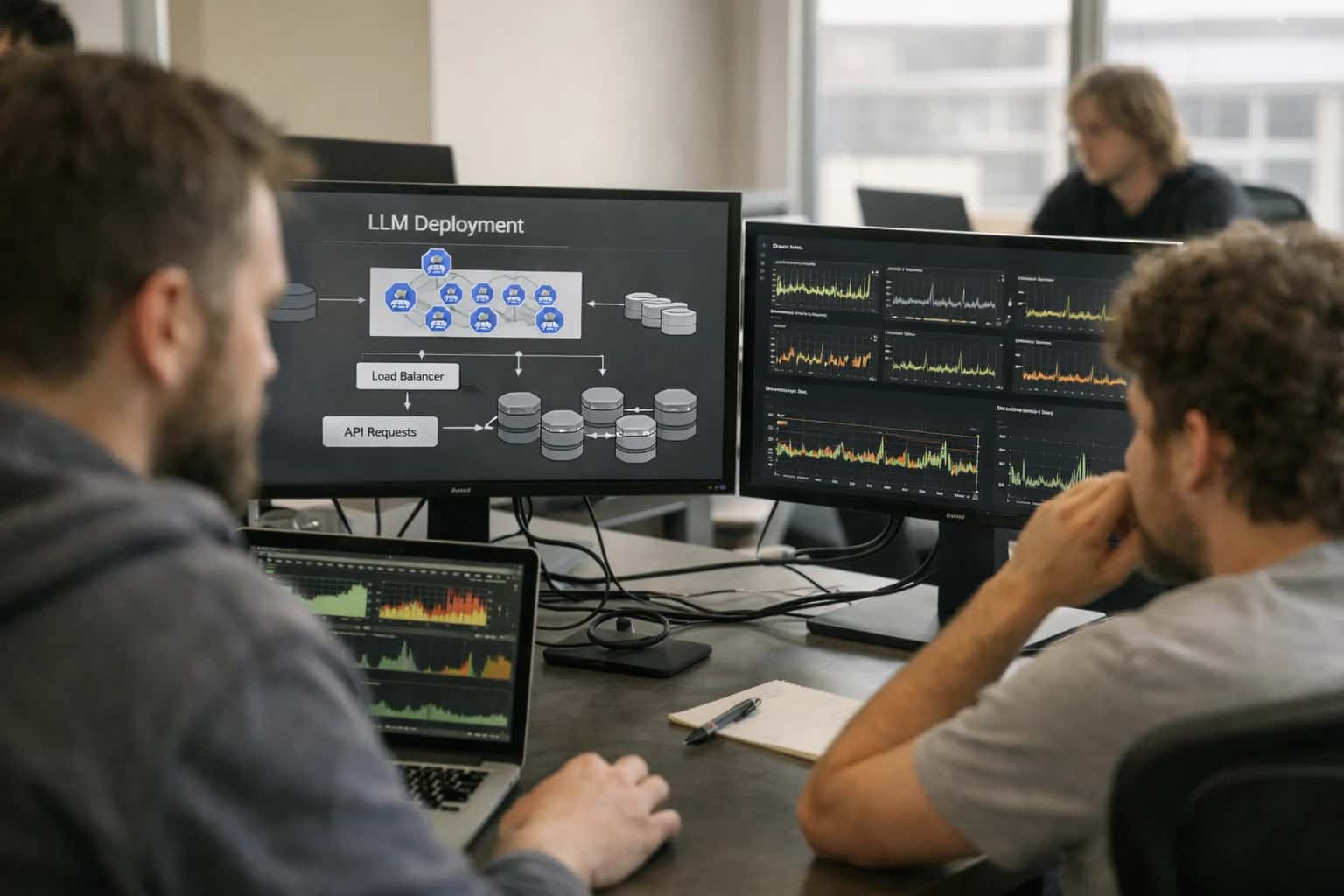
THE ARCHITECTURAL CROSSROADS
Introduction
A foundational comparison of MCP implementations for local versus cloud-based LLMs, focusing on the core trade-offs of control, cost, and connectivity.
MCP with Cloud LLMs takes a different approach by leveraging the massive scale and cutting-edge capabilities of hosted models like Claude 3.5 Sonnet or GPT-4o. This results in superior developer velocity and access to frontier model reasoning without infrastructure management. You benefit from instant scalability to handle spiky workloads and can integrate advanced multimodal features as they are released. The trade-off is variable, usage-based costs that can scale unpredictably, potential latency from network hops, and the inherent risk of vendor lock-in and API dependency for your core AI workflows.
The key trade-off centers on control versus convenience. If your priority is absolute data privacy, fixed long-term costs, and regulatory compliance, choose a local LLM architecture. This is critical for implementing Sovereign AI Infrastructure in high-risk environments. If you prioritize rapid prototyping, access to the most capable models, and operational simplicity, choose a cloud-based approach. This aligns with strategies for Token-Aware FinOps where optimizing variable spend is the primary challenge. Your decision will define the latency, security, and economic profile of your entire AI agent ecosystem.
ARCHITECTURAL AND OPERATIONAL COMPARISON
MCP with Local LLMs vs MCP with Cloud LLMs
Direct comparison of key metrics for deploying the Model Context Protocol with on-premise versus cloud-hosted language models.
| Metric / Feature | MCP with Local LLMs | MCP with Cloud LLMs |
|---|---|---|
Data Privacy & Sovereignty | ||
Inference Latency (p50) | < 50 ms | 200-500 ms |
Model Inference Cost (per 1M tokens) | $0.00 (OpEx) | $5 - $75 |
Required Upfront Infrastructure | Dedicated GPU servers | Internet connection & API key |
Model Choice & Customization | Full control (Llama 3, Mistral) | Vendor-defined (GPT-4, Claude 3.5) |
Scalability & Burst Capacity | Limited by local hardware | Effectively infinite |
Operational Overhead (DevOps) | High (maintenance, updates) | Low (managed service) |
MCP with Local LLMs vs MCP with Cloud LLMs
TL;DR Summary
Key architectural strengths and trade-offs for connecting the Model Context Protocol (MCP) to different compute backends.
01
MCP with Local LLMs: Unmatched Data Privacy
Specific advantage: Data never leaves your infrastructure. This is critical for regulated industries (finance, healthcare) and for implementing sovereign AI strategies where data residency is mandated by law. It eliminates the risk of third-party data exposure inherent in cloud APIs.
02
MCP with Local LLMs: Predictable, Fixed Cost
Specific advantage: Costs are primarily upfront (hardware) and operational (power), with zero per-token or per-request fees. This matters for high-volume, predictable workloads where cloud API costs would scale linearly and unpredictably. Enables precise AI FinOps budgeting.
03
MCP with Cloud LLMs: Access to Frontier Models
Specific advantage: Instant access to state-of-the-art models like GPT-5, Claude 4.5 Sonnet, and Gemini 2.5 Pro. This matters for tasks requiring maximum reasoning reliability, extended context windows (1M+ tokens), or cutting-edge multimodal capabilities that local models cannot match.
04
MCP with Cloud LLMs: Zero Infrastructure Management
Specific advantage: No need to provision GPUs, manage model deployments, or handle quantization. This matters for rapid prototyping and teams lacking deep MLOps expertise. The cloud provider handles scaling, uptime, and model updates, freeing your team to focus on integration logic.
05
MCP with Local LLMs: Ultra-Low Latency for On-Prem Tools
Specific advantage: Sub-100ms inference latency when co-located with on-premise data sources and tools (e.g., ERP, internal databases). This matters for building real-time, interactive AI agents where network round-trips to a cloud region would introduce unacceptable lag in the user experience.
06
MCP with Cloud LLMs: Built-in Scalability & Redundancy
Specific advantage: Cloud providers offer automatic scaling and global redundancy. This matters for public-facing applications with spiky, unpredictable traffic. It eliminates the need to over-provision local hardware for peak loads and provides inherent high availability.
CHOOSE YOUR PRIORITY
When to Choose: Decision Guide by Persona
MCP with Local LLMs for Data Privacy
Verdict: Mandatory for regulated industries. Strengths: Data never leaves your infrastructure, ensuring compliance with GDPR, HIPAA, or internal data sovereignty policies. This architecture eliminates the risk of third-party data exposure or model training on sensitive inputs. It's ideal for processing PII, financial records, or proprietary R&D data. Use models like Llama 3.1 or Phi-4, quantized and served via vLLM or Ollama.
MCP with Cloud LLMs for Data Privacy
Verdict: Acceptable only for non-sensitive, public data. Strengths: Cloud providers offer robust security certifications (SOC 2, ISO 27001) and data processing agreements. For tasks using already-public information or synthetic data, the privacy risk is low. However, you must trust the provider's security and contractual guarantees. Always review the provider's data retention and usage policies. For deeper analysis, see our guide on Sovereign AI Infrastructure and Local Hosting.
Enabling Efficiency, Speed & Accuracy
Intelligent Analysis, Decision & Execution
We build AI systems for teams that need search across company data, workflow automation across tools, or AI features inside products and internal software.
Talk to Us
Search across company data
Give teams answers from docs, tickets, runbooks, and product data with sources and permissions.
Useful when people spend too long searching or get different answers from different systems.
Enterprise searchRAGPermissions
Read more
Automate internal workflows
Use AI to route work, draft outputs, trigger actions, and keep approvals and logs in place.
Useful when repetitive work moves across multiple tools and teams.
AI agentsWorkflow automationGovernance
Read more
Add AI to products and internal tools
Build assistants, guided actions, or decision support into the software your team or customers already use.
Useful when AI needs to be part of the product, not a separate tool.
AI integrationDecision supportModel routing
Read moreTHE ANALYSIS
Final Verdict and Recommendation
Choosing between MCP with local or cloud LLMs is a foundational decision that defines your system's cost, privacy, and performance profile.
MCP with Local LLMs excels at data sovereignty and predictable operating costs because it eliminates external API dependencies and keeps all data on-premises. For example, deploying a quantized Llama 3.1 70B model via an MCP server can achieve sub-100ms inference latency on modern NVIDIA L4 or H100 GPUs, with a total cost of ownership that becomes fixed after the initial hardware investment, avoiding variable token fees. This architecture is ideal for use cases bound by strict data residency laws (e.g., GDPR, HIPAA) or for applications requiring deterministic, high-frequency tool calls without network overhead.
MCP with Cloud LLMs takes a different approach by leveraging the superior reasoning capabilities and massive context windows of frontier models like Claude 4.5 Sonnet or GPT-5. This results in a trade-off of higher per-query costs and potential data egress for significantly higher accuracy on complex, open-ended tasks. The operational burden shifts from managing GPU clusters to managing API credits, network reliability, and implementing robust retry logic. This model is optimal for applications where cognitive density and advanced reasoning outweigh cost sensitivity, such as strategic analysis or creative agentic workflows.
The key trade-off is fundamentally between control and capability. If your priority is unbreakable data privacy, regulatory compliance, and predictable long-term costs, choose an MCP architecture with local LLMs. This path aligns with initiatives in Sovereign AI Infrastructure and Local Hosting. If you prioritize access to state-of-the-art reasoning, massive context (1M+ tokens), and avoiding infrastructure management, choose MCP with cloud LLMs. This decision often intersects with strategies for Token-Aware FinOps and AI Cost Management to optimize spend. For a hybrid approach, consider implementing a smart router that uses local SLMs for routine operations and escalates to cloud models for complex tasks, a pattern discussed in Small Language Models (SLMs) vs. Foundation Models.

About the author
Prasad Kumkar
CEO & MD, Inference Systems
Prasad Kumkar is the CEO & MD of Inference Systems and writes about AI systems architecture, LLM infrastructure, model serving, evaluation, and production deployment. Over 5+ years, he has worked across computer vision models, L5 autonomous vehicle systems, and LLM research, with a focus on taking complex AI ideas into real-world engineering systems.
His work and writing cover AI systems, large language models, AI agents, multimodal systems, autonomous systems, inference optimization, RAG, evaluation, and production AI engineering.
LinkedIn
Limited slotsGet a Free AI Consultation
Partnered with leading AI, data, and software stack.





How We Work
Custom AI workflows for your Business
One-fit-all AI don't work for modern businesses. At Inferensys, we aim to understand your business & custom requirements; which we use to define most efficient agentic workflows, the data, and the tools for your business.
01
Review the use case
We understand the task, the users, and where AI can actually help.
Read more02
Pick the right approach
We define what needs search, automation, or product integration.
Read more03
Build the first useful version
We implement the part that proves the value first.
Read more04
Improve from there
We add the checks and visibility needed to keep it useful.
Read moreThe first call is a practical review of your use case and the right next step.
Talk to Us