An AI Incident Response Plan is a formal, documented playbook for managing failures in production AI systems. Unlike traditional IT incidents, AI failures—such as biased outputs, privacy breaches, or autonomous agent malfunctions—require specialized triage that considers algorithmic harm and stakeholder trust. Your plan must define clear severity levels (e.g., P0-P4) based on potential impact and establish a cross-functional response team with members from engineering, legal, compliance, and communications. This structure ensures swift, coordinated action when a model goes rogue or causes unintended harm.

Guide
Launching an AI Incident Response Plan
A tactical guide to creating a formal playbook for responding to AI ethics incidents like biased outputs, privacy breaches, or autonomous agent failures. Includes severity frameworks, team structures, and post-mortem templates.
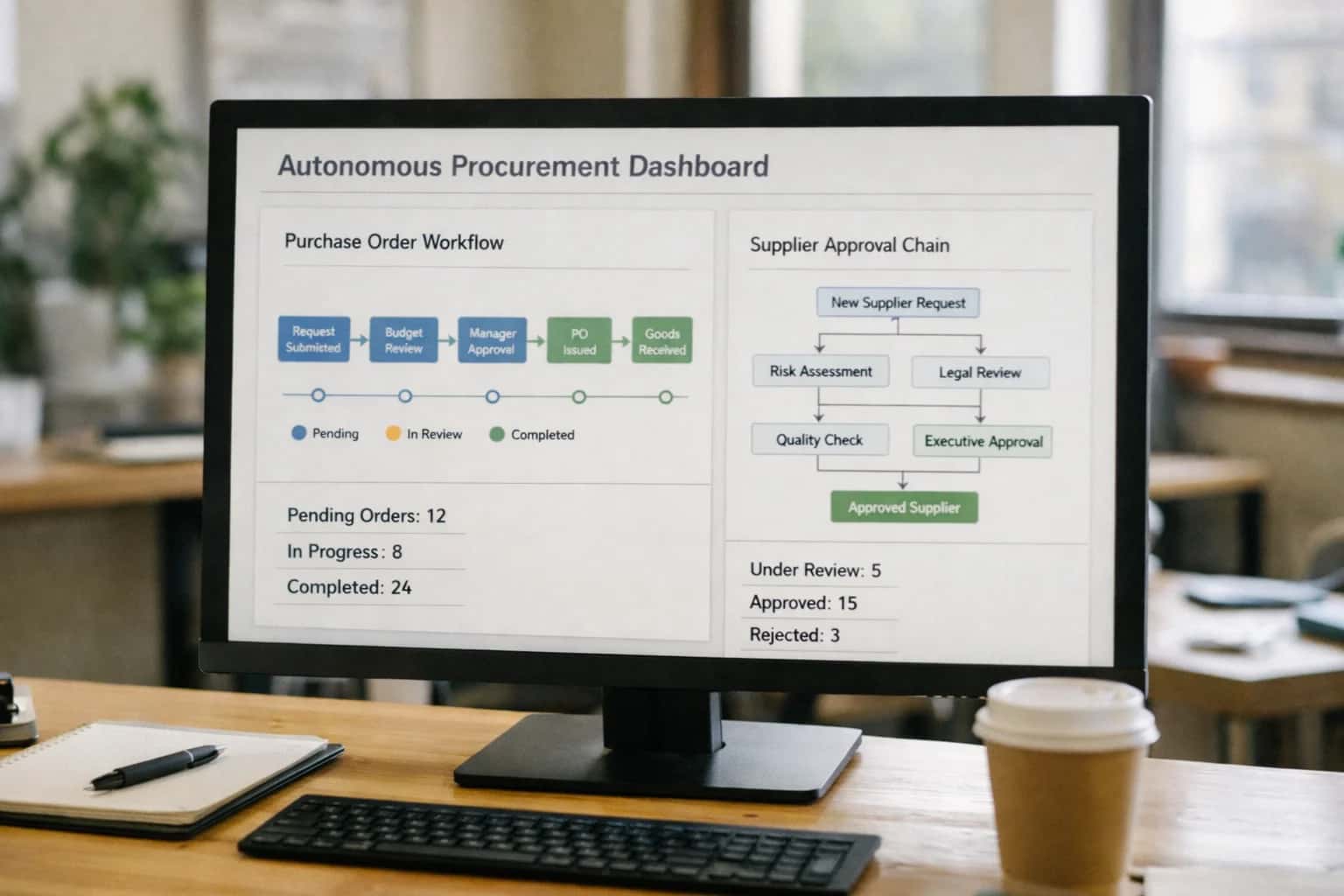
An AI Incident Response Plan is a formal playbook for managing failures like biased outputs, privacy breaches, or autonomous agent malfunctions. This guide explains how to build one.
The core of your plan involves communication protocols for internal stakeholders and external users, plus a post-mortem analysis process to prevent recurrence. You'll implement monitoring to detect incidents, often using tools like Arize AI or Fiddler, and define escalation paths. A robust plan integrates with your broader AI governance framework and complements continuous audit programs. The goal is not just to fix the technical bug, but to preserve trust and demonstrate accountable governance.
SEVERITY CLASSIFICATION
AI Incident Severity Matrix
This matrix classifies AI incidents based on their potential impact to define appropriate response protocols and escalation paths.
| Impact Dimension | SEV-1: Critical | SEV-2: High | SEV-3: Medium | SEV-4: Low |
|---|---|---|---|---|
Primary Impact | Significant harm to individuals or public safety | Material financial loss or legal liability | Moderate operational disruption or reputational damage | Minor service degradation or internal process error |
Response Time SLA | < 15 minutes | < 1 hour | < 4 hours | < 24 hours |
Activation Trigger | Automatic system alert & manual report | Manual report from primary team | Scheduled audit or user report | Internal monitoring flag |
Response Team | C-suite, Legal, Comms, Full IRT* | AI Ethics Officer, Legal, Engineering Lead | AI Ethics Officer & Primary Engineering Team | Primary Engineering Team |
Communication Mandate | External disclosure (regulators, public) required | Internal executive & board notification required | Internal stakeholder notification | Internal team log only |
Post-Mortem Requirement | Formal, blameless analysis with executive review | Formal analysis with cross-functional review | Lightweight analysis within team | Root cause noted in ticket |
Example Scenario | Autonomous agent causes a safety-critical system failure | Model bias leads to unlawful credit denial | Chatbot hallucinates incorrect policy details to users | Non-critical recommendation model shows slight performance drift |
CORE TEAM STRUCTURE
Step 2: Assemble the Cross-Functional Response Team
An effective response requires a dedicated team with the authority and expertise to act immediately. This step defines the essential roles and responsibilities.
The cross-functional response team is a pre-defined group with the mandate to contain, investigate, and resolve an AI incident. Its core members are the AI Ethics Officer (who leads), a technical lead (e.g., ML engineer), a legal/compliance representative, a communications lead, and the relevant product owner. This structure ensures decisions balance technical remediation, legal risk, stakeholder communication, and product impact from the first alert. The team's authority to halt deployments or initiate rollbacks must be explicitly granted in the incident response plan charter.
Assemble this team during planning, not during a crisis. Document primary and backup contacts, establish clear escalation protocols, and conduct regular tabletop exercises. Common mistakes include omitting legal counsel (risking regulatory missteps) or failing to include the product owner (delaying user-facing decisions). For a deeper dive on establishing these governance roles, see our guide on Defining the role of the AI Ethics Officer.
Enabling Efficiency, Speed & Accuracy
Intelligent Analysis, Decision & Execution
We build AI systems for teams that need search across company data, workflow automation across tools, or AI features inside products and internal software.
Talk to Us
Search across company data
Give teams answers from docs, tickets, runbooks, and product data with sources and permissions.
Useful when people spend too long searching or get different answers from different systems.
Enterprise searchRAGPermissions
Read more
Automate internal workflows
Use AI to route work, draft outputs, trigger actions, and keep approvals and logs in place.
Useful when repetitive work moves across multiple tools and teams.
AI agentsWorkflow automationGovernance
Read more
Add AI to products and internal tools
Build assistants, guided actions, or decision support into the software your team or customers already use.
Useful when AI needs to be part of the product, not a separate tool.
AI integrationDecision supportModel routing
Read moreTROUBLESHOOTING
Common Mistakes When Launching an AI Incident Response Plan
Even with the best intentions, teams often stumble on the same pitfalls when creating their first AI incident response plan. This guide addresses the most frequent developer FAQs and operational mistakes to ensure your plan is actionable, not just a document.
This happens when the plan isn't tailored to the unique failure modes of AI systems. A generic IT plan focuses on server downtime or data breaches, but AI-specific incidents involve model drift, biased outputs, autonomous agent failures, or prompt injection attacks.
Fix: Build your plan around AI-specific scenarios. Define severity levels based on potential harm from the AI's output or action, not just system availability. For example:
- Severity 1: Agent makes an unauthorized financial transaction.
- Severity 2: Model output demonstrates severe, reproducible bias affecting a protected class.
- Severity 3: Performance degradation (drift) beyond acceptable thresholds.
Integrate with your MLOps and model lifecycle management tools to get the right telemetry for detection.

About the author
Prasad Kumkar
CEO & MD, Inference Systems
Prasad Kumkar is the CEO & MD of Inference Systems and writes about AI systems architecture, LLM infrastructure, model serving, evaluation, and production deployment. Over 5+ years, he has worked across computer vision models, L5 autonomous vehicle systems, and LLM research, with a focus on taking complex AI ideas into real-world engineering systems.
His work and writing cover AI systems, large language models, AI agents, multimodal systems, autonomous systems, inference optimization, RAG, evaluation, and production AI engineering.
LinkedIn
Limited slotsGet a Free AI Consultation
Partnered with leading AI, data, and software stack.





How We Work
Custom AI workflows for your Business
One-fit-all AI don't work for modern businesses. At Inferensys, we aim to understand your business & custom requirements; which we use to define most efficient agentic workflows, the data, and the tools for your business.
01
Review the use case
We understand the task, the users, and where AI can actually help.
Read more02
Pick the right approach
We define what needs search, automation, or product integration.
Read more03
Build the first useful version
We implement the part that proves the value first.
Read more04
Improve from there
We add the checks and visibility needed to keep it useful.
Read moreThe first call is a practical review of your use case and the right next step.
Talk to Us