AI integration for Coupa Supplier Onboarding targets the manual, document-heavy processes that delay supplier activation and create compliance gaps. The primary functional surfaces for integration are the Supplier Information Management (SIM) module, Coupa Supplier Portal, and the underlying Supplier Master and Supplier Qualification data objects. AI agents can be triggered via webhooks from Coupa's POST /api/suppliers or POST /api/supplier-onboarding-requests endpoints to orchestrate a sequence of automated checks and data enrichment tasks as soon as a new supplier profile is initiated.

Integration
AI Integration for Coupa Supplier Onboarding
A technical guide to automating and accelerating supplier onboarding in Coupa using AI for data extraction, document validation, risk screening, and workflow orchestration.
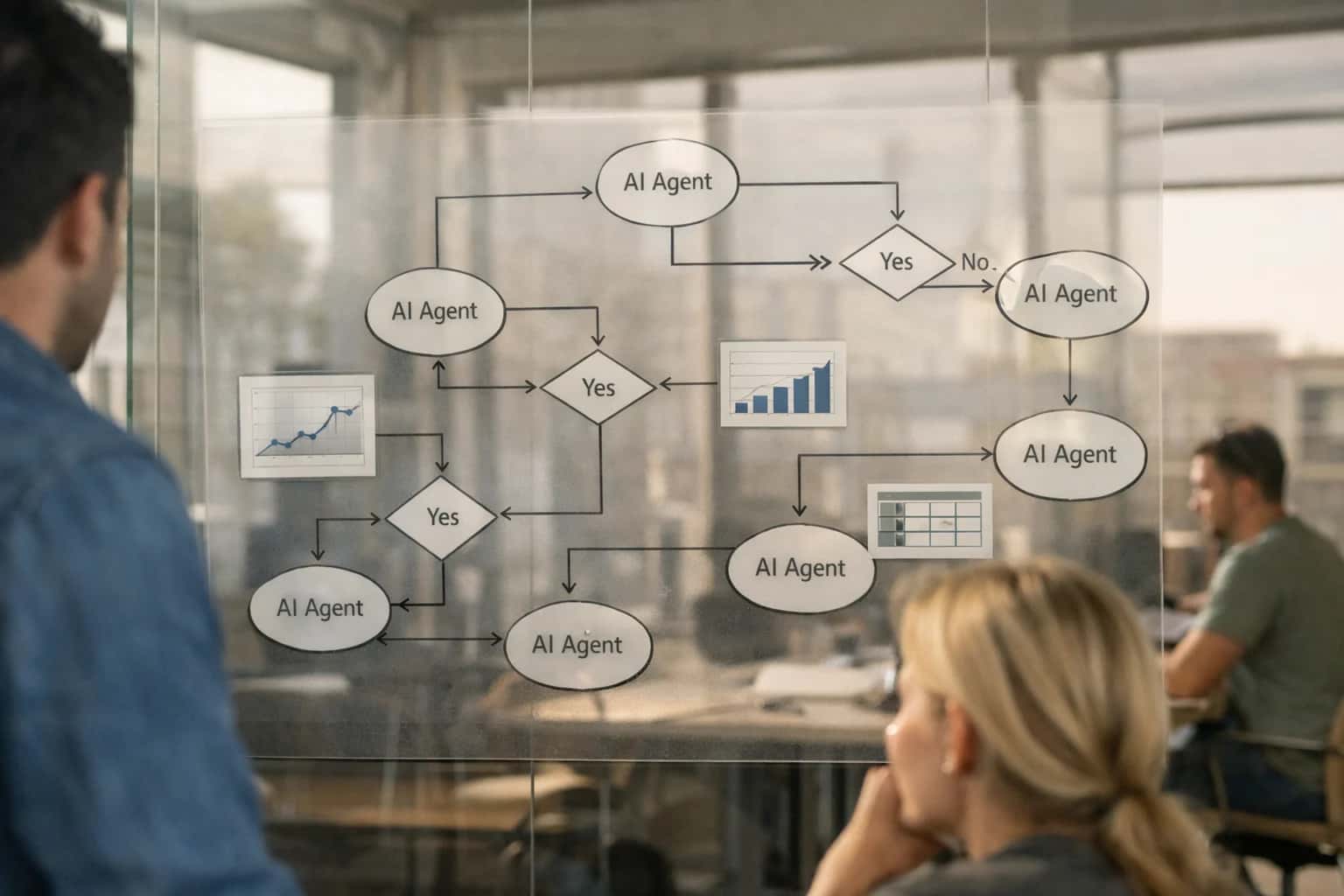
ARCHITECTURE AND WORKFLOW AUTOMATION
Where AI Fits into Coupa Supplier Onboarding
A technical blueprint for embedding AI agents into Coupa's supplier onboarding workflows to automate data collection, document validation, and risk screening.
A typical implementation wires an AI workflow to handle three core tasks in parallel: 1) Document Intelligence to extract and validate data from uploaded certificates (W-9, insurance, diversity) using OCR and LLMs, populating Coupa custom fields; 2) Risk Screening by calling external APIs (e.g., Dun & Bradstreet, sanctions lists) and summarizing findings into a risk score field; and 3) Data Gap Analysis that compares the submitted profile against your procurement policy's required fields, then automatically generates and sends follow-up questions to the supplier via the portal. This reduces the procurement team's manual review from hours to minutes and cuts onboarding cycle times from weeks to days.
Rollout requires a phased approach, starting with a pilot for low-risk supplier categories. Governance is critical: all AI-generated validations and risk scores should be written to Coupa's audit trail, and a human-in-the-loop approval step should be maintained for high-value or high-risk suppliers. The integration is built to be resilient, using a message queue (e.g., RabbitMQ) to handle retries if Coupa's APIs are slow, ensuring supplier data consistency. For teams managing thousands of suppliers, this AI layer transforms onboarding from a cost center into a controlled, efficient, and scalable operation. Explore our related guide on AI Integration for Coupa Vendor Analysis for post-onboarding enrichment workflows.
SUPPLIER ONBOARDING WORKFLOW
Key Coupa Modules and Integration Surfaces for AI
Core Supplier Master Data
The Supplier Information Management (SIM) module is the system of record for all vendor data. AI integration here focuses on automating the collection, validation, and enrichment of supplier profiles.
Key Integration Points:
- Supplier Registration Portal: Inject AI agents to guide new suppliers through form completion, auto-fill fields using document OCR, and provide real-time feedback on missing or invalid data.
- Data Validation APIs: Use LLMs to cross-reference submitted information (e.g., tax IDs, business addresses) against external databases and flag discrepancies before submission.
- Profile Enrichment: Automatically append risk scores, diversity certifications, and financial health data from third-party sources to the supplier master record via Coupa's REST APIs, creating a richer profile for qualification.
This automation reduces manual data entry errors and accelerates the initial data capture phase from days to hours.
ACCELERATE SUPPLIER ENABLEMENT
High-Value AI Use Cases for Coupa Supplier Onboarding
Integrating AI into Coupa's supplier onboarding workflows automates manual data entry, validates compliance documents, and screens for risk, turning a multi-week process into a guided, self-service experience that reduces procurement cycle times and improves data quality.
01
Automated Supplier Information Intake
Deploy an AI-powered intake form that guides new suppliers through a conversational Q&A, extracting and structuring data directly into Coupa's Supplier Profile and Supplier Information Management (SIM) objects. The agent validates entries against master data rules in real-time, flagging inconsistencies for review.
Days -> Hours
Data collection time
02
Document Validation & Compliance Screening
An AI agent reviews uploaded documents (W-9, insurance certificates, diversity forms) against configured rules. It extracts key fields, checks for expiration dates, and validates signatures. Non-compliant documents are flagged with specific reasons, routing exceptions to a Supplier Manager queue for follow-up.
Batch -> Real-time
Compliance check
03
Risk Intelligence Enrichment
Integrate with third-party risk data providers (e.g., Dun & Bradstreet) via API. Upon supplier submission, an AI workflow triggers an enrichment call, appending financial stability scores, ESG ratings, and adverse media flags to the supplier record. High-risk profiles are automatically routed for enhanced due diligence.
Manual -> Automated
Risk screening
04
Intelligent Workflow Routing & Triage
Use AI to analyze the completed supplier profile, documents, and risk score to dynamically assign the onboarding case. Routes standard, low-risk suppliers to auto-approval. Routes complex, high-value, or high-risk cases to the appropriate Category Manager or Legal team based on spend category and contract type.
Hours -> Minutes
Assignment logic
05
Supplier Self-Service Chat Support
Embed a chatbot in the supplier portal, powered by a RAG system over Coupa's knowledge base and onboarding guides. It answers FAQs on status, document requirements, and payment terms, reducing support tickets. For complex issues, it creates a structured ticket in Coupa or a connected ITSM like ServiceNow.
80% Deflection
Typical inquiry rate
06
Post-Onboarding Activation & Training
After approval, an AI agent orchestrates the activation sequence: sending welcome packages, triggering catalog upload workflows, and scheduling training sessions based on the supplier's role (e.g., PO flip vs. invoice submission). It monitors initial transaction success and nudges suppliers who are inactive after go-live.
1 sprint
Implementation timeline
CONCRETE IMPLEMENTATION PATTERNS
Example AI-Powered Onboarding Workflows
These workflows illustrate how AI agents can automate high-friction steps in Coupa's supplier onboarding process, connecting to Coupa's Supplier Management APIs, third-party data sources, and document validation services to reduce cycle times from weeks to days.
Trigger: A new supplier is created in Coupa with a status of 'Pending Information'.
Workflow:
- An AI agent is triggered via a Coupa webhook or scheduled job scanning the
suppliersAPI endpoint. - The agent extracts the supplier's legal name and DUNS number (if provided) and calls external enrichment APIs (e.g., Dun & Bradstreet, government business registries) to retrieve standardized legal name, address, tax IDs, and ownership structure.
- Using the enriched data, the agent automatically populates the corresponding fields in the Coupa supplier record via a
PUT /api/suppliers/{id}call. - If critical data (like a valid tax ID) is missing and cannot be found, the agent drafts and sends a personalized information request email to the supplier's primary contact, using a template that references the specific missing fields.
- The agent logs all actions and data sources in a dedicated audit field within the Coupa supplier record for compliance.
Human Review Point: The procurement team is notified only if the agent encounters discrepancies (e.g., the provided legal name doesn't match the registry) or if the supplier fails to respond to two automated requests.
BUILDING A PRODUCTION-READY INTEGRATION
Implementation Architecture: Data Flow and System Design
A practical blueprint for connecting AI agents to Coupa's supplier onboarding workflows to automate data collection, validation, and risk screening.
A production-ready integration for Coupa supplier onboarding connects at three key layers: the Coupa Supplier API (v3) for master data CRUD operations, the Coupa Document Upload API for handling compliance files, and the Coupa Open API webhooks for triggering AI workflows on status changes (e.g., supplier.created, document.uploaded). The core AI agent acts as an orchestration layer, typically deployed as a cloud service, that ingests initial supplier submission data, calls external enrichment and risk services, validates documents, and pushes enriched records back into Coupa's supplier, supplier_site, and certification objects. This design keeps Coupa as the system of record while the AI handles the heavy lifting of data normalization and due diligence.
The typical data flow begins when a new supplier submits a request via Coupa's Supplier Portal. A webhook triggers the AI agent, which first extracts structured data from the submission. The agent then executes parallel tasks: it calls a RAG-powered knowledge agent to validate business information against global databases, uses a document intelligence model to parse tax forms (W-9, W-8BEN) and certificates (insurance, diversity), and submits the supplier name to a risk screening service for PEPs and sanctions checks. Results are synthesized; if discrepancies or high-risk flags are found, the agent can automatically create a task in Coupa for the supplier manager or trigger a re-submission request. Approved data is mapped and posted back to Coupa, updating fields like risk_score, certification_status, and data_completion_percentage.
Governance and rollout require careful planning. Implement a human-in-the-loop approval gate for high-risk classifications or validation failures before writing back to Coupa. All AI actions should be logged to a separate audit trail, linking to the Coupa supplier ID for traceability. Start with a pilot on a single commodity or region, using Coupa's custom fields and supplier lifecycle statuses to segment AI-processed suppliers. This phased approach allows procurement teams to verify data quality and refine prompts without disrupting live operations, ensuring the AI integration enhances—rather than complicates—the existing onboarding SOP.
AI Integration for Coupa Supplier Onboarding
Code and API Pattern Examples
Automating Supplier Profile Intake
Coupa's Supplier Information Management (SIM) module provides APIs to create and update supplier records. An AI agent can orchestrate the initial data collection by:
- Ingesting unstructured documents (W-9s, certificates of insurance, bank details) via Coupa's document upload endpoints.
- Extracting structured fields using an LLM with a vision model or OCR service.
- Validating and enriching data against third-party sources (D&B, government databases) before submission.
python# Example: Enrich a supplier profile with AI-extracted data import requests # 1. Call AI service to parse uploaded supplier PDF extraction_response = call_llm_for_document_parsing(document_url) supplier_data = extraction_response['structured_fields'] # 2. Validate Tax ID via external service validation_result = validate_tax_id(supplier_data['tax_id']) # 3. Create/Update supplier in Coupa via REST API coupa_payload = { "supplier": { "name": supplier_data['legal_name'], "tax_id": supplier_data['tax_id'], "address": supplier_data['address'], "status": "Pending" if not validation_result['valid'] else "Active" } } response = requests.post( 'https://api.coupa.com/api/suppliers', json=coupa_payload, headers={'Authorization': 'Bearer YOUR_API_KEY'} )
This pattern reduces manual data entry and accelerates the initial profile creation, moving suppliers from 'Pending' to 'Active' status faster.
AI-ENHANCED SUPPLIER ONBOARDING
Realistic Time Savings and Operational Impact
This table illustrates the typical operational impact of integrating AI agents into Coupa's supplier onboarding workflows, focusing on reducing cycle times and manual effort while maintaining governance.
| Process Stage | Before AI | After AI | Key Notes |
|---|---|---|---|
Supplier Information Collection | Manual email follow-ups and data entry | Automated data extraction from submitted forms & documents | Reduces initial data entry by 70-80% |
Document Validation (Certs, W-9) | Manual review by procurement or AP | AI-assisted validation against templates and public records | Flags discrepancies for human review; cuts validation time by 50% |
Risk & Compliance Screening | Ad-hoc checks via third-party portals | Automated batch screening with consolidated risk scoring | Provides same-day initial screening instead of 2-3 business days |
Vendor Master Data Creation | Manual creation in Coupa from collected data | Pre-populated records via API with AI validation | Reduces creation errors and cuts setup time from hours to minutes |
Workflow Routing & Approvals | Manual assignment based on category/spend | AI-recommended routing based on policy, spend, and risk score | Ensures proper segregation of duties; reduces misrouting |
Supplier Communication & Portal Setup | Manual email instructions and support | Automated welcome kits, portal credentials, and FAQ bot | Improves supplier experience; reduces support tickets by ~40% |
Overall Cycle Time (End-to-End) | 14-21 business days on average | 7-10 business days for standard suppliers | High-risk or complex suppliers still require full manual review |
CONTROLLED AUTOMATION FOR SUPPLIER DATA
Governance, Security, and Phased Rollout
A secure, governed approach to deploying AI for Coupa supplier onboarding that maintains compliance and control.
A production-ready integration must enforce strict data governance from the start. This means architecting the AI workflow to operate within a secure, auditable pipeline that respects Coupa's data model and your internal controls. Key design points include:
- API-Based Data Flow: All supplier data from forms, documents, and external sources flows through Coupa's REST APIs (e.g.,
/suppliers,/supplier_onboarding_workflows). The AI service acts as a middleware processor, never storing master data. - Role-Based Access Control (RBAC): AI actions and data visibility are gated by the same Coupa user roles and permissions. A
Supplier Managercan trigger risk screening, while aProcurement Analystmight only see validation results. - Audit Trail Integration: Every AI-generated suggestion, validation flag, or automated field population is logged as a discrete activity within the relevant Coupa supplier record or onboarding task, creating a complete lineage for compliance reviews.
Security is non-negotiable when handling sensitive supplier information like tax IDs, financial statements, and compliance certificates. The integration should implement:
- Zero Data Persistence: The AI processing layer is stateless; extracted data from documents is held transiently in memory only for the duration of the validation task before being written to Coupa.
- Secure Document Handling: Documents uploaded to Coupa are processed via secure, signed URLs. PII and financial data within documents are redacted or masked before any LLM processing for risk screening or classification.
- Vendor Risk API Gateways: Calls to third-party risk and compliance data providers (e.g., Dun & Bradstreet, ESG ratings) are proxied and rate-limited through a secure gateway, with responses validated before enriching the Coupa supplier record.
A phased rollout mitigates risk and builds organizational trust. A typical implementation follows three stages:
- Assist Phase (Weeks 1-4): AI runs in "shadow mode." It processes incoming supplier data but only presents suggestions and validations to human reviewers within the Coupa UI via a custom widget or task comment. All actions require manual approval. This phase tunes accuracy and gathers feedback.
- Automate Phase (Weeks 5-8): For high-confidence, rule-based tasks (e.g., extracting a DUNS number from a clearly formatted certificate, validating a business address against a postal API), the system begins auto-populating non-critical fields in Coupa, flagging only exceptions for review. Approval workflows for critical data (bank details, compliance status) remain manual.
- Scale Phase (Ongoing): With established trust, the system automates entire validation sub-workflows (e.g., a complete W-9 form review) and activates proactive risk screening agents that monitor newly onboarded suppliers for adverse events, creating alerts directly in Coupa. Continuous monitoring of AI accuracy and drift ensures the system remains reliable.
This controlled approach ensures the AI integration enhances efficiency without compromising the integrity of your supplier master data. For detailed architecture patterns, see our guide on Secure AI Integration for Enterprise Platforms.
Enabling Efficiency, Speed & Accuracy
Intelligent Analysis, Decision & Execution
We build AI systems for teams that need search across company data, workflow automation across tools, or AI features inside products and internal software.
Talk to Us
Search across company data
Give teams answers from docs, tickets, runbooks, and product data with sources and permissions.
Useful when people spend too long searching or get different answers from different systems.
Enterprise searchRAGPermissions
Read more
Automate internal workflows
Use AI to route work, draft outputs, trigger actions, and keep approvals and logs in place.
Useful when repetitive work moves across multiple tools and teams.
AI agentsWorkflow automationGovernance
Read more
Add AI to products and internal tools
Build assistants, guided actions, or decision support into the software your team or customers already use.
Useful when AI needs to be part of the product, not a separate tool.
AI integrationDecision supportModel routing
Read moreAI INTEGRATION FOR COUPA SUPPLIER ONBOARDING
Frequently Asked Questions (Technical & Commercial)
Practical questions and workflow details for teams evaluating AI to automate and accelerate supplier onboarding in Coupa. These answers cover technical architecture, commercial considerations, and implementation sequencing.
An AI agent can orchestrate three core workflows, reducing manual data entry and validation from days to hours.
-
Intelligent Data Collection & Form Filling:
- Trigger: A new supplier request is submitted in Coupa (via UI or API).
- Action: The agent extracts the supplier's legal name and DUNS number from the request, then calls external data enrichment services (e.g., D&B, corporate registries) via API.
- Update: It auto-populates the Coupa supplier master record fields like legal address, tax IDs, banking information, and corporate hierarchy, presenting the completed form for a human reviewer to verify.
-
Document Validation & Compliance Screening:
- Trigger: A supplier uploads required documents (W-9, insurance certificates, diversity certifications) to the Coupa supplier portal.
- Action: The agent uses vision/OCR models to extract key fields (e.g., EIN, policy numbers, dates). It then cross-references this data against the populated master record and runs automated checks (e.g., is the tax ID valid? Is the insurance certificate current?).
- Update: It flags discrepancies or expiring documents in the Coupa supplier record's comments or a custom field, routing the supplier for re-upload or triggering an alert to the supplier manager.
-
Risk & Financial Viability Pre-Screening:
- Trigger: Upon submission of a completed supplier profile.
- Action: The agent calls financial risk APIs (e.g., credit scores, adverse media screening) and analyzes the supplier's NAICS codes against your company's risk policy.
- Update: It generates a risk summary and recommended onboarding tier (e.g., "Standard", "Enhanced Due Diligence Required") within the Coupa supplier record, automating the initial triage for the procurement team.

About the author
Prasad Kumkar
CEO & MD, Inference Systems
Prasad Kumkar is the CEO & MD of Inference Systems and writes about AI systems architecture, LLM infrastructure, model serving, evaluation, and production deployment. Over 5+ years, he has worked across computer vision models, L5 autonomous vehicle systems, and LLM research, with a focus on taking complex AI ideas into real-world engineering systems.
His work and writing cover AI systems, large language models, AI agents, multimodal systems, autonomous systems, inference optimization, RAG, evaluation, and production AI engineering.
LinkedIn
Limited slotsGet a Free AI Consultation
Partnered with leading AI, data, and software stack.





How We Work
Custom AI workflows for your Business
One-fit-all AI don't work for modern businesses. At Inferensys, we aim to understand your business & custom requirements; which we use to define most efficient agentic workflows, the data, and the tools for your business.
01
Review the use case
We understand the task, the users, and where AI can actually help.
Read more02
Pick the right approach
We define what needs search, automation, or product integration.
Read more03
Build the first useful version
We implement the part that proves the value first.
Read more04
Improve from there
We add the checks and visibility needed to keep it useful.
Read moreThe first call is a practical review of your use case and the right next step.
Talk to Us