AI integration for Splunk SIEM focuses on three primary surfaces: the Splunk Machine Learning Toolkit (MLTK) for custom model deployment, the Splunk Common Information Model (CIM) for normalized data analysis, and the Splunk Search Processing Language (SPL) pipeline for real-time inference. The goal is to inject intelligence into the data flow—applying models to raw log streams for behavioral baselining, analyzing notable events in Splunk Enterprise Security (ES) for risk-based prioritization, and enriching investigation workflows in Splunk Mission Control. This moves detection beyond static correlation rules to identify subtle, multi-stage attack patterns and insider threats that leave faint signals across disparate data sources like endpoint logs, network flows, and cloud audit trails.

Integration
AI Integration for Splunk SIEM Analytics
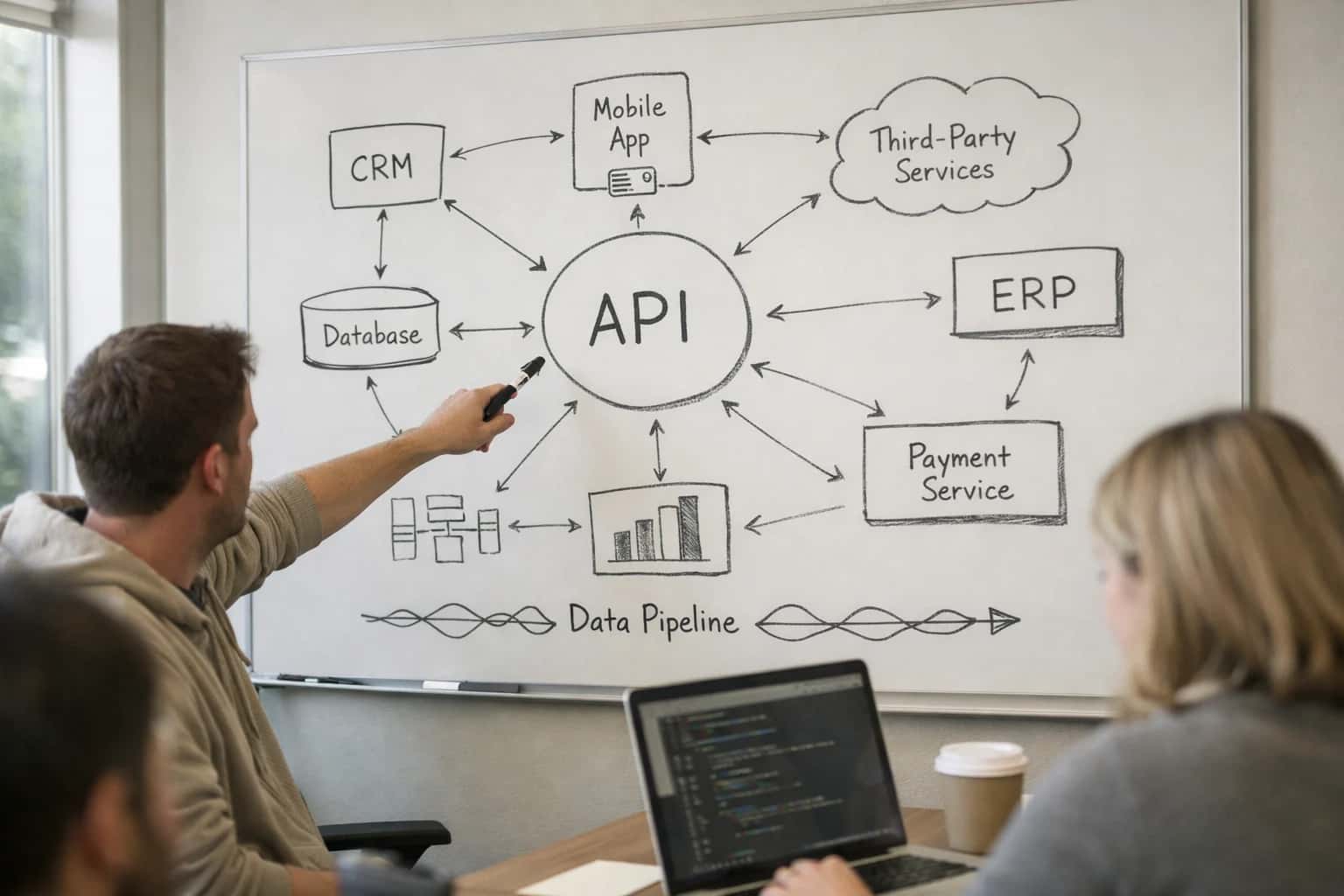
Where AI Fits in Splunk SIEM Analytics
Integrating AI into Splunk transforms its powerful correlation engine from a rule-based system into a proactive, context-aware security analyst.
A practical implementation wires an AI inference layer—hosted on scalable GPU infrastructure—to listen to Splunk's HTTP Event Collector (HEC) or query the Splunk REST API. High-volume, low-latency use cases, like real-time session scoring for UEBA, require streaming data through Splunk Data Stream Processor (DSP) with model inference at the edge. For investigative enrichment, an AI agent can be triggered from an ES notable event, pulling related raw logs and entity profiles to generate a narrative summary and suggested next steps, which are posted back to the incident as a comment. Governance is critical: all AI-generated insights should be logged as new events in a dedicated ai_audit index, tagged with the model version, confidence score, and prompting context for traceability and model drift detection.
Rollout should start with a contained, high-value workflow. A common entry point is augmenting Splunk's Risk-Based Alerting (RBA). An AI model analyzes the attributes of a new notable event—its source, destination, user, and preceding activity—to dynamically adjust the risk score and assign a preliminary severity. This reduces alert fatigue by deprioritizing false positives and bubbling up true threats. Another low-risk starting point is using generative AI to automate the creation of investigation summaries for closed cases, drafting the narrative from the incident timeline and analyst notes stored in Splunk. This creates immediate operational value while the team builds trust in the system, before progressing to more autonomous functions like predictive threat hunting or AI-assisted response orchestration via Splunk Adaptive Response or Phantom.
Key Splunk Surfaces for AI Integration
The SPL Layer for AI-Enhanced Queries
SPL is the primary surface for integrating AI into Splunk's analytics engine. Instead of writing complex, static correlation searches, AI can be used to generate, optimize, and explain SPL queries. This enables:
- Natural Language to SPL: Translating analyst questions ("Show me unusual outbound data transfers from finance servers") into executable SPL, lowering the barrier for threat hunting.
- Query Optimization: AI models can analyze search performance, suggest time-range optimizations, recommend
tstatsoversearchcommands, and restructure inefficient joins to reduce load on search heads. - Anomaly Explanation: When a statistical or ML model in the Splunk Machine Learning Toolkit flags an outlier, a generative AI layer can produce a plain-language explanation of why the data point is anomalous, referencing field values and historical baselines.
This integration typically occurs via a custom search command or an external API that processes natural language, returns SPL, and can be embedded into dashboards or alert actions.
High-Value AI Use Cases for Splunk Analytics
Move beyond static SPL searches and rule-based correlation. These AI integration patterns apply machine learning to Splunk's log streams for behavioral baselining, outlier detection, and surfacing previously unknown attack patterns.
Dynamic Anomaly Detection for User & Entity Behavior
Apply unsupervised learning models to Splunk-indexed authentication, VPN, and resource access logs to establish peer-group behavioral baselines. Automatically flag subtle deviations—like a user accessing systems at unusual hours or downloading atypical data volumes—that static UEBA rules might miss. Workflow: Models run as scheduled SPL searches or via the Splunk Machine Learning Toolkit, outputting risk scores to the Risk index for correlation in ES notable events.
Automated Alert Triage & Enrichment
Integrate an AI layer between raw Splunk alerts and the SOC analyst queue. For each notable event, an agent retrieves related logs, asset context from a CMDB, and external threat intel via API. It generates a concise narrative summary, a confidence score, and a recommended triage action (e.g., 'Investigate', 'Ignore', 'Escalate'). This reduces manual log sifting for Tier 1 analysts.
Natural Language to SPL Query Assistant
Embed a co-pilot directly into the Splunk search bar or a dedicated chat interface. Analysts describe what they're looking for in plain language (e.g., "show me all failed logins for service accounts in the last 24 hours"), and the AI generates, explains, and can execute the corresponding SPL query. This dramatically lowers the barrier for complex threat hunting and data exploration.
Predictive Threat Hunting & Hypothesis Generation
Use AI to analyze internal incident history, ingested threat reports, and environment changes to generate proactive hunting hypotheses. The system suggests specific SPL searches to look for emerging TTPs, such as living-off-the-land binaries or anomalous cloud API calls, turning hunters from reactive to predictive. Findings can be fed back to tune detection rules.
Intelligent Log Parsing & Schema Normalization
Deploy AI models at the edge of your Splunk pipeline (e.g., via Data Stream Processor or Heavy Forwarders) to automatically parse and classify unfamiliar or unstructured log sources. This maps disparate vendor formats to a common information model (CIM), ensuring data is AI-ready for correlation and reducing manual onboarding effort for new data sources.
Autonomous Investigation & Playbook Orchestration
For high-confidence, high-severity alerts, trigger an AI agent that performs a multi-step investigation using Splunk's Adaptive Response Framework. The agent might query endpoint telemetry, check firewall blocks, and isolate a host via integrated tools—all while documenting its actions in the incident timeline. Human analysts review and approve critical steps based on policy.
Example AI-Augmented Splunk Workflows
These workflows illustrate how to embed AI agents and models directly into Splunk SIEM operations, moving beyond static correlation rules to adaptive, context-aware automation. Each example details a trigger, the data context, the AI action, and the resulting system update.
Trigger: A new Notable Event is created in Splunk Enterprise Security (ES).
Context Pulled: The agent retrieves the raw event data, associated risk modifiers, the impacted asset's CMDB record (criticality, owner), and recent related alerts from the past 24 hours.
AI Agent Action: A classification model analyzes the event pattern and metadata. Concurrently, a language model generates a plain-language summary of the potential threat, maps it to the MITRE ATT&CK framework, and suggests initial investigative questions (e.g., "Check for unusual outbound connections from host X").
System Update: The Notable Event in Splunk ES is automatically enriched with:
- A dynamic severity score adjustment based on asset context.
- The AI-generated summary and ATT&CK mapping in a custom field.
- The investigative questions added to the incident's comments.
- The alert is auto-assigned to the appropriate analyst queue based on the threat type and asset owner.
Human Review Point: The analyst reviews the enriched alert. The AI's summary and questions serve as a starting point, but the final determination and escalation are manual.
Typical Implementation Architecture
A production-ready AI integration for Splunk SIEM analytics is a layered system that enhances, rather than replaces, your existing detection and investigation workflows.
The integration typically begins at the data pipeline layer, where streaming log data from Splunk's Data Stream Processor or Heavy Forwarders is enriched in near-real-time. AI models analyze raw log streams for behavioral baselining—establishing normal patterns for user logins, network flows, and API calls—and flag statistical outliers. These enriched events, now tagged with anomaly scores and contextual metadata, are indexed into Splunk, making them available for correlation by existing ES rules and searches. This layer operates on a streaming inference model, using lightweight models to avoid adding latency to critical security data ingestion.
At the analytics and detection layer, the integration taps into Splunk's Machine Learning Toolkit (MLTK) and Search Processing Language (SPL). Custom SPL searches invoke pre-trained models (hosted on a separate inference service) to perform deeper analysis on aggregated data. For example, a scheduled search might run hourly to cluster similar failed login attempts across disparate sources (VPN, Active Directory, SaaS apps) using unsupervised learning, surfacing previously unknown attack patterns that rule-based correlation misses. The results are written back to Splunk as risk events or used to adjust the risk scores of notable events in Enterprise Security, creating a feedback loop where AI findings become first-class citizens in the SOC's visibility plane.
The final layer is the analyst workflow integration, where AI outputs are presented within the tools SOC teams already use. This can involve:
- Custom Dashboard Panels: Visualizing model confidence scores, top anomaly categories, and trend lines for behavioral drift.
- Alert and Notable Event Enrichment: Appending plain-language explanations of why an event was flagged (e.g., "This internal host initiated connections to 15 new countries in the last 2 hours, 3x its 30-day baseline") directly in the event's
_rawdata or as a custom field. - Proactive Hunting Assist: An AI co-pilot accessible via a simple SPL command (e.g.,
| ai_hunt "find potential data exfiltration") that suggests relevant data sources, timeframes, and initial SPL queries based on the latest threat intelligence and your environment's historical data.
Governance is maintained through Splunk's native Role-Based Access Control (RBAC) for model management and a dedicated audit index tracking all model inferences, data samples used, and user interactions with AI-assisted features.
Code and Payload Examples
Automating SPL Query Generation
AI can translate natural language analyst requests into optimized Splunk Processing Language (SPL) searches. This accelerates threat hunting and data exploration. The typical workflow involves an agent that takes a user's question, analyzes the available data sources and indexes, and constructs a valid SPL query with appropriate time modifiers, field extractions, and statistical commands.
Example Python pseudocode for an SPL generation agent:
pythonimport openai def generate_spl_from_nl(question: str, data_sources: list) -> str: """Generates an SPL query from a natural language question.""" system_prompt = f"""You are a Splunk SPL expert. Available sourcetypes: {data_sources}. Generate a valid SPL search. Use `earliest=-24h` as the default time range. Structure: `index=* sourcetype=... | stats ... | table ...`""" response = openai.chat.completions.create( model="gpt-4", messages=[ {"role": "system", "content": system_prompt}, {"role": "user", "content": question} ] ) return response.choices[0].message.content # Example usage question = "Show me the top 10 source IPs with failed login attempts from the Windows Security logs in the last hour." sources = ["WinEventLog:Security", "linux_secure"] spl_query = generate_spl_from_nl(question, sources) # Expected output might be: # `index=wineventlog sourcetype="WinEventLog:Security" EventCode=4625 | stats count by src_ip | sort -count | head 10`
Realistic Time Savings and Operational Impact
This table illustrates the operational impact of integrating AI with Splunk SIEM for behavioral analytics, moving beyond static rules to dynamic pattern detection and investigation support.
| Analyst Workflow | Before AI Integration | After AI Integration | Implementation Notes |
|---|---|---|---|
Behavioral Baseline Creation | Manual query building and peer group definition over days | Automated peer group discovery and baseline suggestions in hours | AI analyzes historical user/entity data; human validation required for final model |
Outlier and Anomaly Detection | Rule-based thresholds miss novel patterns; high false-positive rate | ML models surface subtle, multi-dimensional behavioral deviations | Models run on indexed data; requires tuning period to establish environment-specific norms |
Attack Pattern Hypothesis | Manual correlation of disparate logs and threat intel | AI suggests potential attack chains and related IOCs based on initial alert | Generates investigative leads; analyst must confirm and pursue |
Threat Hunting Query Generation | Hunter crafts SPL based on experience and intel reports | Natural language to SPL translation; AI proposes hunting queries for emerging TTPs | Reduces barrier for junior analysts; senior oversight recommended for complex hunts |
Incident Context Enrichment | Manual lookup across CMDB, vulnerability scans, and ticketing systems | Automated entity enrichment pulls context from integrated data sources at alert time | Context appended to notable events; reduces tab-switching during triage |
Investigation Narrative Drafting | Analyst manually writes summary timeline post-investigation | AI generates draft incident timeline and summary from related events and analyst notes | Draft is a starting point; analyst refines for accuracy and adds key decisions |
Detection Rule Tuning & Retirement | Periodic manual review based on offense feedback; stale rules linger | AI analyzes rule efficacy, false positive rates, and overlap to suggest tuning or retirement | Recommendations feed into a structured governance workflow for SOC lead approval |
Governance, Security, and Phased Rollout
Deploying AI within a Splunk SIEM requires a structured approach to manage risk, ensure data integrity, and deliver measurable value.
A production-grade integration connects to Splunk via its REST API or the HTTP Event Collector (HEC), streaming processed insights back into notable events or custom summary indexes. Governance starts with defining a strict data perimeter: which Splunk indexes, sourcetypes, and data models the AI can access, enforced via Splunk's role-based access controls (RBAC). All AI-generated outputs—such as behavioral anomaly flags or enriched alert context—must be written to a dedicated, auditable index with clear metadata tagging (e.g., ai_model_version, confidence_score, source_search) to maintain a verifiable lineage back to the original logs and searches.
Security is non-negotiable. The AI service should operate as a privileged, isolated component, never storing raw log data. It receives curated data payloads or search results via secure APIs. For models analyzing sensitive data, implement on-premises or VPC-hosted inference endpoints. All prompts and model outputs should be logged to a secure audit index for periodic review, ensuring the AI's reasoning aligns with security policies and doesn't hallucinate critical details. Use Splunk's own alerting to monitor the health and data consumption of the AI integration itself.
A phased rollout mitigates risk and builds trust. Phase 1 (Read-Only Analysis): Deploy AI to analyze historical data and generate suggested correlations or summaries, writing findings to a pilot index for analyst review without affecting operational workflows. Phase 2 (Assisted Triage): Integrate AI-generated context into Splunk Enterprise Security notable event workflows as supplemental fields, helping analysts prioritize. Phase 3 (Conditional Automation): For high-confidence, low-risk scenarios, allow AI to trigger Adaptive Response actions or auto-close false positives, but only after establishing human-in-the-loop approval gates and robust rollback procedures. Each phase should have defined success metrics, such as reduction in mean time to triage (MTTR) or increase in true positive rate for specific use cases.
Enabling Efficiency, Speed & Accuracy
Intelligent Analysis, Decision & Execution
We build AI systems for teams that need search across company data, workflow automation across tools, or AI features inside products and internal software.
Talk to Us
Search across company data
Give teams answers from docs, tickets, runbooks, and product data with sources and permissions.
Useful when people spend too long searching or get different answers from different systems.

Automate internal workflows
Use AI to route work, draft outputs, trigger actions, and keep approvals and logs in place.
Useful when repetitive work moves across multiple tools and teams.

Add AI to products and internal tools
Build assistants, guided actions, or decision support into the software your team or customers already use.
Useful when AI needs to be part of the product, not a separate tool.
Frequently Asked Questions
Practical questions about implementing AI to enhance Splunk's analytics, moving beyond rule-based correlation to behavioral baselining and outlier detection.
The Splunk MLTK is a powerful framework for building and deploying custom statistical and machine learning models using SPL and Python. An AI integration layer complements this by:
- Orchestrating Advanced Models: Seamlessly calling external, state-of-the-art models (e.g., from Azure ML, Amazon SageMaker, or open-source libraries) that may be too complex or resource-intensive to run directly within a Splunk search head.
- Enabling Real-Time Inference: Applying pre-trained models to streaming data via the Splunk Data Stream Processor (DSP) or HTTP Event Collector (HEC) for immediate behavioral scoring, rather than batch analysis.
- Augmenting with LLM Context: Using large language models to interpret the output of MLTK models—explaining why a user or host was flagged as an outlier in plain language, generating investigation hypotheses, or drafting documentation for new detection patterns.
- Unified Governance: Managing model versions, input/output schemas, and performance monitoring (drift, accuracy) in a central AI platform, while Splunk handles the data pipeline and alerting.
In short, MLTK is for building models with Splunk data; AI integration is for operationalizing a broader, more sophisticated model ecosystem within Splunk workflows.

About the author
Prasad Kumkar
CEO & MD, Inference Systems
Prasad Kumkar is the CEO & MD of Inference Systems and writes about AI systems architecture, LLM infrastructure, model serving, evaluation, and production deployment. Over 5+ years, he has worked across computer vision models, L5 autonomous vehicle systems, and LLM research, with a focus on taking complex AI ideas into real-world engineering systems.
His work and writing cover AI systems, large language models, AI agents, multimodal systems, autonomous systems, inference optimization, RAG, evaluation, and production AI engineering.
Partnered with leading AI, data, and software stack.





How We Work
Custom AI workflows for your Business
One-fit-all AI don't work for modern businesses. At Inferensys, we aim to understand your business & custom requirements; which we use to define most efficient agentic workflows, the data, and the tools for your business.
01
Review the use case
We understand the task, the users, and where AI can actually help.
Read more02
Pick the right approach
We define what needs search, automation, or product integration.
Read more03
Build the first useful version
We implement the part that proves the value first.
Read more04
Improve from there
We add the checks and visibility needed to keep it useful.
Read moreThe first call is a practical review of your use case and the right next step.
Talk to Us