AI integration for Cortex XSIAM focuses on three primary surfaces: the telemetry ingestion pipeline, the analytics and correlation engine, and the incident and action workflows. At the data layer, AI models analyze streaming logs from endpoints, firewalls, and cloud workloads to establish behavioral baselines for performance metrics, user activity, and network traffic. This enables the platform to move beyond static threshold alerts to detect subtle anomalies—like a gradual increase in database query latency or an unusual spike in authentication failures from a specific subnet—that signal impending performance degradation or security issues.

Integration
AI Integration for Palo Alto Cortex XSIAM AIOps
A practical guide to augmenting Palo Alto Cortex XSIAM with AI for anomaly detection in telemetry, root cause analysis for performance issues, and predictive maintenance for security infrastructure.
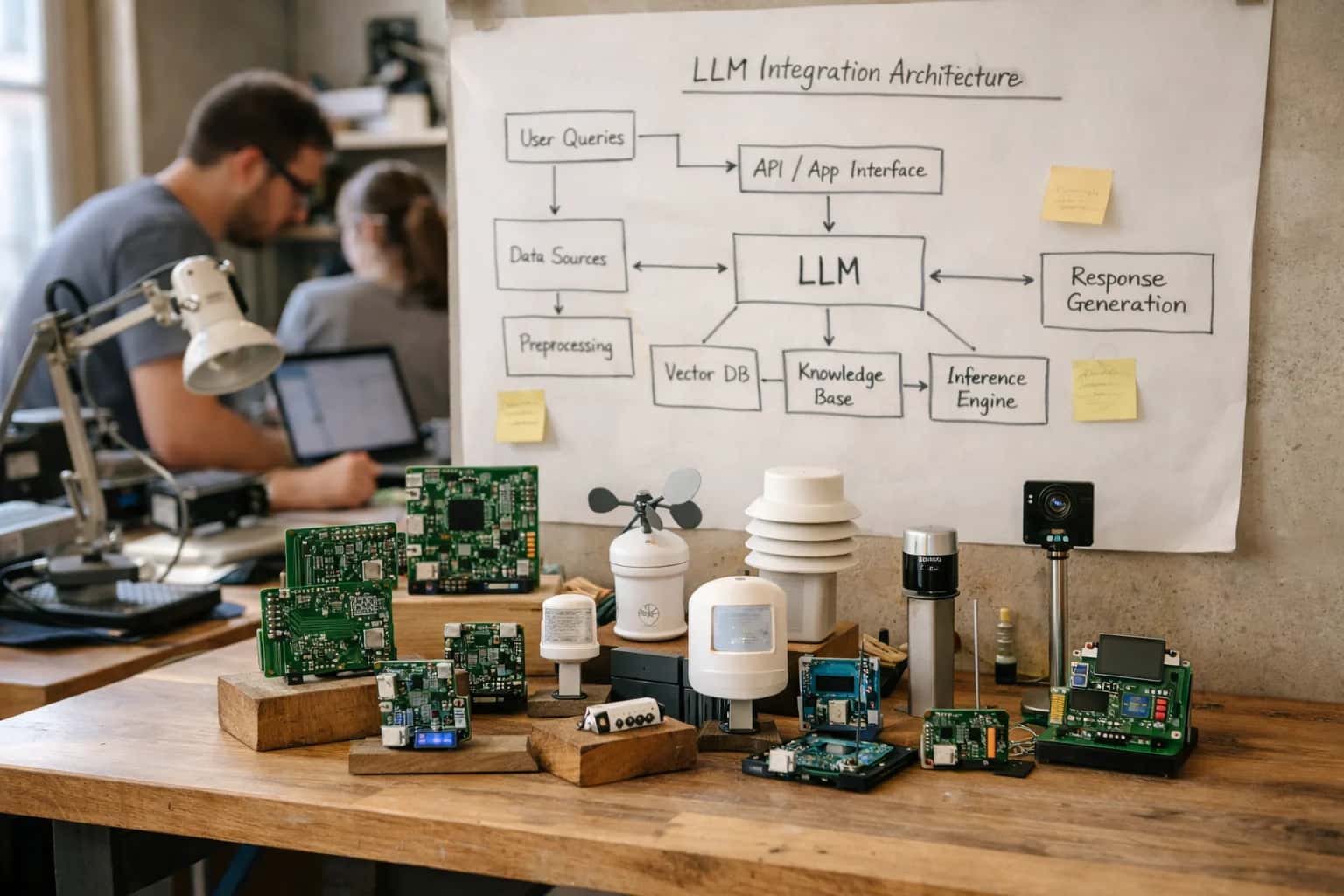
ARCHITECTURE AND IMPLEMENTATION
Where AI Fits into Cortex XSIAM AIOps
Integrating AI into Palo Alto Cortex XSIAM transforms raw telemetry into predictive insights and automated actions for IT operations and security infrastructure.
Within the correlation engine, AI performs root cause analysis by mapping anomalies across the dependency graph of your business services. For example, when a critical application slows down, an AI-augmented XSIAM can automatically query linked telemetry—checking associated VM performance, network path latency, recent code deployments, and security event logs—to generate a ranked list of probable causes. This analysis can be surfaced in an incident or used to trigger automated runbooks via Cortex XSOAR integrations. Implementation typically involves deploying inference containers or calling external model APIs via XSIAM's open API framework, ensuring predictions enrich the existing data model without disrupting real-time processing.
For rollout and governance, start with a focused use case such as predictive maintenance for security appliances (e.g., forecasting hardware failures in firewalls based on temperature and error logs) or anomaly detection in SaaS application telemetry. Use XSIAM's built-in playbook and approval workflows to insert human review points before AI-driven actions, like auto-scaling cloud resources or isolating a suspicious server. Maintain an audit trail within XSIAM's case management for all AI-generated insights and recommended actions to ensure explainability and compliance. A phased approach allows teams to validate model accuracy against historical incidents and tune prompts or features based on operational feedback, building trust before expanding to more autonomous workflows.
This integration matters because it shifts IT and SecOps from reactive firefighting to proactive management. By embedding AI directly into the Cortex XSIAM workflow, teams can reduce mean time to resolution (MTTR) for complex outages, preempt security infrastructure failures, and allocate engineering resources to strategic initiatives rather than manual triage. For a deeper look at orchestrating these automated responses, see our guide on AI Integration for Palo Alto Cortex XSOAR Integrations.
AI-OPS WORKFLOW AUTOMATION
Key Integration Surfaces in Cortex XSIAM
Ingesting and Analyzing Telemetry Streams
The Anomaly Detection Engine is the primary surface for applying AI to time-series and log data. Integration focuses on augmenting XSIAM's baseline statistical models with custom LLM-powered analysis to identify subtle, multi-dimensional deviations.
Key Integration Points:
- Metric Ingestion APIs: Feed normalized performance, security, and business metrics from external systems (APM, custom apps) into XSIAM's telemetry pipeline for unified anomaly scoring.
- Model Output Handlers: Intercept anomaly scores and metadata to apply additional reasoning. For example, use an LLM to correlate a CPU spike anomaly with recent deployment logs or change tickets to suggest a root cause.
- Feedback Loops: Use XSIAM's API to label false positives/negatives, continuously refining the detection thresholds and model behavior based on operator feedback.
Implementation Pattern: A lightweight service subscribes to XSIAM's anomaly event stream, enriches each event with contextual data from CMDBs or orchestration tools, and uses a reasoning model to generate a confidence-scored hypothesis (e.g., "80% likely related to deployment SHA:abc123").
AIOPS INTEGRATION PATTERNS
High-Value AI Use Cases for XSIAM AIOps
Integrate AI directly into Palo Alto Cortex XSIAM's AIOps workflows to move from reactive monitoring to predictive operations. These use cases focus on leveraging XSIAM's telemetry, analytics, and automation surfaces for intelligent IT operations.
01
Predictive Infrastructure Failure Detection
Analyze XSIAM's performance metrics, log patterns, and SNMP traps from firewalls, switches, and servers to predict hardware degradation or software failures before they cause outages. Models correlate subtle anomalies across the Strata NGFW and Prisma Access telemetry streams.
Days -> Hours
Lead time on failures
02
Root Cause Analysis for Service Degradation
Automatically correlate XSIAM service health scores, application latency metrics, and network flow data during performance incidents. AI identifies the likely root cause component (e.g., a specific firewall policy, WAN link, or backend service) and generates a narrative for the NOC.
Hours -> Minutes
Mean time to identify
03
Intelligent Alert Triage & Routing
Process XSIAM's alert stream from Cortex Data Lake and XDR to deduplicate, cluster related events, and route them to the correct operations team (network, security, cloud). Uses natural language to summarize the alert cluster and suggest initial diagnostic steps.
80% Reduction
In alert noise
04
Automated Capacity Planning & Right-Sizing
Analyze long-term resource utilization trends from XSIAM's infrastructure monitoring. AI forecasts future capacity needs for Palo Alto firewalls, GlobalProtect VPN concentrators, and Cortex XDR processing nodes, recommending upgrade schedules or license adjustments.
1 Sprint
For planning cycle
05
Self-Healing Network Configuration
Integrate AI with XSIAM's automation layer and Panorama/Cloud NGFW APIs. Detect configuration drifts or suboptimal firewall rules causing performance bottlenecks, then generate and propose safe, compliant remediation scripts for engineer approval.
Batch -> Real-time
Correction workflow
06
Anomalous User & Entity Behavior Analytics (UEBA) for IT
Extend XSIAM's analytics beyond security to IT operations. Baseline normal admin behavior (login times, commands, accessed systems) and flag deviations that may indicate compromised credentials, insider risk, or accidental misconfiguration by privileged users.
CORTEX XSIAM AIOPS
Example AI-Augmented Workflows
These workflows demonstrate how AI agents and models can be integrated into Palo Alto Cortex XSIAM's AIOps data streams and automation surfaces to automate root cause analysis, predict infrastructure issues, and reduce mean time to resolution (MTTR).
Trigger: XSIAM detects a performance KPI (e.g., API latency, CPU utilization) breach for a critical business service, correlating metrics from AppDynamics/Dynatrace with XSIAM's telemetry.
AI Agent Action:
- The agent queries XSIAM for all related events, logs, and changes in the 15-minute window prior to the KPI breach.
- It uses an LLM to analyze the unstructured log data, identifying patterns and extracting key entities (hostnames, deployment IDs, error codes).
- The agent cross-references these entities with the XSIAM CMDB and recent change tickets (via ServiceNow integration) to identify a probable root cause (e.g., "Deployment v2.1.4 to cluster
prod-us-east-1-aat 14:30 UTC").
System Update: The agent creates a high-priority incident in XSIAM, pre-populating the description with a concise narrative: "Performance degradation on Service: Payment-Gateway. Probable Root Cause: Recent deployment (v2.1.4) introduced latency spike. Correlated with 500-error increase in Nginx logs on hosts: pay-gw-01, pay-gw-02."
Human Review Point: The incident is auto-assigned to the platform engineering team with a recommendation to roll back deployment v2.1.4. A human confirms the analysis before executing the rollback playbook.
AI FOR IT OPERATIONS
Typical Implementation Architecture
A production-ready AIOps integration for Palo Alto Cortex XSIAM connects generative AI to telemetry streams, anomaly detection pipelines, and incident workflows.
The core architecture establishes a real-time inference layer that sits adjacent to Cortex XSIAM's data pipeline. This layer ingests normalized telemetry—performance metrics, log events, and topology data—from the Cortex Data Lake via its streaming APIs. AI models analyze this stream for subtle deviations from learned baselines, flagging anomalies in resource utilization, application latency, or security infrastructure health (e.g., firewall CPU spikes, Panorama™ management plane errors) that may indicate impending failures. These AI-generated insights are written back as enriched events to a dedicated XSIAM custom table, making them available for correlation with native alerts, dashboards, and automation rules.
For root cause analysis, a retrieval-augmented generation (RAG) workflow is triggered by a high-severity XSIAM incident. The system queries a vector index containing historical incident reports, runbook excerpts, and infrastructure documentation. An LLM synthesizes this context with the live incident's timeline—drawn from the XSIAM Investigation module—to generate a concise root cause hypothesis and recommended remediation steps. This output is attached to the incident as a comment and can automatically populate fields in a connected ITSM tool like ServiceNow via Cortex XSOAR playbooks, turning hours of manual analysis into minutes.
Governance and rollout are critical. We implement a human-in-the-loop approval step for any AI-recommended automated action (e.g., scaling a service, restarting a module) before execution via XSOAR. All AI inferences are logged to a separate audit table with traceability back to the source data and model version, ensuring reproducibility for compliance. The rollout typically starts with a single, high-value workflow—such as predictive maintenance for critical Cortex XDR sensor health—allowing the operations team to validate AI accuracy and build trust before expanding to broader infrastructure and application performance use cases.
AI INTEGRATION PATTERNS FOR CORTEX XSIAM
Code and Payload Examples
Ingesting AI-Generated Anomalies into XSIAM
Cortex XSIAM ingests telemetry via its Data Lake API. To inject AI-generated anomaly alerts, you typically POST a JSON payload that mimics a log source. This allows your custom AI models—trained on historical performance or security telemetry—to surface deviations that XSIAM's native analytics may miss.
A common pattern is to run a lightweight Python service that queries your AI inference endpoint, formats the results, and pushes them to XSIAM's ingestion endpoint. The payload should include the anomaly score, affected entity (host, container, service), timestamp, and a concise description. This creates a new xsiam_ai_anomaly event type that can trigger alerts, feed dashboards, or initiate automated response playbooks in XSOAR.
pythonimport requests import json # Example payload for an AI-detected anomaly in host CPU patterns anomaly_payload = { "log_type": "ai_anomaly", "vendor": "inference_systems", "product": "performance_anomaly_detector", "time_generated": "2024-05-15T10:30:00Z", "host_name": "prod-web-03", "anomaly_score": 0.92, "metric": "cpu_utilization", "expected_range": "15-40%", "observed_value": "78%", "description": "Sustained high CPU deviation detected, pattern suggests crypto-mining or resource exhaustion.", "recommended_action": "Isolate host for investigation, review process list." } # Post to Cortex Data Lake API headers = {"Authorization": "Bearer YOUR_API_KEY", "Content-Type": "application/json"} response = requests.post( "https://api.us.cdl.paloaltonetworks.com/public/log/v1/ingest", headers=headers, data=json.dumps(anomaly_payload) )
AI-OPS FOR CORTEX XSIAM
Realistic Time Savings and Operational Impact
This table illustrates the tangible operational improvements when integrating AI into Palo Alto Cortex XSIAM workflows, focusing on realistic time savings and enhanced analyst effectiveness.
| Metric | Before AI | After AI | Notes |
|---|---|---|---|
Mean Time to Detect (MTTD) for performance anomalies | Hours to days of manual metric review | Real-time detection with AI-driven baselining | AI continuously analyzes telemetry for deviations from learned normal behavior. |
Root Cause Analysis (RCA) for service degradation | Manual correlation across 5-10 data sources | AI-suggested probable cause with evidence links | AI correlates logs, metrics, and topology to rank likely root causes. |
Alert Triage and Prioritization | Manual review of hundreds of daily alerts | AI-assisted scoring and grouping of related alerts | Reduces noise by up to 70%, allowing focus on high-fidelity incidents. |
Infrastructure Health Forecasting | Reactive response to failures | Predictive maintenance alerts 24-72 hours in advance | AI models time-series data to forecast potential hardware/component failures. |
Incident Summary Generation | Manual narrative drafting post-resolution | Automated, structured summary at case closure | Pulls key events, actions, and resolution from the investigation timeline. |
Security & IT Event Correlation | Siloed teams manually sharing data | Cross-domain AI correlation surfaces hybrid threats | Identifies incidents where a security event (e.g., malware) causes a performance issue. |
Onboarding New Data Sources | Manual parsing and normalization rules | AI-assisted schema mapping and KPI suggestion | Accelerates time-to-value for new telemetry by recommending relevant analytics. |
ARCHITECTING CONTROLLED AIOPS DEPLOYMENTS
Governance, Security, and Phased Rollout
Integrating AI into Cortex XSIAM requires a deliberate approach to data governance, model security, and incremental rollout to ensure operational stability and measurable value.
Governance starts with defining the data boundaries for AI analysis. This involves mapping which telemetry streams—such as firewall logs from Strata NGFW, endpoint data from Cortex XDR, and performance metrics from Prisma Cloud—are accessible to AI models for anomaly detection and root cause analysis. Access is controlled via Cortex Data Lake permissions and scoped to specific data retention periods. All AI-generated insights, such as predicted infrastructure failures or anomalous user behavior, must be written back to the data lake with a clear audit trail, linking them to the source queries and model versions used.
Security is multi-layered. First, the AI integration itself operates as a service principal within Palo Alto's OAuth framework, with permissions strictly limited to read telemetry and write analysis objects. Second, all prompts and model inferences are logged to the XSIAM audit log, creating an immutable record of AI activity. Third, for sensitive use cases like predictive maintenance on critical security infrastructure, a human-in-the-loop approval step can be configured within XSOAR playbooks before any automated remediation action, such as restarting a service or modifying a policy, is executed.
A phased rollout mitigates risk and proves value. Phase 1 focuses on read-only analysis: deploying AI models to monitor a single, non-critical service for anomaly detection, with outputs visible only in a dedicated dashboard. Phase 2 introduces automated enrichment: having AI attach root cause hypotheses and recommended actions to XSIAM alerts, which analysts can accept or reject, building trust in the system. Phase 3 enables conditional automation: for high-confidence, low-risk scenarios—like auto-closing alerts determined to be benign noise—AI can trigger predefined XSOAR playbooks. Each phase includes defined success metrics, such as reduction in mean time to detect (MTTD) for performance issues or analyst time saved per investigation, measured within the XSIAM analytics framework.
Enabling Efficiency, Speed & Accuracy
Intelligent Analysis, Decision & Execution
We build AI systems for teams that need search across company data, workflow automation across tools, or AI features inside products and internal software.
Talk to Us
Search across company data
Give teams answers from docs, tickets, runbooks, and product data with sources and permissions.
Useful when people spend too long searching or get different answers from different systems.
Enterprise searchRAGPermissions
Read more
Automate internal workflows
Use AI to route work, draft outputs, trigger actions, and keep approvals and logs in place.
Useful when repetitive work moves across multiple tools and teams.
AI agentsWorkflow automationGovernance
Read more
Add AI to products and internal tools
Build assistants, guided actions, or decision support into the software your team or customers already use.
Useful when AI needs to be part of the product, not a separate tool.
AI integrationDecision supportModel routing
Read moreAI INTEGRATION FOR CORTEX XSIAM
Frequently Asked Questions
Practical questions about implementing AI agents and automation within Palo Alto Cortex XSIAM for AIOps, anomaly detection, and predictive maintenance.
AI integrates primarily through Cortex XSIAM's Open API and webhook/event-driven architecture. The typical pattern involves:
- Trigger: An event from XSIAM's telemetry pipeline (e.g., a performance anomaly score exceeding threshold, a new incident created).
- Context Pull: The AI agent calls XSIAM APIs to fetch related entities, metrics, topology maps, and recent logs for the affected service or asset.
- Agent Action: A model analyzes this context to perform tasks like root cause hypothesis generation, generating a natural-language summary, or recommending a specific runbook.
- System Update: Results are posted back to XSIAM via API—updating an incident's description, adding an investigation note, or triggering a pre-configured automation (like scaling a resource).
Key integration points are the Incidents API, Entities API, and the Automations & Playbooks engine. AI acts as a cognitive layer that enhances, rather than replaces, XSIAM's native correlation and automation.

About the author
Prasad Kumkar
CEO & MD, Inference Systems
Prasad Kumkar is the CEO & MD of Inference Systems and writes about AI systems architecture, LLM infrastructure, model serving, evaluation, and production deployment. Over 5+ years, he has worked across computer vision models, L5 autonomous vehicle systems, and LLM research, with a focus on taking complex AI ideas into real-world engineering systems.
His work and writing cover AI systems, large language models, AI agents, multimodal systems, autonomous systems, inference optimization, RAG, evaluation, and production AI engineering.
LinkedIn
Limited slotsGet a Free AI Consultation
Partnered with leading AI, data, and software stack.





How We Work
Custom AI workflows for your Business
One-fit-all AI don't work for modern businesses. At Inferensys, we aim to understand your business & custom requirements; which we use to define most efficient agentic workflows, the data, and the tools for your business.
01
Review the use case
We understand the task, the users, and where AI can actually help.
Read more02
Pick the right approach
We define what needs search, automation, or product integration.
Read more03
Build the first useful version
We implement the part that proves the value first.
Read more04
Improve from there
We add the checks and visibility needed to keep it useful.
Read moreThe first call is a practical review of your use case and the right next step.
Talk to Us