AI integration for compliance connects to the client profile, service note, and staff certification modules within platforms like Zenoti, Fresha, and Mangomint. The primary surface areas are the appointment records (which contain service details and practitioner assignments), employee records (which store license numbers and expiration dates), and the digital forms or notes attached to client visits. By monitoring these data objects via platform APIs or webhook streams, an AI agent can perform continuous, automated audits against a configurable rules engine for local regulations, such as verifying that a licensed esthetician performed a specific advanced treatment or flagging expired certifications before they are scheduled.

Integration
AI for Compliance and Regulation in Spas
A technical blueprint for integrating AI with spa management platforms to automate the monitoring of booking data, service notes, and staff credentials for compliance with local regulations, license renewals, and safety protocols.
ARCHITECTURE AND GOVERNANCE
Where AI Fits into Spa Compliance Workflows
A technical blueprint for integrating AI with salon and spa management platforms to automate compliance monitoring, license tracking, and safety protocol adherence.
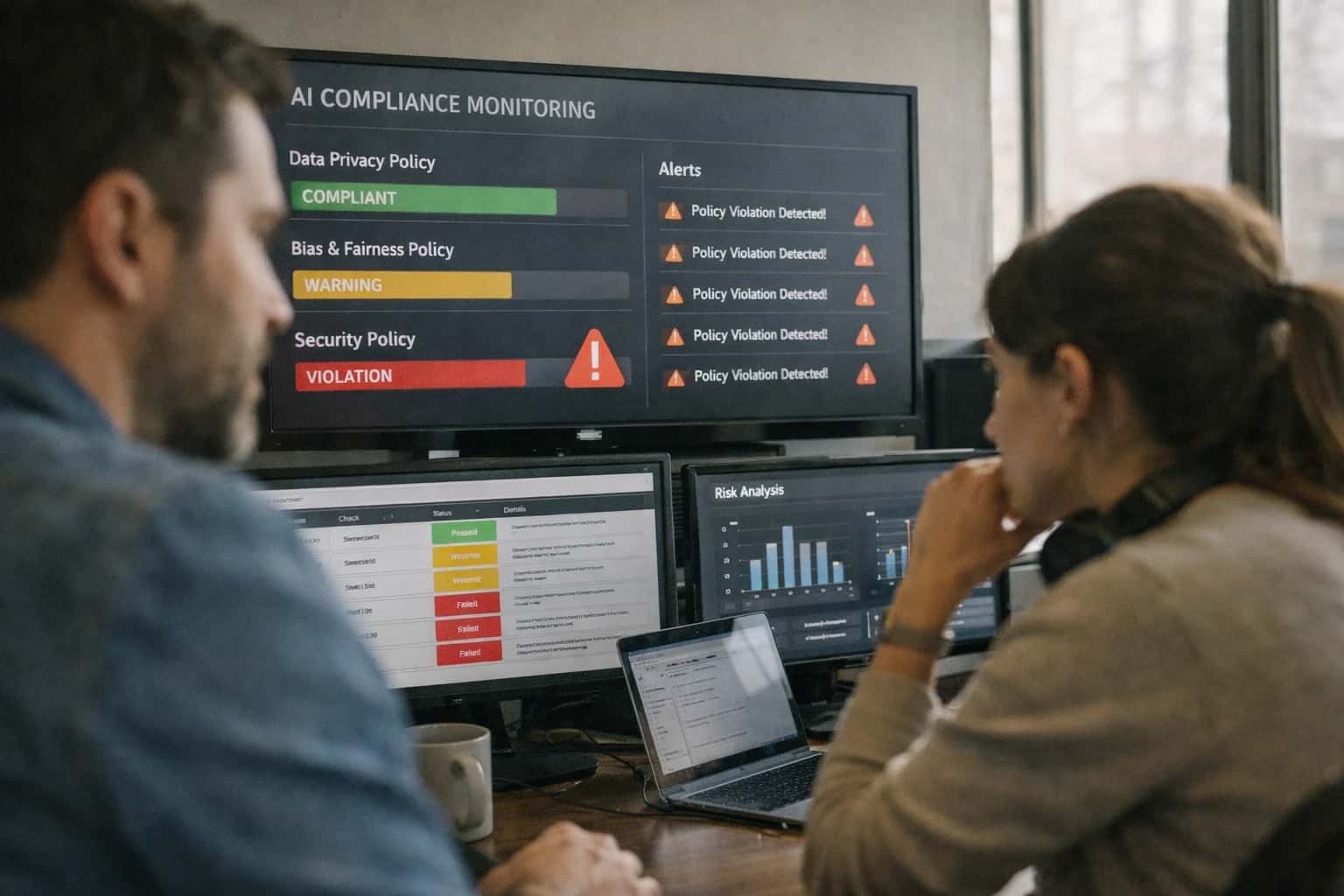
A practical implementation involves a background orchestration agent that polls or listens for new appointments and updated staff records. For each booked service requiring a licensed professional, the agent cross-references the assigned staff member's credentials in the system against a compliance database. It can also analyze unstructured service notes using natural language processing to detect mentions of controlled substances, client contraindications, or procedural deviations from safety protocols. High-confidence violations or near-misses are then logged to a dedicated compliance dashboard and can trigger automated workflows within the spa software, such as blocking the booking, notifying a manager via SMS, or creating a follow-up task in the staff queue.
Rollout and governance are critical. Start with a pilot on high-risk service categories (e.g., medical aesthetics, laser treatments) within a single location. The AI system should maintain a full audit trail of all checks, decisions, and overrides, integrating with the platform's existing activity logs. Human-in-the-loop review is essential for edge cases; the AI should flag issues for manager approval rather than taking autonomous enforcement actions initially. This phased approach allows spas to build trust in the system, refine rule sets, and demonstrate ROI through reduced manual audit hours and mitigated compliance risk before scaling across an enterprise. For a deeper dive into connecting AI with specific platform APIs, see our guide on AI Integration for Zenoti which covers enterprise-grade data flows.
SALON AND SPA MANAGEMENT PLATFORMS
Key Data Surfaces for AI Compliance Integration
Core Profile and History Data
The client profile, service history, and consent forms stored in platforms like Zenoti or Mangomint are the primary surfaces for compliance monitoring. AI models can be integrated via API to continuously scan this data for regulatory adherence.
Key integration points include:
- Client Demographics and Health Declarations: To verify age restrictions for certain treatments or flag contraindications based on disclosed medical conditions.
- Service Notes and Treatment Documentation: To ensure notes include required elements (e.g., patch test records, product used, therapist signature) as per local cosmetology board rules.
- Licensed Professional Associations: To cross-reference the therapist assigned to a service with active license numbers and certification expiry dates stored in the staff module.
Automated audits here can prevent violations before they occur, triggering alerts for missing documentation or expired credentials.
AUTOMATED MONITORING & REPORTING
High-Value AI Compliance Use Cases for Spas
Integrating AI with spa management platforms like Zenoti, Fresha, and Mangomint enables automated, continuous compliance monitoring. These use cases focus on connecting to booking data, service notes, and staff records to proactively identify risks and streamline mandatory reporting workflows.
01
Automated License & Certification Expiry Monitoring
AI agents connect to the staff profile and credentialing modules in platforms like Zenoti or Mangomint to continuously scan for upcoming license renewals (esthetician, massage therapy) and certification expirations (CPR, specialized treatments). The system flags at-risk staff for managers and can auto-generate reminder emails or tasks in the platform's workflow engine.
Batch -> Real-time
Monitoring cadence
02
Service Note Audit for Protocol Adherence
After each service, AI reviews the clinical or treatment notes entered in the spa software against local health board protocols. It checks for required documentation (e.g., client contraindications, product lot numbers for facials, sanitization logs) and flags incomplete or non-compliant entries for supervisor review before the record is finalized.
Same day
Audit completion
03
Dynamic Consent Form Management
Integrates with client profile and intake form data in platforms like Vagaro or Fresha. AI matches the booked service (e.g., chemical peel, laser) with the required consent forms, verifies they are signed and current, and alerts the front desk of missing documents before check-in. For medical spas, it can also pre-fill forms based on client history.
04
Regulatory Change Impact Analysis
An AI workflow ingests updates to local spa regulations and cross-references them with the software's service menu, pricing, and staff qualification data. It produces a report highlighting which services, pricing structures, or staff roles are affected, allowing for proactive updates to the platform's configuration.
1 sprint
Implementation lead time
05
Incident & Complaint Documentation Support
When an incident is logged in the spa platform's reporting module, an AI copilot assists managers in drafting the initial report. It pulls relevant client history, staff schedules, and service details to ensure factual accuracy and compliance with reporting timelines mandated by insurance or regulatory bodies.
06
Inventory & SDS Compliance for Chemicals
Connects AI to the inventory management features of spa software. The system monitors stock levels of regulated chemicals, ensures Safety Data Sheets (SDS) are digitally attached to product records, and can trigger automated reordering or staff training alerts when new products or regulations are introduced.
AUTOMATED MONITORING AND REPORTING
Example AI Compliance Workflows
For spas operating under strict local regulations, integrating AI with your management platform (Fresha, Zenoti, Mangomint, Vagaro) can automate the monitoring of booking data, service notes, and staff credentials for compliance adherence. These workflows connect to platform APIs to analyze structured and unstructured data, flagging potential issues for human review.
Trigger: Daily batch job or real-time webhook on staff profile updates.
Data Pulled: AI agent queries the spa platform's Staff API to retrieve therapist records, focusing on license_number, certification_type, expiration_date, and uploaded_document_url fields.
Agent Action:
- Extracts dates from text fields and document metadata.
- Compares expiration dates against a configurable compliance calendar (e.g., 30, 60, 90-day warnings).
- For missing documents or imminent expirations, the agent generates a structured alert.
System Update: The alert is posted to a dedicated Compliance channel in the platform (if supported via API) or sent as a formatted payload to a connected task management system (e.g., Asana, Monday.com). The alert includes:
- Staff member name and ID
- Specific license/certification
- Days until expiration
- Direct link to the staff record in the spa software
Human Review Point: The spa manager or HR lead reviews the alert. The AI can draft a reminder email to the therapist, but sending requires manager approval via a simple "Approve/Edit" interface.
SECURE, AUDITABLE AI WORKFLOWS
Implementation Architecture: Data Flow and Guardrails
A technical blueprint for integrating AI compliance monitoring into spa management platforms, ensuring data security and regulatory adherence.
The integration architecture connects to the spa platform's core data objects via secure APIs and webhooks. Key data sources include the appointment calendar (for service type, duration, therapist credentials), client profiles (for consent forms and medical history notes), and service notes (for treatment details and product usage). A scheduled ETL job or real-time event stream ingests this data into a secure processing layer, where Personally Identifiable Information (PII) is pseudonymized before analysis. The AI model, typically a fine-tuned classifier or a Retrieval-Augmented Generation (RAG) system, evaluates records against a knowledge base of local regulations (e.g., state board rules for esthetician scope of practice, OSHA safety protocols, or product MSDS requirements).
Flagged records are routed to a dedicated compliance queue within the spa software or a separate dashboard. Each finding includes the source record ID, the specific rule violation or risk (e.g., 'Expired license detected for therapist ID 452', 'Service note missing required allergy checkmark'), and a confidence score. High-confidence, low-risk items can trigger automated workflows—like sending a license renewal reminder via the platform's comms API. Higher-risk flags require human-in-the-loop review, where a spa manager or compliance officer approves the AI's finding before any system action is taken. All AI interactions, from data ingestion to flag generation and resolution, are logged with a full audit trail, including user ID, timestamp, and the model's reasoning snippet for explainability.
Rollout follows a phased governance model. Start with a read-only pilot on historical data to calibrate model accuracy and false-positive rates, using a sample location or service category. Upon validation, enable real-time monitoring for net-new appointments and notes, with alerts configured in the platform's notification center. Finally, integrate approved remediation actions, such as auto-blocking bookings with unlicensed staff or appending missing documentation prompts to the client intake form. This tiered approach, coupled with role-based access controls (RBAC) on the compliance dashboard, ensures the AI augments—rather than disrupts—existing operational workflows while maintaining a defensible compliance posture. For related architectural patterns, see our guides on AI for Client Health History Analysis and AI for Consent Form Automation.
IMPLEMENTATION PATTERNS
Code and Payload Examples
Real-Time License Check via Webhook
Integrate AI to monitor therapist license data within the spa platform. A scheduled job or webhook trigger can send license records nearing expiration to an AI agent for review.
The agent can:
- Parse the license type, state, and renewal requirements from the therapist profile.
- Check against a regulatory database or internal policy ruleset.
- Generate a summary for the manager and draft a personalized reminder for the therapist.
This pattern prevents service interruptions by proactively flagging expirations 30-60 days in advance, allowing time for renewal courses or paperwork.
Example Trigger Payload:
json{ "event": "license_check_daily", "platform": "Zenoti", "records": [ { "therapist_id": "T-78910", "name": "Jane Smith", "license_number": "CA-EST-12345", "license_type": "Esthetician", "expiration_date": "2024-08-15", "state": "California", "email": "[email protected]" } ] }
AI-DRIVEN COMPLIANCE WORKFLOWS
Realistic Time Savings and Operational Impact
This table illustrates the shift from manual, reactive compliance checks to proactive, AI-assisted monitoring within spa management platforms like Zenoti and Fresha. It shows where time is saved and operational risk is reduced.
| Compliance Workflow | Before AI (Manual Process) | After AI (Assisted Process) | Implementation Notes |
|---|---|---|---|
License & Certification Expiry Tracking | Monthly spreadsheet audit (2-4 hours) | Automated dashboard alerts (5 min review) | AI scans staff profiles via API, flags renewals 60 days out |
Service Note Review for Protocol Adherence | Spot-check 5% of notes weekly (1-2 hours) | AI scans 100% of notes, flags anomalies (<15 min review) | NLP checks for required documentation (e.g., contraindications, aftercare) |
Regulatory Update Monitoring | Manual review of industry emails/sites (1 hour/week) | AI summarizes relevant changes, suggests action items (10 min/week) | Agent ingests regulatory body feeds, maps to your service catalog |
Client Consent Form & History Validation | Front desk verifies paperwork at check-in (3-5 min/client) | AI pre-screens profiles, highlights missing docs for staff (1 min/client) | Integrates with client profile APIs; exception-based workflow |
Safety Incident Log Analysis | Quarterly manual review for trends (4-8 hours/quarter) | AI clusters incident types, suggests root causes (1 hour/quarter) | Processes free-text incident reports from platform for pattern detection |
Sanitation & Equipment Log Audits | Manual logbook sign-off verification (30 min/day) | AI validates digital log completion, flags gaps (5 min/day) | Connects to digital checklists; alerts for missed entries |
Marketing & Service Description Compliance | Ad-hoc review of website/service menu (variable) | AI scans published content for regulated claims (on-demand) | Monitors for non-compliant language (e.g., medical guarantees in a spa setting) |
IMPLEMENTING CONTROLLED AI FOR REGULATED ENVIRONMENTS
Governance, Security, and Phased Rollout
A practical guide to deploying AI for spa compliance with the necessary controls, audit trails, and incremental adoption strategy.
Integrating AI for compliance monitoring requires a policy-first architecture. This means your AI agents and workflows must be designed to operate within the strict data access and modification rules of your spa management platform (e.g., Zenoti, Fresha). Key governance controls include:
- Role-Based Access Control (RBAC) Integration: The AI system should inherit permissions from the spa platform, ensuring it only reviews data (e.g., service notes, therapist licenses) that a compliance manager or owner is authorized to see. It should not have blanket 'read-all' access.
- Audit Trail Generation: Every AI-driven review—such as flagging a soon-to-expire license in a therapist profile or identifying a missing safety protocol note—must create an immutable log entry within the platform's native audit system or a linked compliance log. This creates a defensible record of AI-assisted oversight.
- Human-in-the-Loop for Critical Actions: The system should be configured to suggest and flag, not autonomously act. For instance, it can highlight a potential regulation breach in a booking note, but any corrective action (e.g., locking a booking, notifying a manager) requires a human approval step via the platform's workflow engine.
A phased rollout minimizes risk and builds organizational trust. Start with a read-only monitoring phase in a single location or for a specific regulation set (e.g., state board license renewals).
- Phase 1: Discovery & Alerting: Connect the AI to a mirrored or sandboxed dataset. Configure it to scan therapist profiles for license expiration dates and service notes for required terminology (e.g., client contraindication acknowledgments). It generates a daily digest report for managers, with no direct platform writes.
- Phase 2: Assisted Workflow: Integrate the AI's findings into the platform's native task or ticket system. For example, when a license expires in 30 days, the AI automatically creates a task in Zenoti for the location manager with the therapist's name and deadline. The manager completes the renewal workflow within the existing system.
- Phase 3: Proactive Prevention: With validated accuracy, enable the AI to suggest soft blocks. If a client with a noted allergy books a service involving a contraindicated product, the AI can flag the booking to the front desk agent at the moment of confirmation, suggesting an alternative service. All such interventions are logged.
Security is paramount when handling sensitive client health information and employee data. The integration must use the spa platform's official OAuth or API key authentication, never storing platform credentials. Data processed by AI models should be transient; after analysis, only the conclusion (e.g., "Flag: License Expiration for Jane Doe, ID#123") and a reference ID are written back, not the raw client notes. For highly sensitive use cases in medical spas, consider an architecture where data is pseudonymized before analysis. Start with the lowest-risk, highest-ROI compliance workflows—like automated license tracking—to demonstrate value and refine the governance model before expanding to more complex clinical note reviews. For related architectural patterns, see our guides on AI Integration for Medical Spa Management Platforms and AI for Business Process Automation in Spas.
Enabling Efficiency, Speed & Accuracy
Intelligent Analysis, Decision & Execution
We build AI systems for teams that need search across company data, workflow automation across tools, or AI features inside products and internal software.
Talk to Us
Search across company data
Give teams answers from docs, tickets, runbooks, and product data with sources and permissions.
Useful when people spend too long searching or get different answers from different systems.
Enterprise searchRAGPermissions
Read more
Automate internal workflows
Use AI to route work, draft outputs, trigger actions, and keep approvals and logs in place.
Useful when repetitive work moves across multiple tools and teams.
AI agentsWorkflow automationGovernance
Read more
Add AI to products and internal tools
Build assistants, guided actions, or decision support into the software your team or customers already use.
Useful when AI needs to be part of the product, not a separate tool.
AI integrationDecision supportModel routing
Read moreAI COMPLIANCE INTEGRATION
Frequently Asked Questions
Practical questions for spa owners and technical teams implementing AI to monitor and enforce regulatory compliance within platforms like Zenoti, Fresha, and Mangomint.
The AI integration connects to your spa platform's booking and staff APIs to perform real-time checks. Here's the typical workflow:
- Trigger: A new appointment is booked or a staff member is assigned to a service.
- Data Pull: The AI agent retrieves the service code (e.g., "C-1234" for a specific massage modality) and the assigned therapist's license ID from the platform.
- Agent Action: It cross-references this data against an internal or external compliance database to verify:
- The therapist's license is active and in good standing.
- The license permits the specific service being performed.
- Any required supervisory ratios (for apprentices) are met.
- System Update: If a violation is detected, the AI can:
- Block the booking in the software and notify the front desk.
- Create a compliance ticket in the platform's task module for the manager.
- Log the event with a full audit trail in a separate compliance dashboard.
This prevents booking services that staff are not legally authorized to perform.

About the author
Prasad Kumkar
CEO & MD, Inference Systems
Prasad Kumkar is the CEO & MD of Inference Systems and writes about AI systems architecture, LLM infrastructure, model serving, evaluation, and production deployment. Over 5+ years, he has worked across computer vision models, L5 autonomous vehicle systems, and LLM research, with a focus on taking complex AI ideas into real-world engineering systems.
His work and writing cover AI systems, large language models, AI agents, multimodal systems, autonomous systems, inference optimization, RAG, evaluation, and production AI engineering.
LinkedIn
Limited slotsGet a Free AI Consultation
Partnered with leading AI, data, and software stack.





How We Work
Custom AI workflows for your Business
One-fit-all AI don't work for modern businesses. At Inferensys, we aim to understand your business & custom requirements; which we use to define most efficient agentic workflows, the data, and the tools for your business.
01
Review the use case
We understand the task, the users, and where AI can actually help.
Read more02
Pick the right approach
We define what needs search, automation, or product integration.
Read more03
Build the first useful version
We implement the part that proves the value first.
Read more04
Improve from there
We add the checks and visibility needed to keep it useful.
Read moreThe first call is a practical review of your use case and the right next step.
Talk to Us