AI integration for inventory support connects directly to the core data objects within platforms like McKesson EnterpriseRx, PioneerRx, PrimeRx, and BestRx. The primary surfaces are the inventory master file, purchase order modules, and supplier catalog APIs. An AI agent continuously ingests real-time data on stock levels, prescription movement, seasonal trends (e.g., flu shot supplies), and supplier lead times. It uses this to predict shortages weeks in advance, not days, and automatically generates suggested purchase orders with optimal quantities and substitution logic, which are placed into an approval queue within the platform for pharmacist review.

Integration
AI Integration for Pharmacy Management Platform Inventory Support
A technical blueprint for embedding AI-driven inventory optimization, expiry management, and automated reordering into McKesson EnterpriseRx, PioneerRx, PrimeRx, and BestRx. Reduce waste, prevent stockouts, and free up pharmacist time.
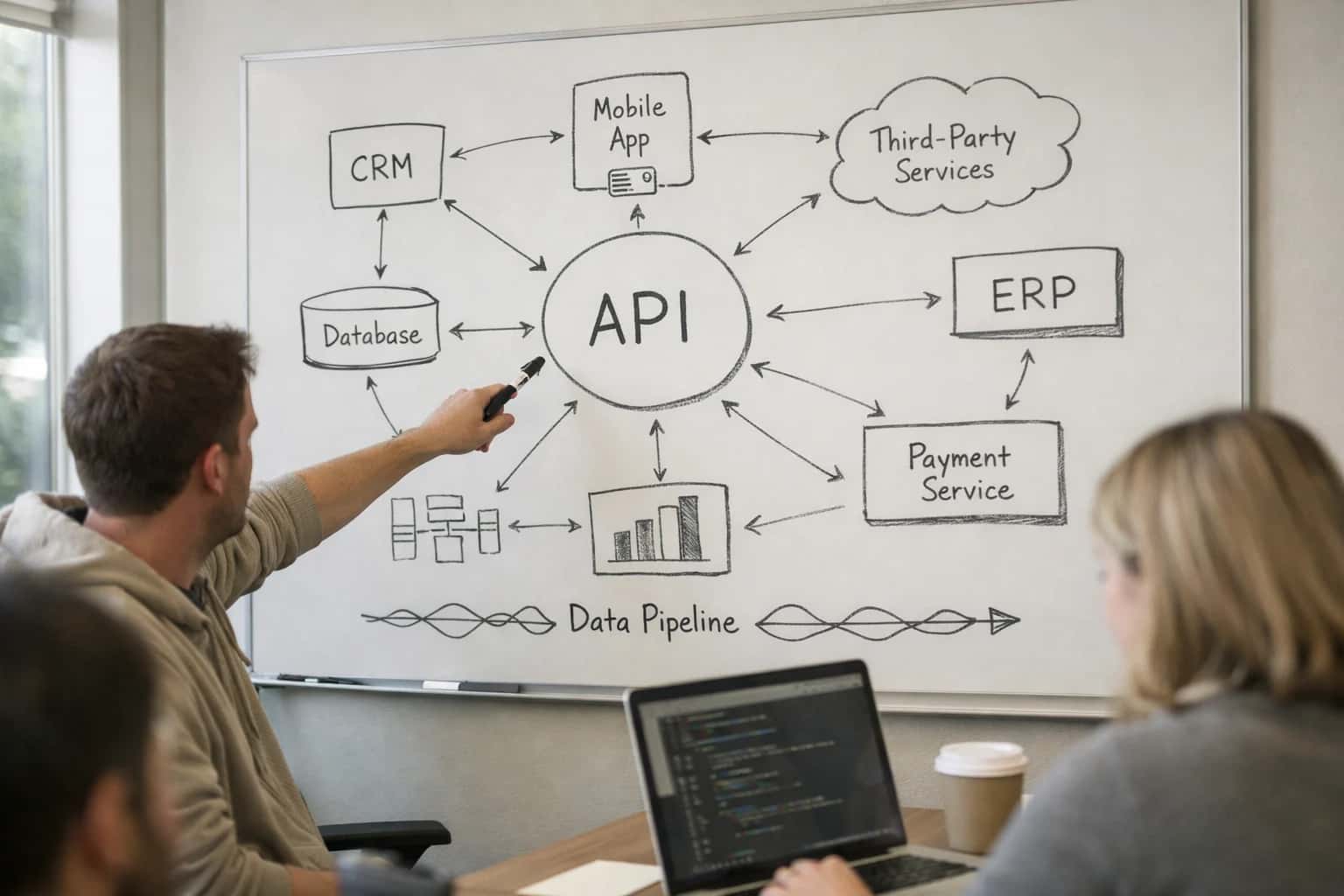
ARCHITECTURE & ROLLOUT
Where AI Fits into Pharmacy Inventory Management
Integrating AI into pharmacy platform inventory transforms reactive stock management into a predictive, automated operation.
The implementation typically involves a middleware layer that polls the pharmacy platform's database or listens to its transaction webhooks. For example, when a prescription is adjudicated, the event triggers an update to the AI's demand forecast. The agent then cross-references this against expiry date tracking and slow-mover reports native to the platform. High-impact workflows include: automated expiry alerts that suggest return-to-wholesaler candidates, substitution guidance during out-of-stock scenarios based on formulary and cost, and waste reduction insights that identify patterns leading to expired inventory. The result is a shift from daily manual stock counts to exception-based management, where pharmacists intervene only on flagged discrepancies or high-value decisions.
Rollout is phased, starting with read-only analysis and alerting to build trust in the AI's predictions before enabling automated purchase suggestions. Governance is critical: all AI-generated orders require configurable RBAC approval, and every suggestion is logged with an audit trail in the platform's notes field, explaining the 'why' behind each recommendation (e.g., 'predicted 20% demand increase for albuterol based on local pollen data'). This ensures the pharmacist remains in control while the AI handles the heavy lifting of data synthesis and routine reorder calculations, turning inventory from a cost center into a strategically managed asset.
PHARMACY MANAGEMENT PLATFORMS
Integration Touchpoints for AI-Powered Inventory
Core Platform Surfaces for AI
AI for inventory support integrates directly with the stock management and purchasing modules within platforms like McKesson EnterpriseRx, PioneerRx, PrimeRx, and BestRx. The primary touchpoints are the inventory master tables, purchase order (PO) workflows, and supplier catalog interfaces.
Key integration actions include:
- Real-time Stock Level Monitoring: Hooking into the platform's live inventory database to track on-hand quantities, lot numbers, and expiry dates.
- Purchase Order Generation: Triggering or suggesting POs via the platform's native PO creation API when AI predicts a shortage.
- Supplier Data Sync: Enriching platform item masters with real-time availability and cost data from wholesaler APIs (e.g., AmerisourceBergen, Cardinal Health) to inform AI suggestions.
Implementation typically uses a middleware agent that polls platform inventory APIs, runs predictive models, and writes suggestions back to a custom dashboard or directly into the PO queue for pharmacist review.
PHARMACY INVENTORY SUPPORT
High-Value AI Inventory Use Cases
Integrate AI directly into your pharmacy management platform to transform reactive stock management into a predictive, automated operation. These use cases connect to platform inventory tables, purchase history, and supplier APIs to reduce waste, prevent shortages, and free up staff time.
01
Predictive Shortage & Reorder Automation
AI models analyze platform prescription velocity, seasonal trends, and supplier lead times to predict shortages 7-14 days out. The system automatically generates suggested purchase orders within the platform's PO module, factoring in minimum order quantities and contract pricing. Operational value: Moves from manual, gut-feel ordering to data-driven, just-in-time inventory.
Batch -> Real-time
Order planning
02
Expiry Date Optimization & Waste Reduction
An AI agent continuously scans the platform's inventory database for expiry dates and movement rates. It flags slow-moving items at risk of expiry, suggests promotional dispensing, and can even initiate return-to-wholesaler workflows via platform integrations. Operational value: Directly reduces shrink and improves inventory turnover by proactively managing shelf life.
Days -> Hours
Expiry risk identification
03
Smart Generic Substitution & Therapeutic Interchange
When a brand-name drug is out of stock, the AI reviews the platform's formulary, contract preferences, and patient history to recommend the optimal generic or therapeutic alternative. It surfaces the suggestion within the verification queue with supporting rationale for pharmacist review. Operational value: Maintains patient care continuity while optimizing cost and availability.
04
Multi-Site Inventory Balancing & Transfer Coordination
For pharmacy groups, AI monitors stock levels across all connected platform instances. It identifies surplus at one location and shortage at another, then automatically suggests inter-store transfers via the platform's transfer module, optimizing routing and minimizing expedited shipping costs. Operational value: Turns a network of pharmacies into a resilient, shared inventory pool.
1 sprint
Network optimization setup
05
Supplier Performance & Contract Compliance Monitoring
AI analyzes purchase order fulfillment data from the platform, tracking supplier fill rates, backorder frequency, and pricing accuracy against contracts. Automated reports flag underperforming vendors and identify cost-saving opportunities by suggesting contract renegotiation or alternative suppliers. Operational value: Provides data-driven leverage in supplier relationships and protects margin.
06
Recall & Shortage Intelligence Integration
AI agents subscribe to FDA, ASHP, and wholesaler alert feeds. When a recall or national shortage is announced, the system instantly cross-references impacted NDCs with platform inventory and patient profiles. It generates actionable tasks: quarantine stock, identify affected patients, and suggest alternatives—all logged within the platform's compliance module. Operational value: Dramatically accelerates critical patient safety and regulatory response workflows.
PRACTICAL AUTOMATION PATTERNS
Example AI-Driven Inventory Workflows
These workflows illustrate how AI agents connect to your pharmacy platform's inventory data layer—via direct database queries, API calls, or file exports—to execute predictive and prescriptive actions. Each pattern is designed to reduce waste, prevent stockouts, and automate routine purchasing tasks.
Trigger: Daily batch job at 2 AM local time.
Context Pulled: The AI agent queries the platform's inventory table for all SKUs, pulling the last 90 days of movement history, current on-hand quantity, on-order quantity, and supplier lead times.
Agent Action: A time-series forecasting model analyzes the data for each SKU, accounting for seasonality (e.g., flu season) and trends. It calculates a dynamic reorder point and optimal order quantity.
System Update: For SKUs where (On-Hand + On-Order) < Dynamic Reorder Point, the agent:
- Checks supplier catalog APIs for real-time availability and price.
- Generates a purchase order draft with suggested quantities.
- Human Review Point: Submits the draft PO to a designated pharmacist or inventory manager's approval queue within the platform.
- Upon approval, the agent uses the platform's PO API to create the final order and updates the
on-orderquantity field.
Impact: Moves from static, often outdated min/max levels to a demand-aware system, reducing carrying costs for slow-movers and preventing outages for fast-movers.
FROM REACTIVE STOCKING TO PREDICTIVE INVENTORY
Implementation Architecture: Data Flow & Guardrails
A practical blueprint for connecting AI to your pharmacy platform's inventory data to automate reorder logic, minimize waste, and prevent stockouts.
The integration architecture connects to your pharmacy management platform's core inventory tables—typically DrugMaster, InventoryOnHand, PurchaseOrder, and SupplierCatalog—via its API or a direct database connection. An AI agent acts as a middleware layer, ingesting daily stock levels, movement history, and expiry dates. It cross-references this with supplier lead times, seasonal demand patterns (e.g., flu season), and local prescription trends to calculate dynamic reorder points. Instead of static thresholds, the system generates smart purchase suggestions, which are posted back to the platform as draft POs in a designated queue (e.g., PendingAIAction) for pharmacist review and one-click approval.
Critical guardrails are built into the data flow. All AI-generated suggestions include an audit trail linking back to the source data and reasoning (e.g., "suggested due to 30% increase in GLP-1 prescriptions last month"). A human-in-the-loop approval step is mandatory before any order is transmitted to the supplier. The system also implements expiry management workflows, flagging drugs approaching 75% of their shelf-life and suggesting returns to the wholesaler or prioritization for use, with these alerts surfaced directly in the platform's inventory dashboard. For controlled substances, the AI respects strict compliance rules, never auto-suggesting orders that would breach platform-configured ordering limits.
Rollout is phased, starting with a pilot on non-controlled, high-turnover SKUs. The AI's predictions are logged and compared against actual usage to calibrate the model, with performance dashboards accessible within the platform's reporting module. This architecture ensures the AI augments—not replaces—the pharmacist's oversight, turning inventory from a daily manual task into a managed, predictive operation. For a deeper look at connecting AI to specific platform APIs, see our guides on McKesson EnterpriseRx Inventory Management and PioneerRx Inventory Support.
INVENTORY SUPPORT INTEGRATION PATTERNS
Code & Payload Examples
Predictive Reorder Point Calculation
Integrate AI models with the platform's historical dispensing data and supplier lead times to dynamically calculate reorder points, moving beyond static minimums.
Example Python API Call: This script fetches recent movement data from the platform's reporting API, runs a forecast, and posts a suggested purchase order back to the inventory module.
pythonimport requests import pandas as pd from inference_systems import InventoryForecastAgent # 1. Pull 90-day movement data from platform API dispense_data = requests.get( f"{PLATFORM_API_URL}/reports/inventory/movement", params={"days": 90, "ndc_list": ["12345678910"]}, headers={"Authorization": f"Bearer {API_KEY}"} ).json() # 2. Initialize forecasting agent with supplier lead time (e.g., 3 days) agent = InventoryForecastAgent(lead_time_days=3) forecast, reorder_point = agent.predict(dispense_data["daily_units"]) # 3. Post suggestion to platform's purchase order draft endpoint po_payload = { "ndc": "12345678910", "suggested_quantity": forecast, "reorder_reason": "AI_forecast", "current_stock": dispense_data["on_hand"], "calculated_reorder_point": reorder_point } requests.post(f"{PLATFORM_API_URL}/inventory/purchase-suggestions", json=po_payload)
The AI agent accounts for seasonality (e.g., flu season) and promotional spikes, suggesting orders that prevent stockouts without over-ordering.
AI FOR INVENTORY SUPPORT
Realistic Time Savings & Operational Impact
This table illustrates the operational impact of integrating AI for inventory optimization, expiry management, and reorder automation within pharmacy management platforms like McKesson, PioneerRx, PrimeRx, and BestRx.
| Workflow / Metric | Before AI Integration | After AI Integration | Implementation Notes |
|---|---|---|---|
Daily Stock Review & Reorder Point Calculation | Manual spreadsheet analysis, 1-2 hours daily | Automated dashboard alerts, 15-minute review | AI analyzes platform stock levels and movement history to flag items below dynamic reorder points |
Expiry Date Tracking & Waste Reduction | Monthly manual physical audits, prone to missed items | Weekly automated expiry reports with action items | AI scans platform expiry data, predicts waste risk, and suggests returns or promotions 90 days out |
Purchase Order Generation for Fast-Movers | Reactive ordering based on wholesaler catalogs, next-day processing | Proactive suggested POs for 80% of items, same-day submission | AI integrates with supplier APIs, considers lead times and platform demand forecasts to draft orders |
Slow-Mover & Dead Stock Identification | Quarterly review via platform reports, often after capital is tied up | Real-time alerts on items with 60+ day turnover | AI monitors platform movement against shelf space, suggests discontinuation or transfer to other stores |
Generic Substitution & Therapeutic Interchange Suggestions | Pharmacist memory or manual lookups during verification | AI-powered suggestions integrated into verification workflow | Model considers platform formulary, contract pricing, and patient history to recommend cost-saving alternatives |
Supplier Performance & Backorder Management | Manual tracking of late shipments and out-of-stock items | Automated tracking with root-cause analysis and alternate supplier suggestions | AI correlates platform purchase orders with delivery logs and supplier catalogs to flag reliability issues |
Inventory Reporting for Management | Manual compilation from multiple platform screens for monthly review | Automated, insight-driven report delivered weekly | AI aggregates platform data on turns, GMROI, and waste into actionable narratives, highlighting top opportunities |
IMPLEMENTATION BLUEPRINT
Governance, Security & Phased Rollout
A practical guide to deploying AI inventory support with security controls and measurable impact.
Integrating AI for inventory support requires a secure, event-driven architecture that respects the pharmacy platform's data model. For platforms like McKesson EnterpriseRx, PioneerRx, PrimeRx, or BestRx, this typically involves a middleware agent that subscribes to key platform events—such as a prescription fill, a manual stock adjustment, or a daily closing report—via webhooks or by polling dedicated API endpoints like /inventory/transactions or /purchase-orders. The AI service, hosted in your secure VPC, processes this data to generate predictions for reorder points, expiry risks, and substitution opportunities. These insights are then written back to a custom object or note field within the platform (e.g., Inventory_AI_Recommendation__c) or delivered as alerts to a designated dashboard or queue, ensuring the pharmacist remains in the loop. All data flows are encrypted in transit, and the AI system only requests the minimum necessary data scopes (e.g., read:inventory, write:notes).
A phased rollout minimizes disruption and builds trust. Phase 1 (Read-Only Observability): Deploy the AI in a monitoring-only capacity for 2-4 weeks. It analyzes historical stock movement and expiry data from the platform's reporting modules to generate baseline forecasts and waste reports, which are delivered via a separate portal or daily email. This phase validates the AI's accuracy without altering any live workflows. Phase 2 (Assisted Recommendations): Integrate AI suggestions directly into the platform's user interface. For example, within the inventory module's reorder screen, surface a "Suggested Order" card powered by AI, requiring a pharmacist or technician to review and approve before creating a purchase order. This introduces the tool into the daily workflow with a human approval gate. Phase 3 (Conditional Automation): For high-confidence, low-risk actions—like flagging a product nearing its expiry date for return authorization or creating a draft PO for fast-moving items—implement rule-based automation. These automated actions should be logged in a dedicated audit trail within the platform and be configurable by pharmacy management.
Governance is critical for regulated pharmacy operations. Establish a Model Review Board comprising the pharmacy manager, a lead technician, and an IT representative to approve new AI recommendation categories before they go live. All AI-driven actions must be attributable: every suggestion and automated task should create an audit log entry in the platform, linking to the source data and the AI model version. Implement regular drift checks to ensure the AI's predictions remain accurate as drug formularies or supplier lead times change. Finally, maintain a clear rollback procedure, allowing the pharmacy to disable automated features instantly via a configuration switch while retaining read-only visibility, ensuring patient safety and operational continuity are never compromised.
Enabling Efficiency, Speed & Accuracy
Intelligent Analysis, Decision & Execution
We build AI systems for teams that need search across company data, workflow automation across tools, or AI features inside products and internal software.
Talk to Us
Search across company data
Give teams answers from docs, tickets, runbooks, and product data with sources and permissions.
Useful when people spend too long searching or get different answers from different systems.
Enterprise searchRAGPermissions
Read more
Automate internal workflows
Use AI to route work, draft outputs, trigger actions, and keep approvals and logs in place.
Useful when repetitive work moves across multiple tools and teams.
AI agentsWorkflow automationGovernance
Read more
Add AI to products and internal tools
Build assistants, guided actions, or decision support into the software your team or customers already use.
Useful when AI needs to be part of the product, not a separate tool.
AI integrationDecision supportModel routing
Read moreAI INVENTORY SUPPORT
Frequently Asked Questions
Common questions about implementing AI for inventory optimization, expiry management, and automated reordering within McKesson EnterpriseRx, PioneerRx, PrimeRx, and BestRx.
AI integration connects directly to your pharmacy management platform's database and APIs to access real-time inventory data. This typically involves:
- Data Synchronization: Setting up a secure, read-only data pipeline (e.g., via ODBC/JDBC connection or REST API) that pulls daily or real-time stock levels, movement history, purchase orders, and product master files.
- Context Enrichment: The AI system enriches this data with external signals like supplier lead times, seasonal demand trends (e.g., flu season), and generic drug availability.
- Action Loop: AI-generated recommendations (e.g., "Reorder Amoxicillin 500mg") are pushed back into the platform via its purchase order module API or presented to staff in a dedicated dashboard that mirrors the platform's UI.
Key integration points are the Inventory table, PurchaseOrder API, and Product catalog. No direct writes to live dispensing inventory are made without a pharmacist-in-the-loop approval step.

About the author
Prasad Kumkar
CEO & MD, Inference Systems
Prasad Kumkar is the CEO & MD of Inference Systems and writes about AI systems architecture, LLM infrastructure, model serving, evaluation, and production deployment. Over 5+ years, he has worked across computer vision models, L5 autonomous vehicle systems, and LLM research, with a focus on taking complex AI ideas into real-world engineering systems.
His work and writing cover AI systems, large language models, AI agents, multimodal systems, autonomous systems, inference optimization, RAG, evaluation, and production AI engineering.
LinkedIn
Limited slotsGet a Free AI Consultation
Partnered with leading AI, data, and software stack.





How We Work
Custom AI workflows for your Business
One-fit-all AI don't work for modern businesses. At Inferensys, we aim to understand your business & custom requirements; which we use to define most efficient agentic workflows, the data, and the tools for your business.
01
Review the use case
We understand the task, the users, and where AI can actually help.
Read more02
Pick the right approach
We define what needs search, automation, or product integration.
Read more03
Build the first useful version
We implement the part that proves the value first.
Read more04
Improve from there
We add the checks and visibility needed to keep it useful.
Read moreThe first call is a practical review of your use case and the right next step.
Talk to Us