This integration connects two critical data systems: ServiceTitan's operational records (jobs, invoices, equipment history, customer satisfaction scores) and HubSpot's marketing automation engine. The AI layer acts as a real-time orchestrator, analyzing service events to trigger personalized marketing workflows. Key connection points include the Customer and Job objects in ServiceTitan's API and the Contact, Company, and Deal objects in HubSpot's API. The AI evaluates service completion, invoice value, technician notes, and NPS feedback to score customer health and intent, then pushes enriched profiles and qualified events into HubSpot for immediate campaign execution.

Integration
AI Integration for ServiceTitan HubSpot
A technical blueprint for connecting AI across ServiceTitan and HubSpot to automate lead scoring, trigger personalized marketing campaigns from service events, and create a unified customer journey for field service businesses.
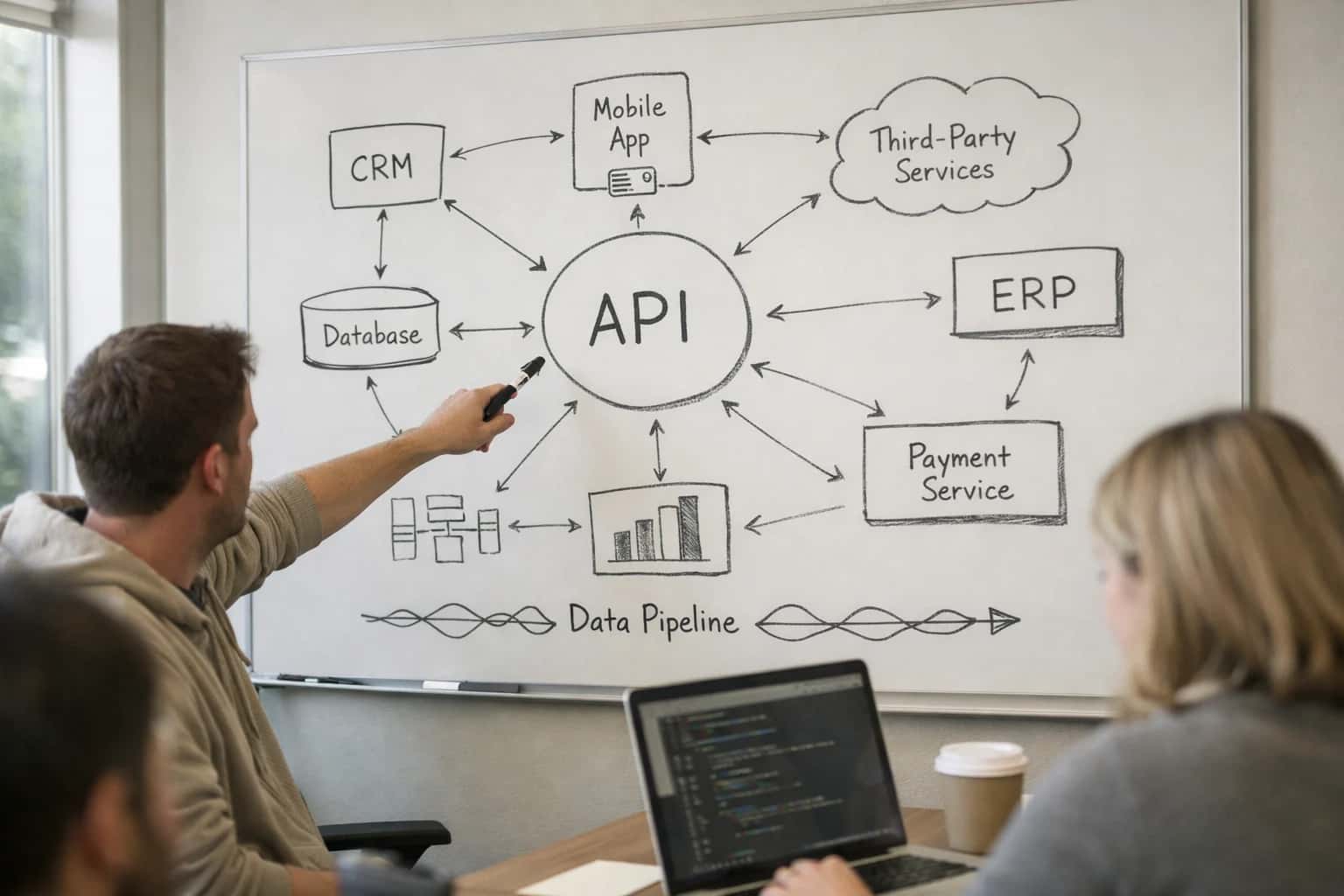
AUTOMATED CUSTOMER JOURNEY ORCHESTRATION
Where AI Connects ServiceTitan Operations to HubSpot Marketing
A blueprint for integrating AI across ServiceTitan and HubSpot to create a unified, data-driven customer journey from field service to marketing automation.
Implementation typically involves a middleware service (like a secure cloud function) that subscribes to ServiceTitan webhooks for key events: job.completed, invoice.paid, review.submitted. The service uses an LLM or a rules-based classifier to analyze the event context—for example, extracting sentiment from technician notes or identifying a high-value repeat service. It then calls HubSpot's API to update contact properties, add contacts to specific lists, or create a new marketing-qualified deal. A common high-value workflow is automatically adding customers who just completed a major HVAC installation to a "High-Value Asset Owner" list in HubSpot, triggering a personalized email sequence about maintenance plans within 24 hours.
Rollout requires careful data mapping and governance. Start by syncing a unified customer ID and defining a clear taxonomy for HubSpot contact properties that reflect service lifecycle stages (e.g., last_service_type, estimated_asset_age, customer_tier). Implement approval steps for AI-generated marketing actions, especially for high-touch segments, and maintain an audit log of all sync events. This architecture turns one-time service transactions into ongoing revenue streams by enabling your marketing team to act on operational intelligence the same day the job is finished. For related architectural patterns, see our guides on /integrations/field-service-management-platforms/ai-integration-for-servicetitan-crm and /integrations/marketing-automation-platforms.
UNIFIED CUSTOMER JOURNEY
Key Integration Surfaces in ServiceTitan and HubSpot
Bidirectional Contact & Company Sync
This is the foundational layer. AI logic governs the real-time sync of customer profiles, company records, and job history between ServiceTitan and HubSpot.
Key Objects:
- ServiceTitan → HubSpot: Sync
CustomerandJobobjects to HubSpot Contact and Company records. AI enriches HubSpot profiles with service history (e.g., total spend, last service date, equipment owned). - HubSpot → ServiceTitan: New HubSpot Contacts or Companies that meet criteria (e.g., high lead score, specific form submission) can be automatically created as ServiceTitan
Customerrecords, kicking off the service lifecycle.
AI Governance: Use AI to de-duplicate records, standardize addresses, and tag contacts with lifecycle stages (Marketing Lead → Service Customer).
UNIFIED CUSTOMER JOURNEY
High-Value AI Use Cases for ServiceTitan-HubSpot Integration
Integrating AI across ServiceTitan and HubSpot creates a closed-loop system where service interactions fuel personalized marketing and sales intelligence. These use cases focus on automating data flow and generating actionable insights to increase customer lifetime value.
01
Automated Service-to-Marketing Lead Scoring
AI analyzes completed ServiceTitan work orders, customer satisfaction scores, and equipment age to automatically update HubSpot contact properties and lead scores. High-value, satisfied customers with aging assets are flagged for proactive marketing campaigns (e.g., maintenance plan promotions).
Batch -> Real-time
Lead scoring update
02
Intelligent Post-Service Nurture Sequences
Trigger personalized HubSpot email workflows based on the specific service performed. An AI agent reviews the ServiceTitan job details (e.g., installed a new HVAC unit) and dynamically generates follow-up content—warranty info, maintenance tips, accessory offers—drafted into the marketing automation sequence.
1 sprint
Campaign setup time
03
Predictive Customer Churn Alerts for Account Managers
An AI model correlates data from both systems: declining ServiceTitan service frequency, negative feedback, and reduced HubSpot email engagement. It generates alerts in HubSpot for account managers, recommending intervention actions like a personalized check-in call or a special offer.
Same day
Risk identification
04
Dynamic Customer Segmentation for Targeted Campaigns
AI continuously segments the unified customer base using combined attributes: ServiceTitan job history (e.g., 'pool service customers'), HubSpot behavioral data, and predicted lifecycle stage. These dynamic lists power hyper-targeted HubSpot campaigns for cross-sell, loyalty, and referral programs.
Hours -> Minutes
List refresh
05
AI-Powered Quote-to-Lead Handoff
When a ServiceTitan estimate is created for a new prospect, AI enriches the contact record with firmographic data and intent signals before syncing to HubSpot as a qualified lead. It can also suggest the most effective initial contact strategy (e.g., call vs. email) based on historical conversion data.
Batch -> Real-time
Lead routing
06
Unified Service & Marketing ROI Dashboard
An AI agent synthesizes data from both platforms to answer complex business questions. It correlates HubSpot campaign UTM parameters with downstream ServiceTitan revenue from converted customers, providing a clear view of which marketing efforts drive the most profitable service work.
SERVICE-TO-MARKETING AUTOMATION
Example AI-Driven Workflows: From Service Event to Marketing Action
These workflows illustrate how AI can connect service events in ServiceTitan to personalized marketing actions in HubSpot, creating a closed-loop customer journey. Each example details the trigger, data flow, AI decision, and resulting system update.
Trigger: A work order is marked 'Complete' in ServiceTitan with a high customer satisfaction score (e.g., 5-star rating).
Context Pulled: AI agent retrieves the completed job details (service type, equipment serviced, technician notes), customer's full service history from ServiceTitan, and their current HubSpot contact profile (including past marketing engagement).
AI Agent Action:
- Analyzes the service event against the customer's asset list and historical data.
- Generates a personalized recommendation (e.g., "Based on the age of your AC unit serviced today, a seasonal maintenance plan could improve efficiency by 15%").
- Scores the lead for an upsell campaign and selects the optimal nurture track in HubSpot.
System Update:
- The AI agent creates a new HubSpot task for the sales rep: "Follow up on maintenance plan for [Customer Name]."
- It adds the customer to a HubSpot workflow for "High-Value Service Follow-up," triggering a personalized email sequence with the AI-generated recommendation.
- A custom property on the HubSpot contact record (e.g.,
Recommended_Upsell) is updated with the AI's suggestion for future reference.
Human Review Point: The sales rep receives the task and can review the AI's reasoning before making the call. The marketing email content can be set to require manager approval before sending.
CONNECTING SERVICE OPERATIONS TO MARKETING INTELLIGENCE
Implementation Architecture: Data Flow, APIs, and the AI Layer
A technical blueprint for integrating AI across ServiceTitan and HubSpot to create a unified, automated customer journey.
The integration architecture connects two primary data flows. First, ServiceTitan-to-HubSpot enrichment: completed work orders, technician notes, customer asset histories, and service contract details are synced via ServiceTitan's REST APIs to become rich contact properties and timeline events in HubSpot. Second, HubSpot-to-ServiceTitan triggers: marketing campaign engagement scores, lead source data, and form submissions from HubSpot are pushed back to ServiceTitan's customer records to inform service priority and personalize technician dispatches. The AI layer sits as an orchestration service between these systems, using the unified data to power three core workflows:
- Predictive Lead Scoring: Models analyze a homeowner's service history (appliance age, past repair frequency) combined with HubSpot engagement to score and route high-intent leads for replacement quotes.
- Personalized Campaign Automation: AI segments the customer base in HubSpot based on service events (e.g., recent AC repair) to trigger timely, relevant email nurtures for maintenance plans or accessory sales.
- Intelligent Service Scheduling: When a high-value marketing lead books a consultation, the AI reviews technician skill sets and parts inventory in ServiceTitan to recommend the optimal first appointment, aiming to convert the visit into a sold job.
Implementation hinges on a middleware service (often built on a platform like n8n or Make) that handles the bi-directional sync, data transformation, and AI agent calls. This service listens for webhooks from both platforms—like job.completed from ServiceTitan or contact.updated from HubSpot—and decides which AI workflow to initiate. For example, a completed HVAC repair job triggers an agent that:
- Fetches the job details and customer record from ServiceTitan's
jobsandcustomersAPIs. - Calls an LLM (like GPT-4) with a prompt to draft a personalized follow-up email summarizing the service and suggesting a seasonal maintenance plan.
- Uses the HubSpot API to create a contact property (
last_service_type: HVAC) and enrolls the customer in a corresponding "Post-Repair Care" workflow. - Logs the action and generated content in an audit trail for compliance. The middleware also manages error handling, rate limiting, and secure credential storage for both platform APIs.
Rollout should be phased, starting with a single high-value workflow like automated review requests for completed jobs. Governance is critical: marketing teams must define the rules for AI-triggered campaigns, while service managers approve the logic for lead scoring. Establish a human-in-the-loop review step for all AI-generated customer communications during the pilot. This architecture turns your service data into a competitive marketing asset, enabling campaigns that feel personal because they are rooted in actual home needs, moving from generic blasts to contextual, service-driven marketing that improves customer lifetime value.
SERVICE DATA TO MARKETING AUTOMATION
Code and Payload Examples
Triggering HubSpot Workflows from ServiceTitan
When a job is marked complete in ServiceTitan, a webhook payload is sent to an orchestration layer. This layer uses AI to analyze the work order details—such as service type, parts replaced, and technician notes—to determine the most relevant marketing follow-up. It then triggers a corresponding HubSpot workflow.
Example Webhook Payload from ServiceTitan:
json{ "event": "job.completed", "data": { "jobId": "ST-12345", "customerId": 78910, "serviceName": "AC Compressor Replacement", "totalAmount": 2450.75, "completionDate": "2024-05-15T14:30:00Z", "technicianNotes": "Replaced faulty compressor R-22. System pressure now optimal. Recommended bi-annual maintenance.", "items": [ { "name": "Compressor Unit", "sku": "AC-COMP-5T" }, { "name": "Labor", "sku": "LABOR-2HR" } ] } }
The AI agent parses the technicianNotes and items to classify the job as a "major repair" and identifies an upsell opportunity for a "Preventive Maintenance Plan."
SERVICE OPERATIONS
Realistic Time Savings and Business Impact
This table illustrates the operational impact of integrating AI across ServiceTitan and HubSpot, focusing on measurable improvements to workflows that bridge field service and marketing.
| Metric | Before AI | After AI | Notes |
|---|---|---|---|
Lead scoring from service history | Manual review of past jobs | Automated scoring based on asset value, frequency, and spend | Marketing can prioritize high-lifetime-value service customers |
Marketing campaign trigger creation | Weekly manual list exports and uploads | Real-time triggers from completed work orders or new assets | Campaigns launch same-day instead of next-week |
Customer service-to-sales handoff | Email or spreadsheet flag for account manager | Automated alert with context and suggested offer in HubSpot | Reduces missed renewal and upsell opportunities by ~40% |
Personalized quote/estimate follow-up | Generic email sequence for all leads | Dynamic content based on job type, location, and homeowner data | Increases lead-to-job conversion for targeted services |
Post-service feedback collection & routing | Batch survey sends with manual triage of negative responses | AI-triggered surveys with sentiment analysis routing to correct team | Critical issues reach a manager in hours, not days |
Unified customer profile enrichment | Disjointed data across platforms requiring manual reconciliation | Bi-directional sync with AI deduplication and gap filling | Creates a single source of truth for service and marketing ops |
Preventive maintenance renewal marketing | Calendar-based reminders with static email blasts | Predictive model flags at-risk contracts, triggers personalized nurture | Improves contract retention through timely, relevant outreach |
ARCHITECTING A CONTROLLED INTEGRATION
Governance, Security, and Phased Rollout
A practical framework for deploying AI across ServiceTitan and HubSpot with security, governance, and incremental value delivery.
A production-grade integration between ServiceTitan and HubSpot requires a governance layer that respects the sensitivity of both service and marketing data. This involves secure API credential management via a secrets vault, strict field-level access controls to protect PII and financial data, and comprehensive audit logging for all AI-generated actions—such as a lead score adjustment in HubSpot or a service history update in ServiceTitan. All AI prompts and model calls should be routed through a central LLMOps gateway to enforce policy, manage costs, and trace the lineage of automated decisions back to the source customer record.
A phased rollout mitigates risk and demonstrates quick wins. Start with a read-only analysis phase, where an AI agent analyzes completed ServiceTitan jobs to identify customers with high-value, repeat service history and automatically tags them in a dedicated HubSpot list for a "loyalty" marketing campaign. Next, implement a one-way automation phase, where service appointment confirmations in ServiceTitan trigger personalized, AI-drafted email sequences in HubSpot with relevant maintenance tips. The final phase introduces bi-directional intelligence, where HubSpot contact engagement scores and lead source data are used by an AI agent within ServiceTitan to prioritize callback lists for CSRs and personalize service agreement renewal offers.
Critical to success is establishing a human-in-the-loop for high-stakes actions before full automation. For example, AI-generated proposals for high-value preventive maintenance contracts should require a service manager's approval in ServiceTitan before being sent via a HubSpot workflow. Similarly, AI-suggested lead scores based on service spend should be presented as recommendations to a marketing operations specialist for review. This controlled approach, combined with a rollback plan for each automation, ensures the integration drives efficiency without compromising customer trust or operational control.
Enabling Efficiency, Speed & Accuracy
Intelligent Analysis, Decision & Execution
We build AI systems for teams that need search across company data, workflow automation across tools, or AI features inside products and internal software.
Talk to Us
Search across company data
Give teams answers from docs, tickets, runbooks, and product data with sources and permissions.
Useful when people spend too long searching or get different answers from different systems.
Enterprise searchRAGPermissions
Read more
Automate internal workflows
Use AI to route work, draft outputs, trigger actions, and keep approvals and logs in place.
Useful when repetitive work moves across multiple tools and teams.
AI agentsWorkflow automationGovernance
Read more
Add AI to products and internal tools
Build assistants, guided actions, or decision support into the software your team or customers already use.
Useful when AI needs to be part of the product, not a separate tool.
AI integrationDecision supportModel routing
Read moreIMPLEMENTATION BLUEPRINT
Frequently Asked Questions
Practical questions for technical teams planning an AI integration between ServiceTitan and HubSpot to unify service operations with marketing automation.
This workflow uses a ServiceTitan webhook on job completion to trigger a personalized HubSpot marketing sequence.
- Trigger: A ServiceTitan job changes to status
Completedand is invoiced. - Context Pulled: An AI agent or middleware service calls the ServiceTitan API to fetch:
- Customer details (name, email, property address)
- Job details (service category, technician notes, total invoice amount, parts replaced)
- Customer satisfaction score (if captured).
- AI Action & Routing: A lightweight model or rule engine analyzes the job data to select the appropriate marketing track in HubSpot.
- High-Value Job + Positive Notes: Route to a "Premium Service Review" campaign, triggering a thank-you email and a request for a Google review.
- Preventive Maintenance Job: Route to a "PM Reminder" campaign, scheduling a follow-up email in 11 months.
- Job with Upsell Opportunity (e.g., old unit noted): Route to a "Related Service Offer" campaign, adding the contact to a list for a special offer on upgrades.
- System Update: The integration creates or updates the contact in HubSpot, applies the relevant contact properties (e.g.,
last_service_date,last_service_type), and enrolls the contact in the chosen workflow. - Human Review Point: For jobs flagged with negative notes or low satisfaction scores, the system can create a task in HubSpot for an account manager to call instead of triggering an automated campaign.

About the author
Prasad Kumkar
CEO & MD, Inference Systems
Prasad Kumkar is the CEO & MD of Inference Systems and writes about AI systems architecture, LLM infrastructure, model serving, evaluation, and production deployment. Over 5+ years, he has worked across computer vision models, L5 autonomous vehicle systems, and LLM research, with a focus on taking complex AI ideas into real-world engineering systems.
His work and writing cover AI systems, large language models, AI agents, multimodal systems, autonomous systems, inference optimization, RAG, evaluation, and production AI engineering.
LinkedIn
Limited slotsGet a Free AI Consultation
Partnered with leading AI, data, and software stack.





How We Work
Custom AI workflows for your Business
One-fit-all AI don't work for modern businesses. At Inferensys, we aim to understand your business & custom requirements; which we use to define most efficient agentic workflows, the data, and the tools for your business.
01
Review the use case
We understand the task, the users, and where AI can actually help.
Read more02
Pick the right approach
We define what needs search, automation, or product integration.
Read more03
Build the first useful version
We implement the part that proves the value first.
Read more04
Improve from there
We add the checks and visibility needed to keep it useful.
Read moreThe first call is a practical review of your use case and the right next step.
Talk to Us