The traditional post-event lead process is a bottleneck: raw scan data from platforms like Whova, Bizzabo, or Cvent sits in a CSV until someone manually researches, scores, and imports it into Salesforce or HubSpot. An AI-integrated architecture flips this model to real-time. When a badge is scanned, an event webhook triggers an AI agent. This agent immediately enriches the lead by cross-referencing the attendee's profile, session attendance, and engagement scores from the event platform's API. It then applies a dynamic scoring model—factoring in job title, company, session participation, and booth visits—to calculate a lead score before the conversation at the booth has even ended.

Integration
Smart Lead Capture and Scoring for Events
Architecture for enhancing event lead capture (e.g., via Whova or badge scanning) with AI-driven scoring, enrichment, and real-time routing to Salesforce or HubSpot, using session engagement and profile data.
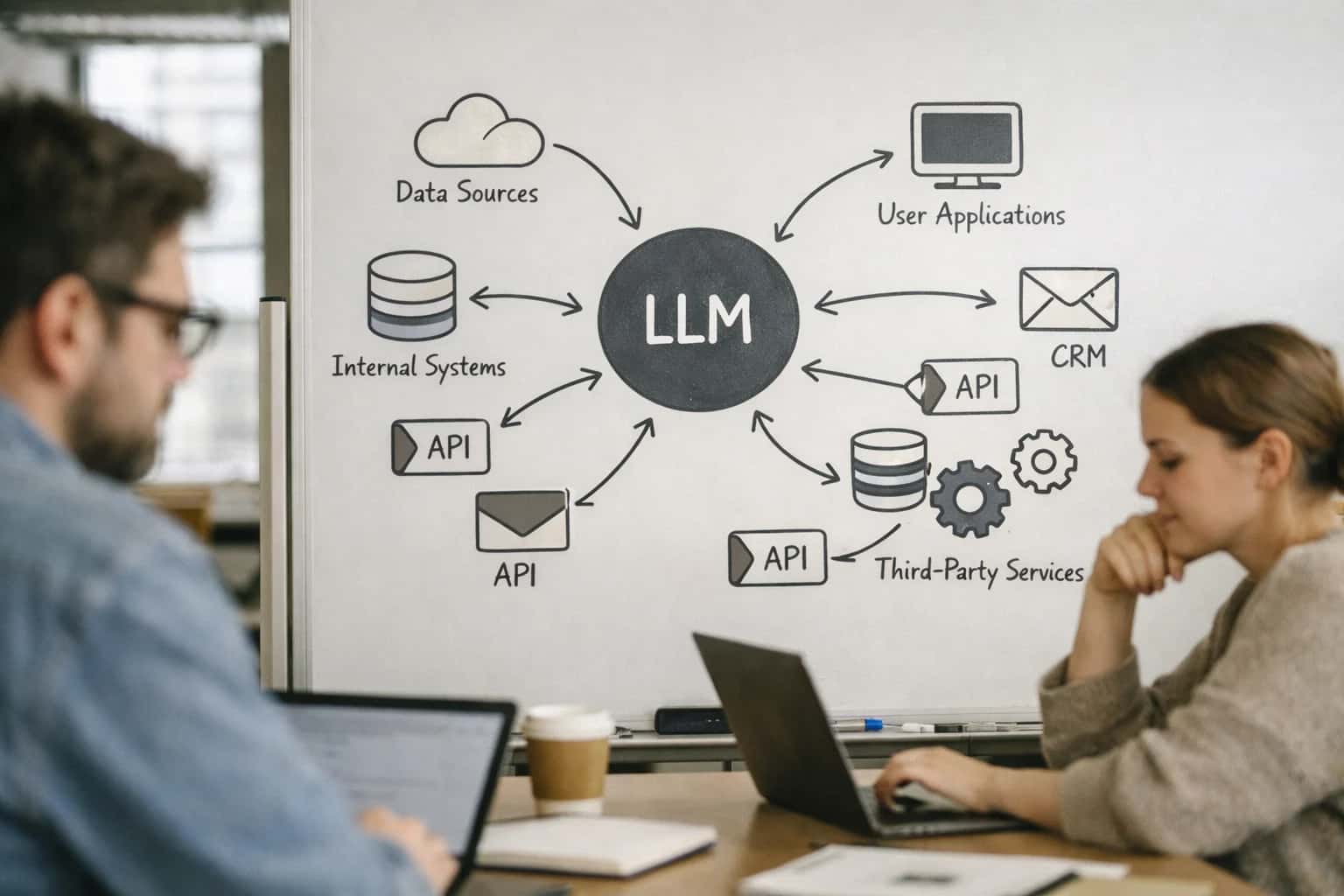
ARCHITECTURE FOR REAL-TIME LEAD PROCESSING
From Raw Scan to Qualified Lead in Seconds
A technical blueprint for transforming event badge scans into enriched, scored, and routed leads using AI agents integrated with your event and CRM platforms.
Implementation centers on a lightweight orchestration layer—often a serverless function or a workflow in n8n or Microsoft Copilot Studio—that sits between your event platform and CRM. This layer calls a series of tools: a profile enrichment service, a session engagement API from the event platform, and your configured LLM for scoring logic. The final payload, now containing an enriched contact object and a lead_score field, is posted to your CRM's API, typically to a Lead or Contact object, and can trigger an immediate alert in Slack or Teams for the sales rep. The entire flow, from scan to CRM create, is designed to execute in under 10 seconds.
Rollout requires careful governance. Start with a pilot event or a specific track (e.g., VIP attendees). Implement audit logging for every scan-to-lead transaction to monitor the AI's scoring decisions and ensure data quality. Use your CRM's validation rules to act as a final safety net. This integration doesn't replace human judgment; it prioritizes it. By the time your sales team opens their CRM, the highest-potential leads from the event floor are already tagged, scored, and waiting for a personalized follow-up, turning a week-long manual process into a same-day competitive advantage.
SMART LEAD CAPTURE AND SCORING
Where AI Plugs Into Your Event Stack
Ingesting First-Party Attendee Data
AI lead scoring begins at the point of registration. Integration taps into the registration APIs of platforms like Cvent, Whova, or Eventbrite to pull structured attendee profiles as they are created or updated. This includes job titles, company data, registration source, and ticket tier.
For on-site events, real-time check-in data via badge scanning APIs (common in Bizzabo or Whova) provides a critical signal. An AI agent can process this stream to identify high-value attendees the moment they arrive, triggering immediate alerts for sales teams. The architecture typically involves a webhook listener that enriches the raw check-in event with company data from a CRM before passing it to a scoring model.
Example Webhook Payload for Scoring:
json{ "event_id": "conf-2024-001", "attendee_id": "att_7x9b2p", "action": "checked_in", "timestamp": "2024-10-15T09:30:00Z", "profile": { "first_name": "Alex", "last_name": "Chen", "title": "VP of Engineering", "company": "TechCorp Inc.", "registration_type": "VIP" } }
SMART LEAD CAPTURE AND SCORING
High-Value AI Use Cases for Event Leads
Transform raw event attendee data into prioritized, actionable sales pipeline. These AI integration patterns connect platforms like Cvent, Whova, and Bizzabo to your CRM, enriching leads with session engagement, profile data, and real-time scoring for immediate follow-up.
01
Real-Time Lead Scoring & Routing
AI models analyze badge scan data, session attendance, and app engagement from Whova or Cvent in real-time. Leads are instantly scored and routed to the correct Salesforce queue or HubSpot list based on fit, intent, and engagement level, moving follow-up from days to minutes.
Days -> Minutes
Follow-up time
02
Automated Profile Enrichment
Agents use the registration API to fetch attendee profiles, then call enrichment services (Clearbit, Apollo) to append firmographic data, technographics, and social profiles. Enriched records are pushed to Salesforce/HubSpot, giving reps full context before the first touchpoint.
50+ Fields
Typical data appended
03
Session-Based Intent Signaling
Integrate with the session tracking API to monitor which product demos, technical deep-dives, or keynote sessions an attendee joins. AI correlates session topics with your solution areas to generate an intent score and suggested talking points for the sales team.
High-Intent Signal
For sales outreach
04
Post-Event Survey Sentiment Analysis
Connect AI to post-event survey tools (integrated with Cvent) to analyze open-ended responses. Extract themes, quantify sentiment, and identify at-risk or highly interested leads based on feedback. Insights and flagged leads are automatically synced to the CRM for tailored follow-up.
05
Networking Match Score Automation
For platforms like Bizzabo with networking features, AI analyzes attendee profiles and stated goals to generate 'missed connection' alerts for your sales team. Identifies high-value prospects your team didn't meet but should reach out to based on mutual interests.
Batch -> Real-time
Match alerts
06
Lead Handoff & Activity Sync
A complete workflow where a scored, enriched lead is created in the CRM, and an AI agent drafts a personalized first email using event context. The agent also logs all event activities (sessions attended, scans) as timeline entries in Salesforce or HubSpot, creating a full engagement record.
SMART LEAD CAPTURE AND SCORING FOR EVENTS
End-to-End AI Lead Scoring Workflows
Practical automation patterns for enriching event leads with AI-driven scoring and routing, directly within platforms like Cvent, Bizzabo, Whova, and Eventbrite. These workflows connect badge scans, session engagement, and profile data to CRM systems like Salesforce or HubSpot in real-time.
Trigger: An attendee badge is scanned at a booth or session using a platform like Whova or a Cvent-powered scanner.
Context Pulled: The system retrieves the attendee's basic registration profile from the event platform and any pre-event survey responses.
AI Agent Action: An AI agent calls an enrichment API (e.g., Clearbit, ZoomInfo) or parses the attendee's LinkedIn profile URL (if provided) to append:
- Job title, seniority level, department.
- Company size, industry, estimated revenue.
- Technologies used (from LinkedIn skills or Crunchbase).
System Update: The enriched profile is immediately written back to a custom object in the event platform (e.g., Cvent.CustomField__c) and a webhook fires to the CRM, creating/updating a Contact with the new data.
Human Review Point: Enrichment confidence scores below 85% flag the record for manual review in a queue before CRM sync.
FROM SCAN TO SCORED LEAD IN MINUTES
Implementation Architecture: Data Flow and AI Layer
A production-ready blueprint for connecting event lead capture to AI-driven scoring and CRM sync.
The integration architecture connects three primary layers: the Event Platform (e.g., Whova, Cvent, or badge scanner API), the AI Processing Layer, and the Destination CRM (Salesforce, HubSpot). The flow begins when an attendee badge is scanned or a digital connection is made within the event app. This raw interaction event—containing attendee ID, session ID, and timestamp—is sent via webhook or API call to a secure ingestion endpoint. Simultaneously, the system pulls the attendee's enriched profile (job title, company, registration answers) from the event platform's API. These two data streams are merged into a unified JSON payload that forms the basis for AI analysis.
The core AI layer, hosted within your cloud environment, processes this payload through a sequential workflow. First, a scoring agent evaluates the lead using a configurable model that weights factors like session engagement depth, profile seniority, company relevance, and explicit interest signals. This model can be tuned for different event types (e.g., a trade show versus an investor day). Second, an enrichment agent can call external APIs (like Clearbit or LinkedIn) to append missing firmographic data. Finally, a routing agent uses the score and enriched data to determine the correct CRM object, owner, and campaign, formatting the lead into the exact API schema required by Salesforce or HubSpot for immediate creation or update.
Governance is built into the pipeline. All AI-scoring decisions are logged with the underlying rationale (e.g., "+20 points for VPE title, +15 for attending technical deep-dive session") to an audit table, providing full explainability for sales teams. The system can be configured with approval gates or score thresholds before CRM sync, and it integrates with your existing Identity and Access Management (IAM) platform to ensure AI agents have only the necessary, scoped access to event and CRM data. Rollout typically starts with a single high-value event or track, allowing for calibration of scoring weights before scaling to the entire portfolio.
For a deeper look at connecting event data to downstream systems, see our guide on Cvent Integration with Salesforce CRM, or explore how to secure these automated workflows with Secure AI Access for Event Platforms with IAM.
SMART LEAD CAPTURE AND SCORING
Code and Payload Examples
Capturing and Enriching a Lead from a Badge Scan
When a badge is scanned at a booth, the event platform (e.g., Whova) typically sends a webhook or updates an API object. An AI agent intercepts this event to enrich the raw data before it hits your CRM.
Typical Payload from Event Platform:
json{ "event_id": "conf-2024-001", "scan_timestamp": "2024-10-15T14:30:00Z", "attendee_id": "att_78910", "attendee_name": "Jane Doe", "attendee_email": "[email protected]", "attendee_company": "TechCorp Inc.", "attendee_title": "Director of Product", "booth_id": "booth_salesforce", "session_attendance": ["ses_101", "ses_105"] }
Agent Enrichment Logic: The agent calls an enrichment service (e.g., Clearbit, internal DB) to append firmographic data like industry, employee count, and technographics. It also analyzes the session attendance list against a session taxonomy to infer interest areas (e.g., "cloud infrastructure", "product-led growth").
SMART LEAD CAPTURE AND SCORING FOR EVENTS
Realistic Time Savings and Business Impact
This table illustrates the operational impact of adding AI-driven scoring and routing to event lead capture workflows, comparing manual processes to an AI-assisted architecture.
| Workflow Stage | Before AI | After AI | Implementation Notes |
|---|---|---|---|
Lead ingestion from badge scan/app | Manual CSV export/import | Real-time API sync to scoring engine | Webhook from Whova/Cvent to processing queue |
Initial lead qualification | Hours of manual profile review | Minutes for AI-assisted scoring | Scores based on title, company, session attendance |
Lead enrichment & routing logic | Static rules (e.g., job title) | Dynamic scoring with firmographic data | AI calls enrichment APIs, applies routing rules to CRM object |
CRM record creation/update | Next-day manual data entry | Same-day automated sync | Batched API calls to Salesforce/HubSpot with audit trail |
Sales team alert & assignment | Email blast or manual assignment | Automated Slack/Teams alert for hot leads | Integration with CRM assignment rules and communication platforms |
Post-event nurture segmentation | Broad segment based on registration | Granular segments based on engagement score | AI tags leads for specific email journeys in Marketo/Braze |
Reporting & ROI attribution | Manual spreadsheet compilation | Automated dashboard with lead source scoring | AI correlates event activity with pipeline stages in BI tools |
ARCHITECTING FOR ENTERPRISE PRODUCTION
Governance, Security, and Phased Rollout
A production-ready AI integration for event lead capture requires deliberate governance, secure data handling, and a phased rollout to manage risk and prove value.
Start with a sandbox environment. Before connecting to live production data in your event platform (e.g., Cvent, Whova) and CRM (e.g., Salesforce, HubSpot), implement the AI scoring pipeline in a development or sandbox instance. Use historical event data exports to test enrichment logic, scoring models, and routing rules. This isolates the integration from live operations and allows for rigorous validation of data flows—ensuring badge scan records, session attendance logs, and profile data are correctly mapped and processed before any real-time sync occurs.
Implement a human-in-the-loop (HITL) approval layer for high-stakes routing. Not every AI-scored lead should be auto-synced. Configure rules to hold "high-value" or "anomalous" leads (e.g., scores above a threshold, or from VIP sessions) in a review queue within your CRM or a custom dashboard. This allows sales operations to audit the AI's logic—checking enrichment sources like Clearbit or session engagement weightings—before the lead is assigned. This builds trust, provides a feedback loop to tune the model, and maintains control over critical prospect relationships.
Govern access with API keys, webhook signatures, and audit trails. The integration will involve multiple systems: the event platform's API, AI model endpoints (like OpenAI), enrichment services, and your CRM. Use dedicated service accounts with least-privilege API permissions. Sign all webhook payloads from your event platform. Log every action—lead received, score calculated, enrichment source, routing decision—to a centralized audit log. This is crucial for compliance (e.g., GDPR for attendee data) and for diagnosing issues when a lead doesn't route as expected.
Roll out by event tier or lead source. Don't enable AI scoring for all events at once. Start with a single, low-risk internal event or a specific lead source (e.g., "scan from sponsored session only"). Measure the quality of routed leads against a control group. Use this initial phase to calibrate scoring thresholds and gather feedback from sales reps. Then, expand to track leads across multiple sessions, then to external events, and finally to incorporate real-time engagement signals from event apps. This phased approach de-risks the investment and creates a clear narrative of increasing ROI.
Enabling Efficiency, Speed & Accuracy
Intelligent Analysis, Decision & Execution
We build AI systems for teams that need search across company data, workflow automation across tools, or AI features inside products and internal software.
Talk to Us
Search across company data
Give teams answers from docs, tickets, runbooks, and product data with sources and permissions.
Useful when people spend too long searching or get different answers from different systems.
Enterprise searchRAGPermissions
Read more
Automate internal workflows
Use AI to route work, draft outputs, trigger actions, and keep approvals and logs in place.
Useful when repetitive work moves across multiple tools and teams.
AI agentsWorkflow automationGovernance
Read more
Add AI to products and internal tools
Build assistants, guided actions, or decision support into the software your team or customers already use.
Useful when AI needs to be part of the product, not a separate tool.
AI integrationDecision supportModel routing
Read moreIMPLEMENTATION AND WORKFLOW DETAILS
Frequently Asked Questions
Practical questions about architecting and rolling out AI-driven lead capture and scoring for events, from data flow and model selection to governance and ROI measurement.
The integration typically uses a combination of platform APIs and webhooks to stream data to the AI layer.
Common Data Sources:
- Registration API: Pulls attendee profile data (company, title, interests) from Cvent, Whova, or Bizzabo.
- Session Check-in/Engagement Webhooks: Real-time triggers when an attendee scans into a session, visits a booth, or downloads a resource.
- Networking Activity Streams: Data from Whova's networking features or Bizzabo's meeting scheduler.
- Badge Scan Events: Via integrated scanner APIs (e.g., via Whova's lead retrieval) sent as JSON payloads.
Example Webhook Payload for a Session Check-in:
json{ "event_id": "conf_2024_q3", "attendee_id": "att_78910", "session_id": "keynote_ai", "timestamp": "2024-05-15T10:30:00Z", "action": "check_in", "duration_minutes": 5 }
This data is queued (e.g., in AWS SQS or Google Pub/Sub) and processed by the scoring service to update lead profiles in near real-time.

About the author
Prasad Kumkar
CEO & MD, Inference Systems
Prasad Kumkar is the CEO & MD of Inference Systems and writes about AI systems architecture, LLM infrastructure, model serving, evaluation, and production deployment. Over 5+ years, he has worked across computer vision models, L5 autonomous vehicle systems, and LLM research, with a focus on taking complex AI ideas into real-world engineering systems.
His work and writing cover AI systems, large language models, AI agents, multimodal systems, autonomous systems, inference optimization, RAG, evaluation, and production AI engineering.
LinkedIn
Limited slotsGet a Free AI Consultation
Partnered with leading AI, data, and software stack.





How We Work
Custom AI workflows for your Business
One-fit-all AI don't work for modern businesses. At Inferensys, we aim to understand your business & custom requirements; which we use to define most efficient agentic workflows, the data, and the tools for your business.
01
Review the use case
We understand the task, the users, and where AI can actually help.
Read more02
Pick the right approach
We define what needs search, automation, or product integration.
Read more03
Build the first useful version
We implement the part that proves the value first.
Read more04
Improve from there
We add the checks and visibility needed to keep it useful.
Read moreThe first call is a practical review of your use case and the right next step.
Talk to Us