The integration's core surfaces are Cvent's Registration API, Attendee API, and Webhook system, and Salesforce's REST API, Platform Events, and Flow automation. AI agents act on the payloads moving between these endpoints. For example, when a new attendee registers via Cvent, the webhook payload is intercepted. An AI agent can immediately enrich the lead by pulling public data (company, role, intent signals) before the Lead or Contact record is even created in Salesforce. This pre-sync enrichment ensures the CRM record is actionable from moment one.

Integration
Cvent Integration with Salesforce CRM
A technical blueprint for building a bi-directional, AI-enhanced integration between Cvent and Salesforce CRM to automate lead sync, enrich contact records with event behavior, and trigger personalized follow-ups.
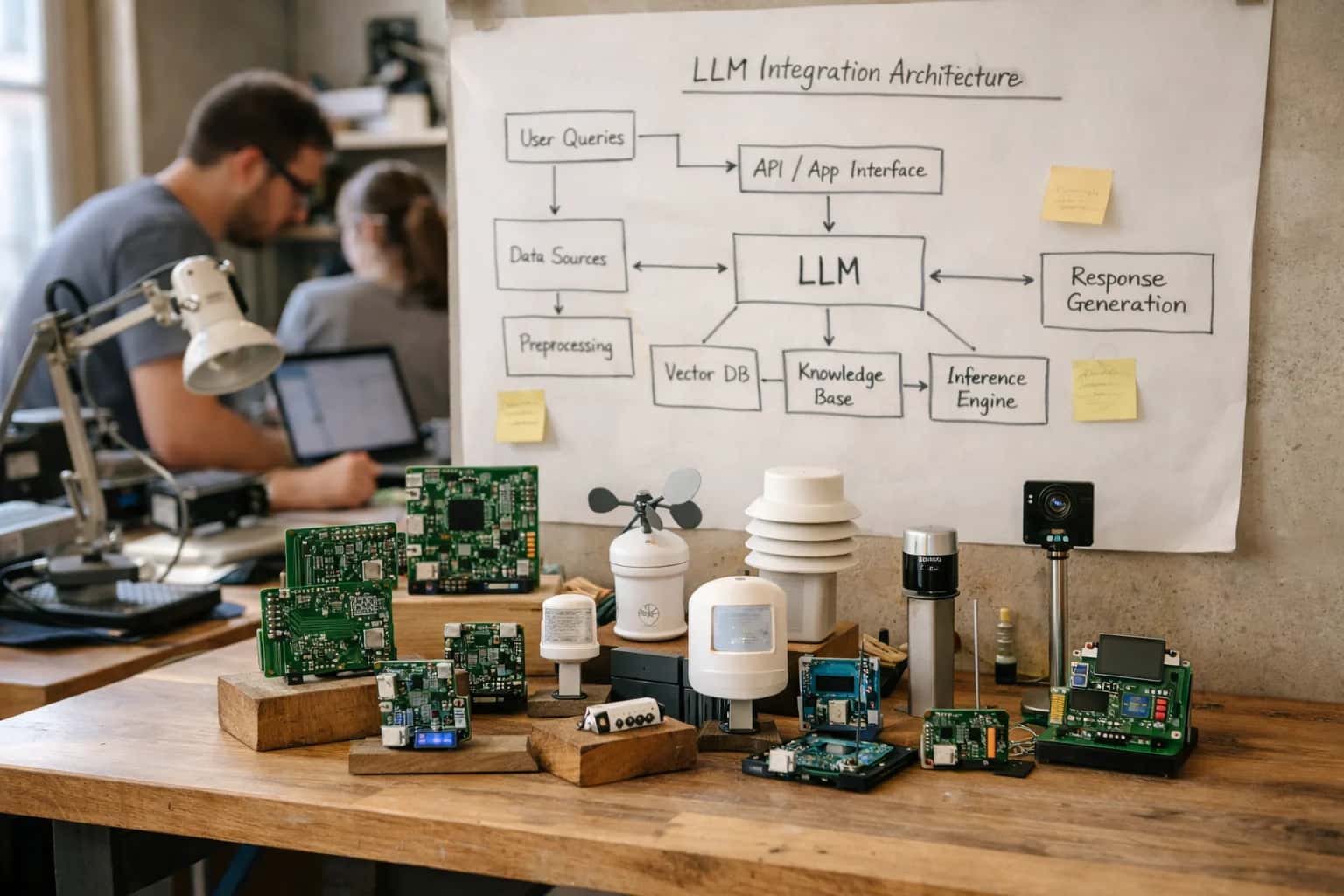
ARCHITECTURE FOR BI-DIRECTIONAL INTELLIGENCE
Where AI Fits in the Cvent-to-Salesforce Workflow
A practical blueprint for embedding AI into the critical data flow between Cvent and Salesforce, automating lead enrichment and triggering personalized follow-ups.
Post-event, the workflow shifts to behavioral scoring and personalized outreach. The AI layer processes Cvent's session attendance, poll responses, and networking activity data (via the Attendee API) to generate an engagement score and key interest tags. This intelligence is written to custom fields on the Salesforce Contact or Lead object. A Salesforce Flow is then triggered, using this data to draft a personalized follow-up email via an LLM, suggest next-best-actions for the sales rep in Salesforce Lightning, or automatically update the Opportunity stage if the attendee is a hot prospect. The result is a closed-loop system where event behavior directly fuels sales workflows, turning generic 'we met at the event' emails into relevant, timely conversations.
Governance is critical. All AI-generated content (like email drafts) should be logged in a custom AI_Audit_Log__c object and routed for human-in-the-loop approval before sending, especially for high-value accounts. Implement rate limiting and idempotency keys on API calls to both systems to handle retries gracefully. Rollout should be phased: start with lead enrichment and scoring for a single pilot event, validate data quality and impact, then expand to automated follow-ups for specific segments. This measured approach de-risks the integration while demonstrating quick value from more intelligent, connected event data.
ARCHITECTURE BLUEPRINT
Key Integration Surfaces in Cvent and Salesforce
Registration Data and Lead Objects
This surface connects Cvent's attendee registration data to Salesforce's Lead and Contact objects. The primary integration point is Cvent's Registration API, which provides real-time webhooks for new registrations, cancellations, and field updates.
Key Workflow:
- An AI agent listens for
registration.createdwebhooks from Cvent. - It enriches the raw attendee data by cross-referencing the email against internal databases or public sources to append job title, company size, or technographic signals.
- The agent then creates or updates a corresponding Lead record in Salesforce, mapping Cvent custom fields to Salesforce fields. It can also trigger an immediate Event Engagement Score calculation based on ticket type, session selections, and survey responses to prioritize follow-up.
- This automated sync ensures sales teams have enriched, scored leads in their CRM within minutes of registration, replacing manual CSV imports.
Related Service: /integrations/event-management-platforms/ai-integration-for-cvent
CVENT + SALESFORCE
High-Value AI Use Cases for the Integration
A bi-directional, AI-enhanced integration between Cvent and Salesforce automates lead flow, enriches CRM records with event behavior, and triggers personalized follow-ups. These are the highest-impact workflows to build first.
01
Real-Time Lead Scoring & Routing
AI analyzes Cvent registration data (job title, company, session selections) and cross-references it with Salesforce account/contact data to assign a lead score and route it to the correct sales rep or SDR queue in real-time via webhook. Workflow: Registration → API call → Scoring model → Salesforce Lead/Contact update → Assignment rule.
Batch → Real-time
Lead processing
02
Post-Event Engagement Automation
After an event, AI synthesizes an attendee's engagement data (session attendance, booth visits, survey responses from Cvent) into a personalized follow-up email and task for the Salesforce owner. Workflow: Event ends → Data sync → AI generates summary & next steps → Creates Salesforce Task & Email → Logs activity on Contact timeline.
Same day
Personalized follow-up
03
Event-Driven Opportunity Updates
AI monitors Cvent check-ins and session engagement for existing Salesforce Contacts. High-value engagement (e.g., keynote attendance, product demo visit) automatically triggers a stage update, adds a note to the Opportunity, and alerts the account owner. Workflow: RFID/App check-in → Event → AI evaluates significance → Updates Salesforce Opportunity Stage & Activity.
Manual → Automated
Pipeline signal
04
Intelligent Badge Scan Enrichment
When a lead is scanned at a booth, the AI agent immediately enriches the scan record with data from Salesforce (existing relationship, deal size, recent support tickets) and pushes enriched context back to the scanner app or rep's mobile Salesforce. Workflow: Scan → API call → Enrich with CRM data → Return context to scanner/Cvent → Log in Salesforce.
05
Attendee No-Show & Cancellation Analysis
AI correlates registration no-shows or cancellations in Cvent with Salesforce data (email engagement, recent sales touchpoints) to identify at-risk accounts or ineffective pre-event campaigns, triggering a recovery workflow in Salesforce. Workflow: No-show flag in Cvent → AI analyzes CRM history → Creates Salesforce Task for follow-up or Campaign update.
Proactive alerts
Risk detection
06
Event ROI Attribution Model
AI continuously matches Cvent attendees to Salesforce Opportunities and Closed-Won deals. It builds an attribution model to calculate event influence on pipeline and revenue, generating a dashboard in Salesforce Reports or Tableau CRM. Workflow: Sync attendee lists & deal data → AI performs fuzzy matching & timeline analysis → Updates custom Salesforce object with attribution metrics.
IMPLEMENTATION PATTERNS
Example AI-Enhanced Workflows
These workflows illustrate how AI agents, powered by Cvent and Salesforce APIs, automate high-friction processes between event management and CRM operations. Each pattern includes the trigger, data flow, AI action, and system update.
Trigger: An attendee scans their badge at a session, visits a sponsor booth, or downloads a resource via the Cvent event app.
Context/Data Pulled:
- Attendee profile from Cvent (registration type, company, title, custom fields).
- Real-time engagement event (session attended, booth visited, duration).
- Historical engagement from past events (if available in Cvent).
Model or Agent Action:
- An AI agent ingests the profile and engagement data.
- It scores the lead using a configurable model considering:
- Fit (job title, company industry vs. target account list).
- Intent (session relevance, sponsor interest).
- Engagement level (multiple touchpoints, duration).
- The agent determines the appropriate Salesforce action:
- Create a new Lead with a calculated
Lead ScoreandEvent Source. - Update an existing Contact/Lead, appending the new activity and recalculating score.
- Assign an Opportunity Task to the relevant sales rep based on territory rules.
- Create a new Lead with a calculated
System Update or Next Step:
- The agent uses the Salesforce REST API to create/update the record.
- A high-score lead triggers an immediate alert in the sales team's Slack channel via a webhook.
- The Cvent attendee record is tagged with the
Salesforce_Lead_Idfor future syncs.
Human Review Point: Scoring thresholds and routing rules are configured and reviewed quarterly by Sales Ops. High-value leads flagged by the system are still subject to rep qualification.
BI-DIRECTIONAL SYNC WITH AI ENRICHMENT
Implementation Architecture & Data Flow
A production-ready blueprint for connecting Cvent and Salesforce with an AI layer that automates lead flow and enriches records with event intelligence.
The core integration connects Cvent's Attendee API and Event API to Salesforce's REST API via a middleware orchestration layer. Key data objects flow bi-directionally: Cvent registrants sync as Leads or Contacts in Salesforce, while Salesforce Campaigns and Contacts can be pushed back to Cvent for targeted event invitations. The AI layer intercepts this flow at two critical points: first, to score and route new leads based on registration metadata (job title, company, session selections) before they hit Salesforce; second, to enrich existing Contact records in Salesforce with post-event behavioral data (session attendance, booth visits, survey responses) pulled from Cvent after the event concludes.
Implementation typically uses a queue-based system (e.g., AWS SQS or RabbitMQ) to handle registration spikes. A registration webhook from Cvent triggers an event payload. An AI agent evaluates the payload against your business rules—using a model like GPT-4 or Claude for job title normalization and intent scoring—then determines the correct Salesforce object (Lead vs. Contact), Owner, and Lead Score field. For post-event sync, a scheduled job pulls engagement data from Cvent's reporting endpoints, where a separate AI process summarizes key behaviors (e.g., "Attended 3 technical sessions, visited sponsor booth twice") and appends this as a rich-text note to the Contact's Activity Timeline in Salesforce, also updating a custom Event Engagement Score field.
Governance is managed through API key rotation stored in a secrets manager, with all data transformations and AI calls logged for audit. Rollout should start with a single pilot event to validate lead scoring logic and data mapping before scaling. A critical nuance is managing duplicate records; the AI logic should include a fuzzy matching check against existing Contacts in Salesforce using name and email before creating a new Lead, referencing Salesforce's standard duplicate rules.
AI-ENHANCED SYNC PATTERNS
Code & Payload Examples
Bi-Directional Lead Synchronization
This pattern uses Cvent's webhooks for new registrations and Salesforce's Platform Events for new leads to maintain a real-time sync. An AI agent enriches the contact record by analyzing event behavior (session attendance, booth visits) from Cvent and appending insights to the Salesforce Contact's Description or a custom Event_Engagement_Summary__c field.
Example Webhook Payload (Cvent → Salesforce):
json{ "event": "registration.created", "data": { "registrationId": "reg_abc123", "attendee": { "firstName": "Jane", "lastName": "Doe", "email": "[email protected]", "company": "Acme Corp" }, "eventId": "evt_webinar2024", "sessions": ["ses_ai101", "ses_sales202"] } }
AI Enrichment Logic (Pseudocode):
python# After lead is created/updated in Salesforce attendee_profile = fetch_cvent_engagement(registration_id) session_topics = map_sessions_to_topics(attendee_profile['sessions']) enrichment_note = f"Attended sessions on {', '.join(session_topics)}. Showed high interest in AI and sales topics." update_salesforce_contact(contact_id, { 'Description': enrichment_note, 'Event_Score__c': calculate_engagement_score(attendee_profile) })
Cvent + Salesforce AI Integration
Realistic Operational Impact & Time Savings
This table illustrates the tangible workflow improvements and time savings achieved by adding an AI orchestration layer to the Cvent-Salesforce sync, focusing on high-volume manual tasks.
| Workflow / Metric | Before AI Integration | After AI Integration | Implementation Notes |
|---|---|---|---|
Lead Qualification & Routing | Manual review of 100+ post-event leads; 2-4 hour delay to sales | AI-assisted scoring & routing in <15 minutes; human-in-the-loop approval | AI scores based on session attendance, booth scans, and survey responses synced from Cvent. |
Contact Record Enrichment | Reps manually update 5-10 fields per high-value contact | AI auto-populates 'Event Engagement' custom object; flags for follow-up | Leverages Cvent API for behavioral data (e.g., sessions attended, questions asked). |
Personalized Follow-Up Trigger | Generic email blasts 1-2 days post-event; manual segment building | Dynamic, behavior-triggered email/Slack alerts within 1 hour of session end | AI matches engagement to pre-built playbooks; triggers via Salesforce Flow/Marketing Cloud. |
Event ROI Attribution | Quarterly manual spreadsheet analysis linking event spend to pipeline | Weekly automated dashboard with AI-attributed pipeline influence | AI correlates Cvent attendee IDs with Salesforce opportunity contact roles. |
Duplicate Lead/Contact Merging | Ad-hoc de-duping during data import; creates record conflicts | Pre-sync duplicate detection & merge recommendations | AI checks against existing records using name, email, and company before sync. |
Post-Event Survey Analysis | Manual reading of 500+ open-text responses for themes | AI summarizes key themes, sentiment, and urgent issues in 30 minutes | Processes Cvent survey data; outputs to Salesforce Reports and Slack channel. |
Sponsor Lead Package Delivery | Manual CSV compilation and email to sponsors 3-5 days post-event | Automated, branded PDF reports delivered via email <24 hours post-event | AI formats and enriches lead data; uses Cvent API and Salesforce data to generate reports. |
PRODUCTION ARCHITECTURE FOR A BI-DIRECTIONAL SYNC
Governance, Security, and Phased Rollout
A secure, governed approach to deploying AI across the Cvent-Salesforce integration surface.
A production-grade integration must enforce strict data governance and security. This is achieved by implementing a middleware layer (often using a tool like n8n or MuleSoft) that acts as a secure broker. This layer handles authentication with both Cvent's OAuth 2.0 API and Salesforce's REST API, manages API rate limits, and logs all sync events for auditability. AI agents operate within this layer, accessing only the specific objects they need—such as Cvent Attendee records, Event details, and Salesforce Lead, Contact, and Opportunity objects—based on role-based access controls (RBAC) defined in your identity provider (e.g., Okta).
Rollout should be phased, starting with a read-only analysis phase. Phase 1 might involve an AI agent analyzing historical Cvent event data and Salesforce outcomes to build a model for lead scoring without writing any data back. Phase 2 introduces one-way writes, such as enriching Salesforce Contact records with Event_Engagement_Score__c or Last_Event_Attended__c fields. The final phase enables bi-directional workflows, like having an AI agent in Salesforce automatically create personalized Cvent email invitations for a target account list, with all actions queued for human approval before execution.
Critical governance checkpoints include human-in-the-loop approvals for high-stakes actions (e.g., changing a Lead Status), regular drift detection on AI scoring models to ensure accuracy over time, and clear data lineage tracking to comply with data residency and privacy regulations (like GDPR or CCPA). By treating the AI integration as a controlled extension of your existing martech stack, you mitigate risk while systematically unlocking value from your event and CRM data. For related patterns on secure agent access, see our guide on Secure AI Access for Event Platforms with IAM.
Enabling Efficiency, Speed & Accuracy
Intelligent Analysis, Decision & Execution
We build AI systems for teams that need search across company data, workflow automation across tools, or AI features inside products and internal software.
Talk to Us
Search across company data
Give teams answers from docs, tickets, runbooks, and product data with sources and permissions.
Useful when people spend too long searching or get different answers from different systems.
Enterprise searchRAGPermissions
Read more
Automate internal workflows
Use AI to route work, draft outputs, trigger actions, and keep approvals and logs in place.
Useful when repetitive work moves across multiple tools and teams.
AI agentsWorkflow automationGovernance
Read more
Add AI to products and internal tools
Build assistants, guided actions, or decision support into the software your team or customers already use.
Useful when AI needs to be part of the product, not a separate tool.
AI integrationDecision supportModel routing
Read moreAI-ENHANCED CVENT-SALESFORCE INTEGRATION
Frequently Asked Questions
Common technical and strategic questions about implementing a bi-directional, AI-powered integration between Cvent and Salesforce CRM.
The integration focuses on three key bi-directional flows where AI adds significant value:
- Attendee/Lead Synchronization: AI enriches Cvent registrant profiles with Salesforce account/contact data before the event and scores new leads captured at the event (via scanning or app engagement) for real-time routing.
- Event Engagement Data: AI processes raw session attendance, survey responses, and networking activity from Cvent, transforming it into structured Engagement Scores and Behavioral Tags (e.g., "Highly Interested in Product X") that update the corresponding Contact or Lead record in Salesforce.
- Post-Event Follow-up Triggers: Based on AI-analyzed engagement, the system automatically creates Salesforce Tasks, updates Opportunity stages, or triggers personalized email campaigns in Marketing Cloud or Pardot.
Technical Touchpoints: This typically uses Cvent's Attendee API and Event API, coupled with Salesforce's REST API and Platform Events for real-time updates.

About the author
Prasad Kumkar
CEO & MD, Inference Systems
Prasad Kumkar is the CEO & MD of Inference Systems and writes about AI systems architecture, LLM infrastructure, model serving, evaluation, and production deployment. Over 5+ years, he has worked across computer vision models, L5 autonomous vehicle systems, and LLM research, with a focus on taking complex AI ideas into real-world engineering systems.
His work and writing cover AI systems, large language models, AI agents, multimodal systems, autonomous systems, inference optimization, RAG, evaluation, and production AI engineering.
LinkedIn
Limited slotsGet a Free AI Consultation
Partnered with leading AI, data, and software stack.





How We Work
Custom AI workflows for your Business
One-fit-all AI don't work for modern businesses. At Inferensys, we aim to understand your business & custom requirements; which we use to define most efficient agentic workflows, the data, and the tools for your business.
01
Review the use case
We understand the task, the users, and where AI can actually help.
Read more02
Pick the right approach
We define what needs search, automation, or product integration.
Read more03
Build the first useful version
We implement the part that proves the value first.
Read more04
Improve from there
We add the checks and visibility needed to keep it useful.
Read moreThe first call is a practical review of your use case and the right next step.
Talk to Us