AI integration for iCIMS Talent Pool Management connects at three primary surfaces: the Candidate Profile API, the Talent Pool objects and custom fields, and the Communication Campaigns engine. The core workflow begins by using AI to analyze unstructured data from resumes, application notes, and social profiles attached to candidate records. This analysis generates structured tags for skills, seniority, location preferences, and potential role fits, which are written back to iCIMS via custom fields or the candidateTags API. This transforms a static repository into a dynamically segmented, searchable asset.

Integration
AI Integration for iCIMS Talent Pool Management
A practical guide for engineering and talent acquisition leaders on architecting AI integrations to automate the segmentation, enrichment, and proactive engagement of iCIMS talent pools.
ARCHITECTURE AND IMPLEMENTATION
Where AI Fits into iCIMS Talent Pool Management
A technical blueprint for embedding AI into iCIMS Talent Cloud to automate segmentation, tagging, and proactive engagement of passive candidates.
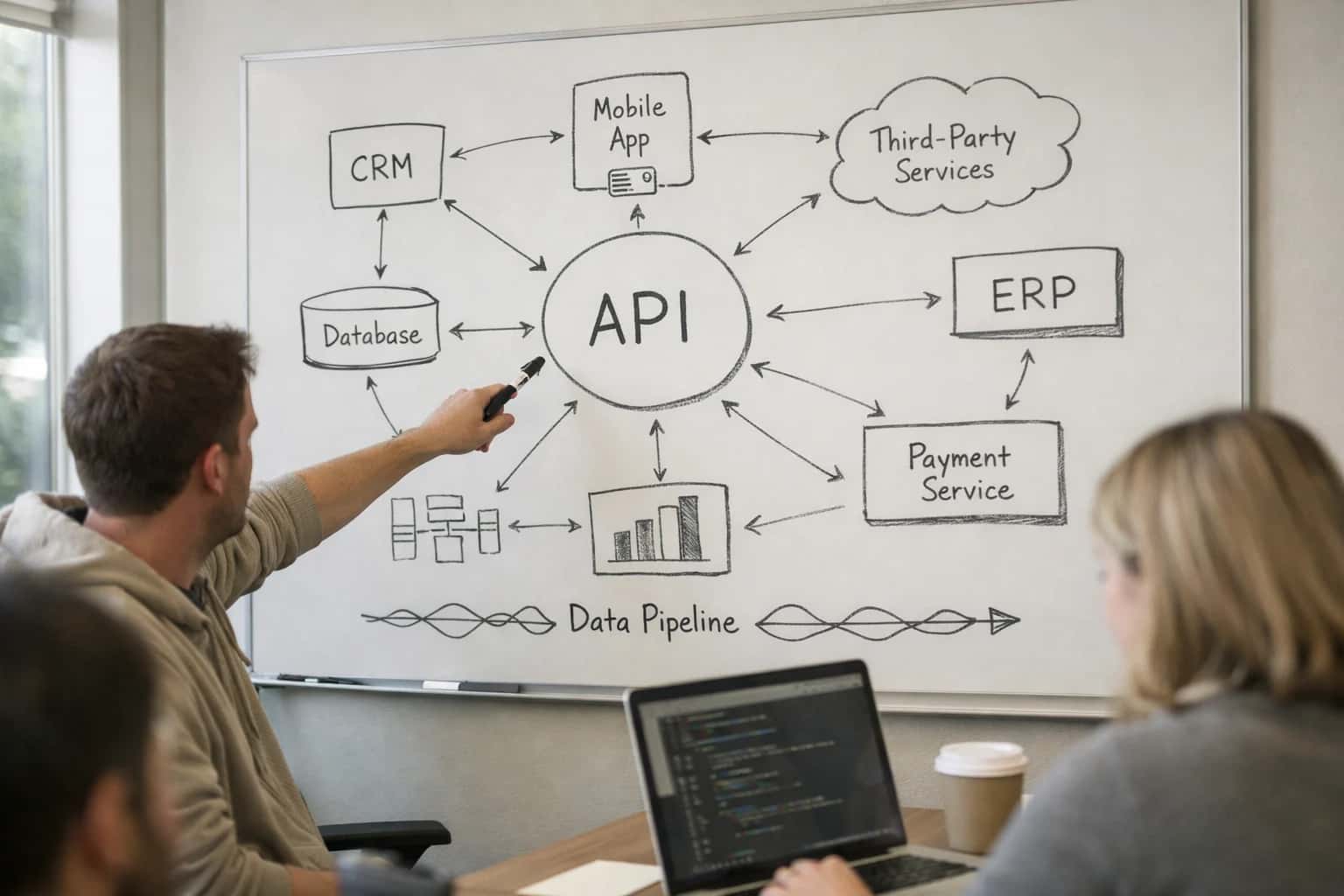
Implementation typically involves a queue-based architecture. A background service polls iCIMS for new or updated candidate profiles, or listens for candidate.application.submitted or candidate.profile.updated webhooks. Each profile is processed by an AI pipeline that performs entity extraction and classification. The results—such as skills: ["Python", "Project Management"], role_fit: "Senior Data Analyst", engagement_score: 0.85—are then posted back to the candidate's record using iCIMS's REST API. This enables recruiters to build smart talent pools using iCIMS's native filtering and saved search capabilities, powered by AI-generated metadata.
For proactive nurturing, AI agents can be triggered based on pool membership or tag changes. For example, when a candidate is added to a "Data Science - Passive" pool, an AI workflow can draft a personalized outreach email using the candidate's profile, schedule it via iCIMS Communications, and log the activity. Governance is critical: all AI-generated tags should be stored in designated custom fields with clear labeling (e.g., AI_Skills_Extracted), and a human-in-the-loop review step should be configured for high-stakes communications. This approach turns iCIMS from a system of record into a system of intelligence, enabling recruiters to move from reactive sourcing to strategic, data-driven pipelining. For related architectural patterns, see our guide on AI Integration for iCIMS High-Volume Hiring.
ARCHITECTURE BLUEPRINT
Key iCIMS APIs and Surfaces for AI Integration
Core Data Objects for AI
The Candidate, Talent Pool, and Job APIs form the foundation for any AI integration. These RESTful endpoints allow you to read, update, and search the core entities where AI adds the most value.
Primary Use Cases:
- Talent Pool Segmentation: Programmatically retrieve candidate profiles from specific talent pools for AI-driven clustering and tagging based on skills, experience, or intent signals.
- Profile Enrichment: Use AI to parse resumes (via the
attachmentsendpoint), extract structured skills, and update candidate custom fields viaPATCH /v1/candidates/{id}. - Proactive Matching: Query the
search/candidatesendpoint with AI-generated semantic filters to rediscover past applicants for newJobrequisitions.
Implementation Note: Always respect rate limits and implement idempotent updates to avoid data corruption when writing AI-generated insights back to iCIMS.
ENTERPRISE PIPELINE AUTOMATION
High-Value AI Use Cases for iCIMS Talent Pools
Transform static candidate databases into dynamic, proactive talent pipelines. These AI integration patterns connect directly to iCIMS APIs and data models to automate segmentation, engagement, and readiness scoring.
01
Automated Talent Pool Segmentation
Continuously analyze candidate profiles, resumes, and activity to auto-tag and segment talent pools by skills, seniority, location, and interest. Uses iCIMS custom fields and candidate API to maintain a living taxonomy, moving beyond manual list management.
Batch → Real-time
Segmentation cadence
02
Proactive Pipeline Nurturing
Trigger personalized, multi-channel nurture campaigns based on candidate behavior and pool membership. Integrates with iCIMS communications and email event webhooks to send relevant content, role alerts, and company updates, keeping passive candidates warm.
Same day
Re-engagement timing
03
AI-Driven Rediscovery & Matching
When a new requisition opens, an AI agent scans tagged talent pools in iCIMS to surface the best-fit past applicants. Generates match scores, summarizes candidate history, and can auto-create a candidate submission or trigger recruiter alerts via API.
04
Skills Gap Analysis & Upskilling
Analyze aggregate skills within talent pools against future hiring forecasts. Generates reports on missing competencies and can recommend internal mobility candidates or trigger targeted upskilling content campaigns through iCIMS career portals.
1 sprint
Insight generation
05
Talent Pool Health Scoring
Monitor pipeline vitality with AI-generated health scores for each pool. Factors include candidate freshness, engagement rates, diversity metrics, and requisition coverage. Surfaces at-risk pools in iCIMS dashboards via custom object updates, guiding sourcing strategy.
06
Compliant GDPR/CCPA Management
Automate consent and data retention workflows across large talent pools. AI reviews candidate profiles and activity to flag records for anonymization or deletion per policy, generating bulk action lists for the iCIMS API while maintaining an audit trail.
TALENT POOL INTELLIGENCE
Example AI Automation Workflows
These workflows illustrate how AI agents can transform static iCIMS talent pools into dynamic, actionable assets. Each pattern uses iCIMS APIs and webhooks to trigger, enrich, and act upon candidate data.
Trigger: A new candidate is added to the iCIMS Talent Pool via API, bulk import, or a completed application for a different role.
AI Agent Action:
- Pulls the candidate's
resume_text,profile_fields, andapplication_historyfrom iCIMS. - Analyzes the data to extract:
- Primary & adjacent skills (e.g., "Python," "Data Engineering," "AWS")
- Seniority level & years of experience
- Industry domain (e.g., "FinTech," "Healthcare")
- Location preferences & remote eligibility
- Compares the profile against active and forecasted job requisitions in iCIMS.
System Update:
- The agent writes back to the candidate's iCIMS profile using custom fields (e.g.,
ai_skill_tags,ai_seniority_tier,ai_top_match_roles). - Applies iCIMS pool tags (e.g.,
AI-Tagged-Data-Engineer,High-Potential-Marketing) for easy filtering. - Optional: Creates a candidate note: "AI Profile Enrichment completed. Top match for REQ#45612 (Senior Data Analyst)."
Human Review Point: Tags and matches are presented as suggestions. A recruiter can review the agent's reasoning (via a linked audit log) and confirm or override tags before initiating outreach.
FROM TALENT POOL TO PIPELINE INTELLIGENCE
Typical Implementation Architecture
A production-ready AI integration for iCIMS Talent Pool Management connects retrieval-augmented agents to candidate profiles, automates segmentation, and powers personalized nurture campaigns.
The core architecture typically involves an event-driven pipeline anchored on iCIMS's REST API and webhooks. Key iCIMS objects like Candidate, Job, Talent Pool, and Communication are synced to a secure vector database (e.g., Pinecone, Weaviate) to create a searchable knowledge layer. An orchestration service (like n8n or a custom Python service) listens for iCIMS webhooks—such as candidate.created, candidate.updated, or talent_pool.assigned—and triggers AI workflows. For example, when a new candidate is added to a pool, an AI agent can automatically parse their resume text (stored in iCIMS attachments), extract skills and experience, and tag the candidate profile using iCIMS custom fields (custom_field_1, custom_field_2) for later segmentation.
High-value workflows are built as multi-step AI agents. A common pattern is a Talent Pool Nurture Agent that runs on a schedule (e.g., weekly). It queries the vector store for candidates in a specific pool who haven't been contacted in the last 30 days, uses an LLM to generate a personalized email draft based on their profile and open requisitions, and then posts the draft to the iCIMS communications API for recruiter review or automated sending. Another critical agent is the Pool Segmentation Engine, which clusters candidates based on skills, location, seniority, and interest signals—updating iCIMS talent pool assignments or creating new sub-pools dynamically via the API. All agent actions should write audit logs back to iCIMS candidate notes or a dedicated logging system for compliance.
Rollout is phased, starting with read-only analysis (e.g., tagging candidates without writing back) to validate model accuracy, then moving to human-in-the-loop workflows (e.g., suggested tags for recruiter approval, draft communications), and finally to fully automated, rules-based actions for high-confidence segments. Governance is critical: implement role-based access controls (RBAC) so AI agents only interact with pools and data their service account is permitted to access, and establish a prompt registry to manage variations for different roles or regions. This architecture ensures AI augments iCIMS workflows without disrupting existing recruiter processes, turning static talent pools into dynamic, actionable pipelines. For related patterns on data synchronization and secure API development, see our guide on AI Integration for Greenhouse API Development and AI Integration for Applicant Tracking Platforms.
ICIMS TALENT POOL AUTOMATION
Code and Payload Examples
Automating Candidate Segmentation
Use AI to analyze candidate profiles and automatically assign them to dynamic talent pools based on skills, experience, and intent. This moves beyond simple keyword tagging to semantic understanding of career trajectories.
Example Python API Call: This script calls an AI service to analyze a candidate record from iCIMS and returns suggested pool tags, which can then be posted back via the iCIMS REST API to update the candidate's custom fields.
pythonimport requests # Example payload sent to AI analysis service analysis_payload = { "candidate_id": "ICIMS-12345", "resume_text": candidate_resume_text, "profile_data": { "skills": ["Python", "AWS", "Machine Learning"], "years_experience": 7, "last_role": "Data Scientist", "location": "Remote" } } # Call AI service for segmentation ai_response = requests.post( "https://api.your-ai-service.com/segment", json=analysis_payload, headers={"Authorization": "Bearer YOUR_API_KEY"} ).json() # Suggested tags from AI suggested_pools = ai_response.get("suggested_pools", []) # e.g., ["Data-Engineering-2025", "ML-Senior-IC", "Remote-US"] # Update iCIMS candidate record with new pool tags icims_update_payload = { "person": { "custom_field_group": { "talent_pool_tags": ", ".join(suggested_pools) } } }
AI-ENHANCED TALENT POOL OPERATIONS
Realistic Operational Impact and Time Savings
This table illustrates the operational improvements for talent acquisition teams managing large-scale talent pools in iCIMS, focusing on moving from manual, reactive processes to AI-assisted, proactive pipelining.
| Workflow | Before AI | After AI | Notes |
|---|---|---|---|
Talent Pool Segmentation | Manual tagging based on limited fields (e.g., job title) | Automated, multi-factor clustering (skills, experience, engagement) | Segments update dynamically as new candidate data enters iCIMS |
Proactive Candidate Outreach | Batch, generic email blasts scheduled monthly/quarterly | Personalized, triggered campaigns based on role openings and engagement signals | Human reviews campaign drafts; AI handles personalization and scheduling |
Skill Gap Identification | Manual resume review or self-reported skills in profiles | Automated skills extraction from resumes and inferred from career history | Populates custom iCIMS fields for recruiter search and reporting |
Pipeline Health Monitoring | Weekly manual report creation from iCIMS dashboards | Automated alerts on pool attrition, skill freshness, and diversity metrics | AI generates summary insights; analysts drill down for root cause |
Candidate Re-engagement | Ad-hoc searches for past applicants when a role opens | Automated flagging of high-potential dormant candidates matching new requisitions | Recruiter receives a shortlist with match score and suggested message |
Compliance & Consent Management | Manual tracking of communication opt-outs and data retention rules | Automated checks against communication preferences and GDPR/CCPA flags before outreach | Ensures all AI-driven activities remain within configured governance policies |
Talent Pool Reporting | Static exports requiring manual consolidation and analysis | Dynamic, narrative-driven reports on pool composition, sourcing effectiveness, and readiness | Reduces reporting preparation from hours to minutes for stakeholder reviews |
ENTERPRISE ARCHITECTURE FOR AI-READY TALENT POOLS
Governance, Security, and Phased Rollout
A production-grade AI integration for iCIMS Talent Pool Management requires a secure, governed architecture and a phased rollout to manage risk and demonstrate value.
A secure integration architecture treats iCIMS as the system of record, with AI acting as a stateless processing layer. This means candidate PII and sensitive profile data from iCIMS Candidate and Talent Pool objects are never permanently stored in external AI systems. Implement a secure API gateway that brokers all calls between iCIMS and your AI services, enforcing strict RBAC, audit logging, and data masking. For operations like semantic search or clustering, use ephemeral vector embeddings—generated on-the-fly from iCIMS data—and ensure they are purged after the session. All AI-generated tags, scores, or segment labels should be written back to iCIMS as custom fields (e.g., AI_Segment_Cluster, AI_Skill_Proximity_Score) to maintain a single source of truth and enable native reporting.
Governance is critical for compliance and trust. Establish a human-in-the-loop review for high-stakes actions, such as adding candidates to a high-priority nurture campaign or applying sensitive demographic tags. Use iCIMS workflow rules to trigger approval steps. For AI-driven communications, implement a content moderation layer that reviews generated outreach messages against brand and compliance guidelines before they are queued in iCIMS Campaigns. Maintain a full audit trail linking every AI-suggested action (e.g., "tag candidate with 'AI_Recommended_For_Cloud_Roles'") to the underlying data point and model version that drove it, stored within iCIMS notes or a linked governance platform.
Adopt a phased rollout to de-risk implementation and build organizational buy-in. Phase 1: Discovery & Tagging. Start with read-only analysis of a single, non-critical talent pool. Use AI to analyze resume text and profile data, suggesting skill tags and thematic clusters. Output results to a report or a sandbox custom field, allowing recruiters to validate accuracy. Phase 2: Semi-Automated Segmentation. Integrate the tagging engine directly with iCIMS, automatically populating custom fields. Introduce a simple UI (e.g., a custom iCIMS dashboard or a sidecar app) where recruiters can review and adjust AI-generated segments before launching a campaign. Phase 3: Orchestrated Nurturing. Connect the segmentation engine to iCIMS Campaigns, allowing for the automated triggering of personalized email sequences based on AI-defined segments, with volume and frequency caps managed through iCIMS. This incremental approach allows you to tune models, establish guardrails, and demonstrate tangible ROI—like reducing manual pool review from hours to minutes—before scaling to enterprise-wide pools.
Enabling Efficiency, Speed & Accuracy
Intelligent Analysis, Decision & Execution
We build AI systems for teams that need search across company data, workflow automation across tools, or AI features inside products and internal software.
Talk to Us
Search across company data
Give teams answers from docs, tickets, runbooks, and product data with sources and permissions.
Useful when people spend too long searching or get different answers from different systems.
Enterprise searchRAGPermissions
Read more
Automate internal workflows
Use AI to route work, draft outputs, trigger actions, and keep approvals and logs in place.
Useful when repetitive work moves across multiple tools and teams.
AI agentsWorkflow automationGovernance
Read more
Add AI to products and internal tools
Build assistants, guided actions, or decision support into the software your team or customers already use.
Useful when AI needs to be part of the product, not a separate tool.
AI integrationDecision supportModel routing
Read moreIMPLEMENTATION DETAILS
Frequently Asked Questions
Common technical and operational questions about integrating AI into iCIMS Talent Pool workflows, covering architecture, security, and rollout.
AI integrations with iCIMS Talent Cloud operate through a secure, API-first architecture designed for enterprise compliance.
Typical Data Flow:
- Authentication: The AI service uses OAuth 2.0 with scoped permissions (e.g.,
candidate.read,talent_pool.write) via a dedicated service account. - Data Retrieval: The system queries iCIMS REST APIs (e.g.,
GET /v1/candidates,GET /v1/talent-pools) to pull candidate profiles, skills, and pool metadata. Queries are often filtered by date or pool ID to process incremental batches. - Processing: AI models analyze profiles for segmentation, tagging, or scoring. No PII is sent to a model unless explicitly required and governed; often, anonymized skill vectors or redacted summaries are used.
- Updates: Results (like new tags, segment assignments, or engagement scores) are written back to iCIMS via
PATCHorPOSTcalls to update candidate custom fields or talent pool memberships.
Security Controls:
- All data in transit is encrypted (TLS 1.2+).
- API keys and secrets are managed in a cloud secrets vault, never hard-coded.
- Audit logs track every API call made by the AI service for compliance reviews.
- Implement a human-in-the-loop approval step for any AI-suggested outreach before it's sent via iCIMS Communications.

About the author
Prasad Kumkar
CEO & MD, Inference Systems
Prasad Kumkar is the CEO & MD of Inference Systems and writes about AI systems architecture, LLM infrastructure, model serving, evaluation, and production deployment. Over 5+ years, he has worked across computer vision models, L5 autonomous vehicle systems, and LLM research, with a focus on taking complex AI ideas into real-world engineering systems.
His work and writing cover AI systems, large language models, AI agents, multimodal systems, autonomous systems, inference optimization, RAG, evaluation, and production AI engineering.
LinkedIn
Limited slotsGet a Free AI Consultation
Partnered with leading AI, data, and software stack.





How We Work
Custom AI workflows for your Business
One-fit-all AI don't work for modern businesses. At Inferensys, we aim to understand your business & custom requirements; which we use to define most efficient agentic workflows, the data, and the tools for your business.
01
Review the use case
We understand the task, the users, and where AI can actually help.
Read more02
Pick the right approach
We define what needs search, automation, or product integration.
Read more03
Build the first useful version
We implement the part that proves the value first.
Read more04
Improve from there
We add the checks and visibility needed to keep it useful.
Read moreThe first call is a practical review of your use case and the right next step.
Talk to Us