In a manufacturing context, the WMS is not just a distribution center; it's a critical buffer and parts bank for the production line. AI integration focuses on three core functional surfaces: MRO inventory management, production kitting workflows, and raw material replenishment triggers. This means connecting AI models to specific WMS data objects like inventory masters (with attributes for OEM part numbers, lead times, and criticality), work orders or kitting orders, and storage locations designated for line-side or bulk raw materials. The goal is to move from reactive, schedule-based processes to predictive, consumption-driven ones.

Integration
AI Integration for Manufacturing Warehousing and MRO
A technical blueprint for embedding AI into Warehouse Management Systems (WMS) supporting manufacturing plants. Focus on automating MRO inventory management, optimizing kitting for production lines, and intelligent raw material replenishment.
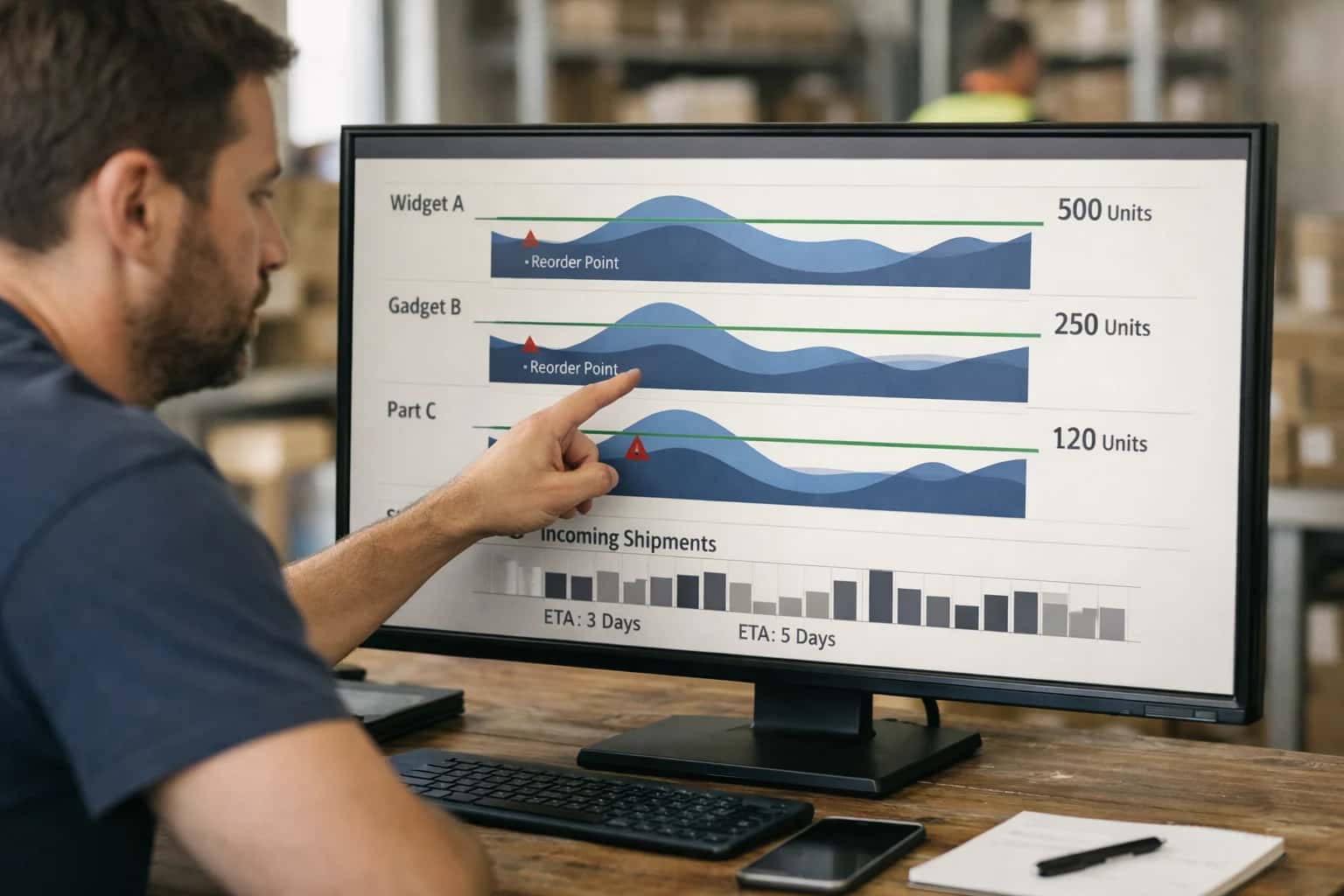
ARCHITECTING FOR MRO AND PRODUCTION SUPPORT
Where AI Fits in Manufacturing Warehousing
A technical blueprint for integrating AI into warehouse management systems (WMS) that directly support manufacturing plants and MRO operations.
Implementation typically involves an event-driven layer that listens to WMS transactions (e.g., a kit component pick) and plant floor signals (e.g., MES production counts). For example, an AI agent can analyze pick frequency, supplier lead time variability, and machine downtime records to dynamically adjust min/max levels for MRO spares in the WMS, preventing line stoppages without overstocking. For kitting, AI can optimize the pick sequence and cartonization of kits based on the bill of materials (BOM) and the physical location of components in the warehouse, reducing travel time and errors for assemblers.
Rollout requires careful governance, as changes directly impact production. Start with a pilot on a single production line or MRO category. Use the WMS's API or a middleware platform to create a feedback loop where AI-generated recommendations (e.g., "replenish raw material A to line-side rack 5") are presented as tasks in the WMS mobile interface for planner approval before execution. This builds trust and creates an audit trail. Over time, successful patterns can be automated, with the AI acting as a co-pilot to the warehouse planner, ensuring the right part is in the right place at the right time to keep manufacturing running.
AI FOR MANUFACTURING WAREHOUSING & MRO
Key Integration Surfaces in Your WMS
MRO Inventory & Spare Parts
Integrate AI directly into your WMS's MRO inventory modules to manage critical spare parts for production line maintenance. Key surfaces include:
- Item Master & Bill of Materials (BOM): Enrich item records with failure rates, lead times, and machine affinity data to power predictive stocking models.
- Min/Max & Reorder Logic: Override static reorder points with dynamic AI models that analyze maintenance schedules, production forecasts, and supplier reliability.
- Reservation & Allocation: Use AI to intelligently reserve parts for scheduled preventive maintenance (PM) work orders, preventing stockouts that cause line downtime.
Implementation typically involves a middleware service that subscribes to WMS stock transactions and maintenance work orders from your CMMS, scoring part criticality and pushing updated reorder parameters via REST API.
MANUFACTURING & MRO FOCUS
High-Value AI Use Cases for Plant Warehousing
Integrating AI into manufacturing-focused WMS platforms like SAP EWM or Manhattan Active enables intelligent orchestration of MRO inventory, raw material staging, and production support workflows. These use cases connect AI to the specific data models and task queues that drive plant-side warehouse operations.
01
MRO Spare Parts Replenishment
AI analyzes maintenance schedules from the CMMS (like IBM Maximo), current MRO inventory levels in the WMS, and historical consumption to automatically generate and prioritize replenishment tasks. This prevents production line downtime by ensuring critical spares are staged in the plant warehouse before they are needed.
Reactive -> Proactive
Replenishment mode
02
Dynamic Kitting for Production Lines
Integrates with the MES or production schedule to optimize kitting workflows in the WMS. AI sequences pick tasks for raw materials and sub-assemblies based on line sequence, minimizes travel for kitting carts, and triggers replenishment of kit components from bulk storage to forward picking locations.
Hours -> Minutes
Kit build planning
03
Raw Material Putaway Optimization
Uses AI to determine optimal putaway locations for inbound raw materials (coils, resins, chemicals) based on real-time production consumption rates, material compatibility, and FIFO/FEFO rules. Integrates with WMS receiving workflows to direct forklifts and update inventory records, reducing search time and waste.
Batch -> Real-time
Location decisioning
04
Production Line Side Replenishment Agent
An AI agent monitors consumption signals from the shop floor (via IoT or MES) and the WMS inventory at line-side supermarkets. It automatically creates and dispatches replenishment tasks to warehouse associates or AGVs, balancing multiple lines to prevent material shortages without overstocking limited floor space.
Same-day
Shortage resolution
05
Expiry & Lot Traceability for Regulated Materials
For chemicals or regulated raw materials, AI enhances WMS lot tracking. It automates FEFO picking decisions, predicts expiry risks based on shelf-life data, and generates proactive workflows for quality holds or disposition. Integrates with compliance systems for automated audit trail generation.
Manual -> Automated
Compliance workflow
06
Tool Crib & Calibration Management
AI manages the tool crib as a specialized inventory within the WMS. It tracks tool usage, calibration schedules, and condition, automatically generating pick tasks for scheduled jobs and triggering calibration or maintenance workflows when tools are returned. Reduces tool search time and prevents use of out-of-calibration equipment.
1 sprint
Typical implementation
MANUFACTURING WAREHOUSING AND MRO
Example AI-Driven Workflows
These workflows illustrate how AI agents integrate with your Warehouse Management System (WMS) to automate and optimize critical operations in a manufacturing context, focusing on MRO inventory, production kitting, and raw material flows.
Trigger: A work order is released in the Manufacturing Execution System (MES) for a scheduled maintenance task on a production line.
Context/Data Pulled:
- The AI agent queries the WMS for the Bill of Materials (BOM) for the specific maintenance procedure.
- It checks real-time inventory levels for each required MRO part across the warehouse.
- It reviews historical consumption rates and lead times from the ERP for each part.
Model or Agent Action:
- The agent uses a predictive model to determine if on-hand quantities are sufficient for the job and for a defined safety stock buffer.
- If a shortage is predicted, it automatically generates a purchase requisition in the ERP for the exact quantity needed, selecting the preferred supplier based on past performance and cost.
- It creates a preemptive pick task in the WMS to stage the available parts in a dedicated maintenance staging area, linked to the work order number.
System Update or Next Step:
- The purchase requisition is routed for approval via the ERP's workflow.
- The pick task appears on a supervisor's dashboard and is assigned to a technician.
- The agent logs all actions (prediction, requisition creation, task generation) to an audit trail for traceability.
Human Review Point: The purchase requisition requires manager approval if it exceeds a predefined cost threshold, with the agent providing a justification note summarizing the predicted shortage and impacted production line.
MANUFACTURING & MRO FOCUS
Implementation Architecture: Connecting AI to Your WMS
A technical blueprint for integrating AI agents into manufacturing and MRO warehouse workflows, connecting to WMS data models and automation layers.
Integrating AI into a manufacturing or MRO warehouse requires connecting to specific WMS data objects and workflows. The primary integration surfaces are the Inventory Master (for raw materials, MRO spares, and finished goods), Work Orders (for kitting requests tied to production schedules), and Task Management queues (for putaway, picking, and cycle count directives). AI models consume real-time signals from these objects—like stock levels, pick completion times, and work order due dates—via the WMS's REST or SOAP APIs. For platforms like SAP EWM or Oracle WMS Cloud, this often means tapping into predefined business objects like LGNUM (warehouse number), HU (handling unit), and TANUM (task number) to read statuses and post back intelligent recommendations.
A core implementation pattern is an AI orchestration layer that sits between the WMS and other manufacturing systems (like an MES or ERP). This layer uses the WMS APIs to monitor the Pick List and Replenishment Task queues. For MRO, it can prioritize spare part picks based on criticality scores from a CMMS. For production kitting, it can dynamically sequence kitting tasks by analyzing the Bill of Materials (BOM) from the ERP and real-time line-side inventory levels from the WMS. The AI agent then pushes optimized task sequences or exception resolutions (e.g., 'substitute part X for out-of-stock part Y') back into the WMS as a suggested or automated task update, often through a custom API endpoint or a configured business rule.
Governance and rollout require a phased approach, starting with a single workflow like raw material replenishment to the production line. This involves setting up a secure service account for the AI agent with role-based access controls (RBAC) scoped to specific warehouse zones and transaction types. All AI-driven recommendations should be logged in an immutable audit trail, linking the WMS transaction ID (e.g., LTAP document in SAP) to the AI's reasoning payload. For controlled rollouts, implement a human-in-the-loop approval step in the WMS task workflow, where supervisors can accept or override AI suggestions via a mobile RF screen before the task is released to the floor. This builds trust and allows for performance calibration.
This architecture enables tangible operational shifts: moving from fixed, time-based replenishment schedules to dynamic, consumption-triggered replenishment, reducing line-side stockouts. For MRO, it transforms spare parts picking from a first-in-first-out queue to a priority-driven workflow that minimizes equipment downtime. By grounding AI decisions in the live WMS data model and existing user interfaces, the integration delivers intelligence where work happens, without requiring operators to learn a new system. Explore our related guide on AI for Predictive Replenishment in WMS for a deeper technical dive into the inventory forecasting models that power these workflows.
MANUFACTURING WAREHOUSING AND MRO
Code and Payload Examples
Triggering Replenishment from MRO Consumption
AI models analyze work order completion data and MRO item issue transactions to predict stockouts for critical spare parts. The integration calls a custom API endpoint on the WMS to create a replenishment task, prioritizing parts based on criticality and lead time.
Example API Payload (WMS Replenishment Task):
json{ "taskType": "REPLENISHMENT", "priority": "HIGH", "itemId": "MRO-VALVE-001", "fromLocation": "BULK-RACK-A12", "toLocation": "MRO-PICKFACE-05", "quantity": 4, "reasonCode": "AI_PREDICTED_STOCKOUT", "metadata": { "predictedStockoutDate": "2024-06-15", "associatedWorkOrder": "WO-78432", "criticalityScore": 0.92 } }
This payload is generated by the AI service and posted to the WMS task management API, automatically moving parts from bulk storage to forward picking locations before a production line stoppage occurs.
AI FOR MANUFACTURING WAREHOUSING AND MRO
Realistic Operational Impact and Time Savings
This table illustrates the tangible operational improvements achievable by integrating AI agents into a WMS supporting a manufacturing plant, focusing on MRO inventory, production kitting, and raw material workflows.
| Workflow / Metric | Before AI Integration | After AI Integration | Implementation Notes |
|---|---|---|---|
MRO Part Replenishment Trigger | Manual review of min/max levels; weekly cycle | AI predicts consumption & auto-creates PO drafts | Integrates with WMS inventory & CMMS work order data |
Production Line Kitting | Paper pick lists; manual staging verification | AI-optimized pick path & digital verification | Uses WMS tasking APIs & mobile device confirmation |
Raw Material Putaway | Fixed location rules; manual congestion handling | Dynamic slotting based on line schedule & velocity | AI suggests optimal storage bin via WMS putaway API |
Cycle Count Scheduling | Calendar-based; ABC analysis quarterly | AI-driven dynamic schedule based on transaction risk | Generates count tasks directly in WMS via integration |
Expedite Request Triage | Email/phone to planner; manual search across systems | Agent auto-queries WMS, ERP, TMS for ETA & suggests alternatives | RAG over WMS/ERP data; provides consolidated answer in minutes |
Non-Conforming Material Disposition | Paper form routing; manual hold area searches | AI suggests disposition (RTV, scrap, rework) & updates WMS status | Integrates with quality system data; triggers WMS move orders |
MRO Technician Support | Searching manuals, paper SOPs, calling supervisor | Voice/chat agent provides procedure steps & parts location | RAG on SOPs & WMS inventory data; hands-free for technicians |
IMPLEMENTING AI IN A REGULATED, HIGH-STAKES ENVIRONMENT
Governance, Security, and Phased Rollout
Integrating AI into manufacturing warehousing and MRO requires a controlled, security-first approach that respects the critical nature of production inventory and maintenance workflows.
Governance starts with data access. Your AI agents and models require read/write access to sensitive WMS objects: MRO parts masters, kitting BOMs, raw material inventory records, work order statuses, and supplier lead time data. We architect integrations using service accounts with role-based access controls (RBAC) scoped strictly to the necessary transaction tables and APIs, never granting blanket database access. All AI-generated actions—like a suggested kanban replenishment or a kitting assembly instruction—are logged in an immutable audit trail linked to the source WMS transaction ID, providing full traceability for quality audits and operational reviews.
A phased rollout is critical for user adoption and risk management. We recommend a three-stage approach: 1) Read-Only Intelligence Phase: Deploy AI agents that analyze data from your WMS (e.g., Manhattan Active, SAP EWM) and CMMS to provide predictive alerts—like MRO stock-out risk or raw material quality drift—via dashboards or daily digests, with no system writes. 2) Assisted Workflow Phase: Introduce AI co-pilots into specific workflows, such as suggesting optimal putaway locations for incoming raw materials or drafting kitting pick lists for production lines, where a human planner reviews and approves each recommendation before it's executed in the WMS. 3) Conditional Automation Phase: For mature, high-confidence workflows (e.g., auto-replenishment of fast-moving consumables based on machine telemetry), enable fully automated execution with defined circuit-breakers and weekly leadership reviews of exception logs.
Security extends to the AI models themselves. In manufacturing contexts, we often deploy smaller, domain-specific models fine-tuned on your historical MRO consumption and production schedules, running within your cloud tenant or on-premises, rather than relying solely on general-purpose LLMs. This reduces data egress risk and improves accuracy for part number recognition and technical documentation. Integration points are secured via API gateways with strict rate limiting, and all prompts interacting with WMS data are designed to avoid injecting operational logic or sensitive supplier terms into public model endpoints. The final architecture ensures AI augments your WMS's core reliability without becoming a single point of failure for receiving, kitting, or line-side replenishment operations.
Enabling Efficiency, Speed & Accuracy
Intelligent Analysis, Decision & Execution
We build AI systems for teams that need search across company data, workflow automation across tools, or AI features inside products and internal software.
Talk to Us
Search across company data
Give teams answers from docs, tickets, runbooks, and product data with sources and permissions.
Useful when people spend too long searching or get different answers from different systems.
Enterprise searchRAGPermissions
Read more
Automate internal workflows
Use AI to route work, draft outputs, trigger actions, and keep approvals and logs in place.
Useful when repetitive work moves across multiple tools and teams.
AI agentsWorkflow automationGovernance
Read more
Add AI to products and internal tools
Build assistants, guided actions, or decision support into the software your team or customers already use.
Useful when AI needs to be part of the product, not a separate tool.
AI integrationDecision supportModel routing
Read moreAI INTEGRATION FOR MANUFACTURING WAREHOUSING AND MRO
Frequently Asked Questions
Practical questions and workflow blueprints for integrating AI into Warehouse Management Systems (WMS) that support manufacturing plants, focusing on MRO inventory, production kitting, and raw material workflows.
The safest approach is a phased, read-first integration using WMS APIs and event streams.
-
Trigger & Data Pull: Start by connecting an AI agent to the WMS via its REST APIs or database. The agent subscribes to events like:
- Low stock alerts for MRO items (e.g., bearings, seals, lubricants).
- New work orders or maintenance schedules from the MES/CMMS.
- Inventory transaction logs for critical spare parts.
-
AI Action: The agent analyzes this data against:
- Bill of Materials (BOM) for active production lines.
- Historical consumption patterns and seasonality.
- Supplier lead times and minimum order quantities.
-
System Update: Initially, the AI generates recommendations only, delivered as alerts in the WMS interface or to a planner's dashboard. For example: "Recommend creating a purchase requisition for 50 units of SKU #VALVE-8872. Stock will fall below safety stock in 4 days based on Line 3's scheduled PM."
-
Human Review & Rollout: Planners review and approve recommendations. After establishing trust (e.g., 95%+ accuracy over 30 days), you can automate the next step: having the AI generate and push a draft purchase order or internal transfer request into the ERP/WMS for final human approval. This keeps a human in the loop for critical MRO items.

About the author
Prasad Kumkar
CEO & MD, Inference Systems
Prasad Kumkar is the CEO & MD of Inference Systems and writes about AI systems architecture, LLM infrastructure, model serving, evaluation, and production deployment. Over 5+ years, he has worked across computer vision models, L5 autonomous vehicle systems, and LLM research, with a focus on taking complex AI ideas into real-world engineering systems.
His work and writing cover AI systems, large language models, AI agents, multimodal systems, autonomous systems, inference optimization, RAG, evaluation, and production AI engineering.
LinkedIn
Limited slotsGet a Free AI Consultation
Partnered with leading AI, data, and software stack.





How We Work
Custom AI workflows for your Business
One-fit-all AI don't work for modern businesses. At Inferensys, we aim to understand your business & custom requirements; which we use to define most efficient agentic workflows, the data, and the tools for your business.
01
Review the use case
We understand the task, the users, and where AI can actually help.
Read more02
Pick the right approach
We define what needs search, automation, or product integration.
Read more03
Build the first useful version
We implement the part that proves the value first.
Read more04
Improve from there
We add the checks and visibility needed to keep it useful.
Read moreThe first call is a practical review of your use case and the right next step.
Talk to Us