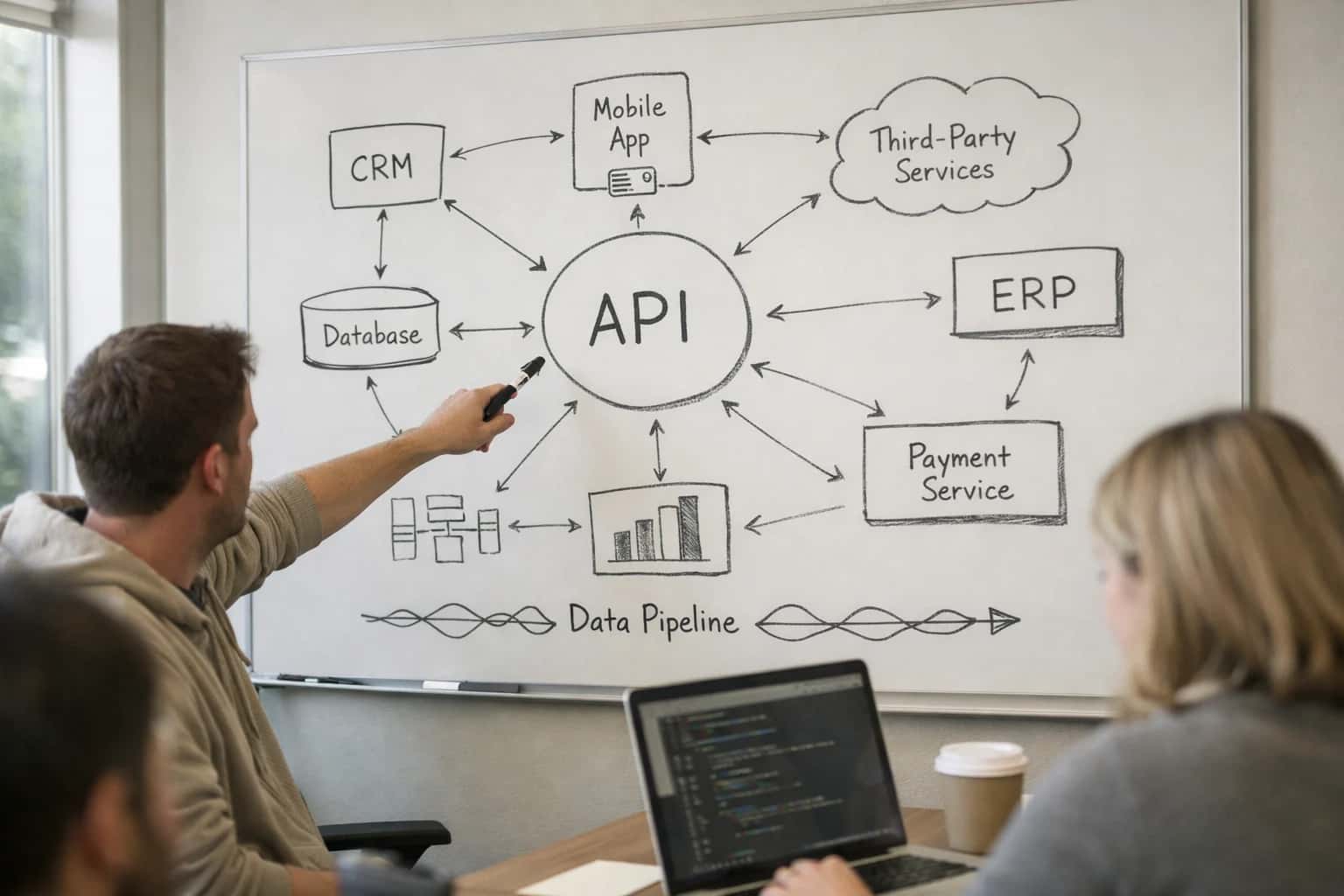
The integration connects at the diagnosis and treatment plan layer of the Covetrus Pulse record. When a veterinarian enters a diagnosis code (like Feline Chronic Kidney Disease) or finalizes a treatment plan, the system triggers an AI agent via webhook. This agent uses the structured data—diagnosis, patient species, breed, age—to query a curated knowledge base of veterinary articles, videos, and care sheets. The AI doesn't just fetch a generic link; it curates and personalizes a shortlist of the 2-3 most relevant resources for that specific patient's context, drafting a brief, plain-language explanation for the client.

Integration
AI Integration for Covetrus Pulse Client Education
Automate the curation and delivery of condition-specific educational content to clients via the Covetrus Pulse portal, triggered by diagnosis codes or treatment plans.
ARCHITECTURE AND ROLLOUT
Where AI Fits into Covetrus Pulse Client Education
Integrating AI into Covetrus Pulse to automate the delivery of personalized educational content transforms a manual, reactive process into a proactive, scalable client engagement workflow.
The curated content bundle and draft message are then routed back into Covetrus Pulse, typically landing in a review queue within the Client Communications module for the veterinarian or technician to approve, edit, or reject. Upon approval, the system automatically delivers the educational packet via the client's preferred channel (Pulse portal, email, SMS) and logs the interaction against the patient record. This creates a closed-loop system where client education is directly tied to clinical activity, improving compliance and reducing front-desk follow-up calls for basic questions.
Rollout focuses on a phased, condition-specific approach. Start by enabling AI for high-volume, well-documented conditions (e.g., dental disease, arthritis) where educational content is standardized. Governance is critical: the AI's knowledge base must be vet-approved and regularly updated, and all outgoing communications should maintain the practice's voice and branding. Implementation requires mapping Covetrus Pulse's Diagnosis and Treatment Plan API objects to the AI agent's input schema and configuring the approval workflow to fit existing staff protocols, ensuring the tool augments rather than disrupts the clinical process.
WHERE AI CONNECTS TO AUTOMATE CLIENT EDUCATION
Key Integration Surfaces in Covetrus Pulse
Portal Content Delivery & Messaging
The Covetrus Pulse client portal is the primary surface for educational delivery. AI integration here focuses on triggering and personalizing content delivery based on clinical events.
Key Integration Points:
- Portal Message API: Automatically post condition-specific articles or video links to a patient's portal message center upon diagnosis code entry or treatment plan finalization.
- Automated Campaigns: Use the marketing/communications module to enroll clients into sequenced educational email or SMS campaigns. AI determines the optimal content sequence and timing based on the condition's typical recovery timeline.
- Portal Widget Injection: Inject a dynamic "Recommended Reading" widget onto the patient's portal homepage, populated by an AI service that analyzes the pet's active problems and recent visit notes.
Implementation Note: Content delivery must respect client communication preferences stored in Pulse and log all sends for auditability within the platform's native communication history.
COVETRUS PULSE INTEGRATION
High-Value Use Cases for AI-Powered Education
Integrating AI with Covetrus Pulse transforms static client education into a dynamic, personalized workflow. These use cases automate the curation and delivery of condition-specific content, directly within the patient journey, to improve compliance and client satisfaction.
01
Automated Post-Diagnosis Education Packs
Triggered by a diagnosis code or treatment plan entry in Pulse, AI automatically assembles a personalized education pack. It pulls relevant articles, videos, and aftercare instructions from your library or trusted sources (like VIN) and delivers it via the client portal and follow-up email.
Manual → Automated
Content Assembly
02
Personalized Discharge & Follow-Up Instructions
AI generates a plain-language summary of the hospital visit or surgical procedure, integrating specific medications and home care instructions from the Pulse record. This tailored document is sent to the client portal immediately upon checkout, reducing front-desk handoff time and clarifying care steps.
Hours → Minutes
Document Creation
03
Condition-Specific Preventive Care Campaigns
For patients with chronic conditions (e.g., diabetes, CKD), AI establishes ongoing education workflows. Based on the problem list in Pulse, it schedules and sends periodic, condition-relevant content (diet tips, monitoring guidance) to keep clients engaged and support long-term management between visits.
Set-and-Forget
Campaign Orchestration
04
Intelligent Triage for Client Portal Inquiries
An AI assistant integrated with the Pulse client portal can field common post-visit questions (e.g., "Is this incision normal?"). It retrieves context from the patient's record and either provides a vetted answer or, if concerning, escalates with a structured note to the clinical team within Pulse.
Batch → Real-time
Client Support
05
Medication & Treatment Adherence Support
AI links prescribed medications in Pulse to educational content about their purpose, administration, and side effects. Automated check-in messages are sent via the portal a few days after dispensing to ask about adherence and answer follow-up questions, with responses logged back to the patient record.
Improves Compliance
Proactive Engagement
06
New Pet Owner Onboarding Series
Automate a multi-touch educational journey for new clients. When a new patient is registered in Pulse, AI triggers a timed series of welcome emails and portal notifications covering preventive care, socialization, and practice services—personalized by pet species, breed, and age.
1 Sprint
Setup & Launch
CLIENT EDUCATION AUTOMATION
Example AI Automation Workflows
These workflows illustrate how AI can be integrated with Covetrus Pulse to automate the curation, personalization, and delivery of educational content, transforming a manual, reactive process into a scalable, proactive client engagement engine.
Trigger: A veterinarian finalizes a diagnosis in a patient's record within Covetrus Pulse, selecting a specific diagnosis code (e.g., "Feline Diabetes Mellitus").
Context/Data Pulled: The AI integration retrieves:
- The diagnosis code and common name.
- Patient details (species, breed, age, weight).
- Client contact information and preferred communication channel from the client portal profile.
- Any relevant treatment plan items (e.g., "Prescribed insulin").
Model/Agent Action: An AI agent uses the diagnosis as a key to query a pre-vetted, practice-approved library of educational content (articles, videos, infographics). It selects 3-5 most relevant pieces, then generates a personalized cover note summarizing the condition and next steps in simple language, referencing the specific patient.
System Update/Next Step: The curated "education packet" (cover note + links/resources) is automatically:
- Posted to the client's private portal in Covetrus Pulse under the patient's record.
- Sent via the client's preferred channel (email or SMS) with a direct link.
- Logged as a completed client communication task in the patient's timeline.
Human Review Point: The practice can configure the system to flag packets for certain complex or sensitive diagnoses (e.g., "Cancer") for veterinarian review before sending.
AUTOMATED EDUCATIONAL CONTENT DELIVERY
Implementation Architecture & Data Flow
A production-ready integration architecture for automatically delivering personalized client education through the Covetrus Pulse portal.
The integration is triggered by key events within Covetrus Pulse's medical record and billing modules. When a veterinarian finalizes a diagnosis (e.g., adding a SNOMED CT code for "Canine Otitis Externa") or saves a treatment plan that includes specific procedures or medications, a webhook or API event is sent to a secure orchestration layer. This layer, built with tools like n8n or CrewAI, receives the payload containing the patient_id, diagnosis_codes, prescribed_medications, and client_id. It then queries a vector database (e.g., Pinecone or Weaviate) that has been pre-loaded with your practice's approved educational content—videos from YouTube/Vimeo, PDF handouts, and articles—to perform a semantic search for the most relevant materials.
The retrieved content is dynamically assembled into a personalized client education packet. A generative AI model, governed by strict guardrails, drafts a concise cover note explaining why these resources are relevant to the pet's specific condition. This entire packet—links, documents, and note—is then posted back to the Covetrus Pulse API, attaching it to the patient's record and automatically publishing it to the associated client's portal account. The system logs the action in Covetrus Pulse's audit trail and can optionally trigger a portal notification or SMS alert to the client, all within seconds of the diagnosis being recorded.
Rollout is phased, starting with a single high-volume condition (e.g., dental prophylaxis or arthritis). Governance is critical: all AI-generated cover notes are reviewed and approved by a lead DVM before go-live, and the content library is curated and updated by practice managers. The integration runs in a secure, HIPAA-compliant environment, with no client PHI stored in external AI services. This architecture ensures education is timely, relevant, and seamlessly woven into the existing clinical workflow, turning a manual, forgettable task into an automatic standard of care. For related architectural patterns, see our guide on AI Integration for Veterinary EHR Systems.
IMPLEMENTATION PATTERNS
Code & Payload Examples
API Trigger from Diagnosis Code
When a veterinarian finalizes a diagnosis in Covetrus Pulse, the system can automatically trigger an API call to an AI service. This call passes the diagnosis code (e.g., ICD-10-CM for veterinary conditions) and patient context to request a curated educational content package.
python# Example: Trigger from Covetrus Pulse via webhook import requests # Payload sent from Covetrus Pulse when a diagnosis is saved diagnosis_webhook_payload = { "event_type": "diagnosis_entered", "patient_id": "PAT-78910", "diagnosis_code": "S83.511A", # Example: Cruciate ligament rupture "diagnosis_description": "Cranial cruciate ligament rupture, right stifle", "client_id": "CLT-12345", "portal_access": True } # Forward to AI orchestration service response = requests.post( 'https://api.your-ai-service.com/v1/curate/education', json=diagnosis_webhook_payload, headers={'Authorization': 'Bearer YOUR_API_KEY'} )
This pattern ensures content delivery is immediate and relevant to the specific condition discussed during the visit.
CLIENT EDUCATION WORKFLOW
Realistic Time Savings & Business Impact
How AI integration for client education in Covetrus Pulse transforms manual content curation into an automated, personalized system.
| Metric | Before AI | After AI | Notes |
|---|---|---|---|
Educational content curation | Manual search & selection (15-30 min per case) | Automated retrieval & assembly (< 1 min) | AI matches diagnosis/treatment codes to a pre-vetted library |
Client delivery timing | Next business day or during follow-up call | Same-day, automated portal delivery | Content is pushed post-consultation while case is top-of-mind |
Content personalization | Generic handouts or standard links | Condition-specific bundles with pet/owner details | AI incorporates patient name, condition stage, and prescribed medications |
Staff workload for education | Clinical or front-desk time spent explaining | Shifted to automated delivery with staff oversight | Team reviews AI-curated bundles and adds custom notes if needed |
Client comprehension tracking | No visibility into material engagement | Portal analytics on opens, time spent, and downloads | Provides data to identify clients needing follow-up calls |
Update propagation for new content | Manual process to replace outdated handouts | Central library updates reflect instantly in future bundles | Ensures clients always receive the most current information |
Cross-selling preventive care | Reactive, based on staff memory during visits | Proactive, AI suggests related wellness content | e.g., dental care content bundled with a dental extraction case |
IMPLEMENTING AI IN A REGULATED CLINICAL ENVIRONMENT
Governance, Security & Phased Rollout
Deploying AI for client education requires a secure, governed approach that builds trust and ensures clinical accuracy.
Integrating AI with Covetrus Pulse for client education touches sensitive Protected Health Information (PHI) and influences client care decisions. A production architecture must enforce strict data governance: AI models should only access de-identified patient data (e.g., diagnosis codes, treatment plan IDs) via secure, logged API calls from a dedicated integration layer. Generated educational content—articles, videos, care instructions—must be reviewed and approved by a veterinarian before being pushed to the client portal, ensuring medical accuracy and liability protection. All content delivery, client interactions, and AI inferences should be logged in an immutable audit trail within the Pulse system for full traceability.
A phased rollout is critical for adoption and risk management. Phase 1 (Pilot): Start with a single, high-volume condition (e.g., canine dental disease) and a small group of veterinarians. AI curates content drafts based on diagnosis codes, which vets review and manually send via Pulse. This validates the content library and workflow. Phase 2 (Automated Delivery): Enable automated, vet-approved content delivery for a broader set of conditions, triggered by the completion of a treatment plan in Pulse. Implement client feedback mechanisms within the portal. Phase 3 (Personalization & Expansion): Integrate patient-specific data (breed, age, weight) to further tailor content and expand to preventive care topics, using feedback data to continuously refine AI recommendations.
Security is paramount. The AI service should operate in a private cloud or VPC, never storing raw Pulse data. All communications must use TLS 1.3 encryption. Access to the AI integration settings within Pulse should be controlled via Role-Based Access Control (RBAC), typically limited to practice managers and lead clinicians. A key governance step is establishing a clinical review board—comprising veterinarians and practice managers—to regularly audit AI-suggested content for accuracy, bias, and relevance, updating approval rules as needed. This controlled, iterative approach ensures the AI enhances client education without compromising safety or compliance, turning a potential risk into a scalable practice differentiator. For related architectural patterns, see our guide on AI Integration for Veterinary EHR Systems.
Enabling Efficiency, Speed & Accuracy
Intelligent Analysis, Decision & Execution
We build AI systems for teams that need search across company data, workflow automation across tools, or AI features inside products and internal software.
Talk to Us
Search across company data
Give teams answers from docs, tickets, runbooks, and product data with sources and permissions.
Useful when people spend too long searching or get different answers from different systems.
Enterprise searchRAGPermissions
Read more
Automate internal workflows
Use AI to route work, draft outputs, trigger actions, and keep approvals and logs in place.
Useful when repetitive work moves across multiple tools and teams.
AI agentsWorkflow automationGovernance
Read more
Add AI to products and internal tools
Build assistants, guided actions, or decision support into the software your team or customers already use.
Useful when AI needs to be part of the product, not a separate tool.
AI integrationDecision supportModel routing
Read moreIMPLEMENTATION AND WORKFLOW DETAILS
Frequently Asked Questions
Practical questions about integrating AI to automate client education delivery within the Covetrus Pulse platform.
The integration uses diagnosis codes, procedure codes, and treatment plan details from the patient's record in Covetrus Pulse as the primary trigger. Here’s the typical workflow:
- Trigger: A veterinarian finalizes an encounter, marking a diagnosis (e.g.,
Otitis Externa) or adding a treatment plan item (e.g.,Dental Prophy). - Context Pull: The integration (via API or webhook) receives the patient ID, encounter ID, and the associated codes/plan items.
- Content Mapping: A rules engine, which can be AI-enhanced, maps these clinical codes to a curated library of condition-specific content (videos on ear cleaning, articles on dental home care).
- Personalization: The system can personalize the message with the pet's name and specific medication names from the prescription.
- Delivery: The finalized content package is posted to the client's portal in Covetrus Pulse and/or sent via the platform's integrated email/SMS system, with tracking logged back to the patient record.

About the author
Prasad Kumkar
CEO & MD, Inference Systems
Prasad Kumkar is the CEO & MD of Inference Systems and writes about AI systems architecture, LLM infrastructure, model serving, evaluation, and production deployment. Over 5+ years, he has worked across computer vision models, L5 autonomous vehicle systems, and LLM research, with a focus on taking complex AI ideas into real-world engineering systems.
His work and writing cover AI systems, large language models, AI agents, multimodal systems, autonomous systems, inference optimization, RAG, evaluation, and production AI engineering.
LinkedIn
Limited slotsGet a Free AI Consultation
Partnered with leading AI, data, and software stack.





How We Work
Custom AI workflows for your Business
One-fit-all AI don't work for modern businesses. At Inferensys, we aim to understand your business & custom requirements; which we use to define most efficient agentic workflows, the data, and the tools for your business.
01
Review the use case
We understand the task, the users, and where AI can actually help.
Read more02
Pick the right approach
We define what needs search, automation, or product integration.
Read more03
Build the first useful version
We implement the part that proves the value first.
Read more04
Improve from there
We add the checks and visibility needed to keep it useful.
Read moreThe first call is a practical review of your use case and the right next step.
Talk to Us