AI integration for Descartes Route Planning connects to two primary surfaces: the routing and scheduling engine (for plan generation) and the real-time logistics network (for execution monitoring). The goal is to inject predictive intelligence into the plan-optimize-execute-monitor loop. Key integration points include the Route Planner API for submitting enriched optimization requests, the Mobile Resource Management (MRM) APIs for live driver and vehicle data, and the Global Logistics Network (GLN) for real-time traffic, weather, and regulatory alerts. AI acts as a pre-processor and post-processor: before optimization, it predicts time windows, traffic delays, and service constraints; after a plan is locked, it continuously monitors for disruptions and suggests dynamic reroutes.

Integration
AI Integration for Descartes Route Planning
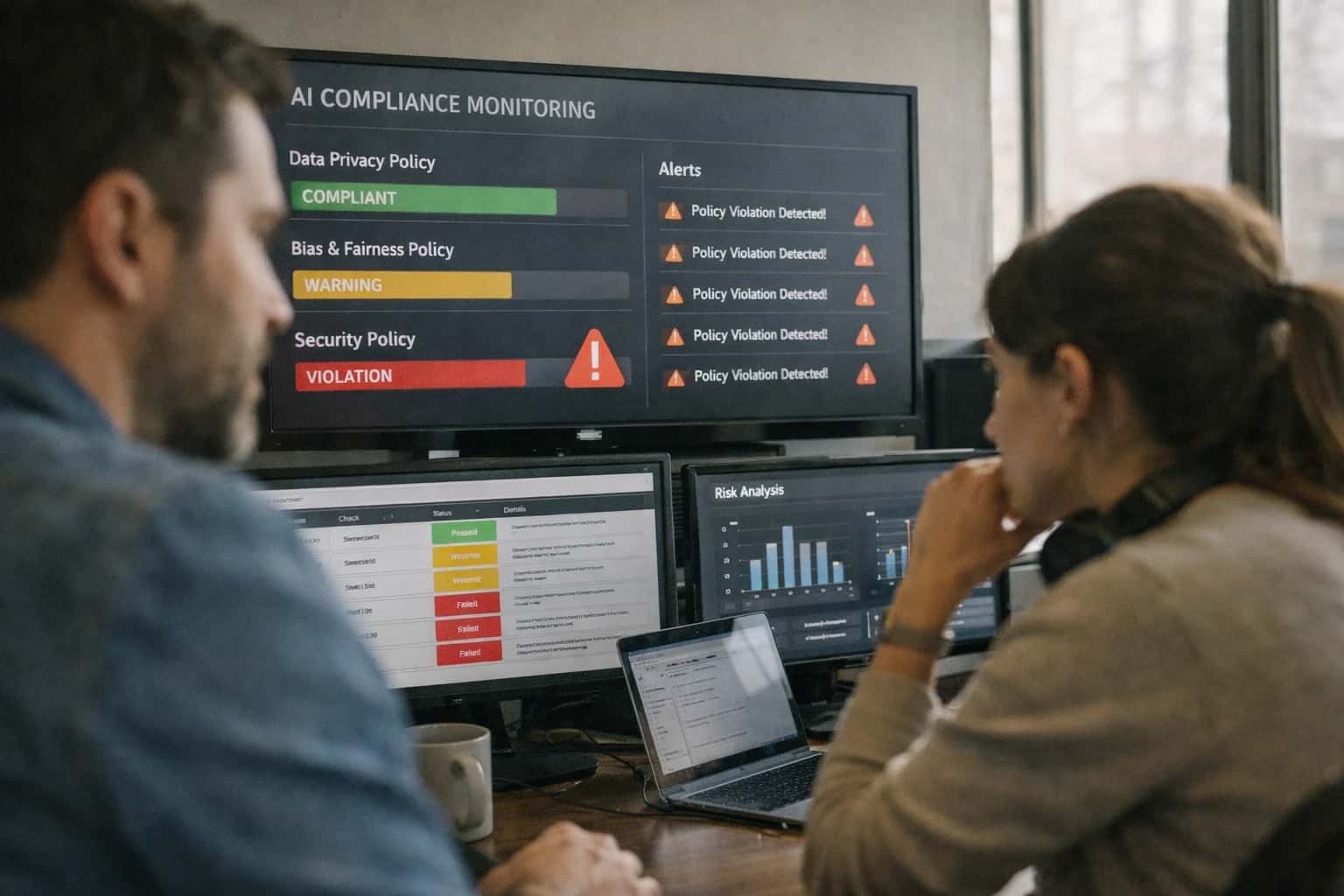
Where AI Fits into Descartes Route Planning
A practical blueprint for embedding AI into Descartes' routing and scheduling engines to move from static plans to dynamic, predictive operations.
Implementation typically involves a middleware layer that sits between your order management system and Descartes. This layer uses historical shipment data, real-time GLN feeds, and external data (e.g., detailed weather forecasts) to generate predictive constraints. For example, an AI model might predict a 45-minute delay on a specific highway segment due to forecasted rain and typical Friday traffic, which is then passed as a soft time window or travel time multiplier to the Descartes optimizer. For multi-objective planning—balancing cost, time, driver hours, and carbon emissions—AI can run scenario simulations, adjusting weightings in the optimizer's objective function to present planners with 2-3 Pareto-optimal plans for final selection.
Rollout should be phased, starting with a single depot or driver cohort. Governance is critical: all AI-suggested route changes should be logged with a reason code (e.g., "predicted weather delay") and require planner approval or follow a pre-defined policy (e.g., auto-accept delays under 30 minutes). Integrate with Descartes' reporting modules to create a feedback loop, comparing AI-influenced plans against actual outcomes to continuously refine the predictive models. This approach turns Descartes from a calculation engine into a cognitive planning partner, reducing manual replanning by 30-50% and improving on-time delivery rates through proactive adjustment.
Key Descartes APIs & Modules for AI Integration
Core Optimization APIs
The Descartes Routing & Scheduling Engine is the primary surface for AI-driven optimization. Integration focuses on injecting predictive intelligence into its constraint-based planning algorithms.
Key APIs for AI Enhancement:
- Optimization API: Submit complex multi-objective planning requests (cost, time, sustainability, driver preference). AI models can pre-process orders to suggest optimal time windows or dynamically adjust constraint weights (e.g., prioritize low-carbon routes during peak demand).
- Route Update API: Push real-time adjustments. AI agents can call this to dynamically reroute a subset of stops based on live traffic, weather disruptions, or last-minute high-priority orders, then reintegrate the revised plan.
- Geocoding & Mapping API: Ensure accurate stop locations. AI can use this to validate and correct addresses, reducing failed deliveries before planning begins.
AI Use Case: An AI layer analyzes historical on-time performance, real-time traffic feeds, and weather forecasts to predict travel time distributions for each leg. It then calls the Optimization API with adjusted time constraints, leading to plans with higher inherent buffer and reliability.
High-Value AI Use Cases for Descartes Routing
Integrating AI into Descartes' routing and scheduling engines moves planning from static rule-based optimization to dynamic, predictive orchestration. These use cases embed intelligence directly into daily dispatch, compliance, and customer workflows.
Predictive Multi-Objective Route Optimization
AI models analyze historical traffic patterns, real-time weather feeds, and carrier performance data to generate routes that dynamically balance cost, time, sustainability (carbon), and service-level requirements. Workflow: Planner sets objectives; AI evaluates thousands of constraint combinations; system presents 2-3 optimal plans with trade-off analysis.
Automated Disruption Response & Replanning
Monitors Descartes' global logistics network for real-time events (port closures, strikes, severe weather). AI automatically evaluates impact on active routes, suggests optimal reroutes or mode shifts, and triggers proactive customer communication workflows via integrated systems.
Driver Compliance & HOS Copilot
Integrates AI with Descartes' MobilePOD and Hours-of-Service (HOS) data. Provides predictive alerts for potential HOS violations before they occur, suggests optimal break/rest stop locations, and automates log auditing and DVIR support, reducing driver admin burden and compliance risk.
Intelligent Appointment Scheduling
AI analyzes historical dock wait times, carrier arrival patterns, and facility schedules within Descartes' platform. It recommends or automatically books optimal appointment slots to minimize detention/demurrage, maximize asset utilization, and smooth yard operations. Workflow: Tender acceptance triggers AI slot recommendation for carrier self-serve booking.
Dynamic Multi-Modal Planning
For complex global shipments, AI evaluates cost, carbon, and transit time across truck, rail, ocean, and air legs within Descartes' multi-modal planning modules. It constructs optimal intermodal itineraries, predicts transload points, and monitors handoffs for exceptions, automating what is typically a manual, spreadsheet-heavy process.
Automated Trade Lane & Customs Risk Analysis
Connects AI to Descartes' Global Logistics Network and customs content. For a given lane, AI predicts potential clearance delays, flags regulatory changes, and recommends optimal Incoterms or documentation requirements. This intelligence feeds directly into route planning and customer quote workflows, de-risking international moves.
Example AI-Augmented Routing Workflows
These workflows illustrate how AI agents can be embedded into Descartes' routing and scheduling engines to automate complex decisions, respond to real-time disruptions, and optimize for multiple business objectives simultaneously.
Trigger: A new batch of orders is released into Descartes' Routing & Scheduling engine for daily planning.
Context Pulled: The agent retrieves the order set, vehicle profiles, driver constraints (HOS, skills), and real-time external data feeds for traffic, weather, and fuel prices via Descartes' APIs.
AI Agent Action: The agent runs a multi-objective optimization model, balancing:
- Cost: Minimizing total distance and fuel consumption.
- Service: Meeting promised delivery windows.
- Sustainability: Prioritizing routes with lower emissions.
- Driver Experience: Avoiding known high-congestion zones and ensuring manageable shift lengths.
The model generates a set of Pareto-optimal route plans, and the agent selects the best-fit plan based on configurable business rules (e.g., "today, prioritize cost; tomorrow, prioritize service").
System Update: The selected optimal route plan is pushed back into Descartes as the finalized schedule, ready for dispatch.
Human Review Point: The planner reviews the AI-recommended plan via the Descartes UI, with the agent highlighting any trade-offs made (e.g., "Selected Plan B: 5% higher cost but 20% lower carbon emissions vs. Plan A") for final approval.
Implementation Architecture: Data Flow & System Design
A practical blueprint for embedding AI into Descartes' route planning workflows to optimize for cost, service, and compliance.
Integrating AI with Descartes Route Planning starts by connecting to its core data surfaces: the Routing & Scheduling Engine API, Global Logistics Network (GLN), and Mobile Resource Management (MRM) driver data. The AI layer ingests real-time and historical data streams—including planned routes, actual GPS pings, traffic feeds, weather forecasts, and carrier performance records—to build a predictive context model. This model powers three primary workflows: 1) Multi-objective route optimization that re-sequences stops dynamically based on live traffic, weather-impacted drive times, and time-window constraints. 2) Predictive compliance monitoring that cross-references planned routes against HOS regulations, geofenced rest areas, and hazmat routing guides to flag potential violations before dispatch. 3) Continuous plan adjustment that suggests mid-route diversions or stop swaps by processing real-time exception alerts from the GLN.
The system design typically involves a middleware agent that sits between Descartes and the AI model. This agent handles event ingestion (e.g., new orders, traffic alerts), context enrichment (pulling in external data like weather APIs), and secure tool calling to the LLM or optimization model. The AI returns structured recommendations—such as a revised stop sequence or a driver alert—which the agent translates into actions within Descartes via its REST API, updating the plan or creating a notification in the Dispatcher Workbench. For governance, all AI-suggested changes are logged with a rationale in an audit trail, and critical overrides (like changing a hazmat route) can be routed through a human-in-the-loop approval step configured in Descartes' workflow engine.
Rollout focuses on a phased, workflow-specific approach. A common starting point is integrating AI for dynamic ETA updates and weather rerouting on a subset of high-value or time-sensitive routes. This allows teams to validate AI accuracy and user trust before expanding to more complex use cases like multi-depot load balancing or electric vehicle trip planning. Successful implementations wire the AI to run as a continuous background service, re-evaluating routes every 15-30 minutes or on triggered events, ensuring plans adapt to conditions without overwhelming dispatchers with alerts. The final architecture ensures Descartes remains the system of record for execution, while the AI acts as an intelligent co-pilot for the planning and exception management layers.
Code & Payload Examples
Calling the Descartes Routing Engine with AI Inputs
Integrate predictive AI models directly into Descartes' route planning API calls. The core pattern involves enriching the standard optimization request (routePlanRequest) with AI-generated constraints and objectives, such as predicted traffic slowdowns or weather-impacted road segments.
Example Payload Enhancement:
json{ "routePlanRequest": { "stops": [...], "vehicleSpecs": {...}, "constraints": { "timeWindows": [...], "driverHours": {...} }, "optimizationGoals": ["minimizeCost", "minimizeTime"], "aiContext": { "predictedTrafficSegments": [ { "roadId": "I-5_SB_milepost_120", "timeBlock": "2024-10-26T14:00:00Z/PT2H", "predictedDelayMinutes": 22, "confidence": 0.87 } ], "weatherAdvisories": [ { "area": "polygon_coordinates", "hazard": "snow_accumulation_3in", "severity": "high", "recommendedDetourId": "ALT_ROUTE_7B" } ], "sustainabilityGoal": { "maxCarbonKg": 150.5, "preferredMode": "electric" } } } }
The AI context layer allows the Descartes engine to evaluate multi-objective plans (cost, time, carbon) against real-world predictions, returning a routePlanResponse with AI-justified selections.
Realistic Operational Impact & Time Savings
This table illustrates the practical impact of embedding AI into Descartes Route Planning workflows, focusing on time savings, process improvement, and decision quality for planners and dispatchers.
| Metric | Before AI | After AI | Notes |
|---|---|---|---|
Multi-objective route optimization | Manual weighting of cost, time, sustainability | AI suggests Pareto-optimal plans | Planner reviews and approves; AI handles complex trade-off calculations |
Dynamic rerouting for disruptions | Reactive, manual replanning (1-2 hours) | Proactive, AI-suggested alternatives (<15 mins) | AI analyzes real-time traffic, weather, and carrier ETAs to trigger alerts |
Driver compliance & HOS planning | Manual check of hours-of-service rules | AI-flagged potential violations in plan | Reduces risk; planner finalizes compliant schedule |
Predictive ETA accuracy | Static ETAs based on standard speeds | Dynamic, confidence-scored ETAs | AI incorporates historical lane performance, weather forecasts, and live traffic |
Fuel & sustainability optimization | Basic route mileage calculations | AI recommends fuel-efficient paths & EV charging | Considers terrain, traffic patterns, and vehicle specs for cost/emissions |
Carrier performance integration | Manual review of carrier scorecards | AI factors on-time performance into planning | Automatically de-prioritizes low-performing carriers for time-sensitive loads |
Exception investigation & root cause | Manual log review across systems | AI correlates events & suggests likely cause | Speeds up operational post-mortems from hours to minutes |
New planner onboarding & training | Weeks of shadowing and trial runs | AI copilot suggests best practices & flags errors | Reduces ramp-up time and standardizes planning quality |
Governance, Security & Phased Rollout
Integrating AI into Descartes Route Planning requires a controlled approach that prioritizes operational safety, data integrity, and measurable value.
A production integration typically connects via Descartes' Routing & Scheduling API or a middleware layer that ingests planning requests and returns AI-enhanced routes. This architecture ensures the core Descartes engine remains the system of record, with AI acting as a pre-processor for constraints (like predictive traffic windows) or a post-processor for multi-objective optimization (balancing cost, time, and sustainability scores). All AI-driven suggestions should be logged in a dedicated audit table, linked to the original RoutePlanID, for explainability and performance review.
Rollout follows a phased, constraint-first model to build trust:
- Shadow Mode: Run AI models in parallel with existing Descartes plans, comparing outputs without affecting drivers or customers. Measure divergence in key metrics like estimated miles, duration, and cost.
- Advisory Mode: Surface AI recommendations (e.g., "Weather delay likely on I-90 after 2 PM") within the Descartes planner UI as non-binding insights for dispatchers to accept or override, tracking adoption rates.
- Guarded Automation: Automate specific, low-risk decisions, such as dynamic sequencing of non-time-sensitive deliveries within a defined geographic zone, with hard business rule guardrails.
- Continuous Optimization: Expand to more complex workflows like multi-day, multi-driver continuous move planning or real-time rerouting based on live telematics and weather feeds, with established fallback procedures.
Governance is critical. Implement a prompt management system to version and control the instructions given to LLMs for tasks like natural-language reason code generation for route changes. Establish RBAC controls to define which user roles can modify AI parameters or approve automated route changes. For data security, ensure customer addresses, driver details, and rate information are never sent to a third-party AI model without proper anonymization or use of a private, VPC-deployed model endpoint. A phased rollout paired with clear governance turns AI from a black box into a reliable, auditable component of your transportation technology stack.
Enabling Efficiency, Speed & Accuracy
Intelligent Analysis, Decision & Execution
We build AI systems for teams that need search across company data, workflow automation across tools, or AI features inside products and internal software.
Talk to Us
Search across company data
Give teams answers from docs, tickets, runbooks, and product data with sources and permissions.
Useful when people spend too long searching or get different answers from different systems.

Automate internal workflows
Use AI to route work, draft outputs, trigger actions, and keep approvals and logs in place.
Useful when repetitive work moves across multiple tools and teams.

Add AI to products and internal tools
Build assistants, guided actions, or decision support into the software your team or customers already use.
Useful when AI needs to be part of the product, not a separate tool.
Frequently Asked Questions
Explore detailed walkthroughs of how AI integrates with Descartes Route Planning to automate key workflows, from dynamic optimization to driver compliance.
This workflow continuously re-optimizes planned routes using live external data.
- Trigger: A scheduled job (e.g., every 15 minutes) or a webhook from Descartes alerts the system to new orders, cancellations, or a significant change in real-time data (e.g., major traffic incident, severe weather alert).
- Context Pulled: The AI agent retrieves the current planned route from Descartes, including stops, time windows, vehicle specs, and driver details. It then fetches real-time constraints via APIs:
- Traffic conditions (Google Maps, HERE)
- Weather forecasts and active alerts (OpenWeather, NOAA)
- Road closures and incidents (state DOT feeds)
- Planned driver breaks and Hours of Service (HOS) status
- Agent Action: An optimization model (LLM-augmented solver) processes the route and constraints. It evaluates multi-objective trade-offs:
- Minimizing total drive time vs. fuel consumption vs. carbon emissions.
- Respecting hard constraints (delivery windows, vehicle capacity).
- Suggesting potential stop resequencing or minor time shifts.
- System Update: The agent generates a revised route plan with a confidence score and a clear rationale (e.g., "Reroute suggested to avoid 45-minute delay on I-95 due to accident"). This is pushed back to Descartes Route Planning via its API as a proposed plan update.
- Human Review Point: For high-confidence, low-impact changes (e.g., resequencing within a neighborhood), the system can auto-apply. For major changes affecting the first/last stops or customer commitments, the plan is flagged in the dispatcher's console for one-click approval.

About the author
Prasad Kumkar
CEO & MD, Inference Systems
Prasad Kumkar is the CEO & MD of Inference Systems and writes about AI systems architecture, LLM infrastructure, model serving, evaluation, and production deployment. Over 5+ years, he has worked across computer vision models, L5 autonomous vehicle systems, and LLM research, with a focus on taking complex AI ideas into real-world engineering systems.
His work and writing cover AI systems, large language models, AI agents, multimodal systems, autonomous systems, inference optimization, RAG, evaluation, and production AI engineering.
Partnered with leading AI, data, and software stack.





How We Work
Custom AI workflows for your Business
One-fit-all AI don't work for modern businesses. At Inferensys, we aim to understand your business & custom requirements; which we use to define most efficient agentic workflows, the data, and the tools for your business.
01
Review the use case
We understand the task, the users, and where AI can actually help.
Read more02
Pick the right approach
We define what needs search, automation, or product integration.
Read more03
Build the first useful version
We implement the part that proves the value first.
Read more04
Improve from there
We add the checks and visibility needed to keep it useful.
Read moreThe first call is a practical review of your use case and the right next step.
Talk to Us