
Inferensys

Integration

AI Integration with Phrase Custom AI Solutions

Technical blueprint for building and deploying custom AI models—like brand voice analyzers or regulatory compliance scanners—on top of Phrase's extensible webhook and plugin architecture to augment translation workflows.
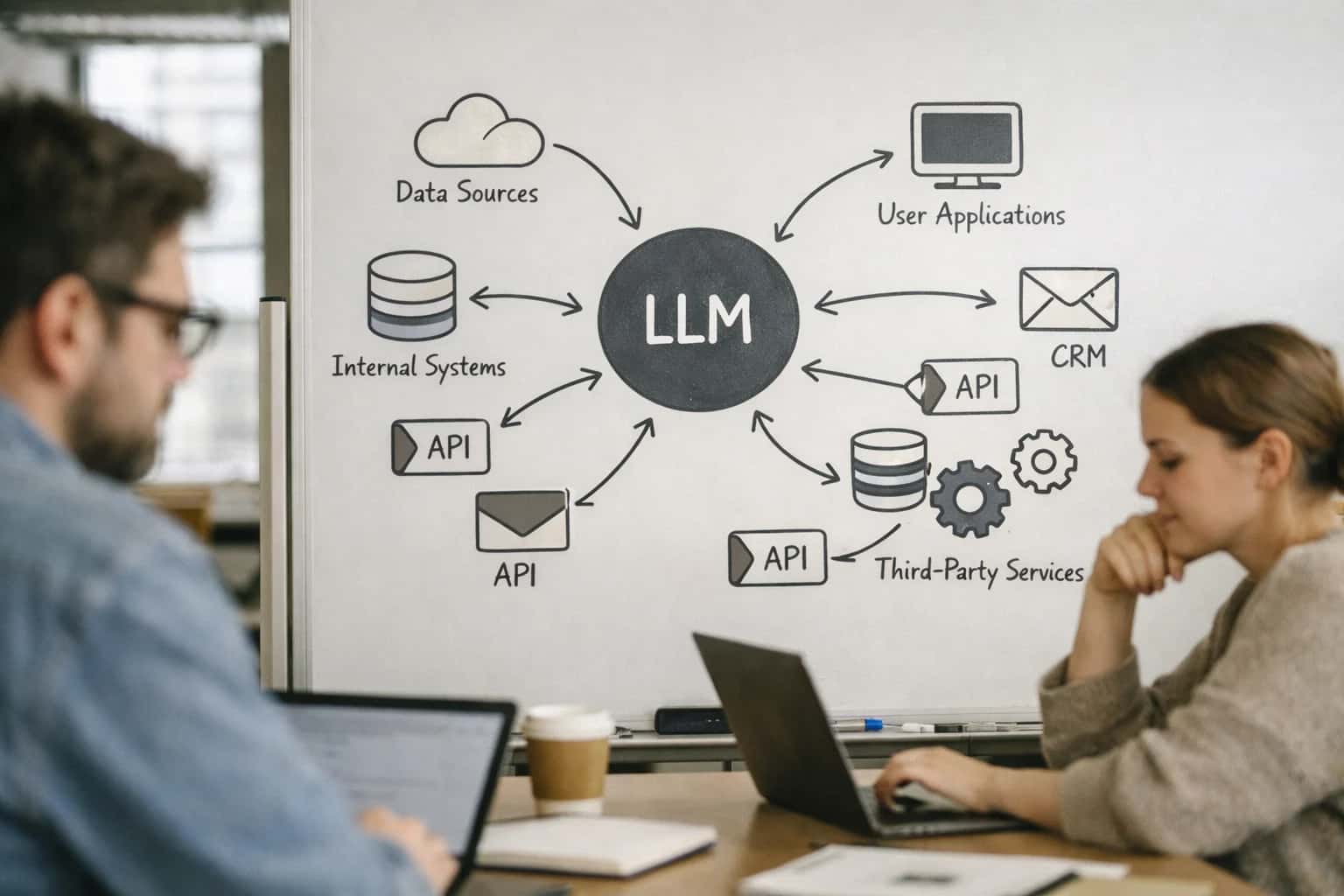
Architect reviewing LLM integration architecture on laptop, system diagrams visible, modern technical office setup.
ARCHITECTURE AND ROLLOUT

Extending Phrase with Custom AI Models

A technical blueprint for developing, deploying, and governing custom AI solutions on Phrase's extensible platform.

Phrase's webhook and plugin architecture provides a robust foundation for integrating custom AI models that address specific business logic beyond generic machine translation. This involves connecting to key functional surfaces: the Jobs API for initiating translation workflows, the Strings API for real-time content analysis, and webhook listeners for triggering AI actions on events like job creation or string update. Common integration points include:

  • Pre-translation analysis: Deploying a custom brand voice or compliance scanner that processes source strings via webhook before they enter the translation memory.
  • In-workflow augmentation: Injecting AI-generated terminology suggestions or contextual explanations into the translator's interface via custom widgets or the Phrase In-Context Editor.
  • Post-translation QA: Implementing a secondary, AI-powered quality gate that reviews translated segments against a vector database of approved style guides and past decisions.


A production implementation typically follows a decoupled, event-driven pattern. Source content pushed to Phrase triggers a webhook to your AI service, which processes the payload and returns metadata (e.g., a complexity_score, recommended_glossary_terms) back to Phrase via API call. For latency-sensitive use cases like real-time terminology support, the architecture may employ a sidecar service that caches approved terms and brand rules, providing sub-second lookups directly within the translation UI. Governance is managed through Phrase's existing project and user role (RBAC) structures, ensuring AI suggestions are only applied to appropriate content tiers and undergo required human review steps defined in the workflow.

Rollout should be phased, starting with a pilot project on a low-risk content type (e.g., internal knowledge base articles). Use Phrase's sandbox environment to test the full integration lifecycle—from webhook configuration and error handling to the audit trail of AI-suggested changes. Critical to long-term success is establishing a feedback loop: log AI suggestion acceptance/rejection rates back to your model training pipeline. This closed-loop system, coupled with Phrase's detailed activity logs, allows for continuous refinement of custom models, ensuring they evolve with your brand guidelines and compliance requirements without disrupting core localization velocity.

ARCHITECTURE BLUEPRINT

Where to Plug In Custom AI: Phrase's Integration Surfaces

Automate the Terminology Lifecycle

Phrase's Terminology API is the primary surface for injecting custom AI to enforce brand voice and compliance. Use AI models to analyze source content and automatically suggest new terms for glossary creation, validate translator adherence in real-time, and flag potential inconsistencies.

Key Integration Points:

  • POST /api/v2/terms: Automatically create and suggest terms by analyzing project source files with a custom NLP model.
  • Webhook term.created: Trigger AI-powered validation workflows when a new term is added, checking for conflicts or compliance issues.
  • In-Editor Suggestions: Use the Phrase Editor SDK to provide real-time, context-aware term recommendations to linguists as they translate.

Example AI Use Case: Build a compliance scanner that cross-references new terms against a regulated substances database, automatically tagging high-risk entries for legal review before they enter the glossary.

EXTENSIBLE WEBHOOK & PLUGIN ARCHITECTURE

High-Value Custom AI Use Cases for Phrase

Phrase's API-first design and event-driven webhooks create a powerful foundation for custom AI agents. These patterns move beyond basic machine translation to inject intelligence directly into localization workflows, project management, and quality gates.

01

Brand Voice & Tone Consistency Scanner

Deploy a custom AI model that analyzes translated strings in Phrase projects via webhook payloads. The model scores each segment against your defined brand attributes (e.g., formal, playful, technical) and flags deviations for reviewer attention, ensuring global content aligns with brand identity.

Batch -> Real-time
Compliance check
02

Automated Context Enrichment for Translators

Build an AI agent that listens for string.added or job.created webhooks. It automatically fetches screenshots, Figma frames, or Jira ticket context related to the source string, attaches it as a note in Phrase, and provides a brief summary. This reduces translator context-switching and improves accuracy.

1 sprint
Setup time
03

Regulatory & Compliance Clause Detector

For industries like fintech or healthcare, implement a classifier that scans source content entering Phrase via file upload or API. It identifies high-risk strings containing legal terms, disclaimers, or regulated phrases, and automatically routes those jobs to a specialized vendor or adds a mandatory legal review step in the workflow.

Pre-emptive Risk Mitigation
Core benefit
04

Intelligent Project Scoping & Cost Forecasting

Create an AI copilot that analyzes a new project's file set (via Phrase's API) to predict effort. It considers word count, translation memory match rates, content complexity scores, and historical vendor performance to generate a time and cost estimate, helping managers plan resources and budgets more accurately.

Hours -> Minutes
Estimation time
05

Dynamic Terminology Suggestion & Validation

Extend Phrase's terminology module with an AI layer. When a translator works on a segment, an agent queries a vector store of past approved translations, product docs, and marketing materials to suggest contextually relevant terms not yet in the official glossary, and submits them for approval via Phrase's API.

Continuous Glossary Growth
Outcome
06

Anomaly Detection in Translator Output

Implement a monitoring agent that uses Phrase's review and proofread webhooks. It compares newly submitted translations against a model of the translator's typical style and quality patterns, flagging potential outliers (e.g., unusual speed, stylistic drift) for project manager review, enabling proactive quality management.

Same day
Issue detection
IMPLEMENTATION PATTERNS

Example Custom AI Workflows for Phrase

These workflows demonstrate how to build and deploy custom AI solutions on top of Phrase's extensible platform, using its webhooks, APIs, and plugin architecture to automate specialized tasks beyond standard machine translation.

Trigger: A new translation job is created in Phrase for marketing campaign content.

Context Pulled: The workflow uses the Phrase API to fetch the source strings and project metadata. It simultaneously retrieves the approved brand voice guide (PDF, Confluence page) from a connected document store.

AI Action: A custom fine-tuned LLM or a series of classification models analyze each source string against the brand guide. The AI checks for:

  • Adherence to prescribed tone (e.g., "friendly, not casual").
  • Prohibited jargon or terminology.
  • Required inclusion of brand pillars or keywords.

System Update: The workflow posts results back to Phrase as custom tags (e.g., brand-check:pass, brand-check:review) and creates a comment on segments flagged for review, citing the specific guideline violation.

Human Review Point: Segments tagged for review are automatically routed to a senior linguist or brand manager within the Phrase workflow before proceeding to general translation.

CUSTOM AI SOLUTIONS FOR PHRASE

Implementation Architecture: Building the AI Layer

A technical blueprint for developing and deploying custom AI models that extend Phrase's core localization workflows.

Integrating custom AI with Phrase begins by mapping its extensible surfaces: the Webhooks API for event-driven triggers and the REST API for programmatic control of projects, jobs, and strings. Your AI layer acts as an external service that listens for Phrase events—like job.created or string.added—and uses the API to fetch context, apply your model, and push back results. For example, a brand voice analyzer would subscribe to translation.created webhooks, retrieve the source and target strings via the API, run its analysis, and post findings as a custom comment or issue on the string for human review. This pattern keeps your AI logic decoupled, scalable, and auditable.

Production implementation requires a middleware orchestrator to manage the handshake between Phrase and your AI services. A typical stack includes: a message queue (e.g., RabbitMQ, AWS SQS) to handle webhook bursts; a vector database (e.g., Pinecone, Weaviate) to store and retrieve your approved style guides, past translations, and brand assets for RAG context; and a model serving layer (e.g., a FastAPI service) hosting your custom classifiers or LLM agents. The orchestrator uses Phrase's API to enrich payloads with project metadata, terminology entries, and translation memory matches before invoking your AI, ensuring decisions are grounded in your existing localization knowledge base.

Governance and rollout are critical. Start with a pilot project scope, such as applying a compliance scanner only to strings tagged legal or regulatory. Implement a human-in-the-loop approval step where AI suggestions are posted as draft translations with a custom state (e.g., ai_suggested) for linguist validation. Use Phrase's user and role management to control who can see and approve AI outputs. Log all AI interactions—input, model version, output, and final human action—to a separate audit system for performance monitoring and compliance. This controlled, phased approach de-risks deployment and builds trust with your localization team by keeping them in command of the final output.

AI INTEGRATION WITH PHRASE CUSTOM AI SOLUTIONS

Code and Payload Examples

Triggering Custom AI on String Events

Phrase's webhook system can trigger custom AI services for tasks like brand voice analysis or compliance scanning. When a new string is uploaded or a translation is completed, Phrase sends a JSON payload to your configured endpoint. Your service processes the content and posts results back via the Phrase API.

Example Payload (Phrase → Your Service):

json
{
  "event": "translation.completed",
  "project_id": "proj_abc123",
  "key_id": "key_def456",
  "locale_id": "fr-FR",
  "content": "Welcome to our premium service.",
  "translation": "Bienvenue à notre service premium."
}

Your handler should authenticate, call your AI model (e.g., for tone analysis), and then update the Phrase key with metadata or flags using the Phrase API, enabling automated governance within the translation workflow.

CUSTOM AI SOLUTION DEVELOPMENT

Realistic Time Savings and Operational Impact

This table illustrates the operational impact of developing and deploying custom AI solutions (e.g., brand voice analyzers, compliance scanners) on top of Phrase's extensible platform, moving from manual, reactive processes to automated, proactive intelligence.

Workflow / MetricBefore Custom AIAfter Custom AI IntegrationImplementation Notes

Brand Voice & Tone Analysis

Manual sampling by brand team; 2-4 week review cycles

Automated scanning of 100% of new translations; real-time alerts

AI model trained on style guide; integrates via Phrase webhooks for new string events

Regulatory Compliance Scanning

Post-translation legal review; high-risk of missed clauses

Pre-merge scanning for prohibited terms & required disclosures

Custom classifier deployed as a Phrase QA step; flags strings before translator assignment

Terminology Consistency Enforcement

Reactive glossary updates after inconsistencies are found

Proactive term extraction & suggestion during translation

NLP pipeline analyzes source content; pushes candidate terms to Phrase Terminology API

Translation Priority & Routing

Manual triage by project manager based on incomplete context

AI scores urgency/complexity; auto-routes to appropriate linguist pool

Model uses metadata (project, due date, content type); sets Phrase job tags & assignees

Quality Assurance (QA) Pass

Generic QA checks; manual spot-checking for nuanced errors

Context-aware QA for domain-specific accuracy & fluency

Fine-tuned LLM provides in-editor suggestions via Phrase's suggestion API

Project Setup & Configuration

Manual project creation, file parsing, and settings configuration

AI agent parses source files, suggests project structure, auto-configures

Agent uses Phrase API; reduces setup from 1-2 hours to 10-15 minutes per project

Root Cause Analysis for Quality Issues

Manual investigation across TM, glossary, and translator history

Automated correlation of error patterns to suggest systemic fixes

AI analyzes QA rejection data; recommends glossary updates or translator training

ARCHITECTING CONTROLLED AI DEPLOYMENT

Governance, Security, and Phased Rollout

A practical framework for deploying custom AI solutions on Phrase with appropriate controls, security, and a risk-managed rollout.

Production AI integrations with Phrase must respect its data model and extensibility points while enforcing strict governance. We architect solutions using Phrase's webhook system and REST API to create a secure, event-driven layer. This typically involves:

  • Secure API Gateways & Service Accounts: Using dedicated, scoped service accounts with least-privilege access to Phrase projects, glossaries, and translation memories.
  • Audit Trails: Logging all AI-initiated actions (e.g., auto-creating jobs, suggesting terms) back to a central audit log, tagging them with the AI agent's service ID for traceability.
  • Data Sanitization Pipelines: Implementing pre-processing to strip PII or sensitive data from source strings before sending to external LLM APIs, often using Phrase's custom metadata or placeholder tags to maintain structure.

A phased rollout is critical for managing risk and proving value. We recommend starting with a pilot on a single, non-critical Phrase project or a specific workflow stage, such as:

  1. Phase 1 - Assistive QA: Deploy an AI model as a non-blocking, custom QA step that flags potential brand voice or compliance issues in translations, requiring no changes to existing translator approval workflows.
  2. Phase 2 - Augmented Creation: Integrate an AI copilot into the Phrase translator interface via its plugin architecture, providing real-time terminology suggestions and context retrieval from connected vector stores, but keeping human translators firmly in the loop.
  3. Phase 3 - Controlled Automation: For trusted workflows, enable AI to auto-translate low-risk, high-volume content types (e.g., internal UI strings) by creating jobs via API, but route outputs to a dedicated "AI-Translated" review queue for sampled human validation.

Governance is maintained through a combination of technical and process controls. We implement prompt versioning and output evaluation cycles, storing approved prompts as assets within Phrase's Glossary or Style Guide modules for centralized management. For custom models, we establish drift detection by monitoring suggestion acceptance rates and A/B testing outputs against a gold-standard human translation set. This ensures your AI solutions on Phrase remain accurate, cost-effective, and aligned with evolving brand and compliance standards, turning a pilot into a scalable, governed capability. For related patterns on managing AI across multiple platforms, see our guide on AI Integration for Translation Management Platforms.

IMPLEMENTATION QUESTIONS

FAQ: Custom AI Integration with Phrase

Practical answers for teams building custom AI solutions—like brand voice analyzers or compliance scanners—on top of Phrase's extensible platform.

You typically use Phrase's webhook system or its REST API to invoke your AI service. Common triggers include:

  1. Project Creation: When a new project is created, call an AI model to analyze the source files for complexity, brand term density, or regulatory risk to inform routing and pricing.
  2. Job Status Change: Set a webhook for job.status.changed. When a job moves to in_progress, you can fetch the job's strings via the API, send them to your custom compliance scanner, and post results back as an internal comment or custom field.
  3. String State Change: Use the string.added or string.state.changed webhook to run real-time analysis on new or updated source strings. For example, a brand voice analyzer can score each new string and flag outliers for review.

Example Payload to AI Service:

json
POST /your-ai-model/analyze
{
  "project_id": "proj_abc123",
  "strings": [
    { "id": "str_1", "text": "Welcome to our premium service.", "key": "homepage.hero.title" },
    { "id": "str_2", "text": "Click here to delete your account.", "key": "settings.danger.button" }
  ],
  "context": {
    "brand_guidelines_url": "https://internal/wiki/brand-voice-v2",
    "regulation": "gdpr"
  }
}

The AI service returns scores or flags, which your middleware then posts back to Phrase using the Comments API or by updating a custom string field.

Prasad Kumkar

About the author

Prasad Kumkar

CEO & MD, Inference Systems

Prasad Kumkar is the CEO & MD of Inference Systems and writes about AI systems architecture, LLM infrastructure, model serving, evaluation, and production deployment. Over 5+ years, he has worked across computer vision models, L5 autonomous vehicle systems, and LLM research, with a focus on taking complex AI ideas into real-world engineering systems.

His work and writing cover AI systems, large language models, AI agents, multimodal systems, autonomous systems, inference optimization, RAG, evaluation, and production AI engineering.


