AI development services for Lokalise target three primary integration surfaces: its REST API and webhooks, key-based translation management model, and developer-centric CLI/SDK tooling. The most impactful integrations connect AI to the automation layer—using webhooks to trigger AI-powered tasks like auto-translating low-priority UI strings, generating context for translators from linked design files, or performing custom QA checks via the Lokalise QA API. For development teams, this means embedding AI agents into CI/CD pipelines that monitor source code repositories, detect new or modified strings, and automatically push them to the correct Lokalise project with AI-generated placeholder translations, reducing manual key management overhead.

Integration
AI Integration for Lokalise AI Development Services
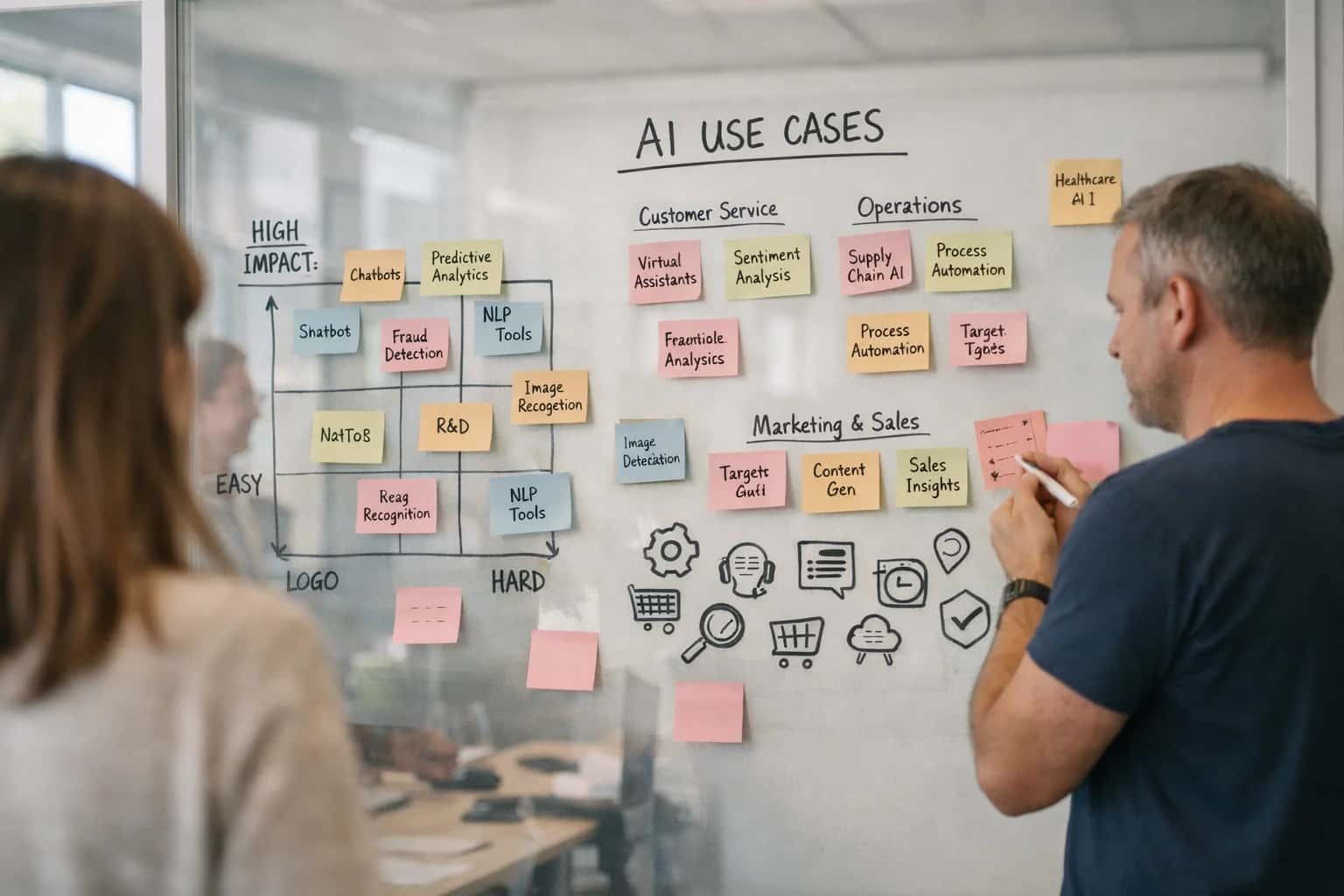
Where AI Fits in Lokalise Development Services
A practical blueprint for integrating AI into Lokalise-centric development workflows to accelerate translation pipelines and improve developer experience.
Implementation typically involves a middleware service that sits between your codebase and Lokalise, handling tasks like:
- Context Enrichment: Using AI to analyze the source code file and UI component where a string is used, then attaching that context as a description or screenshot in Lokalise.
- Intelligent Routing: Applying NLP to classify strings (e.g.,
marketing,legal,error_message) and automatically assigning them to appropriate translator workflows or machine translation engines based on cost/quality trade-offs. - Automated QA Pipelines: Building custom checks that run via the Lokalise QA API, using fine-tuned models to flag potential brand voice deviations, regulatory compliance issues, or contextual mismatches that generic checks miss. This service architecture allows for centralized governance, audit logging of AI suggestions, and A/B testing of different AI models without disrupting the core Lokalise integration.
Rollout should be phased, starting with non-customer-facing content like internal tool UI strings or developer documentation. Key governance considerations include establishing a human-in-the-loop review workflow for high-risk content (pricing, legal terms), implementing cost controls for AI API usage per project, and maintaining a feedback loop where translator accept/reject decisions on AI suggestions are used to retrain or fine-tune models. The goal is not to replace Lokalise but to augment its automation capabilities, turning manual, batch-oriented localization processes into a real-time, AI-assisted workflow that keeps pace with agile development cycles.
Key Lokalise Surfaces for AI Integration
The Core Data Model for AI
Lokalise organizes content into projects, keys, and language-specific strings. This is the primary surface for AI integration, where models can read source strings and generate or evaluate target translations.
Integration Points:
- Bulk Operations API: Fetch all untranslated keys for a target language to send to an LLM for batch suggestion generation.
- Webhooks on Key Update: Trigger an AI quality check whenever a new translation is submitted by a human or another system.
- Key Metadata: Use custom key attributes (e.g.,
context,screenshot_url,max_length) to enrich AI prompts, ensuring suggestions respect UI constraints and visual context.
Example Workflow: An AI agent monitors the keys endpoint for new English source strings tagged marketing_urgency=high. It uses the key's context and any linked screenshots to generate a German translation via GPT-4, then posts the suggestion back to Lokalise via the translations endpoint, flagging it for human review.
High-Value AI Use Cases for Lokalise
For engineering leaders building or procuring AI services for Lokalise, these patterns detail where to inject intelligence into its key-based translation workflows, developer-centric APIs, and quality assurance pipelines to accelerate global product launches.
AI-Powered Translation Suggestion Engine
Integrate LLMs via Lokalise's Translation API to provide context-aware suggestions beyond basic machine translation. Use project metadata, key descriptions, and screenshots to ground prompts, reducing translator cognitive load and improving first-pass quality for complex UI strings.
Automated Quality Assurance & Compliance Scanning
Deploy custom AI models as webhook-triggered QA steps. After a translation is updated, call an AI service to check for brand voice adherence, regulatory term compliance (e.g., GDPR, industry-specific), and contextual accuracy against linked design files, flagging issues before human review.
Intelligent Key Management & Cleanup Agent
Build an AI agent that analyzes Lokalise project data via the Keys API to identify unused keys, suggest consolidations, and recommend better naming conventions based on usage patterns. This optimizes translation memory and reduces project clutter for development teams.
Dynamic Content Routing & Priority Triage
Implement an AI orchestration layer that sits between your source systems (e.g., GitHub, CMS) and Lokalise. Classify incoming strings by urgency, market impact, and content type using NLP, then automatically create and prioritize Lokalise jobs, assigning them to appropriate translator workflows.
Context Retrieval for Translators (RAG)
Create a Retrieval-Augmented Generation (RAG) system that connects Lokalise to a vector store of product documentation, past decisions, and brand guidelines. Provide translators with a semantic search sidebar in the Lokalise UI, delivering relevant context for ambiguous keys to ensure consistency.
Predictive Localization Operations
Use AI to analyze commit histories, product roadmaps, and past Lokalise project data to forecast translation needs. Predict which features will require localization, estimate required capacity and budgets, and pre-emptively setup project frameworks, reducing time-to-market for global releases.
Example AI-Enhanced Workflows
For engineering teams building or procuring AI development services for Lokalise, these workflows illustrate common integration patterns. Each example details the trigger, data flow, AI action, and system update to provide a blueprint for implementation.
Trigger: A developer pushes new source strings to a Lokalise project via the API or CLI.
Context/Data Pulled: The integration service listens for the key.added webhook. It fetches the new key's source string, file name, and project metadata. It then queries connected systems (e.g., GitHub for the associated commit/PR description, Figma for the component name, Jira for the related ticket) to gather development context.
Model or Agent Action: An LLM (like GPT-4 or Claude) is prompted to synthesize the gathered context into a concise, structured note. The prompt instructs the model to:
- Extract technical terms and product names.
- Note if the string is for UI, error, or documentation.
- Flag any placeholder variables (
{{var}}) and describe their expected format. - Suggest relevant Lokalise tags (e.g.,
component:button,priority:high).
System Update or Next Step: The service uses the Lokalise API to update the key's context field and apply the suggested tags. This enriched context is immediately visible to translators in the Lokalise editor.
Human Review Point: The AI-generated context is logged as a suggestion. Project managers can review the context updates in a batch via a custom dashboard and revert any that are inaccurate.
Implementation Architecture & Data Flow
A production-ready AI integration for Lokalise connects custom models to its key-based translation workflow, injecting intelligence at critical decision points without disrupting existing operations.
The core integration pattern uses Lokalise's webhooks and REST API to create a bidirectional data flow. When a new key is uploaded or a translation job is created, a webhook triggers an AI service. This service fetches the source string and its associated context—such as screenshots, developer comments, or linked design files from the Lokalise UI—via the API. The AI then processes this payload, performing tasks like complexity scoring, terminology suggestion, or initial machine translation draft generation. The results are posted back to Lokalise as comments, suggestions, or custom metadata on the translation key, enriching the workspace for human linguists.
For advanced use cases like automated quality assurance, the architecture incorporates a scheduled agent that polls the Lokalise API for strings in a 'review' state. This agent runs custom NLP models (e.g., for brand voice compliance or regulatory term detection) against the translated content. Failures are logged as tasks or issues directly within the Lokalise project, triggering assigned workflows. To ground AI outputs in your specific domain, implement a Retrieval-Augmented Generation (RAG) system. A vector database stores your approved style guides, past high-quality translations, and product documentation. When an AI model needs to generate a suggestion or answer a translator's query, it first retrieves the most relevant context from this knowledge base via semantic search, ensuring consistency and reducing hallucination.
Rollout should follow a phased, key-level opt-in approach. Start by tagging specific projects or key groups (e.g., marketing, ui_high_risk) for AI processing. This allows for controlled A/B testing and quality gates. Governance is critical: all AI suggestions must be clearly labeled as such in Lokalise, and a human-in-the-loop review step should be mandatory for final approval. Implement audit logging to track which AI suggestions were accepted or rejected, creating a feedback loop to continuously fine-tune your models. For teams managing this internally, consider our guide on MLOps for Translation Management to operationalize the model lifecycle.
Code & Payload Examples
Augmenting the Lokalise Editor
Integrate a custom AI model to provide real-time translation suggestions within the Lokalise editor. This pattern uses Lokalise's keys endpoint to fetch the source string and context, then posts a suggestion back via the comments or a custom webhook for inline display.
Example API Call (Python):
pythonimport requests # Fetch key details for context key_id = "abc123" project_id = "your_project_id" api_token = "lok_xxxxxxxx" headers = {"Authorization": f"Token {api_token}"} key_url = f"https://api.lokalise.com/api2/projects/{project_id}/keys/{key_id}" key_data = requests.get(key_url, headers=headers).json() source_text = key_data['key']['translations'][0]['translation'] key_name = key_data['key']['key_name']['web'] file_info = key_data['key']['filenames']['web'] # Call your AI service with context ai_payload = { "source_text": source_text, "context": { "key_name": key_name, "file": file_info, "target_language": "de_DE" } } ai_suggestion = call_ai_model(ai_payload) # Your AI service # Post suggestion as a comment for translator review comment_url = f"https://api.lokalise.com/api2/projects/{project_id}/keys/{key_id}/comments" comment_payload = { "comment": f"AI Suggestion: {ai_suggestion}", "is_resolved": False } requests.post(comment_url, json=comment_payload, headers=headers)
This creates a non-intrusive feedback loop, allowing translators to accept, modify, or ignore AI-generated alternatives.
Realistic Time Savings & Operational Impact
This table illustrates the operational impact of integrating custom AI development services into Lokalise workflows, based on typical engineering and localization team scenarios.
| Workflow / Metric | Before Custom AI | After AI Integration | Implementation Notes |
|---|---|---|---|
New language launch support | Manual project setup, key tagging, and TM analysis (2-3 days) | AI-assisted scope definition & automated project templating (4-6 hours) | AI analyzes source content to auto-tag keys by domain and predict resource needs. |
Terminology extraction & glossary build | Manual review of source docs and past projects (1-2 weeks) | AI-powered term extraction and suggestion with human validation (2-3 days) | NLP models process product documentation and existing TMs to propose candidate terms. |
Translation Memory (TM) cleanup & optimization | Quarterly manual audit; inconsistent key merging | Continuous AI monitoring with merge recommendations and duplicate detection | AI agents monitor TM health, flag conflicts, and suggest consolidation to improve match rates. |
Context provision for translators | Manual linking to design files or product specs | Automated context retrieval via RAG; relevant docs attached to translation jobs | Vector database stores product knowledge; AI fetches pertinent context based on key content. |
Custom QA check deployment | Engineering builds and maintains rule-based scripts | AI model fine-tuning & deployment as a custom QA step via Lokalise API (Pilot: 2-4 weeks) | Teams train models on brand/style guidelines; deploy as API-driven check within Lokalise workflow. |
High-volume string batch processing | Manual triage and routing based on simple filters | AI-driven complexity scoring and automatic routing to appropriate resources | AI scores strings for difficulty/risk, auto-assigning to MT, vendor, or in-house teams. |
Localization pipeline health monitoring | Reactive dashboards; manual investigation of bottlenecks | Proactive AI alerts on drift, quality anomalies, and forecasted delays | AI analyzes project velocity, reviewer feedback, and cost data to predict and flag risks. |
Governance, Security, and Phased Rollout
A practical blueprint for deploying AI services in Lokalise with enterprise-grade controls and a low-risk rollout.
Integrating AI into Lokalise requires careful governance, especially when handling proprietary product strings, brand terminology, and regulated content. A secure architecture typically involves a dedicated AI service layer that sits between Lokalise's webhooks/API and your chosen LLMs. This layer manages authentication via Lokalise's project_id and token scopes, logs all AI interactions for audit trails, and enforces data privacy by scrubbing PII before sending payloads to external models. Key operational surfaces to govern include AI-powered translation suggestions in the editor, automated QA checks via the QA API, and batch job automation triggered by webhooks.
A phased rollout mitigates risk and builds team trust. Start with a pilot on a single, non-critical Lokalise project—such as internal documentation or a low-traffic marketing site. Use AI for a single, high-value workflow, like generating first-draft translations for low-context UI strings or performing automated brand terminology checks. Implement a human-in-the-loop review step where all AI suggestions are flagged for translator approval within the Lokalise interface. Measure acceptance rates, time saved per task, and error rates to quantify impact before scaling.
For production deployment, establish clear AI usage policies directly within Lokalise's project settings and team permissions. Define which content types (e.g., legal disclaimers, high-visibility marketing copy) are off-limits for AI and enforce this via webhook logic or custom QA rules. Integrate cost-tracking to monitor spending per project or language, and set up alerts for drift in AI output quality. This controlled approach ensures your Lokalise AI integration delivers efficiency gains without compromising on security, compliance, or final translation quality.
Enabling Efficiency, Speed & Accuracy
Intelligent Analysis, Decision & Execution
We build AI systems for teams that need search across company data, workflow automation across tools, or AI features inside products and internal software.
Talk to Us
Search across company data
Give teams answers from docs, tickets, runbooks, and product data with sources and permissions.
Useful when people spend too long searching or get different answers from different systems.

Automate internal workflows
Use AI to route work, draft outputs, trigger actions, and keep approvals and logs in place.
Useful when repetitive work moves across multiple tools and teams.

Add AI to products and internal tools
Build assistants, guided actions, or decision support into the software your team or customers already use.
Useful when AI needs to be part of the product, not a separate tool.
Frequently Asked Questions
Common technical and strategic questions for engineering leaders evaluating or procuring AI development services to augment Lokalise workflows.
Connecting securely involves a server-side integration layer, not direct client-side calls from Lokalise's UI. The standard pattern is:
- Deploy a secure proxy service (e.g., in your cloud VPC) that handles authentication with both Lokalise and your AI provider.
- Use Lokalise webhooks to trigger your service. For example, configure a webhook for
key.addedortranslation.updatedevents. - In your service, call the Lokalise API (using a Project Contributor or Admin token with scoped permissions) to fetch the specific key, context, and translation memory.
- Process the payload locally, call your AI model (e.g., hosted on Azure AI, AWS Bedrock, or a private endpoint), and apply any post-processing logic.
- Push suggestions back via the Lokalise API using the
key.comment.addendpoint or by creating a translation task, avoiding direct auto-commit for governance.
Security Essentials:
- Never embed AI API keys in Lokalise custom code blocks.
- Use environment variables and secret management for all tokens.
- Implement request signing and rate limiting on your proxy.
- Log all AI interactions for auditability.

About the author
Prasad Kumkar
CEO & MD, Inference Systems
Prasad Kumkar is the CEO & MD of Inference Systems and writes about AI systems architecture, LLM infrastructure, model serving, evaluation, and production deployment. Over 5+ years, he has worked across computer vision models, L5 autonomous vehicle systems, and LLM research, with a focus on taking complex AI ideas into real-world engineering systems.
His work and writing cover AI systems, large language models, AI agents, multimodal systems, autonomous systems, inference optimization, RAG, evaluation, and production AI engineering.
Partnered with leading AI, data, and software stack.





How We Work
Custom AI workflows for your Business
One-fit-all AI don't work for modern businesses. At Inferensys, we aim to understand your business & custom requirements; which we use to define most efficient agentic workflows, the data, and the tools for your business.
01
Review the use case
We understand the task, the users, and where AI can actually help.
Read more02
Pick the right approach
We define what needs search, automation, or product integration.
Read more03
Build the first useful version
We implement the part that proves the value first.
Read more04
Improve from there
We add the checks and visibility needed to keep it useful.
Read moreThe first call is a practical review of your use case and the right next step.
Talk to Us