AI integration in enterprise translation is not about replacing the TMS, but augmenting its core surfaces: the translation memory (TM), terminology management, workflow automation engine, and quality assurance (QA) APIs. The goal is to inject intelligence at key decision points—such as when a new string enters the system, a translator requests context, or a project manager needs to route a complex job. This requires connecting AI models to the TMS via its webhooks and REST APIs to read project data, analyze content, and push back suggestions or automated actions. For example, an AI agent can be triggered on file ingestion to classify strings by domain (e.g., legal, marketing, UI) using NLP, then automatically apply the correct glossary and assign them to specialized linguist pools.

Integration
AI Integration for Translation Management in Enterprise
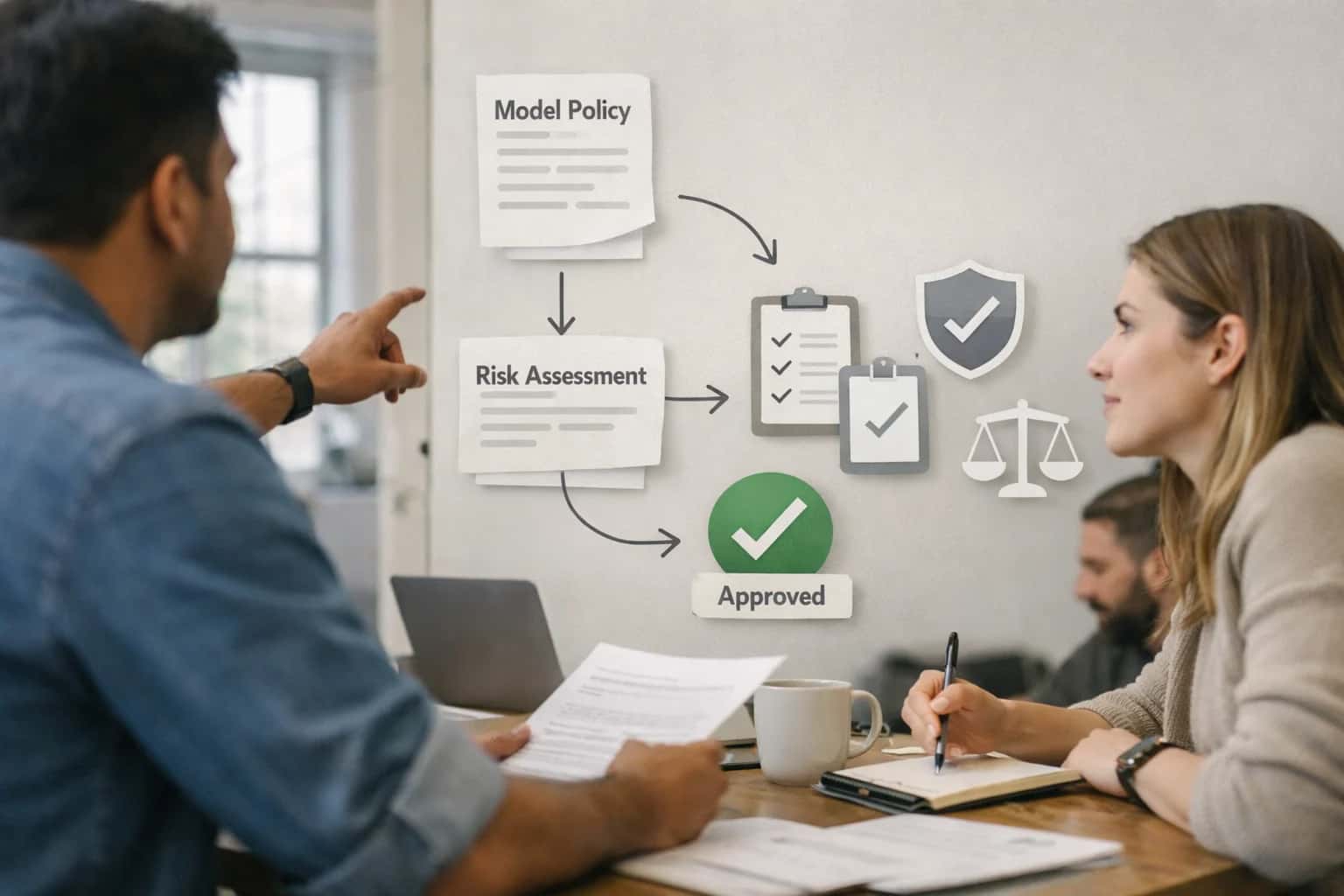
Where AI Fits in the Enterprise Translation Stack
A strategic framework for integrating AI into enterprise-scale translation management systems (TMS) like Smartling, Phrase, Lokalise, and Crowdin.
The high-value implementation pattern is a centralized AI orchestration layer that sits between your TMS and other enterprise systems (CMS, CRM, code repos). This layer uses the TMS as the system of record for translations but handles intelligent pre-processing and post-processing. Key workflows include:
- Automated Context Retrieval: Before a segment is sent for human translation, an AI agent fetches relevant screenshots, product documentation, or Jira tickets from connected systems and attaches them as context.
- Predictive Quality Scoring: AI models analyze translation memory and past reviewer feedback to predict which new translations are high-risk, flagging them for mandatory review.
- Dynamic Workflow Routing: Based on AI analysis of content complexity, regulatory sensitivity, and target market, jobs are automatically routed to the appropriate mix of machine translation, post-editors, and subject-matter experts.
- Real-time Terminology Enforcement: As translators work in the TMS editor, a RAG system grounded in the official terminology base and brand guidelines provides inline suggestions and blocks unapproved terms.
Governance and rollout are critical. Start with a pilot on a single content stream (e.g., marketing blog posts) and a controlled language pair. Implement human-in-the-loop review gates for all AI-generated outputs, and use the TMS's native audit trails to log which AI model made which suggestion. For enterprises using multiple TMS instances (common in decentralized organizations), the AI layer must normalize data models and provide a unified cost and performance dashboard. The business impact is measured in operational metrics: reducing time-to-market for localized content by 30-50%, cutting post-editing effort on low-risk strings, and improving terminology compliance from 70% to over 95%. This architecture turns the TMS from a passive repository into an intelligent, self-optimizing hub for global content operations.
AI Integration Surfaces Across Major TMS Platforms
The Core Knowledge Layer
AI integration at the TM and terminology layer focuses on augmenting human intelligence rather than replacing it. This involves connecting LLMs to the platform's API to perform semantic searches across translation memory, auto-suggest contextually relevant matches beyond exact string lookups, and intelligently maintain glossaries.
Key Integration Points:
- TM Enrichment APIs: Use AI to analyze incoming source content, predict which TM segments are most relevant, and surface them with confidence scores.
- Terminology Management Hooks: Implement webhook listeners that trigger AI models to extract candidate terms from new source documents, suggest definitions, and propose term base entries for reviewer approval.
- Consistency Agents: Deploy background agents that scan ongoing projects for term violations or stylistic drift, flagging inconsistencies against the enforced glossary.
This layer transforms static repositories into proactive, intelligent assistants that reduce translator cognitive load and enforce brand and technical consistency at scale.
High-Value Enterprise Use Cases
Strategic AI integration patterns for enterprise-scale translation management platforms (TMS) like Smartling, Phrase, Lokalise, and Crowdin. These use cases focus on augmenting human workflows, automating operational bottlenecks, and injecting intelligence into the localization lifecycle.
AI-Powered Translation Memory Augmentation
Integrate LLMs to semantically search and suggest context-aware matches from translation memory (TM), going beyond exact string matches. This reduces translator search time and improves consistency by surfacing relevant past translations for similar concepts, even with different wording.
Automated Terminology Governance
Deploy AI agents to monitor TMS projects and enforce approved terminology in real-time. The system flags deviations from the central glossary, suggests corrections, and can auto-extract potential new terms from source content for reviewer approval, reducing manual glossary maintenance by linguists.
Predictive Quality & Risk Scoring
Use ML models to analyze source strings and predict translation difficulty or quality risk before human work begins. Factors include domain complexity, string length, and presence of variables. High-risk segments can be automatically routed to senior linguists or flagged for additional context, optimizing reviewer allocation.
Intelligent Workflow Orchestration
Build AI agents that act as central orchestrators across multiple TMS instances and vendor systems. Agents use project metadata, content analysis, and resource calendars to automate job creation, assign translators, and trigger QA steps, moving beyond simple rule-based automation to context-aware scheduling.
Context-Aware Translator Copilot
Embed an AI assistant directly into the translator's TMS interface. It provides real-time access to connected knowledge bases (product docs, Jira tickets, Figma files) and answers specific questions about ambiguous source strings, reducing context-switching and improving translation accuracy.
Centralized AI Model & Cost Governance
Implement a unified layer to manage multiple AI translation engines (e.g., GPT-4, Claude, custom NMT) across all TMS projects. This layer handles cost routing (sending simple strings to cost-effective models), maintains audit trails of AI usage, and enforces data privacy policies, providing financial and compliance control.
Example Enterprise AI Workflows
These workflows illustrate how AI agents and models connect to translation management platforms (TMS) like Smartling, Phrase, Lokalise, and Crowdin. Each pattern is designed for enterprise-scale operations, focusing on governance, multi-system orchestration, and measurable efficiency gains.
Trigger: A new product release or marketing campaign introduces source content into the connected CMS.
Context/Data Pulled: An AI agent monitors the CMS webhook for new or updated English source strings. It extracts the content and uses a fine-tuned NER (Named Entity Recognition) model to identify potential new terms (product names, features, branded phrases).
Model/Agent Action: The agent queries the TMS (e.g., Phrase) Terminology API to check for existing entries. For novel terms, it:
- Drafts a definition and context using an LLM, grounded in existing brand guidelines.
- Proposes translations for key target languages using a configured LLM, flagged as "AI-suggested."
- Creates a new terminology ticket in the connected project management tool (Jira, Asana) for the terminology steward's review.
System Update/Next Step: Upon steward approval via a webhook, the agent uses the TMS API to create the approved term entry in the central glossary, automatically applying it to all relevant in-progress translation jobs.
Human Review Point: Mandatory. All new term proposals and AI-suggested translations require approval from a designated terminology steward before system ingestion.
Centralized AI Orchestration Architecture
A strategic framework for deploying a unified AI layer across multiple translation management systems to govern cost, quality, and compliance at scale.
For enterprises running Smartling, Phrase, Lokalise, and Crowdin concurrently, a centralized AI orchestration hub acts as the single point of control. This architecture sits above individual TMS APIs, ingesting webhooks for new projects, string updates, and job completions. It uses a rules engine to route content: high-volume, low-risk UI strings might be sent directly to a cost-optimized LLM, while regulated healthcare copy is queued for human translation with AI-powered terminology pre-fetching. The hub maintains a central vector database (e.g., Pinecone, Weaviate) that indexes approved translation memories, style guides, and brand glossaries from all connected systems, providing a unified semantic search layer for any AI agent or model in the workflow.
Implementation requires mapping the common data models across platforms—projects, jobs, translation keys, and vendor assignments—to a canonical internal schema. The orchestration layer then executes multi-step workflows: for example, upon a file upload to Smartling, an AI agent classifies content complexity using NLP, checks predicted cost against budget in the ERP, and automatically creates a corresponding pre-translated job in Phrase for a different vendor network. Governance is enforced at the hub through policy checks that audit AI usage, enforce data residency rules, and maintain an immutable log of all AI-suggested translations and their final human-approved versions for compliance reporting.
Rollout follows a phased approach, starting with a single TMS and a non-critical content stream to validate the cost-routing logic and feedback loops. The centralized model allows for A/B testing of AI providers (e.g., OpenAI vs. Anthropic vs. a fine-tuned internal model) across different content types without platform lock-in. Ultimately, this architecture transforms the localization function from a cost center managed in silos into an intelligent, data-driven operation where AI handles predictable workflows and human experts focus on high-value creative and strategic tasks. For a deeper dive into connecting this hub to a specific platform, see our guide on AI Integration for Smartling or the cross-platform API integration patterns.
Code Patterns for Multi-TMS Orchestration
Centralized Job Routing & Dispatch
An orchestration controller sits above multiple TMS instances (Smartling, Phrase, Lokalise) to intelligently route translation jobs. It uses AI to analyze content—determining complexity, domain, and required quality—to select the optimal TMS, vendor, and workflow path. This pattern prevents vendor lock-in and optimizes for cost, speed, and quality per project.
Key functions include:
- Content Analysis: Classify strings using NLP (e.g., UI vs. legal vs. marketing).
- Routing Logic: Send high-volume, low-risk content to a cost-optimized TMS/MT pipeline; route brand-sensitive or complex content to a premium TMS with human-in-the-loop.
- State Synchronization: Maintain a unified view of job status across all downstream systems.
python# Pseudocode for AI-driven TMS routing def route_translation_job(content_batch, metadata): # AI model predicts complexity, brand risk, and optimal workflow analysis = ai_classifier.predict( text=content_batch, domain=metadata['product_area'], target_locales=metadata['locales'] ) if analysis['risk_score'] < 0.2 and analysis['volume'] > 100: # High-volume, low-risk: route to Phrase with MT pre-fill client = PhraseClient(api_key=os.getenv('PHRASE_KEY')) workflow = 'mt_pe' # Machine Translation + Post-Edit elif analysis['brand_sensitivity'] > 0.7: # Brand-critical: route to Smartling with premium vendor pool client = SmartlingClient(api_key=os.getenv('SMARTLING_KEY')) workflow = 'premium_human' else: # Default: Lokalise with hybrid workflow client = LokaliseClient(api_key=os.getenv('LOKALISE_KEY')) workflow = 'ai_suggest_human_review' # Create project in selected TMS project_id = client.create_project( name=metadata['name'], workflow=workflow, target_languages=metadata['locales'] ) # Log routing decision for audit and model retraining audit_log(analysis, chosen_tms=client.__class__.__name__) return project_id
Realistic Operational Impact at Enterprise Scale
How AI integration with TMS platforms like Smartling, Phrase, Lokalise, and Crowdin changes the operational math for enterprise localization teams, focusing on velocity, cost, and quality.
| Metric | Before AI | After AI | Notes |
|---|---|---|---|
Terminology Glossary Maintenance | Manual extraction & entry by linguists | AI-assisted term discovery & auto-suggest | Reduces glossary update cycles from weeks to days |
Initial Translation for Low-Risk Content | Full human translation or basic MT | LLM draft + human post-edit (PEMT) | Cuts first-pass translation time by 40-60% for suitable content |
Quality Assurance (QA) Pre-Screening | Human reviewer checks all strings | AI flags high-risk segments for human review | Allows reviewers to focus on 20-30% of content with highest risk |
Project Setup & Routing Complexity | Manual analysis to set job parameters | AI classifies content & auto-routes based on domain/urgency | Reduces project manager setup time from hours to minutes |
Translation Memory (TM) Utilization | Exact or fuzzy match lookup only | Semantic search via RAG for contextual matches | Increases useful match retrieval beyond 75% fuzzy threshold |
Stakeholder Reporting & Insights | Manual spreadsheet compilation | AI-generated narrative reports with anomaly detection | Delivers insights same-day instead of next-week |
Regulatory & Compliance Check | Manual line-by-line review for sensitive content | AI pre-screens for compliance clauses & flags exceptions | Ensures 100% coverage scan before human legal review |
Governance, Security, and Phased Rollout
A structured approach to deploying AI across your translation management ecosystem, balancing innovation with control.
For enterprise-scale AI integration, governance starts with a centralized AI model management layer that orchestrates connections to multiple TMS instances (e.g., Smartling, Phrase, Lokalise). This layer enforces policies on which AI models (OpenAI, Anthropic, custom fine-tuned) can be used for specific content types—such as marketing copy versus legal disclaimers—and automatically logs all AI-suggested translations to an immutable audit trail within the TMS for compliance. Security is managed via API gateways that handle authentication, encrypt data in transit, and ensure sensitive source content is never retained by third-party LLM providers beyond the session.
A phased rollout is critical. Start with a pilot in a single TMS (e.g., Smartling) for a low-risk, high-volume content stream like UI strings. Implement AI as a 'suggestion engine' within the translator's workflow, requiring human post-editing. Key technical steps include: setting up webhooks from the TMS to your AI orchestration layer, configuring approval workflows for AI-generated translations that exceed a confidence threshold, and integrating with your existing identity provider (Okta, Entra ID) for role-based access control (RBAC) to govern who can approve AI outputs.
As you scale, the architecture evolves to support multi-TMS orchestration. An AI agent can monitor translation jobs across Smartling and Phrase, intelligently routing content based on cost, quality history, and translator availability. Establish a continuous evaluation loop: use the TMS's QA API scores and translator feedback to fine-tune AI prompts and detect model drift. The final phase introduces fully automated workflows for repetitive tasks—like translating and pushing low-risk help center updates via the TMS's content delivery network (CDN)—while maintaining human-in-the-loop gates for brand-critical or regulated content. This structured approach de-risks adoption and delivers measurable efficiency gains without compromising quality or compliance.
Enabling Efficiency, Speed & Accuracy
Intelligent Analysis, Decision & Execution
We build AI systems for teams that need search across company data, workflow automation across tools, or AI features inside products and internal software.
Talk to Us
Search across company data
Give teams answers from docs, tickets, runbooks, and product data with sources and permissions.
Useful when people spend too long searching or get different answers from different systems.

Automate internal workflows
Use AI to route work, draft outputs, trigger actions, and keep approvals and logs in place.
Useful when repetitive work moves across multiple tools and teams.

Add AI to products and internal tools
Build assistants, guided actions, or decision support into the software your team or customers already use.
Useful when AI needs to be part of the product, not a separate tool.
Enterprise AI Integration: FAQ
Practical answers for CTOs, enterprise architects, and localization leaders planning AI integration with platforms like Smartling, Phrase, Lokalise, and Crowdin.
Centralized AI governance is critical for cost control, compliance, and consistency. A typical enterprise pattern involves:
-
Central Model Orchestrator: Deploy a single service layer (e.g., an internal API gateway) that all TMS instances call for AI functions. This layer handles:
- Routing requests to the appropriate AI model (e.g., GPT-4 for marketing, a fine-tuned model for legal).
- Enforcing usage policies and cost ceilings per project or department.
- Applying prompt templates that inject brand voice, terminology, and compliance instructions.
-
Unified Audit Trail: Configure all TMS webhooks to log AI interactions to a central data warehouse. Track:
project_id,string_key,model_used,token_count,cost.- Whether the AI suggestion was
accepted,edited, orrejectedby the human translator.
-
Policy-as-Code: Define rules in your orchestrator, such as:
yamlpolicies: - content_type: "patient_facing" tms: "Smartling" allowed_ai_action: "terminology_lookup_only" required_human_review: "mandatory" - content_type: "ui_string" tms: "Lokalise" allowed_ai_action: "translation_suggestion" required_human_review: "post_edit"
This approach prevents shadow AI projects and ensures all AI-enhanced translations meet enterprise security and quality standards. See our related guide on AI Governance for Translation Management.

About the author
Prasad Kumkar
CEO & MD, Inference Systems
Prasad Kumkar is the CEO & MD of Inference Systems and writes about AI systems architecture, LLM infrastructure, model serving, evaluation, and production deployment. Over 5+ years, he has worked across computer vision models, L5 autonomous vehicle systems, and LLM research, with a focus on taking complex AI ideas into real-world engineering systems.
His work and writing cover AI systems, large language models, AI agents, multimodal systems, autonomous systems, inference optimization, RAG, evaluation, and production AI engineering.
Partnered with leading AI, data, and software stack.





How We Work
Custom AI workflows for your Business
One-fit-all AI don't work for modern businesses. At Inferensys, we aim to understand your business & custom requirements; which we use to define most efficient agentic workflows, the data, and the tools for your business.
01
Review the use case
We understand the task, the users, and where AI can actually help.
Read more02
Pick the right approach
We define what needs search, automation, or product integration.
Read more03
Build the first useful version
We implement the part that proves the value first.
Read more04
Improve from there
We add the checks and visibility needed to keep it useful.
Read moreThe first call is a practical review of your use case and the right next step.
Talk to Us