LLMs act as a new, intelligent layer between your source content and your human linguists. They connect to your TMS—be it Smartling, Phrase, Lokalise, or Crowdin—via their REST APIs and webhook systems. The integration typically targets three functional surfaces: the translation job creation pipeline, the in-context translation editor, and the post-translation quality assurance (QA) workflow. For example, an AI agent can listen for new files uploaded to a project, use an LLM to perform an initial complexity analysis, and then automatically route simple UI strings to a cost-effective MT provider while flagging high-stakes marketing copy for human translation plus AI-assisted context retrieval.

Integration
AI Integration for Localization with Large Language Models
A technical guide for integrating LLMs into translation management platforms to augment translators, automate QA, manage terminology, and orchestrate multilingual content workflows.
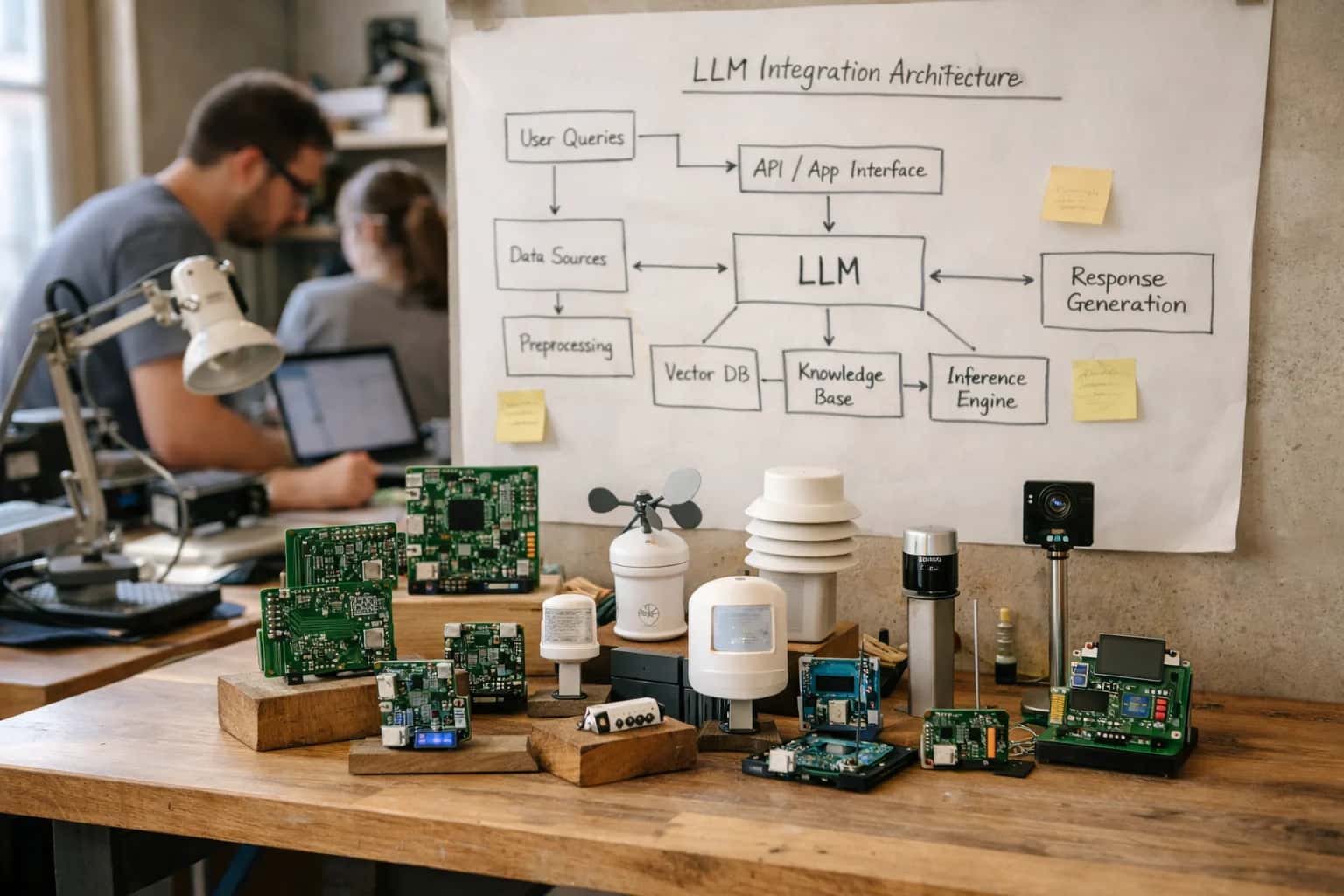
ARCHITECTURE
Where LLMs Fit into the Localization Tech Stack
A practical blueprint for integrating Large Language Models into your existing translation management system (TMS) to augment, not replace, your core localization workflows.
The implementation detail lies in orchestrating context. A production-ready integration doesn't just call an LLM API with a string; it builds a Retrieval-Augmented Generation (RAG) system. This system uses your TMS as the source of truth, querying its translation memory (TM) and term bases via API, and potentially connecting to external vector stores containing product documentation or brand guidelines. The LLM then receives a prompt enriched with approved terminology, past translation examples, and style notes before generating a suggestion. This suggestion can be injected as a pre-translation via the TMS's batch operations API or presented as a real-time inline suggestion in the translator's workspace using the platform's editor SDK or custom plugin architecture.
Rollout requires a phased, governed approach. Start with a pilot project, using the TMS's custom fields or tags to mark which content is eligible for AI assistance. Implement a human-in-the-loop review step, leveraging the TMS's built-in review workflows to mandate approval for AI-suggested translations above a certain confidence threshold. Governance is critical: audit trails must be maintained, often by logging all AI interactions—including the exact prompt context and model used—to a separate system or using the TMS's activity log API. This ensures you can trace any translation back to its source, whether human, machine, or AI-assisted, for quality control and compliance.
WHERE LLMS CONNECT TO LOCALIZATION WORKFLOWS
Key Integration Points in a TMS
Augmenting the Core Translation Engine
This is the primary surface for AI integration. Instead of replacing the TMS's built-in machine translation, LLMs act as a supercharged suggestion layer. Integrate via the platform's Suggestion API (e.g., Smartling's /jobs-api/v2/projects/{projectUid}/jobs/{jobUid}/suggestions) to inject context-aware, style-matched translation options directly into the translator's workspace.
Key Workflow:
- On segment focus, the TMS sends the source string, surrounding context, and relevant TM matches to your orchestration layer.
- Your system enriches the prompt with retrieved context from a connected vector store (brand guidelines, product docs).
- An LLM generates 1-3 candidate translations, which are posted back as premium suggestions with a confidence score.
- Human translators accept, edit, or reject, creating a feedback loop for model fine-tuning.
This turns the TMS editor into an AI copilot, reducing cognitive load and accelerating throughput for complex or novel strings.
TRANSLATION MANAGEMENT PLATFORMS
High-Value AI Use Cases for Localization
Integrating Large Language Models into platforms like Smartling, Phrase, Lokalise, and Crowdin moves beyond basic machine translation. These patterns show where AI can augment translator workflows, automate QA, and accelerate multilingual content operations.
01
Context-Aware Translation Suggestions
Augment the translator's editor with an AI copilot that provides real-time, in-context suggestions. The agent pulls from connected systems (Figma files, Jira tickets, product docs) via RAG to explain UI placement, user intent, or brand guidelines for ambiguous strings, reducing back-and-forth queries.
1 sprint
Reduced clarification cycles
02
Automated Terminology Lifecycle
Use AI to extract, suggest, and validate terms from source content and existing translations. Automatically propose new entries for glossary review in Phrase or Smartling, flag inconsistencies in ongoing projects, and enforce approved terminology during the translation and review stages.
Batch -> Real-time
Glossary maintenance
03
AI-Powered Quality Assurance Gates
Deploy custom AI models as additional QA steps in Lokalise or Crowdin workflows. Beyond basic checks, these models scan for brand voice adherence, regulatory compliance in target markets, contextual accuracy against screenshots, and inclusivity—escalating only high-risk segments for human review.
Hours -> Minutes
Pre-review QA pass
04
Intelligent Project & Workflow Orchestration
Build AI agents that monitor TMS webhooks to automate project setup and routing. Based on content analysis (e.g., marketing vs. legal), predicted complexity, and target market, the agent auto-creates Smartling jobs, assigns the right vendor or internal team, and sets priority—freeing manager capacity.
Same day
Project setup time
05
Dynamic Content Synchronization
Create intelligent connectors that use AI to map and sync content between a TMS and source systems (CMS, code repos, CRM). The agent detects meaningful changes, recommends translation scope for updates (full vs. partial), handles field mapping transformations, and resolves sync conflicts.
Batch -> Real-time
Update detection
06
Predictive Localization Analytics
Implement an AI analytics layer on top of TMS API data to forecast costs, timelines, and risks. Model analyzes historical project data, content volume trends, and team velocity to predict future translation needs, budget overruns, and potential bottlenecks for upcoming product launches.
1 sprint
Lead time for planning
PRACTICAL INTEGRATION PATTERNS
Example AI-Augmented Localization Workflows
These workflows demonstrate how to inject LLM-powered agents into key stages of a Translation Management Platform (TMS) to reduce manual effort, accelerate cycles, and improve quality. Each pattern is triggered by platform events and updates system records via API.
Trigger: A new string is uploaded to a TMS project via API or file ingestion.
Workflow:
- A webhook from the TMS (e.g., Smartling's
string.addedor Lokalise'skey.added) triggers an AI agent. - The agent retrieves the source string and its associated metadata (project ID, key name, file context).
- Using an LLM with RAG over internal documentation, the agent generates a context note. This includes:
- Product feature explanation
- UI location (e.g., "Settings > Billing > Tooltip")
- Screenshot references (if URLs are in metadata)
- Related glossary terms
- The agent posts this structured context note back to the TMS string via API (e.g.,
POST /strings/{id}/comments).
Impact: Translators receive immediate, rich context, reducing back-and-forth queries and improving first-pass accuracy. This is especially valuable for ambiguous terms like "commit" or "track."
AI-ENHANCED LOCALIZATION PIPELINE
Typical Implementation Architecture
A practical blueprint for integrating Large Language Models into your Translation Management System (TMS) to augment, not replace, human linguists and project managers.
The core architecture connects your TMS (Smartling, Phrase, Lokalise, Crowdin) to an AI orchestration layer via its native REST API and webhooks. This layer typically sits as a middleware service, listening for events like job.created, string.added, or translation.delivered. For each event, the service determines the appropriate AI action: retrieving relevant context from a vector database of past translations and style guides, calling an LLM (OpenAI, Anthropic, or a custom fine-tuned model) with a carefully engineered prompt, and posting the result back to the TMS as a suggestion, comment, or QA flag. This keeps the TMS as the system of record for all translation memory, workflow state, and approvals.
High-value integration points are at the string-level and project-level. For strings, AI agents can act as a pre-translator for net-new content, a consistency checker against approved terminology, or a context provider by fetching related product documentation. At the project level, AI can auto-classify incoming content by domain (marketing vs. legal) to route it to the right translator pool, predict timelines based on historical data, and generate stakeholder reports. A key pattern is implementing a human-in-the-loop review step for all AI-generated translations before they are marked as approved in the TMS, ensuring quality control and maintaining an audit trail.
Rollout is typically phased, starting with a single project or language pair to validate quality and ROI. Governance is critical: you must define policies in the orchestration layer for which content types can use AI (e.g., UI strings yes, legal copy no), set cost ceilings per thousand tokens, and implement logging to track AI suggestion acceptance rates. The final architecture should enable a seamless workflow where translators see AI suggestions inline within their familiar TMS interface, allowing them to accept, edit, or reject with a single click, turning hours of manual lookups and consistency checks into minutes of focused review.
AI INTEGRATION FOR LOCALIZATION
Code and Payload Patterns
Automating TMS Workflows with AI
Use webhooks and the TMS API to trigger AI-powered translation for new content. A common pattern is to listen for new source files, analyze their complexity using an LLM, and automatically route them to the appropriate workflow—AI for low-risk content, human translators for high-stakes material.
python# Example: Create a Smartling job via API after AI pre-classification import requests def create_ai_routed_job(source_file_url, project_id, api_key): # 1. Fetch and analyze source content source_text = fetch_content(source_file_url) complexity_score = llm_analyze_complexity(source_text) # 2. Determine workflow based on AI analysis if complexity_score < 0.3: workflow_uid = "AI_FIRST_WORKFLOW" # AI translation, then light human review else: workflow_uid = "HUMAN_FIRST_WORKFLOW" # Direct to professional translators # 3. Create the job in Smartling job_payload = { "jobName": f"AI-Routed-{source_file_url}", "targetLocaleIds": ["es-ES", "fr-FR", "de-DE"], "workflowUid": workflow_uid } headers = {"Authorization": f"Bearer {api_key}"} response = requests.post( f"https://api.smartling.com/jobs-api/v3/projects/{project_id}/jobs", json=job_payload, headers=headers ) return response.json()
This pattern reduces manual triage and ensures content is processed on the optimal path from the start.
AI-ENHANCED LOCALIZATION WORKFLOWS
Realistic Time Savings and Operational Impact
This table shows the typical operational impact of integrating LLMs into key translation management workflows, based on implementations for Smartling, Phrase, Lokalise, and Crowdin.
| Workflow Stage | Before AI Integration | After AI Integration | Implementation Notes |
|---|---|---|---|
Initial Translation of New Strings | Human translator starts from scratch or basic MT | LLM provides context-aware first draft with terminology | Human post-editing required; quality gates control AI usage |
Terminology Validation & Consistency Checks | Manual glossary lookups and spot checks | Real-time AI suggestions and flagging of term deviations | Integrates with TMS QA API; reduces reviewer backlog |
Quality Assurance (Style & Brand Voice) | Sample-based human review after translation | AI pre-screens 100% of content for tone and compliance | AI flags high-risk segments for human review; others fast-tracked |
Project Setup & String Preparation | Manual file analysis and job configuration | AI analyzes content complexity, suggests routing and pricing | Reduces project manager setup time from hours to minutes |
Translation Memory (TM) Maintenance | Periodic manual cleanup of duplicate/conflicting entries | AI continuously clusters and deduplicates TM suggestions | Improves TM leverage rate, reducing repetitive translation costs |
Stakeholder Reporting & Insights | Manual compilation of spreadsheets from TMS dashboards | AI generates narrative-driven reports with anomaly detection | Automated weekly insights delivered to product and marketing teams |
Low-Risk Content Localization (e.g., internal docs) | Full human translation cycle, often deprioritized | AI translation with lightweight human spot-check | Reserved for specific content classes defined by governance policy |
IMPLEMENTING AI IN A REGULATED WORKFLOW
Governance, Security, and Phased Rollout
Integrating LLMs into localization requires a controlled approach that protects IP, ensures quality, and aligns with existing translation management system (TMS) governance.
Start by mapping AI touchpoints to your TMS's existing approval and audit trails. For platforms like Smartling or Phrase, this means configuring AI suggestions to flow through defined workflow stages—such as Translated → AI-Enhanced Review → Linguist Review—ensuring every AI-contributed segment is logged against a job, translator, and timestamp. Use webhooks to trigger AI processing only after content is extracted from the source system and before it's assigned to a human, maintaining the TMS as the single source of truth for translation state.
Security is paramount when handling proprietary product documentation or pre-release marketing copy. Implement a zero-data-retention policy with your LLM provider and ensure all API calls are encrypted and routed through your own proxy layer for logging. For sensitive projects, use content classifiers within your TMS integration to automatically route high-risk strings (e.g., legal, pricing, unreleased features) to human-only translation paths, bypassing AI models entirely. Store approved terminology and style guides in a vector database for Retrieval-Augmented Generation (RAG), grounding AI outputs in your official brand assets without exposing full source documents to external models.
Adopt a phased rollout, beginning with a low-risk, high-volume use case like internal knowledge base articles or UI button text. Instrument the integration to track key metrics: AI suggestion acceptance rate, post-edit distance, and time saved per job. Use this pilot data to refine prompts and workflow rules before expanding to more complex content like marketing campaigns or technical documentation. Finally, establish a continuous feedback loop where translator rejections and edits are used to fine-tune context retrieval and improve the AI's domain-specific knowledge, turning your TMS into a learning system.
Enabling Efficiency, Speed & Accuracy
Intelligent Analysis, Decision & Execution
We build AI systems for teams that need search across company data, workflow automation across tools, or AI features inside products and internal software.
Talk to Us
Search across company data
Give teams answers from docs, tickets, runbooks, and product data with sources and permissions.
Useful when people spend too long searching or get different answers from different systems.
Enterprise searchRAGPermissions
Read more
Automate internal workflows
Use AI to route work, draft outputs, trigger actions, and keep approvals and logs in place.
Useful when repetitive work moves across multiple tools and teams.
AI agentsWorkflow automationGovernance
Read more
Add AI to products and internal tools
Build assistants, guided actions, or decision support into the software your team or customers already use.
Useful when AI needs to be part of the product, not a separate tool.
AI integrationDecision supportModel routing
Read moreAI INTEGRATION FOR LOCALIZATION
Frequently Asked Questions
Practical questions from technical leaders evaluating how to integrate Large Language Models into their existing translation management workflows.
LLMs act as a new layer of intelligence between your source content and human translators, augmenting—not replacing—your current TMS (Smartling, Phrase, Lokalise, Crowdin).
Typical integration points:
- Pre-translation: Use an LLM as a high-quality, context-aware machine translation engine, routing its output into the TMS as a translation suggestion, often with a quality score.
- In-editor assistance: Integrate an LLM-powered copilot into the translator's interface to provide real-time suggestions, terminology lookups, and style guidance based on your brand guidelines.
- Post-translation QA: Deploy custom AI models via the TMS's QA API to perform advanced checks for brand voice, regulatory compliance, and contextual accuracy that go beyond simple placeholder or glossary checks.
- Operational automation: Use AI agents, triggered by TMS webhooks, to automate project setup, assign strings based on complexity, or generate stakeholder reports.
The key is to use the TMS as the system of record and orchestration hub, while LLMs provide the intelligent processing at specific workflow stages.

About the author
Prasad Kumkar
CEO & MD, Inference Systems
Prasad Kumkar is the CEO & MD of Inference Systems and writes about AI systems architecture, LLM infrastructure, model serving, evaluation, and production deployment. Over 5+ years, he has worked across computer vision models, L5 autonomous vehicle systems, and LLM research, with a focus on taking complex AI ideas into real-world engineering systems.
His work and writing cover AI systems, large language models, AI agents, multimodal systems, autonomous systems, inference optimization, RAG, evaluation, and production AI engineering.
LinkedIn
Limited slotsGet a Free AI Consultation
Partnered with leading AI, data, and software stack.





How We Work
Custom AI workflows for your Business
One-fit-all AI don't work for modern businesses. At Inferensys, we aim to understand your business & custom requirements; which we use to define most efficient agentic workflows, the data, and the tools for your business.
01
Review the use case
We understand the task, the users, and where AI can actually help.
Read more02
Pick the right approach
We define what needs search, automation, or product integration.
Read more03
Build the first useful version
We implement the part that proves the value first.
Read more04
Improve from there
We add the checks and visibility needed to keep it useful.
Read moreThe first call is a practical review of your use case and the right next step.
Talk to Us