AI integration targets the student health data lifecycle within Skyward, focusing on three primary surfaces: the Family Access portal for form submission, the Health Management module (or equivalent record storage), and the district's document imaging or file storage system. The core workflow begins when a parent uploads a PDF or scans a paper form—such as an athletic physical, medication authorization, or immunization record—through the portal or a staff member attaches it to a student record. An AI agent, triggered by this upload event via Skyward's APIs or a monitored file location, immediately processes the document. It performs OCR (Optical Character Recognition) to extract text, then uses a fine-tuned model to identify and validate key data points: student name, ID, physician details, medication dosages, authorization dates, and expiration timelines. This extracted data is structured into a JSON payload and posted back to Skyward via API to pre-populate corresponding fields in the health record, flagging any missing or illegible information for human review.

Integration
AI Integration with Skyward Medical Forms
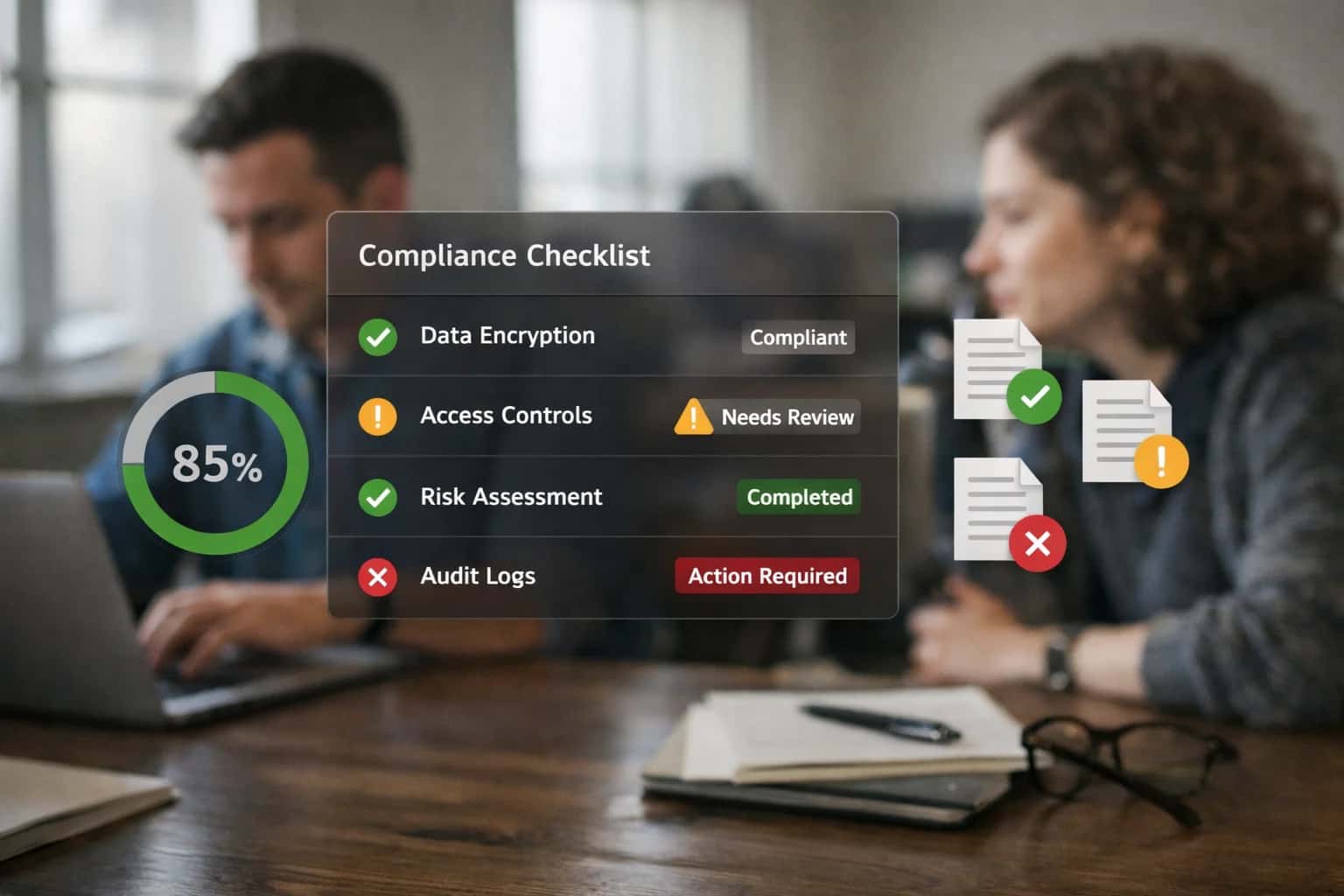
Where AI Fits into Skyward Medical Form Workflows
A practical blueprint for automating student health data intake and compliance using AI within Skyward's existing forms and records modules.
The implementation creates a continuous compliance engine. Once data is ingested, a second AI agent monitors Skyward's health records for expiring authorizations and immunizations based on the parsed dates. It can automatically generate and queue personalized reminder notifications to families via Skyward's communication tools or trigger workflow tasks for school nurses in the system's task manager. For districts, this shifts medical form management from a reactive, manual chase to a proactive, system-triggered process. Key technical considerations include:
- Data Governance: Defining clear RBAC (Role-Based Access Control) for the AI system to match Skyward's permissions, ensuring only authorized staff and systems can read/write sensitive PHI.
- Audit Trail: Logging all AI actions—document processed, fields extracted, record updated—to a separate audit table, maintaining a chain of custody for compliance audits.
- Human-in-the-Loop: Configuring confidence thresholds; low-confidence extractions are routed to a dedicated review queue within Skyward or a connected ticketing system for nurse or registrar verification before updating the master record.
Rollout is typically phased, starting with a single high-volume, structured form type like athletic physicals to validate the pipeline and user acceptance. The AI model is trained on a sample of the district's own historical forms to recognize local variations and required fields. Integration points are built using Skyward's available APIs (e.g., POST /api/students/{id}/health) and webhooks, or via secure file exchange if direct APIs are limited. This approach doesn't replace Skyward; it turns the SIS into an intelligent orchestrator, reducing data entry errors by staff, cutting form processing time from days to hours, and providing a reliable, audit-ready system for health mandate compliance. For a broader view of automating student-facing processes, see our guide on AI Integration for Skyward Student Support.
Key Skyward Modules and APIs for Medical Data
Student Health Records (SHR)
The Student Health Records module is the primary system of record for all medical data in Skyward. It stores structured information like immunizations, allergies, medications, and visit notes, as well as attached documents (PDFs, scanned forms). This is the core data source for any AI integration.
Key integration points for AI include:
- Immunization Tracking: Reading uploaded state forms or physician documents to extract vaccine dates, types, and lot numbers, then auto-populating the SHR compliance grid.
- Medication Authorization Forms: Processing scanned medication administration forms to extract drug name, dosage, schedule, and physician details for nurse office workflows.
- Physical Exam and Athletic Forms: Extracting clearance status, restrictions, and expiration dates from sports physical documents to update student athletic eligibility automatically.
AI agents can monitor this module for new attachments, trigger processing workflows, and update records via Skyward's APIs, reducing manual data entry for health staff.
High-Value AI Use Cases for Skyward Health Forms
Automating the processing and management of student health documentation in Skyward reduces manual data entry, improves compliance, and ensures timely care. These AI integration patterns target athletic forms, medication authorizations, and health plans.
Automated Athletic Form Intake & Validation
Use AI to extract data from scanned or uploaded Pre-Participation Physical Evaluation (PPE) forms directly into Skyward student health records. Validate required signatures, dates, and clearance status against district policies, flagging incomplete forms for the athletic trainer.
Medication Authorization Expiration Alerting
Monitor Skyward for medication authorization forms (like Form 504 or district-specific documents). AI identifies medication names, dosages, and expiration dates, then triggers automated alerts to school nurses and parents via Skyward notifications 30, 14, and 7 days before renewal is required.
Individualized Health Plan (IHP) Data Synthesis
For students with chronic conditions (e.g., asthma, diabetes, severe allergies), AI analyzes doctor-submitted documents to draft structured IHP summaries within Skyward. It extracts emergency protocols, medication schedules, and triggers, giving nurses a rapid, searchable overview.
Immunization Record Compliance Monitoring
Connect AI document processing to Skyward's health module to read state immunization certificates. The system validates doses against requirements by grade level, automatically updates student compliance status, and generates bulk deficiency reports for district health services.
Field Trip & Event Health Risk Triage
When a field trip is created in Skyward Activities, an AI agent cross-references attending student rosters with health plan alerts (e.g., allergies, medications). It automatically generates a summarized health roster for the trip sponsor and checks for required accompanying staff (e.g., nurses).
Health Office Visit Note Summarization
Nurses log visit details in free-text notes within Skyward. AI summarizes these entries daily, extracting key symptoms, actions taken (medication administered, parent contacted), and follow-ups needed. Summaries are pushed to a dashboard for district-level health trend analysis.
Example AI-Powered Medical Form Workflows
These concrete workflows show how AI agents can be integrated with Skyward's Medical Forms module to automate data extraction, compliance monitoring, and communication, reducing manual work for nurses and athletic directors.
Trigger: A parent uploads a completed athletic physical packet (PDF) via the Skyward Family Access portal.
Context Pulled: The AI agent retrieves the student's ID, sport, and existing medical alerts from Skyward's StudentMedical and StudentAthletic tables via API.
Agent Action:
- A document processing agent extracts key fields using OCR and LLM classification:
- Physician signature and date
- Physical exam result (cleared/not cleared)
- Listed medications, allergies, and conditions
- Emergency contact info
- A validation agent checks for:
- Expiration date (physical must be within last 12 months)
- Missing required signatures or sections
- Conflicts with existing medical alerts in Skyward
System Update:
- Valid, complete forms: The agent writes extracted data to the appropriate Skyward medical records and updates the student's athletic eligibility status to
Pending Final Review. - Incomplete/expired forms: The agent creates a task in Skyward's
Message Centerfor the school nurse, attaching the flagged issues.
Human Review Point: The nurse receives a dashboard of Pending Final Review forms. The AI pre-populates the Skyward medical form fields, allowing the nurse to verify and click Approve rather than manually enter data.
Implementation Architecture: Connecting AI to Skyward
A practical blueprint for deploying AI agents and automation into Skyward's medical forms module without disrupting existing workflows.
The integration connects at Skyward's API layer and document storage system. For data extraction, an AI agent is triggered via webhook when a new document (e.g., a scanned physical exam form, medication authorization, or health plan) is uploaded to a student's record in the Health > Documents area. The agent uses OCR and structured extraction to pull key fields—student ID, physician name, medication details, expiration dates, and clearance status—and writes them back to the corresponding custom fields or related tables in Skyward via a secure POST call. This creates a searchable, structured record from an unstructured PDF or image, enabling automated compliance checks.
For alerting and workflow automation, a separate scheduler agent queries Skyward's database daily for extracted expiration dates. When a form is within a configurable window (e.g., 30 days), the system can: 1) Create a task in Skyward's task manager for the school nurse or athletic director, 2) Generate and send a personalized email to parents/guardians via Skyward's communication module, and 3) Post an alert to the student's health dashboard. This is governed by role-based access controls (RBAC), ensuring only authorized staff see sensitive health data, and all actions are logged to Skyward's audit trail for compliance.
Rollout follows a phased approach: start with a single form type (e.g., athletic physicals) in a pilot school, validate extraction accuracy with human-in-the-loop review, then scale to other document types and schools. The architecture is deployed as a containerized service outside Skyward's core, making API calls—it doesn't require modifying Skyward's source code. This ensures maintainability and allows the AI layer to be updated independently. Governance includes regular audits of extraction accuracy, monitoring of API rate limits, and clear procedures for handling extraction errors or ambiguous data, which are routed to a designated staff queue in Skyward for manual review.
Code and Payload Examples
Extracting Data from Scanned PDFs
AI models can process scanned athletic physical forms, medication authorizations, and immunization records uploaded to Skyward's document storage. The extracted data is structured into JSON for automated entry into the appropriate student health record fields, eliminating manual keying.
Example Python payload for a processed form:
json{ "student_id": "S1234567", "form_type": "Athletic Physical", "extracted_fields": { "physician_name": "Dr. Jane Smith", "exam_date": "2024-03-15", "clearance_status": "Cleared for all sports", "expiration_date": "2025-03-14", "restrictions": "None noted", "signature_verified": true }, "source_document_url": "/skyward/docs/S1234567_physical.pdf", "confidence_scores": { "overall": 0.97, "exam_date": 0.99, "expiration_date": 0.96 } }
This payload can be posted to a custom Skyward API endpoint or used to populate fields via the Skyward Qmlativ REST API for the Student Health module.
Realistic Time Savings and Operational Impact
How AI integration transforms manual, paper-heavy workflows for athletic forms, medication authorizations, and health plans into automated, proactive processes.
| Workflow / Metric | Manual Process (Before AI) | AI-Assisted Process (After AI) | Implementation Notes |
|---|---|---|---|
Athletic Physical Form Intake | Staff manually enters data from scanned PDFs/paper (15-20 mins per form) | AI extracts and populates fields automatically (2-3 mins for verification) | Human review remains for accuracy; integrates with Skyward Student Health module |
Medication Authorization Renewal Tracking | Spreadsheet or calendar reminders; manual review of expiration dates (weekly checks) | AI monitors Skyward records, flags expiring authorizations 30 days out (daily automated alerts) | Triggers automated parent communication via Skyward Messenger; reduces liability risk |
Emergency Health Plan Distribution | Manual roster cross-checking and email distribution to coaches/staff (2-3 hours per season) | AI matches plans to student rosters, auto-distributes via portal/email (20-30 mins for oversight) | Ensures FERPA-compliant access; audit trail for who received which plan |
Data Entry for State-Required Immunizations | Nurse manually verifies documents and updates Skyward records (8-10 mins per student) | AI reads uploaded documents, suggests updates for nurse approval (2-3 mins per student) | Focus shifts from data entry to exception handling; improves state reporting accuracy |
Parent Inquiry Response Time | Staff searches physical files and digital records to answer questions (15-45 mins per inquiry) | AI-powered chatbot or agent retrieves data from Skyward in real-time (<1 min for common queries) | Reduces front-office burden; handles FAQs about form status, requirements |
Annual Health Data Audit & Compliance | Manual sampling and review for missing/incomplete records (1-2 weeks of focused effort) | AI scans entire student population, generates exception reports (same-day analysis) | Proactive compliance; identifies patterns (e.g., missing sports physicals by grade) |
Governance, Security, and Phased Rollout
A practical approach to deploying AI for Skyward medical forms with built-in controls and incremental value delivery.
Implementing AI for Skyward medical forms requires a security-first architecture that respects FERPA and student health data (PHI) boundaries. We recommend a pattern where the AI service acts as a processing layer outside the SIS, never storing extracted PII. Medical form PDFs are securely transferred (via encrypted API call or a monitored file drop) to a dedicated processing queue. The AI extracts structured data—student ID, medication names, dosages, physician details, expiration dates—and returns only this sanitized JSON payload back to Skyward via its API for field population and alert creation. The original document remains in Skyward's native document storage, maintaining a clear, auditable link between source and AI-generated data.
Governance is managed through a human-in-the-loop review dashboard integrated with your team's existing ticketing system (like Jira or ServiceNow). For high-risk extractions (e.g., controlled substance authorizations, complex allergy plans), the AI flags low-confidence fields or entire forms for a nurse or health clerk's review before any data is written back to Skyward. All AI actions—document processed, fields extracted, confidence scores, reviewer decisions—are logged to a separate audit trail, creating a immutable record for compliance reporting and model performance tracking.
A phased rollout minimizes disruption and builds trust:
- Phase 1 (Pilot): Target a single, high-volume form type (e.g., Athletic Participation Physicals) for a subset of schools. Use AI for data extraction and expiration date detection only, with 100% human review. Measure time saved per form and accuracy rates.
- Phase 2 (Expansion): Expand to all schools for the pilot form type, introducing auto-population for high-confidence fields (>95%). Implement automated expiration alerts via Skyward's notification engine 30, 60, and 90 days out.
- Phase 3 (Scale): Add additional form types (Medication Administration, Allergy Action Plans). Introduce automated workflow routing—for example, forms missing a physician signature are automatically queued for the health office coordinator. By this stage, the system operates with minimal oversight, focusing human effort on exceptions and complex cases.
This controlled approach ensures the integration delivers immediate operational relief—reducing manual data entry from 15 minutes to under 60 seconds per form—while systematically de-risking the implementation. It transforms your health services team from data clerks into proactive care coordinators, ensuring no student's medical authorization lapses due to an oversight buried in a PDF.
Enabling Efficiency, Speed & Accuracy
Intelligent Analysis, Decision & Execution
We build AI systems for teams that need search across company data, workflow automation across tools, or AI features inside products and internal software.
Talk to Us
Search across company data
Give teams answers from docs, tickets, runbooks, and product data with sources and permissions.
Useful when people spend too long searching or get different answers from different systems.

Automate internal workflows
Use AI to route work, draft outputs, trigger actions, and keep approvals and logs in place.
Useful when repetitive work moves across multiple tools and teams.

Add AI to products and internal tools
Build assistants, guided actions, or decision support into the software your team or customers already use.
Useful when AI needs to be part of the product, not a separate tool.
Frequently Asked Questions
Common technical and operational questions about integrating AI with Skyward's medical forms module for athletic clearances, medication authorizations, and health plans.
The workflow is triggered by a new document upload to a designated Skyward folder or via a webhook from a connected document management system.
-
Trigger & Fetch: An integration service (e.g., a secure Azure Function or AWS Lambda) monitors the Skyward File Management API or a designated cloud storage location (like an S3 bucket synced with Skyward). When a new PDF form (e.g., a Pre-Participation Physical Evaluation form) is detected, it's retrieved.
-
AI Processing: The document is sent to a configured AI pipeline. This typically involves:
- OCR & Extraction: Using a model like Azure Form Recognizer or Amazon Textract to read handwritten and typed fields.
- Structured Output: Key data points (student name, ID, physician details, clearance status, expiration date, medications, allergies) are extracted into a JSON payload.
- Validation: The AI checks for logical inconsistencies (e.g., an expiration date in the past) or missing required signatures.
-
System Update: The JSON payload is used to:
- Update Skyward Records: Via the Skyward API, the student's medical record (
StudentMedicalor custom fields) is updated with the extracted data. - Set Alerts: An expiration date field is populated, triggering Skyward's native alert system or creating a task for the athletic trainer/nurse.
- Flag for Review: If confidence scores are low or data is missing, the form is flagged in a review queue within a separate dashboard, and the original document remains attached to the student's record.
- Update Skyward Records: Via the Skyward API, the student's medical record (
-
Audit Log: Every step is logged with the source document ID, processing timestamp, extracted data, and any human review actions for compliance.

About the author
Prasad Kumkar
CEO & MD, Inference Systems
Prasad Kumkar is the CEO & MD of Inference Systems and writes about AI systems architecture, LLM infrastructure, model serving, evaluation, and production deployment. Over 5+ years, he has worked across computer vision models, L5 autonomous vehicle systems, and LLM research, with a focus on taking complex AI ideas into real-world engineering systems.
His work and writing cover AI systems, large language models, AI agents, multimodal systems, autonomous systems, inference optimization, RAG, evaluation, and production AI engineering.
Partnered with leading AI, data, and software stack.





How We Work
Custom AI workflows for your Business
One-fit-all AI don't work for modern businesses. At Inferensys, we aim to understand your business & custom requirements; which we use to define most efficient agentic workflows, the data, and the tools for your business.
01
Review the use case
We understand the task, the users, and where AI can actually help.
Read more02
Pick the right approach
We define what needs search, automation, or product integration.
Read more03
Build the first useful version
We implement the part that proves the value first.
Read more04
Improve from there
We add the checks and visibility needed to keep it useful.
Read moreThe first call is a practical review of your use case and the right next step.
Talk to Us