
Inferensys

Integration

AI Integration for Procure-to-Pay Platforms in Financial Services

Industry-specific implementation guide for embedding AI into Coupa, SAP Ariba, Jaggaer, and Ivalua. Focuses on automating contingent workforce procurement, professional services spend, and regulatory compliance monitoring for banks, insurers, and asset managers.
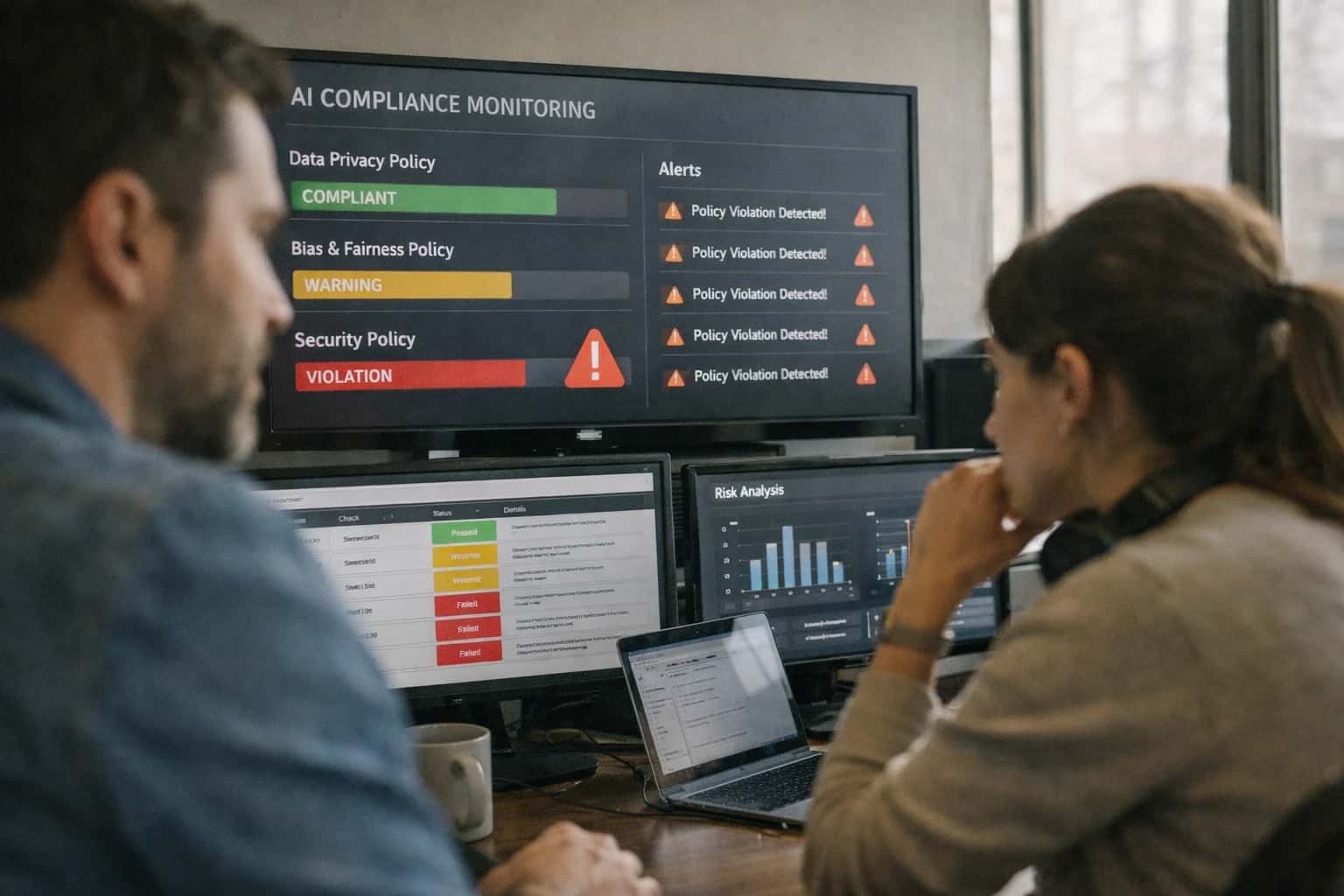
Compliance officer monitoring AI compliance agent on laptop, policy dashboards visible, modern WeWork desk setup.
ARCHITECTURE AND ROLLOUT

Where AI Fits in Financial Services Procure-to-Pay

A technical blueprint for integrating AI into the specialized procure-to-pay workflows of banks, insurers, and asset managers.

In financial services, AI integration targets specific, high-friction surfaces within platforms like Coupa, SAP Ariba, and Ivalua. The primary touchpoints are:

  • Contingent Workforce & Professional Services Procurement: Automating the review of Statement of Work (SOW) documents, validating rate cards against master service agreements, and routing for compliance approvals.
  • Invoice Processing for Complex Services: Extracting line-item details from non-PO invoices for consulting, legal, and audit firms, and performing regulatory compliance checks (e.g., against OFAC lists, business conduct policies) before posting to the general ledger.
  • Spend Classification & GL Coding: Using AI to map transactions from vague vendor descriptions to precise chart of accounts and cost center codes, which is critical for accurate financial reporting and regulatory capital allocation.


Implementation typically involves a middleware agent layer that sits between the P2P platform and core banking/ERP systems. This layer:

  1. Listens to webhooks from the procurement platform for new requisitions, invoices, or contracts.
  2. Calls LLM APIs with structured prompts and context (e.g., contract terms, policy documents) to perform analysis.
  3. Writes results back via the platform's REST API—for example, updating an invoice with a compliance flag (```status: HOLD_FOR_REVIEW````) or enriching a supplier record with a risk score.
  4. Orchestrates workflows by triggering approval tasks in the P2P system or creating alerts in a separate compliance dashboard like ServiceNow. The business impact is operational: reducing manual review of professional service invoices from hours to minutes, ensuring real-time adherence to SOX and model risk management controls, and accelerating the onboarding of third-party vendors for new financial products.

Rollout requires a phased, use-case-led approach, starting with a single high-volume category like IT consulting spend. Governance is paramount; all AI-generated recommendations or classifications must be logged with a full audit trail—including the prompt, source data, and model reasoning—to satisfy internal audit and financial regulators. Human-in-the-loop checkpoints are maintained for transactions above a pre-defined risk or value threshold. Success hinges on tight integration with the financial institution's existing data governance and identity & access management (IAM) frameworks to ensure only authorized agents can act on sensitive financial data. For related architectural patterns, see our guides on /integrations/spend-management-and-procure-to-pay-platforms/ai-integration-for-coupa-invoice-processing and /integrations/enterprise-resource-planning-platforms for ERP reconciliation workflows.

FINANCIAL SERVICES

Integration Surfaces in Leading P2P Platforms

Automating High-Volume, High-Risk Spend

In financial services, managing contingent labor and professional services (consulting, legal, audit) is a major cost center with significant compliance overhead. AI integrates directly into the Services Procurement or Statement of Work (SOW) Management modules of platforms like Coupa, SAP Ariba, and Ivalua.

Key integration surfaces include:

  • SOW Intake & Scoping: AI agents analyze draft SOWs against master services agreements (MSAs), flag non-standard terms, and validate rate cards against negotiated benchmarks.
  • Worker Classification: During requisition, AI cross-references role descriptions, worker location, and engagement terms against regulatory frameworks (e.g., IR35, AB5) to pre-flag misclassification risk.
  • Invoice Validation: For services invoices, AI performs a multi-way match between the SOW, timesheet data (from systems like Beeline or VMS), and the invoice itself, checking for milestone completion and billed vs. budgeted hours.

This automation shifts review from a manual, post-facto audit to a proactive, embedded control, reducing compliance risk and accelerating payment to approved suppliers.

PROCURE-TO-PAY AUTOMATION

High-Value AI Use Cases for Financial Services

For financial services firms, P2P platforms like Coupa, SAP Ariba, and Jaggaer manage critical spend on contingent labor, professional services, and technology. AI integration targets regulatory compliance, operational efficiency, and cost control by automating high-volume, high-risk workflows.

01

Contingent Workforce Invoice & Compliance Review

Automate the validation of contractor timesheets and invoices against SOWs and rate cards within the P2P platform. An AI agent cross-references hours, roles, and project codes, flags non-compliant entries for manager review, and ensures proper classification for regulatory reporting (e.g., worker classification rules). This reduces manual audit effort and compliance risk.

Batch -> Real-time
Compliance check
02

Professional Services Spend Intelligence

Implement an AI layer on top of services procurement modules to analyze spend across law firms, consultancies, and advisory firms. The system categorizes engagements, benchmarks rates against market data, identifies duplicate efforts across business units, and surfaces consolidation opportunities for sourcing teams, directly within the P2P analytics dashboard.

1 sprint
Insight delivery
03

Regulatory Document Extraction for Audit Trails

Integrate an AI document processing pipeline with the P2P platform's contract and invoice repositories. Automatically extract key clauses, dates, rates, and counterparty details from MSAs, SOWs, and invoices to populate structured fields. This creates a searchable, audit-ready record for internal audit and regulatory examinations (e.g., SOX, FDIC), slashing preparation time.

Hours -> Minutes
Document review
04

Intelligent Triage for High-Risk Vendor Payments

Deploy an AI model that scores every payment request in the AP workflow based on vendor risk (sanctions, negative news), transaction anomalies, and policy deviations. High-risk payments are automatically routed to a dedicated queue for enhanced due diligence by treasury or compliance officers, while low-risk flows proceed touchlessly. This embeds financial crime controls into the payment execution layer.

Same day
Risk scoring
05

AI-Powered Budget Guardrails for Cost Centers

Connect AI to the P2P platform's budgeting and requisitioning modules. As employees create purchase requests, an AI copilot analyzes historical spend, remaining budget, and seasonal patterns for that cost center. It provides real-time guidance on approval likelihood, suggests fiscally responsible alternatives, or flags requests that may require pre-approval from finance, enforcing budget discipline at the point of entry.

06

Automated ESG & Supplier Diversity Reporting

Automate the collection and validation of supplier diversity certifications and ESG metrics (carbon footprint, diversity spend) from vendor profiles and invoices. An AI agent aggregates this data, maps it to internal reporting frameworks, and generates ready-to-submit reports for regulators and internal DEI councils, turning a manual quarterly process into a continuous, auditable workflow within the supplier management module.

Weeks -> Days
Report generation
FINANCIAL SERVICES PROCUREMENT

Example AI-Powered Workflows

These workflows illustrate how generative AI agents can be embedded into Coupa, SAP Ariba, Jaggaer, or Ivalua to automate high-touch, high-risk processes unique to financial services procurement, such as contingent workforce management, professional services oversight, and regulatory compliance monitoring.

Trigger: A new or amended Statement of Work for a contingent worker or consulting engagement is uploaded to the P2P platform (e.g., Coupa's Services Procurement module).

Workflow:

  1. Context Pull: The AI agent extracts the SOW document text and retrieves contextual data: the supplier's master record, historical spend with this supplier, the hiring manager's department, and the associated budget code.
  2. Agent Action: Using a configured LLM, the agent analyzes the SOW against a library of compliance rules and playbooks specific to financial services (e.g., FRB SR 13-19, OCC guidelines on third-party risk). It checks for:
    • Appropriate rate card adherence and benchmarking against market data.
    • Clear deliverables, milestones, and acceptance criteria.
    • Missing clauses for data security, confidentiality, and regulatory access.
    • Proper classification of worker (1099 vs. W-2) based on engagement terms.
  3. System Update: The agent generates a summary report and tags the SOW in the platform with a risk score (Low, Medium, High). For Medium or High risk, it automatically routes the SOW to the appropriate reviewer queue (e.g., Legal, Third-Party Risk Management) with highlighted issues.
  4. Human Review Point: The agent does not auto-approve. It provides a pre-populated comment for the reviewer: "AI Review: Rate 15% above department benchmark. Data security appendix references outdated standard. Recommended routing to InfoSec for clause update."

Impact: Reduces legal and compliance review cycles from days to hours, ensures consistent policy application, and surfaces hidden engagement risks before signature.

FINANCIAL SERVICES P2P INTEGRATION

Implementation Architecture: Data Flow and Guardrails

A secure, phased approach to embedding AI into financial services procure-to-pay workflows.

The integration architecture connects LLMs and AI agents to the P2P platform's core APIs and data model. For platforms like Coupa or SAP Ariba, this typically involves:

  • Event Ingestion: Capturing webhooks or polling APIs for new requisitions, invoices, and contracts.
  • Data Enrichment: Using AI to classify spend against the chart of accounts, map transactions to cost centers, and validate vendor information against master data.
  • Workflow Triggers: Based on AI analysis, creating or updating platform objects—like routing a high-value contingent workforce invoice for enhanced review or flagging a professional services contract for compliance checks.
  • Agent Actions: Deploying specialized agents for tasks like real-time vendor risk scoring (pulling from external feeds) or drafting negotiation summaries for sourcing events.

Data flows through a secure middleware layer that enforces role-based access control (RBAC) aligned with the P2P platform's permissions. All AI-generated recommendations or automated actions are logged with a full audit trail, linking back to the source transaction ID and user. For sensitive financial data, we implement data masking at the prompt level and use private endpoints for model inference. Key guardrails include:

  • Human-in-the-Loop Approvals: Configurable thresholds that require manager sign-off for AI-suggested payment holds or contract deviations.
  • Explainability Logs: Every AI decision (e.g., "invoice routed to Compliance team") includes the reasoning and data points used.
  • Regular Model Audits: Scheduled reviews for drift in classification accuracy or risk scoring to maintain model performance and regulatory compliance.

Rollout follows a phased, risk-managed approach. We start with a pilot on a single, high-volume, low-risk workflow—such as automating the triage and data extraction for non-PO invoices—within a controlled business unit. Success is measured by reduction in manual touchpoints, cycle time improvement, and error rates. After validation, the integration scales to more complex processes like contingent worker statement of work (SOW) compliance monitoring or real-time sanctions screening for new supplier onboarding. This iterative method ensures value is proven at each step while maintaining the stringent control environment required in financial services. For a deeper look at foundational integration patterns, see our guide on AI Integration for Coupa Spend Management.

FINANCIAL SERVICES P2P WORKFLOWS

Code and Payload Examples

Automating SOW and Timesheet Validation

In financial services, contingent workforce spend is a high-volume, high-risk category. An AI agent can be integrated via webhook to analyze incoming invoices from staffing agencies against the underlying Statement of Work (SOW) and submitted timesheets.

Typical Workflow:

  1. A new invoice is created in the P2P platform (e.g., Coupa, SAP Ariba).
  2. A webhook triggers an AI agent with the invoice PDF and linked SOW document IDs.
  3. The agent extracts key terms (rate caps, role classifications, billed hours) and compares them to the SOW and approved timesheets.
  4. It flags discrepancies (e.g., billing above agreed rate, unapproved overtime) and routes the invoice to a human reviewer with a summary.
python
# Example: Webhook handler for invoice analysis
from flask import request, jsonify
import requests

@app.route('/webhook/p2p-invoice', methods=['POST'])
def analyze_invoice():
    data = request.json
    invoice_id = data['invoiceId']
    platform = data['sourceSystem']  # e.g., "COUPA"
    
    # Fetch invoice and related SOW docs from P2P API
    invoice_doc = fetch_from_p2p_api(f"invoices/{invoice_id}/document")
    sow_doc_ids = get_linked_sow_ids(invoice_id)
    
    # Call AI service for validation
    validation_result = ai_service.validate_contract_invoice(
        invoice_doc=invoice_doc,
        contract_docs=sow_doc_ids,
        validation_rules="financial_services_contingent_worker"
    )
    
    # Post result back to P2P platform as a comment/flag
    post_validation_alert(invoice_id, validation_result)
    return jsonify({"status": "processed", "invoiceId": invoice_id})
FINANCIAL SERVICES P2P AUTOMATION

Realistic Time Savings and Business Impact

This table illustrates the operational impact of integrating AI into Procure-to-Pay platforms for financial services, focusing on contingent workforce, professional services, and compliance workflows. Metrics are based on typical pilot implementations.

ProcessBefore AIAfter AIImplementation Notes

Contingent Worker Statement of Work (SOW) Review

Manual legal/compliance review (2-4 hours)

AI-assisted clause extraction & risk scoring (20-30 min)

Human attorney reviews AI-highlighted clauses; integrates with Coupa/Ivalua CLM.

Professional Services Invoice Validation

AP analyst matches timesheets to SOW rates (1-2 hrs/invoice)

AI auto-validates rates, hours, and deliverables (5 min/invoice)

Agent flags exceptions for human review; uses Jaggaer/SAP Ariba invoice APIs.

Supplier Risk & Compliance Monitoring

Quarterly manual checks of vendor sanctions, financial health

Continuous AI monitoring with alerts for adverse events

Pulls from external data feeds; updates supplier risk score in platform.

Tail Spend Categorization

Monthly manual mapping to chart of accounts (8-16 hrs)

AI auto-classifies 70-80% of uncategorized transactions

Requires initial training data; outputs feed to Coupa Spend Analysis.

Regulatory Document Pack for Audit

Team compiles evidence across systems (2-3 days)

AI agent assembles relevant POs, contracts, approvals (2-4 hrs)

Queries P2P platform APIs and document stores; creates audit-ready package.

Services Procurement Requisition Routing

Manual routing based on cost center and manager hierarchy

AI analyzes SOW complexity and budget to route to correct approver

Reduces misrouting; integrates with approval workflows in SAP Ariba Guided Buying.

Contingent Workforce Onboarding

Manual collection of certs, background checks (3-5 business days)

AI-driven portal collects & validates documents, triggers checks (1-2 days)

Accelerates time-to-productivity; uses supplier portal integrations.

IMPLEMENTATION FOR FINANCIAL SERVICES

Governance, Security, and Phased Rollout

A pragmatic approach to integrating AI into regulated P2P workflows.

In financial services, AI integrations must be architected for auditability and control. This means implementing AI agents as discrete services that interact with platforms like Coupa or SAP Ariba via their official APIs and webhooks. Key governance surfaces include the supplier master, contract repository, and invoice approval queue. Every AI-driven action—such as a suggested invoice routing path or a flagged vendor risk—must generate an immutable audit log linked to the source transaction record, detailing the prompt, data inputs, model reasoning, and final recommendation. Access to these AI services should be governed by the same RBAC (Role-Based Access Control) policies as the core P2P platform, ensuring only authorized procurement, AP, and compliance personnel can trigger or override automated decisions.

A phased rollout mitigates risk and builds organizational trust. Start with a read-only analysis phase, where AI agents review historical invoice data, contract clauses, and supplier information to surface insights—like identifying non-compliant contingent labor spend or unbilled professional services—without taking any automated action. The next phase introduces assistive automation in low-risk areas, such as AI-powered data extraction and population for new vendor onboarding forms in the supplier portal, with a mandatory human-in-the-loop review step. The final phase enables conditional automation for high-volume, rule-based tasks, such as auto-routing invoices under a certain threshold that match a PO and contract perfectly, but with configurable business rules that can suspend automation for specific supplier categories or geographies.

Security is paramount, especially when handling sensitive financial data. AI models should be deployed in a private cloud or VPC, with all data in transit and at rest encrypted. For use cases involving external data enrichment—such as pulling in Dun & Bradstreet scores for vendor risk—ensure third-party API calls are logged and the ingested data is stored within the P2P platform's data model to maintain a single source of truth. Regular model evaluations for drift and bias are essential, particularly for spend classification or supplier scoring models, to prevent unintended discrimination or erroneous category mapping. A well-governed rollout not only ensures compliance with regulations like SOX and GDPR but also creates a scalable foundation for AI to drive efficiency in procurement operations, third-party risk management, and working capital optimization.

IMPLEMENTATION BLUEPRINT

Frequently Asked Questions

Practical questions for financial services leaders planning AI integration into Coupa, SAP Ariba, Jaggaer, or Ivalua for contingent labor, professional services, and compliance workflows.

A production integration requires a secure middleware layer, not direct API calls from the LLM provider to your P2P platform.

Typical Architecture:

  1. Secure Gateway: Deploy a dedicated service (e.g., in your VPC) that handles authentication (OAuth, API keys) and acts as a proxy to the P2P platform's REST APIs.
  2. Context Enrichment: This service fetches relevant records (e.g., invoice line items, contract clauses, supplier profiles) and formats them into a prompt-safe context window.
  3. Tool Calling: The LLM (like GPT-4) receives user queries and context, then calls back to your gateway service via defined tools/functions (e.g., get_invoice_details(invoice_id), search_contracts_for_clause(keyword)).
  4. Audit Trail: All LLM requests, context fetched, and actions taken are logged with user IDs and timestamps for compliance (critical in financial services).

Key Security Controls:

  • Role-based access control (RBAC) enforced at the gateway, mirroring P2P platform permissions.
  • Data never persists in the LLM provider's systems beyond the session.
  • All PII/PCI data is masked or redacted from prompts where possible.
Prasad Kumkar

About the author

Prasad Kumkar

CEO & MD, Inference Systems

Prasad Kumkar is the CEO & MD of Inference Systems and writes about AI systems architecture, LLM infrastructure, model serving, evaluation, and production deployment. Over 5+ years, he has worked across computer vision models, L5 autonomous vehicle systems, and LLM research, with a focus on taking complex AI ideas into real-world engineering systems.

His work and writing cover AI systems, large language models, AI agents, multimodal systems, autonomous systems, inference optimization, RAG, evaluation, and production AI engineering.


