AI integration for Jaggaer Budget Control connects at the data and workflow layers. The primary integration points are Jaggaer's Budget Management APIs and the Spend Analysis data model. An AI agent acts as a real-time monitor, ingesting transactional data (P.O.s, invoices, commitments) and budget plan records to calculate variances, forecast year-end positions, and trigger alerts. This happens outside the core transactional path, typically via a scheduled job or event-driven webhook, to avoid impacting system performance. The agent's outputs—summaries, forecasts, and exception flags—are written back to custom objects or comment fields within Jaggaer or delivered via a separate dashboard/notification channel for budget owners and procurement.

Integration
AI Integration for Jaggaer Budget Control
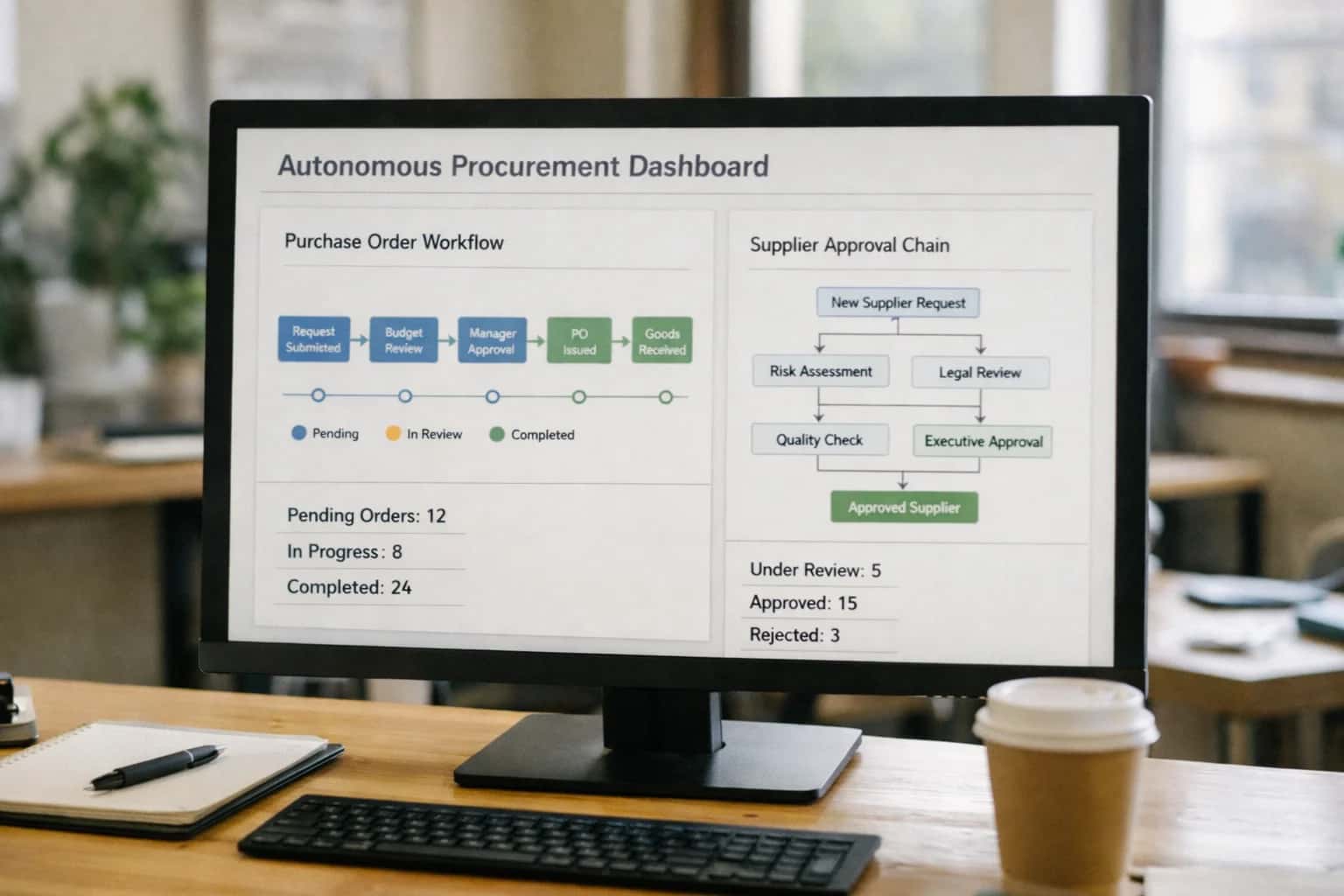
Where AI Fits into Jaggaer Budget Control
A technical blueprint for integrating AI agents into Jaggaer's budget monitoring and forecasting workflows to provide real-time, actionable intelligence to budget owners.
The high-value workflow is proactive budget exception management. Instead of budget owners discovering an overrun during a monthly review, the AI agent analyzes daily spend velocity against remaining budget and historical patterns. It can identify anomalies, such as a department accelerating spend in Q4, and generate a contextual alert: "Marketing Q4 budget forecasted to exceed by 12% based on current P.O. approval rate. Review open commitments for Campaign XYZ." This alert can be routed via Jaggaer's workflow engine to the appropriate budget owner or embedded as a note on the relevant budget record, enabling same-day intervention rather than next-month reconciliation.
Rollout should follow a phased, governance-first approach. Start with a read-only pilot for a single cost center or category, where the AI agent generates forecasts and alerts in a sandbox environment or a separate reporting layer. This validates accuracy and builds trust without altering live Jaggaer data. Phase two involves write-back integration, where approved alerts or summarized forecasts are posted to Jaggaer comment fields or custom dashboard widgets. Critical to governance is maintaining a clear audit trail: all AI-generated insights should be timestamped, versioned, and linked to the source data snapshot, ensuring full traceability for finance controls. This approach allows procurement and finance to incrementally adopt AI-driven budget intelligence while maintaining the integrity of the core Jaggaer platform.
Key Integration Surfaces in Jaggaer
Core Data Model for AI Analysis
AI for budget control in Jaggaer begins by connecting to the platform's core financial data model. The primary integration surfaces are the Budget Object and General Ledger (GL) Account records via Jaggaer's REST APIs or database connectors.
Key data points for AI ingestion include:
- Budget Headers & Lines: Current fiscal year budgets, revisions, and encumbrances at the cost center, project, or account level.
- Actual Spend Transactions: Real-time procurement data (P.O.s, invoices, payments) linked back to GL accounts.
- Commitment Data: Outstanding P.O. values and approved requisitions not yet invoiced.
The AI model uses this structured data to calculate real-time budget consumption rates, forecast spend-to-completion, and identify accounts trending toward overages. Integration is typically event-driven, triggered by procurement document creation or approval to update budget dashboards.
High-Value AI Use Cases for Jaggaer Budget Control
Integrate AI directly into Jaggaer's budget management workflows to move from static, periodic reporting to dynamic, predictive control. These use cases connect to budget objects, commitment data, and approval workflows to provide real-time visibility and automated governance.
Real-Time Budget Commitment Tracking
An AI agent monitors purchase requisitions, POs, and invoices as they are created in Jaggaer, calculating real-time committed spend against budget lines. It surfaces alerts in the budget owner's dashboard when commitments approach or exceed thresholds, preventing overspend before payment.
Predictive Budget Forecasting
Leverages historical Jaggaer spend data, open commitments, and seasonal patterns to generate rolling 90-day forecasts for each cost center or project budget. Forecasts are updated weekly and integrated into Jaggaer's budget dashboards, enabling proactive adjustments.
Intelligent Approval Routing & Policy Enforcement
AI analyzes the GL account, supplier, and amount of each requisition. It automatically routes requests to the correct budget owner based on real-time availability, enforces approval hierarchies, and flags non-compliant purchases against category strategies before submission.
Anomaly Detection in Spend Patterns
Continuously analyzes transaction flows in Jaggaer to detect outliers—like unusual supplier spikes, off-category spending, or duplicate invoices—against established patterns. Alerts are sent to finance controllers with contextual analysis for rapid investigation.
Automated Budget Reallocation Workflows
When a budget owner requests a transfer or increase, an AI copilot drafts the justification memo, analyzes impact on related budgets, and pre-populates a workflow in Jaggaer. It guides the request through pre-defined governance steps, reducing administrative backlog.
Natural Language Budget Q&A
A chatbot interface embedded in Jaggaer allows budget owners and finance to ask questions like 'What's my remaining budget for Q3 marketing?' or 'Show me all overspent projects.' The agent queries live Jaggaer data and commitment APIs, returning answers with source links.
Example AI Agent Workflows
These workflows demonstrate how AI agents connect to Jaggaer's budget management APIs and data model to provide proactive monitoring, forecasting, and stakeholder communication. Each flow is triggered by a system event and executes a series of tool calls to Jaggaer and external data sources.
This agent monitors purchase requisitions and purchase orders against pre-defined budget thresholds.
- Trigger: A new
PurchaseRequisitionis submitted or aPurchaseOrderis released in Jaggaer. - Context Pull: The agent calls the Jaggaer API to fetch:
BudgetAccountdetails (ID, total amount, committed amount, fiscal period).- The new transaction's
GLAccount,CostCenter,ProjectID, and amount.
- Agent Action: The LLM evaluates the transaction against the budget using rules (e.g., "Alert if commitment exceeds 85% of budget") and historical spend velocity.
- System Update / Next Step:
- If an alert is triggered, the agent posts a comment to the Jaggaer transaction record and creates a task for the budget owner.
- It simultaneously sends a formatted Slack/Teams message to the budget owner and procurement approver via webhook, summarizing the impact.
- Human Review Point: The budget owner must acknowledge the alert in Jaggaer or the messaging platform before high-value transactions proceed, ensuring manual oversight for critical thresholds.
Implementation Architecture & Data Flow
A practical blueprint for connecting AI to Jaggaer's budget control surfaces to enable proactive monitoring and forecasting.
The integration connects to Jaggaer's core financial data objects—primarily Budget Plans, Commitments, and Actuals—via its REST APIs or a middleware layer. An AI agent is deployed as a service that periodically ingests this data, along with related metadata like cost centers, projects, and budget owners. This forms a unified view of planned versus committed spend, which the AI analyzes using time-series forecasting and anomaly detection models. Key outputs include predicted budget overruns, variance explanations (e.g., "Project Alpha's hardware spend is 15% above forecast"), and real-time alerts.
For workflow integration, alerts and insights are pushed back into Jaggaer through two primary channels: 1) Automated Notifications to budget owners via Jaggaer's messaging or email system, and 2) Enriched Data Objects, where forecasted spend and risk scores are written to custom fields on budget records. This allows procurement and finance teams to see AI-generated insights directly within their familiar Jaggaer dashboards and reports. High-priority alerts can also trigger approval workflows, such as creating a Budget Adjustment Request or routing an exception to a financial controller for review.
Governance is critical. The AI service operates with a read-only connection to source data by default, and all write-backs are logged for audit. A human-in-the-loop step is recommended for initial rollout, where alerts are first sent to a central team for validation before being broadcast to all budget owners. This phased approach builds trust and allows for tuning of the AI's sensitivity thresholds. The entire system is designed to augment, not replace, Jaggaer's native budget controls, providing a predictive layer on top of its existing enforcement rules.
Code & Payload Examples
Real-Time Alert Payload
When spend against a budget exceeds a defined threshold, Jaggaer can trigger a webhook to an AI service. The AI analyzes the transaction, categorizes the overspend, and formats a contextual alert for the budget owner.
json{ "event": "budget_threshold_exceeded", "timestamp": "2024-05-15T14:30:00Z", "budget_id": "BUD-2024-MKTG-001", "budget_name": "Q2 Marketing Campaigns", "owner_email": "[email protected]", "current_spend": 48500.00, "budget_limit": 45000.00, "overspend_percentage": 7.78, "triggering_transactions": [ { "po_number": "PO-78910", "supplier": "Global Ad Agency Inc.", "amount": 4200.00, "category": "Digital Advertising", "date": "2024-05-14" } ], "jaggaer_tenant_id": "acme_corp" }
The AI service consumes this payload, enriches it with spend trend analysis, and returns a structured message for delivery via email, Teams, or a Jaggaer notification.
Realistic Time Savings & Operational Impact
This table illustrates the operational impact of integrating AI into Jaggaer's budget control workflows, focusing on realistic time savings and process improvements for budget owners and procurement teams.
| Workflow / Metric | Before AI Integration | After AI Integration | Implementation Notes |
|---|---|---|---|
Budget vs. Actuals Review | Manual report generation and analysis, 4-8 hours per budget cycle | Automated anomaly detection and summary reports, 30-60 minutes review | AI analyzes Jaggaer spend data, flags variances > threshold, provides narrative context |
Overspend Alert Generation | Reactive discovery during month-end close, next-day follow-up | Proactive real-time alerts to budget owners via Slack/Teams | Triggers based on PO commitments, invoice postings, and encumbrances; integrates with Jaggaer APIs |
Forecast Accuracy | Manual spreadsheet updates, historical trend extrapolation | AI-assisted forecasting with external factor analysis (e.g., commodity prices) | Pilot improves forecast accuracy by 5-15%; requires 2-3 months of historical data tuning |
Budget Transfer Request Routing | Manual form submission, email-based approval chains (1-3 days) | Intelligent routing with pre-populated justification and policy check (same day) | AI validates request against remaining budget, suggests approvers, auto-fills Jaggaer transfer form |
Capital vs. Operational Spend Classification | Manual GL code mapping by AP team, prone to errors | AI-powered transaction classification at point of requisition | Reduces misclassification by ~70%; model trained on historical Jaggaer chart of accounts |
Budget Owner Onboarding & Training | Generic system training, high volume of 'how-to' support tickets | Contextual copilot answers budget-specific queries within Jaggaer | Reduces basic support tickets by 40-60%; built on Jaggaer's UI extension points |
Quarterly Budget Review Preparation | Data consolidation from multiple systems, 2-3 days of manual work | Automated dashboard and narrative briefing generated overnight | AI synthesizes Jaggaer data, ERP actuals, and commentary from prior reviews for leadership |
Governance, Security & Phased Rollout
A production-ready AI integration for Jaggaer budget control requires a secure, governed architecture and a phased rollout to manage risk and demonstrate value.
A secure integration architecture connects to Jaggaer's APIs—such as the Jaggaer ONE API or Supplier Management API—to pull budget, commitment, and actual spend data from objects like Budget, PurchaseOrder, and Invoice. AI agents process this data within a secure, isolated environment (e.g., a private cloud VPC) where prompts, model outputs, and any derived insights are logged to an immutable audit trail. Access is controlled via role-based permissions, ensuring budget alerts and forecasts are only visible to authorized Budget Owners, Category Managers, and Finance Controllers defined in Jaggaer's security model.
Rollout follows a phased, risk-managed approach:
- Phase 1 (Pilot): Connect to a single cost center or category. Implement AI-driven budget consumption alerts via email or Jaggaer notifications, focusing on high-spend areas. Validate accuracy and user adoption.
- Phase 2 (Expand): Roll out predictive forecasting to additional departments, using historical Jaggaer spend patterns and open commitments to project quarterly underspend/overspend. Integrate forecasts into Jaggaer's reporting or a connected BI tool.
- Phase 3 (Scale & Automate): Enable prescriptive recommendations, such as automated purchase requisition holds when a budget threshold is breached, or suggestions to reallocate funds between projects, with all actions routed through Jaggaer's existing approval workflows.
Governance is embedded throughout. Every AI-generated alert or forecast includes a confidence score and links back to the source Jaggaer transactions. A human-in-the-loop review step is maintained for critical recommendations (e.g., budget transfers over a defined limit). Regular model performance reviews check for drift against actual Jaggaer data, and prompts are version-controlled to ensure consistent, policy-compliant outputs. This controlled approach minimizes disruption to existing financial controls while incrementally delivering the operational intelligence that procurement and finance teams need.
Enabling Efficiency, Speed & Accuracy
Intelligent Analysis, Decision & Execution
We build AI systems for teams that need search across company data, workflow automation across tools, or AI features inside products and internal software.
Talk to Us
Search across company data
Give teams answers from docs, tickets, runbooks, and product data with sources and permissions.
Useful when people spend too long searching or get different answers from different systems.

Automate internal workflows
Use AI to route work, draft outputs, trigger actions, and keep approvals and logs in place.
Useful when repetitive work moves across multiple tools and teams.

Add AI to products and internal tools
Build assistants, guided actions, or decision support into the software your team or customers already use.
Useful when AI needs to be part of the product, not a separate tool.
Frequently Asked Questions
Practical questions about implementing AI-driven budget monitoring, forecasting, and alerting within the Jaggaer platform.
The integration connects via Jaggaer's REST APIs to key budget-related objects and transaction data. The primary touchpoints are:
- Budget Header & Line Objects: To read allocated budgets, fiscal periods, and owner assignments.
- Commitment & Actual Spend Data: To pull real-time encumbrances (PReqs, POs) and actuals (invoices, payments) linked to budget codes.
- GL Account and Category Hierarchies: To understand the chart of accounts and category tree for accurate spend mapping.
An external AI service acts as a middleware layer, periodically ingesting this data via scheduled API calls or listening to webhook events for new transactions. The AI analyzes spend velocity and patterns against the budget, then posts alerts or forecast updates back to Jaggaer as:
- Custom Object Records: For structured forecast data and trend analysis.
- Activity Feed Entries or Notifications: For real-time alerts to budget owners.
- Comment Threads on relevant transactions or budget records.
This architecture keeps the core budget logic in Jaggaer while augmenting it with predictive intelligence.

About the author
Prasad Kumkar
CEO & MD, Inference Systems
Prasad Kumkar is the CEO & MD of Inference Systems and writes about AI systems architecture, LLM infrastructure, model serving, evaluation, and production deployment. Over 5+ years, he has worked across computer vision models, L5 autonomous vehicle systems, and LLM research, with a focus on taking complex AI ideas into real-world engineering systems.
His work and writing cover AI systems, large language models, AI agents, multimodal systems, autonomous systems, inference optimization, RAG, evaluation, and production AI engineering.
Partnered with leading AI, data, and software stack.





How We Work
Custom AI workflows for your Business
One-fit-all AI don't work for modern businesses. At Inferensys, we aim to understand your business & custom requirements; which we use to define most efficient agentic workflows, the data, and the tools for your business.
01
Review the use case
We understand the task, the users, and where AI can actually help.
Read more02
Pick the right approach
We define what needs search, automation, or product integration.
Read more03
Build the first useful version
We implement the part that proves the value first.
Read more04
Improve from there
We add the checks and visibility needed to keep it useful.
Read moreThe first call is a practical review of your use case and the right next step.
Talk to Us