AI integration for Splunk ITSI focuses on three primary surfaces: the Service Analyzer for KPI monitoring, the Glass Tables for visualization, and the Event Analytics engine for correlation. The goal is to inject intelligence into the service health lifecycle—before, during, and after degradation. This means connecting AI models to the underlying metric time series data, episodic events, and service dependency maps that ITSI uses to calculate health scores. By analyzing patterns across these data streams, AI can predict service degradation, suggest root causes by correlating anomalous KPIs, and automatically trigger enriched incident creation in ITSI's notable events or downstream ticketing systems like ServiceNow.

Integration
AI Integration for Splunk IT Service Intelligence
Apply AI to Splunk ITSI to predict service degradation, auto-generate incident tickets, and suggest root causes by analyzing KPI correlations and metric anomalies.
ARCHITECTURE AND ROLLOUT
Where AI Fits into Splunk ITSI Operations
A practical guide to integrating AI with Splunk IT Service Intelligence for predictive service health and automated incident management.
A production implementation typically involves deploying lightweight inference services that subscribe to the ITSI Summary Index or consume data via the ITSI REST API. For predictive alerts, models analyze rolling windows of KPI data to forecast breaches of dynamic thresholds, moving beyond static baselines. For root cause analysis, AI can process the service topology and recent metric correlations to rank likely culprits, presenting them as evidence in the incident. Governance is critical: all AI-generated insights should be logged to a dedicated index for audit, and any automated action—like creating a notable event—should be gated by confidence scores and, for critical services, optional human-in-the-loop approval via a webhook or Slack alert.
Rollout should start with a single, non-critical ITSI service or KPIs known for noisy, manual triage. Use this pilot to validate model accuracy, refine prompts for root cause narratives, and establish the operational handoff between AI suggestions and the on-call team. The long-term value isn't just faster MTTR; it's enabling IT Ops to shift from reactive firefighting to proactive service management, using AI to highlight subtle, cross-domain issues that traditional monitoring misses.
SPLUNK IT SERVICE INTELLIGENCE
Key ITSI Surfaces for AI Integration
Service Health Scores and KPI Thresholds
AI integration targets the core service health scores and KPI thresholds that drive ITSI's glass tables and service analyzers. Instead of relying on static thresholds, AI models can analyze historical KPI data, seasonality, and correlated metric behavior to predict impending service degradation before a breach occurs.
Key surfaces include the service_health_score calculation and the kpi_base_search definitions. An AI agent can be triggered by a KPI's status change to analyze the underlying raw metric data, adjacent service dependencies, and recent change tickets to suggest a dynamic, context-aware threshold adjustment or generate a predictive incident. This moves operations from reactive "red/green" monitoring to proactive risk forecasting, allowing teams to address issues during maintenance windows.
PREDICTIVE SERVICE HEALTH
High-Value AI Use Cases for Splunk ITSI
Integrate AI with Splunk IT Service Intelligence (ITSI) to move from reactive monitoring to predictive operations. These use cases focus on applying machine learning and generative AI to KPIs, service health scores, and metric correlations to prevent outages and accelerate resolution.
01
Predictive Service Degradation
Apply time-series forecasting models to KPI data within ITSI service health scores. AI predicts metric breaches hours before they occur, allowing teams to intervene proactively. Models are trained on historical patterns, seasonality, and correlated infrastructure events.
Reactive -> Proactive
Monitoring shift
02
Automated Incident Ticket Generation
Trigger the creation of detailed incident tickets in connected ITSM platforms (e.g., ServiceNow) when AI predicts or confirms a service degradation. Tickets are auto-populated with affected services, root cause hypotheses, and relevant KPI graphs, reducing manual triage.
Minutes -> Seconds
Ticket creation
03
Correlation-Based Root Cause Suggestion
Analyze real-time and historical metric correlations across the service topology. When a KPI breaches, AI suggests the most likely underlying infrastructure component (e.g., a specific database cluster or network segment) by identifying anomalies in correlated metrics, cutting MTTR.
1 sprint
Typical implementation
04
Intelligent Threshold Tuning
Continuously analyze KPI behavior to recommend dynamic, adaptive thresholds instead of static values. AI identifies baseline shifts (e.g., due to application updates or seasonal traffic) and adjusts alerting thresholds in ITSI to reduce noise and maintain sensitivity.
05
Anomaly Detection for Business Services
Deploy unsupervised ML models on the metric streams feeding ITSI's glass tables. Detect subtle, multi-metric anomalies that don't breach individual KPI thresholds but indicate emerging issues, such as gradual latency creep or sporadic error rates across a transaction flow.
Batch -> Real-time
Detection mode
06
Generative AI for Incident Summaries
When an ITSI episode is created, use a generative AI model to synthesize the timeline, impacted KPIs, and correlated events into a plain-language narrative summary. This accelerates handoffs between L1/L2 teams and provides clear context for war rooms.
PRACTICAL AUTOMATIONS
Example AI-Augmented ITSI Workflows
These workflows illustrate how generative AI and machine learning can be embedded into Splunk ITSI's service monitoring and incident management lifecycle to move from reactive alerts to predictive, automated operations.
Trigger: Splunk ITSI's predictive analytics or anomaly detection module flags a deviation in a KPI baseline for a critical business service (e.g., API latency for a payment service).
Context Pulled: The AI agent retrieves:
- The specific KPI values and deviation magnitude.
- Related infrastructure metrics (CPU, memory, error rates) from the same service entity.
- Recent change tickets from a connected ServiceNow instance.
- Dependency map of upstream/downstream services from ITSI's service topology.
Agent Action: A fine-tuned model analyzes the correlation between metrics and recent changes. It generates a natural language summary: "API latency spike on payment-service correlates with 90% CPU utilization on app-server-05, following a deployment 2 hours ago. Downstream order-service is now showing increased error rates."
System Update: The agent creates a high-priority incident in the connected ITSM platform (e.g., ServiceNow) with the summary, tags it as predicted-degradation, and assigns it to the appropriate platform engineering team. It also updates the ITSI glass table with the AI-generated hypothesis.
Human Review Point: The incident is created for human review, but the AI summary provides immediate, actionable context, reducing triage time from 30+ minutes to seconds.
FROM KPI MONITORING TO PREDICTIVE SERVICE INSIGHTS
Typical Implementation Architecture
A production-ready AI integration for Splunk ITSI connects predictive analytics to service health workflows, creating a closed-loop system for proactive IT operations.
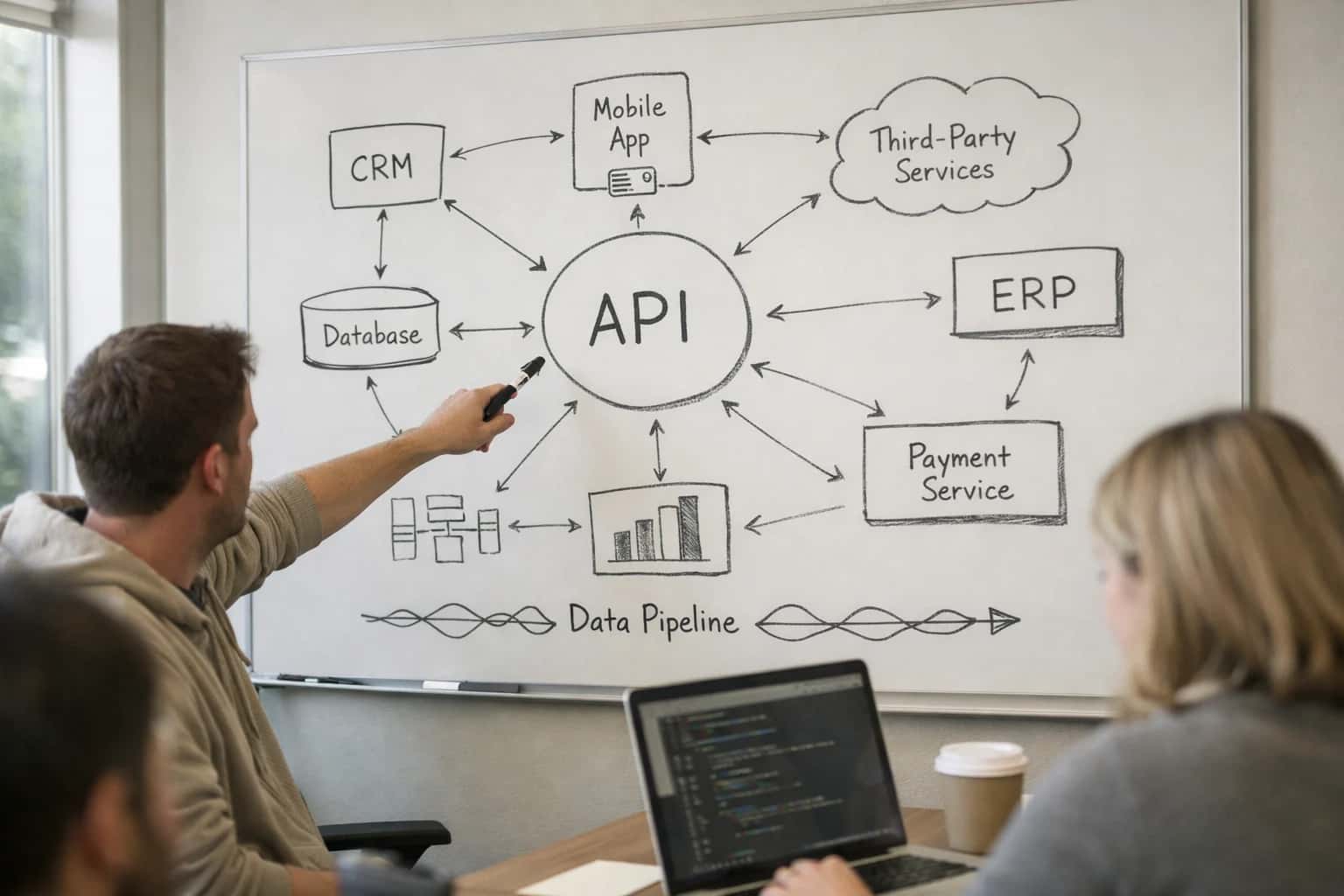
The architecture typically layers AI on top of Splunk ITSI's existing data pipeline. Service health scores, KPI values, and entity metrics from your IT environment are ingested and indexed as normal. An AI service—hosted in your cloud or on-premises—subscribes to this telemetry stream via the Splunk HTTP Event Collector (HEC) or queries the Splunk REST API. This service runs machine learning models to establish behavioral baselines for each KPI, detect subtle anomalies that may indicate impending service degradation, and analyze correlations across metrics to suggest probable root causes. For high-confidence predictions, the system can automatically create ServiceNow incidents or Jira issues via webhook, populating the ticket with the predicted service impact, affected entities, and correlated KPIs.
Implementation focuses on three key integration points: 1) The data feed from ITSI's glass tables and KPI searches, enriched with contextual metadata like business service ownership and dependency maps. 2) The inference engine, which can be a containerized microservice using frameworks like TensorFlow Serving or MLflow, scoring data in near-real-time. 3) The action layer, where predictions trigger workflows in ITSI (e.g., adjusting adaptive thresholding) or external systems via webhooks, email alerts, or Slack messages. A common pattern is to deploy a lightweight vector database alongside the AI service to store and retrieve similar historical incidents, providing analysts with "this looks like last month's database latency issue" context.
Rollout is phased, starting with a non-disruptive "observer mode" where AI predictions are logged to a dedicated Splunk index for validation against actual incidents. Governance is critical: a human-in-the-loop approval step is maintained for automated ticket creation, often managed through a simple dashboard where operations leads can review and approve AI-suggested incidents. Over time, as confidence in the model's precision grows, approved workflows can be automated, with an audit trail of all AI-generated actions and model performance metrics (precision, recall) tracked back in Splunk for continuous tuning. For teams exploring this, we recommend starting with a single, high-impact business service and its 5-10 most critical KPIs.
AI INTEGRATION FOR SPLUNK ITSI
Code and Payload Examples
Detecting Service Health Degradation
Use AI to analyze Splunk ITSI's time-series KPI data for predictive alerting. The workflow involves querying recent KPI values, scoring them with an anomaly detection model, and creating a proactive service ticket if a threshold is breached.
Example Python Payload to an AI Service:
pythonimport requests # Payload structure for KPI anomaly scoring kpi_payload = { "service_id": "app-payment-processor", "kpi_name": "transaction_error_rate", "values": [0.02, 0.015, 0.018, 0.045, 0.12], # Last 5-minute readings "baseline_mean": 0.02, "baseline_std": 0.005 } # Send to an AI inference endpoint response = requests.post( "https://api.your-ai-service.com/anomaly/score", json=kpi_payload, headers={"Authorization": "Bearer YOUR_API_KEY"} ) # If anomaly score > 0.9, trigger an ITSI event if response.json().get('anomaly_score', 0) > 0.9: create_itsi_event( title="Predicted Service Degradation", severity=2, details=response.json().get('reasoning') )
This pattern moves teams from static thresholds to adaptive, ML-driven alerts.
SPLUNK ITSI AI INTEGRATION
Realistic Time Savings and Operational Impact
How AI integration for Splunk IT Service Intelligence changes key operational workflows, reducing manual effort and accelerating service restoration.
| Metric | Before AI | After AI | Notes |
|---|---|---|---|
Service Degradation Detection | Threshold-based alerts after breach | Predictive anomaly detection 15-45 min prior | AI analyzes KPI trends and metric correlations to forecast issues |
Incident Ticket Creation | Manual creation by L1/L2 after alert | Automated ticket draft with root cause hypothesis | AI pulls from ITSI glass tables, KPIs, and entity data; human review required |
Initial Triage & Correlation | 30-60 minutes manual search and pivot | 5-10 minutes with AI-generated incident narrative | AI summarizes related metric anomalies, topology changes, and recent deployments |
Root Cause Analysis (RCA) Suggestion | Hours of manual log diving and metric comparison | Ranked list of probable causes in minutes | AI correlates service health scores with underlying infrastructure and application metrics |
Mean Time to Resolution (MTTR) | Hours to next business day for complex issues | Reduction of 25-50% for correlated incidents | Faster, data-driven initial investigation reduces diagnostic loops |
Post-Incident Report Drafting | Manual compilation of timelines and impacts | Automated first draft with key events and metrics | AI synthesizes ITSI episode data, action logs, and KPI recovery graphs |
Service Health Score Anomaly Review | Daily manual review of score fluctuations | Automated weekly summary with highlighted deviations | AI identifies and explains significant score changes against baselines and business cycles |
OPERATIONALIZING AI FOR SPLUNK ITSI
Governance, Security, and Phased Rollout
A practical approach to deploying AI for service health that maintains control, security, and measurable impact.
Integrating AI with Splunk IT Service Intelligence (ITSI) requires a governance model that respects the criticality of service health data and KPI calculations. Start by defining a read-only AI service account with scoped access to specific ITSI modules—primarily the Service Analyzer, Glass Tables, and the ITSI REST API for KPIs and entity data. AI inferences should be executed asynchronously, with results written to a dedicated ai_insights summary index or a custom ITSI notable event group. This creates a clear audit trail, separating AI-generated hypotheses from core ITSI telemetry and allowing for easy rollback or model retraining without affecting production service monitoring.
A phased rollout is essential for building trust and demonstrating value. Phase 1 focuses on read-only analysis and alerting: deploy AI models to analyze KPI threshold breaches and metric correlations, generating enriched notable events with suggested root causes and confidence scores. These appear alongside traditional alerts for analyst review. Phase 2 introduces controlled automation: after validating Phase 1 accuracy, implement workflows where high-confidence AI insights can automatically create tickets in integrated ITSM tools like ServiceNow via webhook, populating predefined fields with the AI-generated summary and context. Phase 3 enables predictive actions, where the system can suggest proactive measures, like scaling a cloud resource group via an orchestration platform, based on predicted service degradation—but always requiring human approval for execution.
Security is paramount. All AI model calls (e.g., to OpenAI, Azure OpenAI, or private models) must be proxied through a secure gateway that enforces data privacy policies, strips PII from ITSI entity names or metric labels before processing, and logs all prompts and completions for compliance. Implement a human-in-the-loop review queue in a separate dashboard for any AI-recommended action that could impact service availability. Finally, establish a continuous feedback loop by tagging AI-generated insights in ITSI as validated or incorrect. This curated data becomes invaluable for fine-tuning models and proving ROI, moving from "AI suggestions" to "AI-assisted operations" with clear operational guardrails.
Enabling Efficiency, Speed & Accuracy
Intelligent Analysis, Decision & Execution
We build AI systems for teams that need search across company data, workflow automation across tools, or AI features inside products and internal software.
Talk to Us
Search across company data
Give teams answers from docs, tickets, runbooks, and product data with sources and permissions.
Useful when people spend too long searching or get different answers from different systems.
Enterprise searchRAGPermissions
Read more
Automate internal workflows
Use AI to route work, draft outputs, trigger actions, and keep approvals and logs in place.
Useful when repetitive work moves across multiple tools and teams.
AI agentsWorkflow automationGovernance
Read more
Add AI to products and internal tools
Build assistants, guided actions, or decision support into the software your team or customers already use.
Useful when AI needs to be part of the product, not a separate tool.
AI integrationDecision supportModel routing
Read moreAI INTEGRATION FOR SPLUNK ITSI
Frequently Asked Questions
Practical questions about integrating AI with Splunk IT Service Intelligence (ITSI) to predict service degradation, automate incident creation, and accelerate root cause analysis.
AI integration connects at the service, KPI, and entity levels within Splunk ITSI's data model.
Primary Integration Points:
- KPI Base Searches: AI models consume the time-series data from KPI base searches to detect anomalies and forecast trends. This is typically done via the ITSI REST API or by writing enriched results back to a summary index.
- Service Health Scores: The composite health score of an IT service is analyzed to predict impending degradation before thresholds are breached.
- Glass Tables & Deep Dives: AI-generated insights (e.g., "CPU spike on App-Server-05 is correlated with a 40% increase in database latency") can be surfaced as contextual annotations on Glass Tables or within deep dive investigations.
Implementation Pattern:
- Data Extraction: Use ITSI's
itsi_*REST API endpoints or direct Splunk searches againstitsi_summaryindexes to pull KPI and entity data. - AI Processing: Stream this data to an external inference service or use the Splunk Machine Learning Toolkit (MLTK) for on-platform model execution.
- Result Ingestion: Write predictions, correlations, and suggested root causes back to a custom index or use the ITSI API to create predictive KPIs or annotate services.
Governance: Access requires permissions to the ITSI app and relevant summary indexes. All AI-generated actions (like creating an incident) should be logged to an audit index.

About the author
Prasad Kumkar
CEO & MD, Inference Systems
Prasad Kumkar is the CEO & MD of Inference Systems and writes about AI systems architecture, LLM infrastructure, model serving, evaluation, and production deployment. Over 5+ years, he has worked across computer vision models, L5 autonomous vehicle systems, and LLM research, with a focus on taking complex AI ideas into real-world engineering systems.
His work and writing cover AI systems, large language models, AI agents, multimodal systems, autonomous systems, inference optimization, RAG, evaluation, and production AI engineering.
LinkedIn
Limited slotsGet a Free AI Consultation
Partnered with leading AI, data, and software stack.





How We Work
Custom AI workflows for your Business
One-fit-all AI don't work for modern businesses. At Inferensys, we aim to understand your business & custom requirements; which we use to define most efficient agentic workflows, the data, and the tools for your business.
01
Review the use case
We understand the task, the users, and where AI can actually help.
Read more02
Pick the right approach
We define what needs search, automation, or product integration.
Read more03
Build the first useful version
We implement the part that proves the value first.
Read more04
Improve from there
We add the checks and visibility needed to keep it useful.
Read moreThe first call is a practical review of your use case and the right next step.
Talk to Us