AI integration targets three core surfaces in the Sentinel compliance workflow: the Analytics Rules library, Hunting Queries, and the Incidents queue. The primary function is to automatically map your active detection logic—whether custom KQL rules or out-of-the-box templates—to specific regulatory control IDs from frameworks like NIST CSF, MITRE ATT&CK, PCI DSS, or HIPAA. This creates a live, searchable inventory of which controls are monitored and which have gaps, directly within Sentinel workbooks or exported to GRC platforms.

Integration
AI Integration for Microsoft Sentinel Compliance
Automate the mapping of Microsoft Sentinel analytics rules, hunting queries, and incident data to regulatory frameworks like NIST, ISO 27001, PCI DSS, and HIPAA. Generate audit-ready evidence and demonstrate continuous monitoring capabilities.
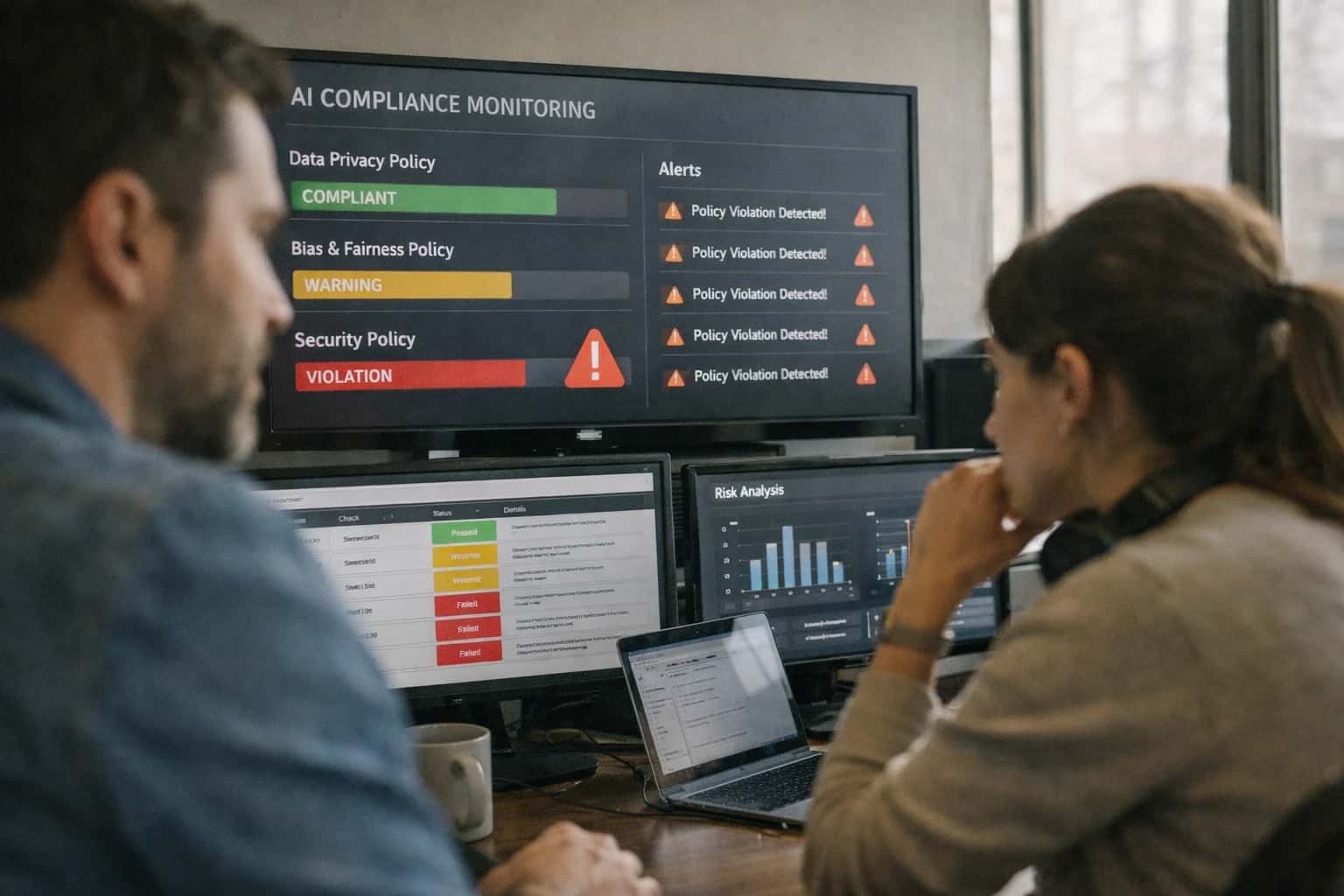
FROM MANUAL MAPPING TO CONTINUOUS DEMONSTRATION
Where AI Fits into Microsoft Sentinel Compliance Workflows
Integrating AI with Microsoft Sentinel transforms compliance from a point-in-time audit burden into a continuous, demonstrable control framework.
Implementation typically involves a scheduled Logic App or Azure Function that uses an LLM to analyze the logic and intent of each KQL query. The AI parses the query for key entities (users, resources, actions) and outcomes (detections, alerts) to infer the security control being enforced. For example, a rule detecting failed interactive logons > 10 would be mapped to NIST AC-7 (Unsuccessful Logon Attempts). This mapping is then stored in a dedicated Sentinel Watchlist or an external database, creating a dynamic compliance evidence ledger that updates as your detection posture evolves.
Beyond mapping, AI generates the narrative and audit trail. For each triggered incident linked to a compliance control, an automated workflow can draft a concise summary explaining the event's context, the control tested, and the response taken. This transforms raw alert data into auditor-ready documentation. Crucially, rollout requires a human-in-the-loop validation phase, where security and compliance teams review and refine the AI's mappings and narratives to ensure accuracy before full automation, establishing governance over the AI's output.
ARCHITECTURE SURFACES
Key Microsoft Sentinel Surfaces for AI Compliance Integration
Mapping Detection Logic to Regulatory Controls
This is the primary surface for AI-driven compliance mapping. Analytics rules and hunting queries in Microsoft Sentinel represent your active detection logic. AI can analyze the KQL logic, alert metadata, and historical triggers to map each rule to specific regulatory framework requirements (e.g., NIST 800-53, PCI DSS, HIPAA).
Key AI Integration Points:
- Control Gap Analysis: AI scans your Analytics Rules workspace to identify gaps in required detection coverage for your target frameworks.
- Rule Documentation: Automatically generates human-readable descriptions of what each rule detects, aligned with control language.
- Effectiveness Correlation: Correlates rule firing data with incident outcomes to demonstrate the "operating effectiveness" of a control for auditors.
- Example Workflow: An AI agent periodically reviews new and modified rules, tags them with
framework: pci_dss,control: 10.2.5, and updates a centralized compliance dashboard.
AUTOMATED FRAMEWORK MAPPING & EVIDENCE GENERATION
High-Value AI Compliance Use Cases for Microsoft Sentinel
Move beyond manual control mapping and reactive evidence gathering. Use AI to continuously map Sentinel analytics rules, hunting queries, and incident data to regulatory frameworks like NIST CSF, ISO 27001, PCI DSS, and HIPAA, automating audit readiness and demonstrating effective, continuous monitoring.
01
Automated Control Mapping for NIST CSF & ISO 27001
AI analyzes your deployed Microsoft Sentinel analytics rules, hunting queries, and watchlists to map them to specific controls in frameworks like NIST CSF (Identify, Protect, Detect, Respond, Recover) and ISO 27001 Annex A. It identifies coverage gaps and suggests new KQL queries or rule logic to fill them, creating a live compliance posture dashboard.
Weeks -> Days
Framework mapping cycle
02
Continuous Evidence Generation for Audit Trails
Instead of manual screenshot collection during audits, AI automatically generates and packages evidence. It correlates triggered incidents, alert logic, and entity timelines to demonstrate that specific controls (e.g., 'detect unauthorized access') are operational and effective, producing summarized PDF or JSON evidence packets on a scheduled or on-demand basis.
Batch -> Continuous
Evidence collection
03
PCI DSS Scope Reduction & Log Review Automation
For PCI DSS Requirement 10 (tracking access to cardholder data), AI analyzes log sources and user activity to dynamically define and validate the Cardholder Data Environment (CDE) scope within Sentinel. It then automates the daily review of security events for systems in scope, flagging anomalies and generating compliance summaries, significantly reducing manual review burden.
Hours -> Minutes
Daily log review
04
HIPAA Security Rule Incident Documentation
AI assists with HIPAA's Security Rule requirements for incident response and audit controls. When a potential PHI breach incident is created in Sentinel, AI automatically drafts the required documentation, including a description of the event, data involved, and response actions taken, pulling from incident comments, entity data, and playbook execution logs to ensure consistency and completeness.
Same day
Initial documentation
05
SOX ITGC Monitoring for Access & Change Management
Supports SOX IT General Controls (ITGC) for access and change management. AI monitors Sentinel for privileged account activity, configuration changes to critical systems, and segregation of duties violations. It maps these events to specific SOX control objectives, generates exception reports for control owners, and maintains a continuous log of testing evidence.
Real-time
Control monitoring
06
Compliance-Specific Threat Hunting & Gap Analysis
AI translates compliance requirements into proactive hunting missions. For example, to satisfy GDPR's 'integrity and confidentiality' principle, it can generate and run KQL hunting queries for unusual data exfiltration patterns or unauthorized access to databases containing personal data. Results are tagged to the relevant regulation articles, turning hunting activity into direct compliance validation.
1 sprint
New control validation
MICROSOFT SENTINEL
Example AI-Driven Compliance Workflows
These workflows demonstrate how AI can automate the mapping of Sentinel analytics, hunting, and incident data to regulatory frameworks, generating evidence and audit trails for continuous compliance monitoring.
Trigger: A new analytics rule is created or modified in Microsoft Sentinel.
AI Action:
- The AI agent analyzes the rule's KQL query, description, and MITRE ATT&CK tags.
- It cross-references the rule's intent and data sources against a knowledge base of compliance framework controls (e.g., NIST 800-53, CIS, PCI DSS).
- The agent generates a mapping report, suggesting which specific controls (e.g.,
AU-6 Audit Review, Analysis, and Reporting) the rule supports.
System Update:
- The mapping is stored as a custom property on the Sentinel analytics rule.
- A summary is logged to a dedicated "Compliance Evidence" table in the Sentinel workspace.
- An optional approval task can be sent via webhook to the compliance team's workflow tool.
Human Review Point: Compliance officer reviews and confirms the AI-suggested mapping before finalizing the control evidence record.
FROM ANALYTICS RULES TO AUDIT EVIDENCE
Implementation Architecture: Data Flow and Integration Points
A practical blueprint for connecting AI to Microsoft Sentinel's compliance data model to automate framework mapping and evidence generation.
The integration connects at three primary points within the Microsoft Sentinel workspace: the Analytics Rules API, the Hunting Queries repository, and the Watchlists used for control mapping. An orchestration agent, typically deployed as an Azure Function or Logic App, periodically queries these endpoints to extract rule logic, KQL queries, and associated metadata. This raw data—including rule names, descriptions, severity, and the underlying detection logic—is sent to a configured LLM endpoint (e.g., Azure OpenAI Service) via a secure, managed API. The AI's role is to analyze this content, map it to specific controls within target frameworks like NIST CSF, ISO 27001, or CIS Controls, and generate a structured compliance artifact.
The core workflow involves semantic analysis and entity extraction. The AI parses each analytics rule's KQL to identify the security events being monitored (e.g., SigninLogs, AuditLogs), the conditions that constitute a violation, and the entities involved (users, IPs, resources). It then cross-references this against a knowledge base of compliance control language. For example, a rule detecting multiple failed logins from a foreign country is programmatically linked to control AC-7 (Unsuccessful Logon Attempts) in NIST 800-53. The output is a dynamic, queryable mapping table stored in a dedicated Sentinel Log Analytics table (e.g., AI_ComplianceMapping_CL), which links RuleID, ControlID, Framework, and ConfidenceScore. This table becomes the single source of truth for automated reporting.
For continuous monitoring demonstrations, a secondary data flow automates evidence collection. When a Sentinel incident is created from a mapped rule, the system triggers an Azure Automation runbook or a Logic App. This workflow uses the mapping table to identify the relevant control, then executes a pre-defined query to gather contextual logs from the incident's timeframe—such as raw events, entity timelines, and response actions taken. These logs are packaged with the incident details and the AI-generated control mapping into a standardized JSON evidence file, which is stored in a secured Azure Storage blob container with strict RBAC. This creates an immutable, time-stamped audit trail. Rollout should begin with a pilot framework and a subset of high-confidence analytics rules, with human-in-the-loop validation of the AI's mappings before enabling full automation. Governance must include regular reviews of the mapping accuracy and updates to the AI's knowledge base as frameworks or Sentinel rules evolve.
AI-ENHANCED COMPLIANCE WORKFLOWS
Code and Payload Examples
Mapping Analytics Rules to NIST 800-53
Use AI to analyze your deployed Microsoft Sentinel analytics rules and hunting queries, then map them to specific regulatory control IDs. The following Kusto Query Language (KQL) example retrieves all active analytics rules and uses an AI service (via an Azure Logic App or Azure Function) to classify them against a compliance framework.
kql// Query to feed into an AI classification service SecurityAlert | where TimeGenerated > ago(7d) | summarize AlertCount=count(), LastTriggered=max(TimeGenerated) by AlertRuleName, ProductName, Tactics | extend Payload = pack("RuleName", AlertRuleName, "Tactics", Tactics, "Product", ProductName) | project Payload
The AI service consumes this payload, compares rule logic and metadata to a knowledge base of control requirements, and returns an enriched JSON with suggested mappings (e.g., NIST-800-53:AU-6). This output is written back to a Sentinel Watchlist or a Log Analytics custom table for reporting.
AI-DRIVEN COMPLIANCE MAPPING
Realistic Time Savings and Operational Impact
How AI integration transforms manual compliance mapping and audit preparation in Microsoft Sentinel.
| Workflow | Before AI | After AI | Notes |
|---|---|---|---|
Framework-to-rule mapping | Manual spreadsheet review (2-4 weeks) | Automated analysis & suggestion (1-2 days) | Human validation required; reduces initial mapping effort by ~80% |
Evidence collection for control | Manual log search & screenshot (Hours per control) | Automated query execution & report generation (Minutes per control) | Generates standardized evidence packets for auditor review |
Gap analysis for new regulations | Consultant-led assessment (4-6 weeks) | AI-powered log analysis & control matching (1 week) | Identifies coverage gaps and suggests new analytics rules |
Audit trail generation | Manual compilation from disparate logs | Continuous, automated documentation of monitoring activity | Creates immutable, time-stamped record for compliance demonstrations |
Rule tuning for compliance | Periodic manual review (Quarterly) | Continuous monitoring & drift detection with alerts | Proactively maintains control effectiveness; flags rule changes that impact compliance |
Stakeholder reporting | Manual slide deck creation (Days) | Automated dashboard & narrative generation (Hours) | Dynamically updates with current coverage metrics and evidence status |
Response to auditor inquiries | Ad-hoc log searches & manual explanation | Pre-generated context & natural language summaries | Speeds up audit fieldwork and reduces analyst distraction |
ARCHITECTING CONTROLLED, AUDITABLE AI FOR COMPLIANCE WORKFLOWS
Governance, Security, and Phased Rollout
Integrating AI into Microsoft Sentinel for compliance requires a security-first architecture that preserves evidence chains, enforces data governance, and enables controlled, measurable adoption.
A production integration must map directly to Microsoft Sentinel's analytics rules, hunting queries, and watchlists. The AI layer acts as a co-processor: it ingests rule logic, query results, and entity data to map them against frameworks like NIST CSF, CIS Controls, or PCI DSS. All outputs—such as a generated mapping of "Impossible Travel" analytics rules to NIST PR.AC-7—are written back to Sentinel as custom log entries or workbook data, creating a immutable, queryable audit trail within the same SIEM investigators already use. This keeps compliance evidence inside the security boundary and searchable via KQL.
Security is non-negotiable. The integration uses Azure Managed Identities for least-privilege access to Sentinel workspaces and Log Analytics data. All prompts, model calls, and data transformations are logged to a dedicated audit table within the same Sentinel workspace, capturing the who, what, and when of every AI operation. For sensitive data, a data filtering and redaction layer processes logs before they reach external models, ensuring PII or regulated data never leaves the compliance boundary unless explicitly configured for grounded analysis in a private Azure OpenAI instance.
A phased rollout mitigates risk and builds trust. Phase 1 focuses on read-only analysis: the AI system reviews existing analytics rules and hunting queries to produce a gap analysis against a target framework, with all output requiring human review. Phase 2 introduces semi-automation, where the system suggests new KQL queries for compliance controls or drafts descriptions for incidents related to compliance violations, which an analyst must approve before activation. Phase 3, after validation and policy sign-off, enables automated, scheduled reporting—generating weekly compliance posture summaries and maintaining dynamic watchlists of assets missing critical monitoring coverage.
Governance is maintained through Sentinel Automation Rules and Logic Apps. These workflows can be configured to require a SecOps or Compliance team approval step before any AI-suggested detection rule is enabled. Furthermore, model performance and drift are monitored by tracking the relevance and accuracy of its framework mappings over time, with dashboards built directly in Sentinel Workbooks. This closed-loop, evidence-based approach ensures the AI integration demonstrably supports continuous monitoring requirements without introducing ungoverned change into the security operations environment.
Enabling Efficiency, Speed & Accuracy
Intelligent Analysis, Decision & Execution
We build AI systems for teams that need search across company data, workflow automation across tools, or AI features inside products and internal software.
Talk to Us
Search across company data
Give teams answers from docs, tickets, runbooks, and product data with sources and permissions.
Useful when people spend too long searching or get different answers from different systems.
Enterprise searchRAGPermissions
Read more
Automate internal workflows
Use AI to route work, draft outputs, trigger actions, and keep approvals and logs in place.
Useful when repetitive work moves across multiple tools and teams.
AI agentsWorkflow automationGovernance
Read more
Add AI to products and internal tools
Build assistants, guided actions, or decision support into the software your team or customers already use.
Useful when AI needs to be part of the product, not a separate tool.
AI integrationDecision supportModel routing
Read moreMICROSOFT SENTINEL COMPLIANCE
Frequently Asked Questions
Practical questions about using AI to automate compliance mapping, evidence gathering, and audit reporting within Microsoft Sentinel.
The integration uses a retrieval-augmented generation (RAG) approach to map your deployed analytics rules to specific regulatory controls.
Typical workflow:
- Trigger: A scheduled job runs daily or weekly.
- Data Pull: The system queries the Microsoft Sentinel
AnalyticsRulesAPI to fetch all active rules, including their KQL query logic, descriptions, and MITRE ATT&CK mappings. - AI Action: Each rule is processed by an LLM (like GPT-4) with access to a vector database containing the text of compliance frameworks (e.g., NIST 800-53, CIS Controls, PCI DSS). The model analyzes the rule's purpose and logic to find relevant control IDs and descriptions.
- System Update: The mappings are written back to a custom Sentinel table (e.g.,
AI_ComplianceMapping_CL) or a linked Azure SQL database, creating a searchable audit trail. - Human Review: A weekly report is generated in a Sentinel Workbook, highlighting new rules without mappings for analyst review and validation.
This creates a dynamic, queryable map between your detection coverage and regulatory requirements.

About the author
Prasad Kumkar
CEO & MD, Inference Systems
Prasad Kumkar is the CEO & MD of Inference Systems and writes about AI systems architecture, LLM infrastructure, model serving, evaluation, and production deployment. Over 5+ years, he has worked across computer vision models, L5 autonomous vehicle systems, and LLM research, with a focus on taking complex AI ideas into real-world engineering systems.
His work and writing cover AI systems, large language models, AI agents, multimodal systems, autonomous systems, inference optimization, RAG, evaluation, and production AI engineering.
LinkedIn
Limited slotsGet a Free AI Consultation
Partnered with leading AI, data, and software stack.





How We Work
Custom AI workflows for your Business
One-fit-all AI don't work for modern businesses. At Inferensys, we aim to understand your business & custom requirements; which we use to define most efficient agentic workflows, the data, and the tools for your business.
01
Review the use case
We understand the task, the users, and where AI can actually help.
Read more02
Pick the right approach
We define what needs search, automation, or product integration.
Read more03
Build the first useful version
We implement the part that proves the value first.
Read more04
Improve from there
We add the checks and visibility needed to keep it useful.
Read moreThe first call is a practical review of your use case and the right next step.
Talk to Us