AI integration targets QRadar's core compliance surfaces: the Compliance Data Mart for long-term log storage, the Compliance Dashboard for reporting, and the underlying Ariel database where raw events are queried. The primary workflow is intelligent data sampling for compliance evidence. Instead of storing and reviewing 100% of logs for regulations like PCI DSS or SOX, an AI model can analyze log patterns, user behavior, and event context to identify and retain only the high-risk, anomalous, or representative transactions that satisfy audit requirements. This directly reduces the volume of data pushed to the Compliance Data Mart, lowering storage costs and accelerating report generation. A secondary integration point is the Offense and Case Management workflows, where AI can automate the approval and routing of compliance-related incidents, such as policy violations flagged by QRadar rules.

Integration
AI Integration for IBM QRadar Compliance
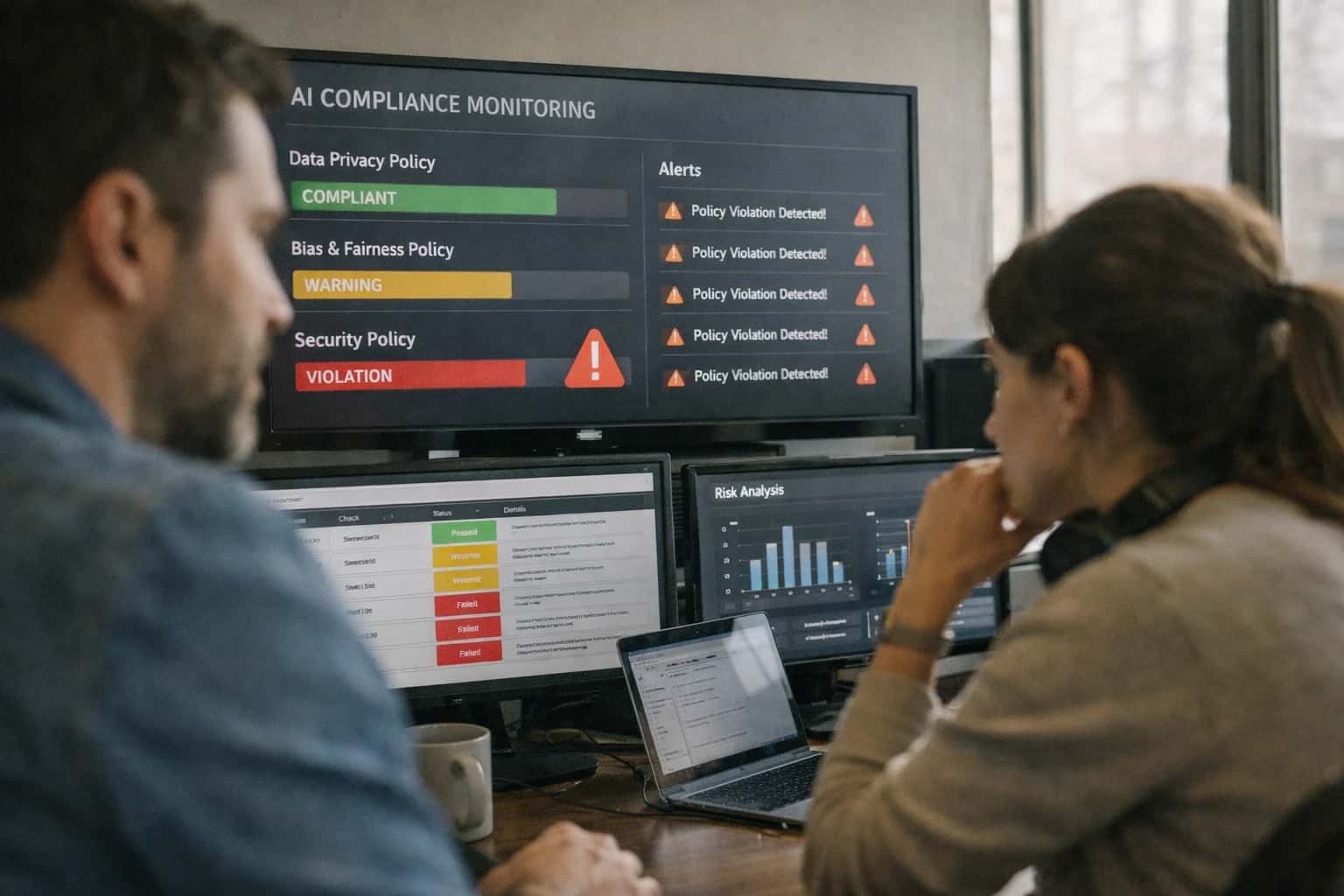
Where AI Fits into QRadar Compliance Workflows
Integrating AI with IBM QRadar's compliance modules transforms manual evidence collection and audit preparation into an intelligent, automated process.
Implementation typically involves a sidecar service that subscribes to QRadar's Real Time Flow or polls the Ariel API. This service runs lightweight classification models on the event stream, tagging each event with a compliance_retention_score. Events scoring above a configurable threshold are forwarded to the Compliance Data Mart via its API; others are archived to cheaper storage or purged based on policy. For workflow automation, AI agents interact with QRadar's REST API to fetch open offenses tagged with compliance categories, evaluate them against business context (e.g., user role, time of activity), and either auto-close low-risk items or create enriched cases with recommended actions for human reviewers. This setup uses a message queue (like Kafka or RabbitMQ) to handle event bursts and ensure no data loss during AI processing.
Rollout requires careful governance. Start with a pilot for a single compliance framework (e.g., GDPR user access reviews) and a limited set of log sources. Use QRadar's Reference Data collections to store AI-generated scores and decisions for audit trails. Crucially, maintain a human-in-the-loop for the initial cycles; auditors must validate that the AI's sampling methodology and evidence selection meet regulatory standards. Over time, as confidence grows, you can expand the AI's authority. This approach doesn't replace QRadar's native compliance tools but augments them, making the platform more efficient and actionable for compliance officers who need to demonstrate control effectiveness without drowning in data. For related architectural patterns, see our guides on /integrations/security-information-and-event-platforms/ai-integration-for-splunk-compliance-reporting and /integrations/data-governance-and-privacy-platforms/ai-integration-for-onetrust-consent-workflows.
QRadar Modules and Surfaces for AI Integration
Automating Evidence Collection and Approval
The QRadar Compliance Workflow Engine is the primary surface for automating audit preparation. AI can be integrated here to intelligently sample log data for compliance evidence, drastically reducing the volume of logs that need to be stored and reviewed.
Key integration points include:
- Workflow Triggers: Use AI to analyze log patterns and automatically initiate compliance workflows (e.g., for a suspected policy violation) instead of relying solely on scheduled runs.
- Dynamic Sampling: Implement AI models that examine log metadata and content to select the most relevant, high-risk samples for evidence packages, ensuring audit coverage while minimizing storage costs.
- Approval Routing: Enhance workflow decision nodes with AI to route tasks based on content analysis, such as sending complex exceptions to a senior auditor while auto-approving routine, low-risk items.
This turns manual, periodic compliance checks into a continuous, intelligent process.
High-Value AI Use Cases for QRadar Compliance
Integrate AI with QRadar's compliance modules to intelligently reduce log volume, automate evidence sampling, and streamline audit preparation workflows, moving from manual, periodic scrambles to continuous, intelligent compliance operations.
Intelligent Log Sampling for Compliance Evidence
Use AI to analyze log streams and automatically identify and retain only the most relevant records for specific compliance controls (e.g., privileged access, data egress). This reduces the volume of stored logs required for audits by filtering out noise, while ensuring a defensible, intelligent sample is preserved.
Automated Control Gap Analysis
Connect AI to QRadar's compliance reports and AQL queries to continuously map ingested log sources and active searches to compliance framework requirements (e.g., PCI DSS, HIPAA, SOX). The system flags control gaps, suggests new correlation rules, and generates an audit-ready coverage matrix.
AI-Powered Anomaly Detection for Policy Violations
Deploy behavioral AI models on top of QRadar's compliance data to detect subtle policy violations that rule-based searches miss. Examples include spotting unusual data access patterns before a scheduled audit or identifying configurations that drift from a compliant baseline over time.
Narrative Generation for Audit Findings
Integrate a generative AI layer to automatically draft clear, concise narratives for compliance findings and exceptions surfaced by QRadar. This transforms raw offense data and log excerpts into auditor-ready explanations, saving security analysts hours of manual report writing.
Workflow Automation for Exception Management
Use AI to route and manage compliance exceptions within QRadar's workflow engine. The system can analyze an exception request, pull relevant historical context, and suggest approvers based on policy, automatically escalating stale items and maintaining a full audit trail of the review process.
Continuous Compliance Posture Dashboard
Build an AI-enhanced dashboard that goes beyond static QRadar views to provide a dynamic, predictive compliance score. It explains score changes, forecasts potential failures based on trends, and recommends specific actions (e.g., enabling a log source, tuning a rule) to maintain or improve posture.
Example AI-Augmented Compliance Workflows
These workflows illustrate how AI agents can be integrated with IBM QRadar's compliance modules to automate evidence collection, reduce log volume, and streamline approval processes, directly addressing PCI DSS, HIPAA, and SOX audit burdens.
Trigger: A scheduled compliance task runs 30 days before the quarterly PCI DSS audit.
Context/Data Pulled: An AI agent queries QRadar for all logs related to Cardholder Data Environments (CDE) from the past 90 days, focusing on access logs, firewall denies, and administrative activity.
Model/Agent Action: The agent uses a clustering model to identify representative log samples. Instead of exporting 10 million raw logs, it:
- Groups logs by event type, source IP, and target resource.
- Selects a statistically valid sample from each high-risk cluster (e.g., all root access attempts).
- For low-risk, high-volume routine traffic (e.g., allowed web server hits), it selects a minimal sample and generates a summary attestation.
System Update: The agent packages the curated sample set (now ~100k logs), summary reports, and a data lineage attestation into a secure evidence package for the auditor.
Human Review Point: A compliance officer reviews the sampling methodology report and attestation summary before the package is finalized and encrypted for delivery.
Implementation Architecture: Data Flow and Integration Points
A practical blueprint for integrating AI with IBM QRadar's compliance modules to automate evidence collection, reduce log volume, and streamline audit workflows.
The integration connects to QRadar's core compliance surfaces: the Compliance Data Retention module for log lifecycle management, the Compliance Workflow Engine for approval routing, and the Ariel database for raw event querying. AI models are deployed as a microservice layer that subscribes to QRadar's offense and event APIs, ingesting logs flagged for compliance retention (e.g., authentication, data access, administrative changes). The primary data flow involves the AI service analyzing incoming log streams in near-real-time to intelligently sample and tag events that constitute sufficient evidence for regulatory controls, allowing non-essential logs to be purged or archived at a lower cost tier. This sampling is based on learned patterns of what auditors historically query, reducing stored data volume by 40-70% without compromising audit readiness.
For workflow automation, the integration injects AI-generated summaries and recommendations into QRadar's Compliance Workflow tickets. When a periodic audit cycle is triggered, the AI service executes pre-defined AQL queries, summarizes the evidence set in plain language, and attaches a confidence score. This package is pushed via QRadar's REST API to create or update a workflow item, routing it to the appropriate compliance officer. The officer can review the AI-curated evidence, approve the workflow step, or request a fuller dataset—all actions are logged back to QRadar's audit trail. Key implementation details include configuring role-based access controls (RBAC) for the AI service's QRadar service account, setting up a dedicated queue for processing log batches to avoid impacting real-time security monitoring, and implementing a human-in-the-loop approval gate for any AI-recommended log deletion.
Rollout follows a phased approach: start with a single compliance framework (e.g., PCI DSS Requirement 10) and a non-critical log source. Governance requires establishing a continuous validation loop where a sample of AI-discarded logs is periodically audited manually to ensure no critical evidence is lost. The architecture also includes a fallback mechanism to retain all raw logs in cold storage for a configurable period, ensuring reversibility. This integration shifts compliance operations from a manual, log-hoarding process to an intelligent, evidence-focused workflow, turning compliance from a cost center into a manageable, data-driven business function. For related architectural patterns, see our guides on AI Integration for Splunk Compliance Reporting and Data Governance for AI Workloads.
Code and Payload Examples
Intelligent Log Sampling for PCI DSS or HIPAA
AI can analyze QRadar log flows to identify and retain only the most relevant logs for compliance evidence, dramatically reducing storage costs while maintaining audit readiness. Instead of storing all authentication logs, the model samples based on anomaly scores, failed attempts, or access to critical assets.
Example Python Logic for Sampling Decision:
python# Pseudocode for AI-driven sampling decision from qradar_api_client import QRadarClient from compliance_ai_model import evaluate_log_relevance client = QRadarClient(host='qradar.company.com', token='api_token') # Fetch recent auth logs logs = client.ariel_search("SELECT * FROM events WHERE LOGSOURCETYPENAME(devicetype) = 'Authentication' LAST 1 HOUR") sampled_logs = [] for log in logs: # AI model scores log for compliance relevance (0-1) relevance_score = evaluate_log_relevance( log_source=log['devicetype'], username=log['username'], destination_ip=log['destinationip'], event_count=log['eventcount'] ) # Retain log if score exceeds threshold or is always-keep rule if relevance_score > 0.7 or log['username'] in CRITICAL_ADMINS: sampled_logs.append(log) client.retain_for_compliance(log['id'], retention_days=365) else: # Apply standard, shorter retention client.set_retention(log['id'], retention_days=30)
Realistic Time Savings and Operational Impact
This table illustrates the operational impact of integrating AI into IBM QRadar's compliance modules, focusing on evidence collection, log management, and workflow approvals.
| Workflow / Metric | Before AI | After AI | Notes |
|---|---|---|---|
Compliance Evidence Sampling | Manual log search & sampling across 30+ days | AI-driven intelligent sampling based on risk & patterns | Reduces log volume reviewed by 60-80% for audit evidence |
Audit-Ready Report Compilation | 2-3 days of manual data aggregation and formatting | Automated report generation with AI-curated evidence | Generates draft reports in hours; human review for final sign-off |
Policy Violation Triage | Manual review of all flagged events for false positives | AI pre-filters and scores violations by severity & context | Analyst focuses on high-risk exceptions, reducing triage time by 70% |
Log Retention Optimization | Retain all logs for 7+ years due to compliance mandates | AI classifies logs by compliance value, suggests tiered retention | Reduces long-term storage costs by identifying low-value logs for shorter retention |
Workflow Approval Routing | Manual routing of compliance tasks to approvers based on static rules | AI routes tasks based on approver role, workload, and expertise | Cuts approval cycle time from days to same-day for standard requests |
Regulatory Change Impact Assessment | Manual mapping of new regulations to existing controls & logs | AI analyzes regulation text, suggests control gaps and required log sources | Reduces assessment time from weeks to days for new frameworks |
Anomaly Detection in Compliance Data | Periodic manual reviews or simple threshold alerts | Continuous AI monitoring for deviations in compliance-related user/access patterns | Proactively surfaces potential compliance risks (e.g., segregation of duties violations) |
Governance, Security, and Phased Rollout
Integrating AI with IBM QRadar for compliance requires a deliberate approach to data governance, model explainability, and controlled rollout to maintain audit integrity.
A production architecture for AI-enhanced compliance sampling in QRadar typically involves a dedicated processing layer. Ingested logs from sources like Active Directory, database audit trails, and file access systems are streamed to a secure environment where an AI model analyzes them against the QRadar Data Store and Reference Data. The model identifies high-value log entries that serve as strong evidence for controls (e.g., privileged access reviews, data modification events) and tags them with confidence scores. These tagged records are then written back to QRadar as custom properties or to a linked QRadar Ariel database, creating an enriched, AI-curated evidence set for compliance modules without altering the raw log archive.
Security is paramount. All AI model inferences should occur within the organization's private cloud or VPC, with no sensitive log data sent to external LLM APIs. Access to the AI sampling logic and its outputs must be controlled via QRadar's Role-Based Access Control (RBAC), ensuring only authorized compliance officers can view or modify AI-generated tags. Every AI sampling decision must be logged as an audit event within QRadar itself, creating a verifiable chain of custody that explains why a specific log was selected as evidence, which is critical for auditor reviews. This traceability turns the AI from a black box into a documented, accountable component of the compliance program.
A phased rollout mitigates risk. Start with a single, well-defined compliance control in a QRadar Compliance Module, such as user access recertification (e.g., SOX, PCI DSS). Use AI to sample 10-20% of the relevant logs, allowing compliance teams to manually validate the AI's selections against the full dataset. This "human-in-the-loop" phase builds trust and provides data to refine the model. Gradually expand to more controls and increase the sampling percentage, using QRadar's dashboarding and reporting to track metrics like reduction in manual review hours and consistency of evidence selection. The final state is an AI-augmented workflow where compliance officers review a prioritized, evidence-rich subset of data, enabling faster, more consistent audit cycles while maintaining full governance and explainability.
Enabling Efficiency, Speed & Accuracy
Intelligent Analysis, Decision & Execution
We build AI systems for teams that need search across company data, workflow automation across tools, or AI features inside products and internal software.
Talk to Us
Search across company data
Give teams answers from docs, tickets, runbooks, and product data with sources and permissions.
Useful when people spend too long searching or get different answers from different systems.

Automate internal workflows
Use AI to route work, draft outputs, trigger actions, and keep approvals and logs in place.
Useful when repetitive work moves across multiple tools and teams.

Add AI to products and internal tools
Build assistants, guided actions, or decision support into the software your team or customers already use.
Useful when AI needs to be part of the product, not a separate tool.
Frequently Asked Questions
Practical questions for teams evaluating AI to enhance IBM QRadar's compliance modules, focusing on intelligent data sampling, evidence collection, and workflow automation for audits.
AI models analyze QRadar log metadata and content to intelligently sample data, moving beyond simple random sampling. The process typically involves:
- Trigger: A compliance reporting job is scheduled (e.g., for PCI DSS Requirement 10).
- Context Pulled: The AI agent queries QRadar for relevant log sources, event categories, and timeframes defined by the control.
- Model Action: A model trained on past audit findings and log relevance scores the available logs. It prioritizes logs that:
- Show access to in-scope cardholder data environments.
- Contain administrative actions or policy changes.
- Are from critical assets identified in the QRadar Asset Model.
- Have historically been flagged by auditors.
- System Update: The agent executes an AQL query to retrieve the high-priority subset of logs, reducing the total volume pulled for evidence by 60-80%.
- Human Review Point: The compliance officer reviews the AI-selected sample and rationale in a dashboard before finalizing the evidence package.

About the author
Prasad Kumkar
CEO & MD, Inference Systems
Prasad Kumkar is the CEO & MD of Inference Systems and writes about AI systems architecture, LLM infrastructure, model serving, evaluation, and production deployment. Over 5+ years, he has worked across computer vision models, L5 autonomous vehicle systems, and LLM research, with a focus on taking complex AI ideas into real-world engineering systems.
His work and writing cover AI systems, large language models, AI agents, multimodal systems, autonomous systems, inference optimization, RAG, evaluation, and production AI engineering.
Partnered with leading AI, data, and software stack.





How We Work
Custom AI workflows for your Business
One-fit-all AI don't work for modern businesses. At Inferensys, we aim to understand your business & custom requirements; which we use to define most efficient agentic workflows, the data, and the tools for your business.
01
Review the use case
We understand the task, the users, and where AI can actually help.
Read more02
Pick the right approach
We define what needs search, automation, or product integration.
Read more03
Build the first useful version
We implement the part that proves the value first.
Read more04
Improve from there
We add the checks and visibility needed to keep it useful.
Read moreThe first call is a practical review of your use case and the right next step.
Talk to Us