AI predictive analytics integrates directly with Zenoti's Data Warehouse and Reporting APIs, which consolidate transactional data, client profiles, service history, and marketing performance across all locations. This provides a single source of truth for building models that forecast daily/weekly revenue, predict client demand by service category, and analyze the lifetime value (LTV) impact of marketing campaigns. Instead of relying on static reports, AI models consume this cleansed, enterprise-grade data to generate forward-looking insights that feed back into operational modules like staff scheduling, inventory procurement, and campaign management.

Integration
AI Predictive Analytics for Zenoti
Architecture for building advanced forecasting models on top of Zenoti's data warehouse, predicting revenue, client demand, and marketing ROI for enterprise spa and salon chains.
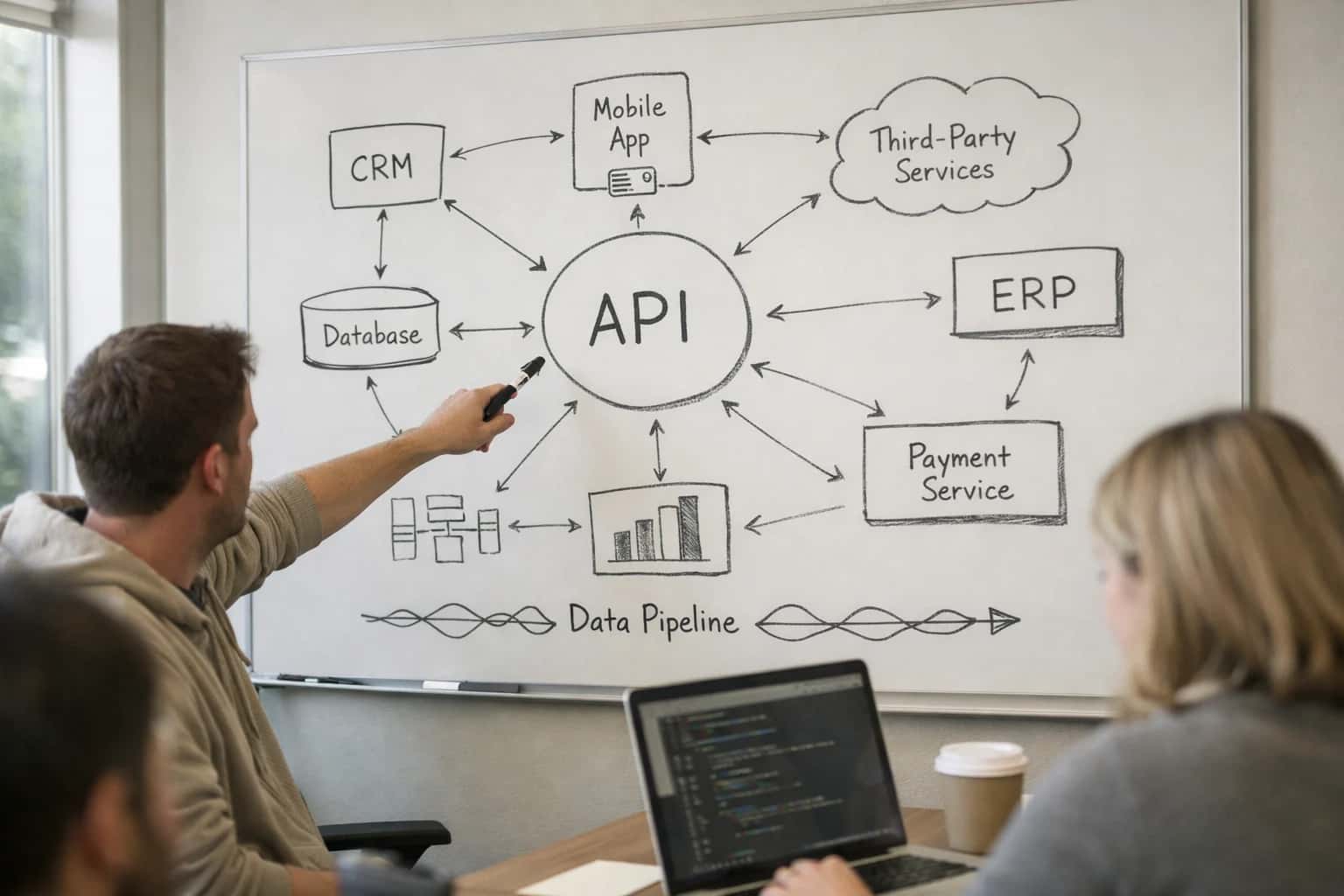
ARCHITECTURE FOR ENTERPRISE SPA AND SALON CHAINS
Where AI Predictive Analytics Fits in Zenoti's Enterprise Stack
A technical blueprint for deploying predictive AI models on Zenoti's unified data layer to forecast revenue, optimize staffing, and maximize marketing ROI.
Implementation involves deploying lightweight inference services that query Zenoti's APIs for near-real-time data or batch-process the data warehouse exports. For example, a demand forecasting model can pull historical appointment data, seasonality factors, and local event calendars to predict booking volume for the next 14 days. These predictions can then trigger automated workflows via Zenoti's Automation Studio—such as adjusting therapist shift templates or generating targeted promotional offers in under-utilized time slots. Similarly, a marketing ROI model can attribute client spend to specific campaign sources (tracked in Zenoti's Marketing Hub) and predict the optimal budget allocation for channels like email, SMS, or paid social.
Rollout requires a phased approach, starting with a single predictive KPI (e.g., no-show probability) for a pilot location group. Governance is critical: all model outputs should be logged in an audit table within Zenoti or a sidecar database, and key forecasts should be surfaced in a custom dashboard via Zenoti's Embedded Analytics for manager review. This ensures predictions drive assisted decision-making without fully automating high-stakes actions. For enterprise chains, this architecture centralizes intelligence while allowing for location-specific model tuning, enabling consistent, data-driven operations across hundreds of spas or salons. For related implementation patterns, see our guides on AI for Staff Scheduling in Fresha and AI for Revenue Management in Salon Software.
ARCHITECTURAL BLUEPOINTS FOR ENTERPRISE SPA & SALON CHAINS
Key Zenoti Data Surfaces for Predictive Modeling
Client Profiles and Lifetime Value
Zenoti's Client and Membership objects form the core of predictive lifetime value (LTV) and churn models. Key fields include:
- Client Demographics & Preferences: Service history, average spend, preferred staff, frequency, and stored payment methods.
- Membership Status & Usage: Active tier, renewal date, monthly/annual revenue commitment, and utilization rate against entitlements.
- Engagement Signals: Email open rates, SMS response history, review submission frequency, and app login activity.
Predictive Use: Feed this data into a time-series model to forecast 90-day LTV and flag at-risk members 30-45 days before likely churn. Integration is via Zenoti's GET /api/v1/clients and GET /api/v1/memberships endpoints, with incremental syncs to a cloud data warehouse for model training.
ARCHITECTURE FOR ZENOTI DATA WAREHOUSE
High-Value Predictive Use Cases for Spa & Salon Chains
Deploy production-ready forecasting models on top of Zenoti's enterprise data to predict revenue, optimize staffing, and maximize marketing ROI across multi-location chains.
01
Multi-Location Revenue Forecasting
Builds a centralized model on Zenoti's aggregated sales, appointment, and membership data to generate location-specific and chain-wide revenue forecasts. Integrates with Zenoti's reporting API to push daily predictions into manager dashboards, enabling proactive budget adjustments.
Batch -> Real-time
Forecast Cadence
02
Therapist Demand & Staffing Optimization
Predicts hourly demand for specific service categories (e.g., hair color, facials) and therapist skill levels. The model ingests Zenoti's historical booking patterns, seasonality, and local event data. Outputs feed into Zenoti's team scheduling module via API to recommend optimal shift plans and break schedules, reducing under/over-staffing.
1 sprint
Implementation Timeline
03
Client Churn & Retention Scoring
Scores each client in Zenoti's database for churn risk based on visit frequency, spend changes, and engagement metrics. Automates personalized win-back campaigns by triggering Zenoti's marketing automation workflows with tailored offers for high-risk segments, directly improving lifetime value.
04
Marketing Campaign ROI Prediction
Analyzes past campaign performance from Zenoti's marketing hub alongside client attribution data. Predicts the likely ROI of planned email/SMS campaigns before they launch, allowing marketers to adjust audience segments, offers, and budgets within Zenoti to maximize return.
05
Retail Inventory & Replenishment Forecasting
Connects to Zenoti's product sales and inventory modules to predict stock-out dates for top-selling retail items (e.g., shampoos, skincare). Generates automated purchase order suggestions based on lead times and predicted demand, syncing recommendations back to Zenoti's vendor management workflows.
Hours -> Minutes
Replenishment Planning
06
Membership Utilization & Renewal Forecasting
Models usage patterns for Zenoti membership and package holders to predict monthly redemption rates and renewal likelihood. Flags underutilized members for proactive check-ins and identifies optimal timing for upgrade offers, feeding insights directly into the membership management dashboard.
PREDICTIVE ANALYTICS ARCHITECTURE
Example AI Forecasting Workflows for Zenoti
These workflows illustrate how to connect AI forecasting models to Zenoti's data warehouse and APIs to automate revenue, demand, and marketing predictions for multi-location spa and salon enterprises.
Trigger: Scheduled job runs nightly after Zenoti's ETL syncs daily transaction data to the data warehouse.
Context/Data Pulled:
- Historical daily revenue for the last 730 days, segmented by location, service category (hair, skin, massage), and channel (online, walk-in, call).
- Upcoming appointment book for the next 14 days, pulled via the
GET /appointmentsAPI, filtered by confirmed status. - External factors: local weather forecast for each location's zip code, day-of-week, and holiday calendar.
Model or Agent Action: A time-series forecasting model (e.g., Prophet or custom LSTM) is executed. The model outputs:
- A predicted daily revenue curve for each location for the next 14 days.
- A confidence interval and flag for any day where the forecast deviates >15% from the historical pattern for that day-of-week.
System Update or Next Step:
The forecast is written to a dedicated ai_forecasts table in the analytics database. A summary alert is generated for the regional manager's dashboard via Zenoti's report notification system if a significant deviation is flagged.
Human Review Point: The regional manager reviews flagged days in the morning briefing report, cross-referencing with local events or staffing changes to validate the AI's alert.
PRODUCTION-READY BLUEPRINT
Implementation Architecture: From Zenoti Data to Forecast Insights
A technical walkthrough of building and deploying predictive models on Zenoti's enterprise data warehouse for multi-location spa and salon chains.
The foundation is a secure, read-only connection to Zenoti's Data Warehouse API or a scheduled export to a cloud storage bucket (e.g., AWS S3). This pipeline ingests key objects nightly: Appointment history, Client profiles with lifetime value, Service menus with pricing, Product sales, Membership status, and Location performance metrics. The raw data is transformed in a dedicated analytics environment (like Snowflake or BigQuery) where feature engineering creates model-ready datasets—for example, calculating 14-day rolling booking velocity, client visit cadence, and seasonal service demand indices per location.
Our implementation uses a modular forecasting service. One model predicts 30-90 day revenue by location and service category using historical trends and promotional calendars. A separate model forecasts client demand for specific treatments, enabling proactive staff scheduling via Zenoti's Scheduling API. A third model analyzes marketing campaign ROI by attributing client spend to source codes. These models run on a weekly cadence, and their outputs—forecasted figures and confidence intervals—are written back to a dedicated table in the analytics layer. A lightweight orchestration service (e.g., Apache Airflow) manages this pipeline, handling retries and logging all data lineage.
For rollout, forecasts are surfaced through two primary channels. First, via a custom dashboard embedded in Zenoti using its iFrame or widget capabilities, giving regional managers a native view of predictions. Second, through automated insight delivery via Zenoti's notification system or email; for example, a daily digest to a location manager: "Forecast indicates high demand for massages next Thursday—consider adding a therapist shift." Governance is critical: all model inputs and outputs are versioned and auditable. We establish a human-in-the-loop review step where major forecast-driven decisions (like hiring) are flagged for manager approval within Zenoti's task system, ensuring AI augments rather than automates strategic calls.
AI PREDICTIVE ANALYTICS
Code & Payload Examples for Zenoti Data Integration
Revenue Forecasting with Zenoti Data
This model predicts daily/weekly revenue by location using historical transaction data from Zenoti's transactions and appointments APIs. The key is joining service revenue, retail sales, and membership payments, then enriching with calendar events and weather data for accuracy.
Example Python payload for data extraction:
pythonimport requests import pandas as pd # Zenoti API call for transaction data headers = {'Authorization': 'Bearer YOUR_API_KEY'} params = { 'from_date': '2024-01-01', 'to_date': '2024-03-31', 'center_id': '12345', # Multi-location loop 'include_details': 'true' # Get line-item breakdown } response = requests.get( 'https://api.zenoti.com/v1/transactions', headers=headers, params=params ) transactions_data = response.json() # Transform: Flatten nested 'details' for service vs. product revenue df = pd.json_normalize(transactions_data['transactions'], record_path=['details'], meta=['transaction_id', 'center_id', 'created_date'])
The transformed dataset feeds into a Prophet or LightGBM model to forecast future revenue, accounting for seasonality (weekends, holidays) and local events.
AI-POWERED FORECASTING FOR ENTERPRISE SPAS AND SALONS
Realistic Time Savings and Business Impact
A practical view of how integrating predictive AI models with Zenoti's data warehouse transforms strategic planning and daily operations for multi-location businesses.
| Metric | Before AI | After AI | Notes |
|---|---|---|---|
Revenue forecasting for next quarter | Manual spreadsheet analysis, 2-3 days per location | Automated model runs with scenario planning, 2-3 hours total | Aggregates Zenoti transaction, booking, and client data; enables what-if analysis for promotions |
Marketing campaign ROI prediction | Post-campaign analysis only, 1-2 week lag | Pre-campaign predictive scoring and spend guidance | Uses historical campaign data from Zenoti Marketing Hub to forecast channel performance |
Staffing demand prediction (weekly) | Manager intuition based on last year's calendar | AI-driven forecasts by service type and location, 90%+ accuracy | Integrates with Zenoti's scheduling API to recommend optimal shift patterns and reduce over/under-staffing |
Inventory reorder point calculation | Manual stock checks and generic reorder rules | Dynamic predictions based on treatment volume and seasonal trends | Connects to Zenoti's product usage and retail sales data to prevent stockouts of high-margin items |
Client churn risk identification | Reactive analysis after membership cancellation | Proactive scoring of at-risk clients 30-60 days in advance | Leverages visit frequency, spend changes, and feedback from Zenoti client profiles to trigger retention workflows |
Service demand forecasting for new locations | Benchmarking against similar sites, high variance | Model trained on existing location data to predict adoption curves | Uses Zenoti's centralized business intelligence to de-risk expansion and set realistic targets |
Capital expenditure planning (e.g., new equipment) | Annual budget based on static growth assumptions | Data-driven projections tied to forecasted service capacity and revenue | Aligns long-term investments with AI-predicted business trajectories from Zenoti's operational data |
ENTERPRISE-GRADE IMPLEMENTATION
Governance, Security, and Phased Rollout
Deploying predictive analytics on Zenoti requires a structured approach to data governance, model security, and controlled rollout across locations.
Production implementations connect to Zenoti's Data Warehouse or Reporting APIs via a dedicated service account with scoped, read-only access to financial, appointment, and client history data. All data extraction occurs over encrypted channels, with PII hashed or tokenized before model ingestion. The AI service itself is deployed in your private cloud or VPC, ensuring predictions and model weights never leave your controlled environment. Audit logs track every data pull, model run, and prediction write-back to Zenoti's custom objects or external dashboards.
A phased rollout is critical for adoption and model calibration. Start with a single-location pilot, focusing on a high-confidence use case like weekly revenue forecasting. Use this phase to validate data pipelines, tune model accuracy against actuals, and establish a feedback loop where location managers review forecasts and provide ground-truth corrections. The second phase expands to a region or cluster of similar locations, introducing more complex models like client demand prediction for service categories. Finally, roll out to the entire enterprise, enabling centralized vs. location-specific models and integrating predictions into Zenoti's automated marketing workflows and corporate reporting dashboards.
Governance is maintained through a model registry and a central analytics steering committee. Each predictive model (e.g., marketing ROI, no-show risk) has a defined business owner, a retraining schedule based on Zenoti's data refresh cycles, and a performance degradation alert. Before any prediction influences an automated action—like adjusting a marketing budget—it should pass through a human-in-the-loop approval step or a business rule layer within Zenoti's workflow engine. This ensures forecasts guide decisions without creating unvetted automation risks.
Enabling Efficiency, Speed & Accuracy
Intelligent Analysis, Decision & Execution
We build AI systems for teams that need search across company data, workflow automation across tools, or AI features inside products and internal software.
Talk to Us
Search across company data
Give teams answers from docs, tickets, runbooks, and product data with sources and permissions.
Useful when people spend too long searching or get different answers from different systems.
Enterprise searchRAGPermissions
Read more
Automate internal workflows
Use AI to route work, draft outputs, trigger actions, and keep approvals and logs in place.
Useful when repetitive work moves across multiple tools and teams.
AI agentsWorkflow automationGovernance
Read more
Add AI to products and internal tools
Build assistants, guided actions, or decision support into the software your team or customers already use.
Useful when AI needs to be part of the product, not a separate tool.
AI integrationDecision supportModel routing
Read moreIMPLEMENTATION AND ARCHITECTURE
Frequently Asked Questions on Zenoti AI Predictive Analytics
Common technical and strategic questions for enterprise spa and salon chains building advanced forecasting models on Zenoti's data warehouse.
A production integration uses a dedicated service account with scoped API permissions, not individual user credentials.
Typical Architecture:
- Extract Layer: A scheduled job (e.g., Airflow, Fivetran) pulls aggregated datasets from Zenoti's reporting APIs or, for enterprise clients, directly from the data warehouse (Snowflake, Redshift, BigQuery) using provided credentials.
- Staging Area: Data lands in a secure cloud storage bucket (S3, GCS) or a dedicated analytics database.
- Model Layer: Your AI/ML platform (Databricks, SageMaker, Vertex AI) accesses this staged data via private networking or VPC endpoints. Models never query Zenoti's live operational database.
- Load Predictions: Forecast outputs (e.g., predicted revenue, client demand scores) are written back to a table in your analytics environment. A separate, idempotent process pushes actionable insights (like recommended staffing levels) into Zenoti via its REST API to populate custom fields or reports.
Key Security Controls:
- Principle of least privilege for API tokens.
- All data in transit (TLS 1.3+) and at rest (encrypted).
- Audit logs for all data access and model predictions.

About the author
Prasad Kumkar
CEO & MD, Inference Systems
Prasad Kumkar is the CEO & MD of Inference Systems and writes about AI systems architecture, LLM infrastructure, model serving, evaluation, and production deployment. Over 5+ years, he has worked across computer vision models, L5 autonomous vehicle systems, and LLM research, with a focus on taking complex AI ideas into real-world engineering systems.
His work and writing cover AI systems, large language models, AI agents, multimodal systems, autonomous systems, inference optimization, RAG, evaluation, and production AI engineering.
LinkedIn
Limited slotsGet a Free AI Consultation
Partnered with leading AI, data, and software stack.





How We Work
Custom AI workflows for your Business
One-fit-all AI don't work for modern businesses. At Inferensys, we aim to understand your business & custom requirements; which we use to define most efficient agentic workflows, the data, and the tools for your business.
01
Review the use case
We understand the task, the users, and where AI can actually help.
Read more02
Pick the right approach
We define what needs search, automation, or product integration.
Read more03
Build the first useful version
We implement the part that proves the value first.
Read more04
Improve from there
We add the checks and visibility needed to keep it useful.
Read moreThe first call is a practical review of your use case and the right next step.
Talk to Us