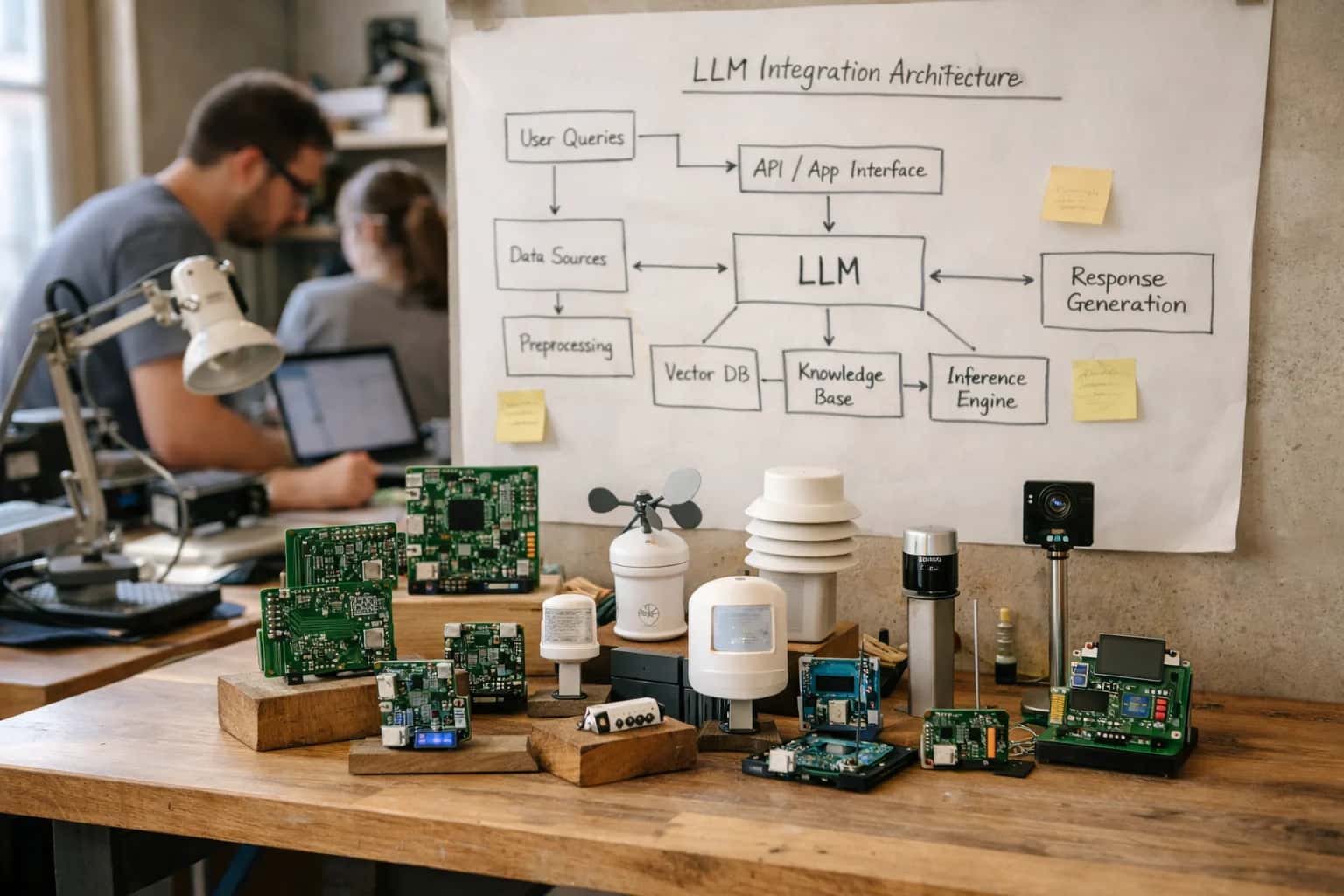
AI for revenue management integrates at three key layers of your salon software stack: the data layer, the automation layer, and the insight layer. At the data layer, AI models connect via API to your platform's core objects—Appointment, Client, Service, Product, and Transaction records—to build a unified view of business performance. This real-time feed powers the automation layer, where AI agents trigger actions like dynamic pricing adjustments, personalized win-back SMS sequences, or automated purchase orders for retail stock based on predicted demand. The insight layer surfaces daily, actionable recommendations directly into manager dashboards or via Slack/email, moving beyond static reports to prescriptive guidance.

Integration
AI for Revenue Management in Salon Software
A technical blueprint for integrating AI into Fresha, Zenoti, Mangomint, and Vagaro to analyze appointment book density, service mix, and retail attachment, providing daily actionable insights to salon owners.
ARCHITECTURE & ROLLOUT
Where AI Fits into Salon Revenue Operations
A technical blueprint for embedding AI into your salon or spa management platform to drive predictable, optimized revenue.
A production implementation typically follows a phased rollout. Phase 1 focuses on low-risk, high-ROI workflows like predictive no-show scoring and automated confirmation sequences, using your platform's webhooks and communication APIs (e.g., Fresha's Booking API and SMS/Email endpoints). Phase 2 introduces prescriptive analytics, such as AI-driven service mix optimization that analyzes appointment book density and average ticket data to recommend scheduling changes or retail bundle promotions. Phase 3 tackles cross-system orchestration, where an AI agent acts as a central controller, syncing data between your salon software and accounting (QuickBooks), payroll, or supplier portals to close the operational loop.
Governance is critical. Implement role-based access controls (RBAC) so AI-generated insights and actions are scoped appropriately—owners see financial forecasts, front-desk staff see daily task lists. All AI-triggered communications should be logged in the client's profile for audit, and key decisions (like major pricing changes) should require a human-in-the-loop approval step within the platform's workflow engine. This ensures AI augments your team's expertise without creating compliance or brand voice risks.
For salon groups and franchises, the architecture scales by deploying a centralized AI model that ingests aggregated, anonymized data from each location's software instance (e.g., multiple Zenoti tenants). This enables benchmarking, predicts regional demand shifts, and standardizes high-impact automations like membership renewal campaigns, while preserving each location's operational autonomy. The result is not a replacement of your core platform, but an intelligent overlay that makes your existing investment in Fresha, Zenoti, Mangomint, or Vagaro significantly more valuable.
WHERE AI CONNECTS TO SALON PLATFORM DATA
Key API Surfaces for Revenue Intelligence
Real-Time Booking and Utilization Data
The core of revenue intelligence is understanding appointment density and service mix. AI models connect to the platform's calendar APIs to analyze patterns.
Key Endpoints to Integrate:
GET /appointmentswith filters for date ranges, service types, and staff members to retrieve historical booking data.GET /resources(rooms, chairs, equipment) to assess asset utilization alongside bookings.- Webhooks for
appointment.created,appointment.updated, andappointment.canceledto enable real-time analysis and dynamic waitlist management.
AI Use Case: By processing this data, an AI agent can identify under-booked time slots, predict peak demand for specific services, and recommend optimal booking rules to maximize daily revenue per chair or room.
FOR SALON AND SPA MANAGEMENT PLATFORMS
High-Value AI Revenue Use Cases
Integrate AI directly into your Fresha, Zenoti, Mangomint, or Vagaro platform to move revenue management from reactive reporting to proactive, daily optimization. These use cases connect to your appointment, service, and retail APIs to generate actionable insights.
01
Dynamic Pricing & Package Optimization
AI models analyze historical booking rates, local competitor pricing, and service demand signals from your platform's calendar API. The system suggests real-time adjustments to service menu pricing and creates personalized package offers for high-value client segments, directly within the platform's service management module.
Batch -> Real-time
Pricing Strategy
02
Intelligent Retail Attachment at Checkout
At the moment of payment in your POS, an AI agent reviews the client's service history, past purchases, and current inventory levels. It surfaces 1-2 highly relevant retail product recommendations to the front-desk staff, increasing average transaction value. Integrates with the platform's transaction and client profile APIs.
1 sprint
To implement
03
Predictive Churn & Automated Win-Back
Continuously scores client profiles based on visit frequency, spend changes, and engagement metrics pulled from your CRM module. Identifies at-risk clients and automatically triggers personalized win-back campaigns (e.g., a special offer via email/SMS) using the platform's marketing automation hooks, turning analytics into direct revenue recovery.
Same day
Campaign activation
04
Service Mix & Staff Utilization Analytics
An AI copilot analyzes your appointment book density, therapist utilization rates, and service profitability data. It provides daily, actionable insights to owners via a dashboard or digest, recommending shifts in service promotion or staff scheduling to maximize revenue per available hour. Built on top of the platform's reporting APIs.
Hours -> Minutes
Insight generation
05
Automated Membership Renewal & Upgrade
For platforms with membership modules (e.g., Zenoti, Vagaro), AI predicts optimal renewal timing for each member based on usage patterns. It drafts and schedules personalized upgrade communications, highlighting underutilized benefits, and can automate tier-upgrade workflows within the membership management system.
06
Smart Inventory Reordering & Bundling
Connects to product sales and supplier data within your platform's inventory module. AI predicts stock-outs for retail and back-bar items, automatically generates purchase orders, and suggests profitable product bundles based on co-purchase trends, turning inventory management into a revenue-driving operation.
Batch -> Real-time
Reorder logic
ACTIONABLE DAILY INSIGHTS
Example AI Revenue Workflows
These are concrete, API-driven workflows that connect AI models directly to your salon software's data to generate revenue-focused actions. Each flow is triggered by platform events, uses historical and real-time data, and results in a system update or a prioritized task for staff.
Trigger: Scheduled daily job (e.g., 7 AM local time).
Context/Data Pulled:
- Yesterday's appointment data from the
AppointmentsAPI (service, therapist, duration, price). - Historical no-show and late-cancel rates by client segment.
- Current week's booking density from the
CalendarAPI. - Retail attachment rates by service type from the
SalesAPI.
Model/Agent Action: An AI agent analyzes the data to identify top revenue risks and opportunities:
- Flags clients booked today with a high predicted no-show score, suggesting a personalized confirmation sequence.
- Identifies under-booked time slots for top-grossing therapists and suggests targeted promotions.
- Calculates missed retail upsell potential from yesterday's services and generates a list of clients to follow up with.
System Update/Next Step:
A structured report is posted to a designated Slack channel or emailed to the manager. For high-risk no-shows, the agent can automatically trigger a personalized SMS sequence via the platform's Communications API.
Human Review Point: The manager reviews the action list and can approve/override AI-suggested promotions or follow-ups with one click.
FROM RAW DATA TO ACTIONABLE INSIGHTS
Implementation Architecture: Data Flow and AI Layer
A practical blueprint for connecting AI models to your salon software's core data to generate daily revenue intelligence.
The integration architecture connects directly to your salon platform's reporting APIs and data warehouse (e.g., Zenoti's Analytics API, Fresha's Business Reports endpoint). Key data objects are ingested nightly or in near-real-time: appointment book density (filled vs. open slots per service category), service mix (revenue per category, average ticket), retail attachment rates (products sold per service), and client lifetime value segments. This raw operational data is staged in a secure cloud environment, where it is cleaned, normalized, and prepared for model inference.
The AI layer consists of two core components. First, a predictive forecasting model analyzes historical patterns and upcoming bookings to predict daily and weekly revenue, flagging potential shortfalls against targets days in advance. Second, an optimization engine uses the service mix and retail data to generate actionable insights, such as: "Thursday afternoons show a 40% under-utilization in coloring stations; consider promoting a mid-week color refresh package to your premium client segment" or "Retail attachment for skincare is 15% below salon average for facial clients; front-desk prompts are recommended." These insights are formatted as plain-language bullet points.
Outputs are delivered back into the salon owner's workflow via a dedicated dashboard (hosted separately for security) and, crucially, through platform-native channels. For example, insights can be pushed as a daily summary to the owner's mobile app via push notification, or key alerts can be written to a custom object in the salon software (like a "Daily AI Briefing" record) accessible to managers. The system includes an audit trail logging all data accesses and model outputs for compliance. Rollout is phased, starting with read-only insight generation for a single location to validate model accuracy before enabling cross-location analytics and automated campaign triggers.
This architecture ensures the AI acts as a copilot for revenue operations, not a black-box replacement. It leverages the platform's existing data model—appointments, services, clients, products—to provide context-aware recommendations that a manager can act on in minutes, turning retrospective reporting into proactive daily guidance. For a deeper look at connecting these insights to automated marketing actions, see our guide on AI for Personalized Marketing in Mangomint.
AI-ENHANCED REVENUE WORKFLOWS
Code and Payload Examples
Generating Actionable Daily Summaries
This workflow connects to the salon platform's reporting API to fetch yesterday's key metrics, then uses an LLM to generate a concise, narrative summary with prioritized recommendations for the salon owner.
Example Payload to LLM:
json{ "system_prompt": "You are a revenue analyst for a salon. Summarize key metrics and suggest 1-2 high-impact actions for today.", "user_prompt": "Yesterday's data: Revenue $4,200 (target $4,500). Top service: Balayage ($1,200). 12% no-show rate (avg 8%). Retail attachment rate 15% (goal 20%). 3 open slots tomorrow afternoon.", "temperature": 0.2 }
Expected LLM Response: "Revenue slightly below target. High no-show rate impacted yield. Action: Review yesterday's 3 no-shows and call to rebook. Action: Push retail attachment by having front desk suggest a repair mask to every color client today. Fill 3 open slots by offering a 10% discount to clients who booked a haircut in the last 90 days." This insight can be delivered via email or in-app notification.
FROM REACTIVE TO PROACTIVE REVENUE MANAGEMENT
Realistic Time Savings and Business Impact
A practical view of how AI integration transforms daily and weekly revenue operations for salon and spa owners, moving from manual data review to automated, actionable insights.
| Revenue Activity | Before AI | After AI | Key Impact |
|---|---|---|---|
Daily Book Analysis | Owner manually reviews calendar for gaps and peaks | AI dashboard highlights under-booked slots and overstaffed periods | Identifies same-day fill opportunities; 30-60 minutes saved daily |
Service Mix Optimization | Monthly review of top services by revenue | AI flags declining high-margin services and suggests promotions | Proactive course correction to protect average ticket size |
Retail Attachment Review | Spot-check at POS or end-of-month reports | AI correlates service types with likely retail purchases, suggests bundles | Increases average transaction value through timely, relevant suggestions |
No-Show & Cancellation Impact | React to gaps after they occur | AI predicts high-risk appointments and triggers pre-emptive confirmations | Reduces lost revenue by proactively protecting the book |
Staff Utilization Reporting | Weekly export and pivot in spreadsheets | AI alerts on therapist under/over-utilization against targets | Enables dynamic scheduling to align labor cost with demand |
Revenue Forecasting | Gut-feel based on last year's same week | AI projects next week's revenue using booking pace, seasonality, and trends | Improves cash flow planning and target setting accuracy |
Promotion Performance | Manual calculation of redemption rates and ROI | AI automatically attributes revenue to campaigns and suggests audience tweaks | Optimizes marketing spend by doubling down on what works |
ARCHITECTING FOR PRODUCTION
Governance, Security, and Phased Rollout
A practical approach to deploying AI revenue management safely and sustainably within your salon software.
A production AI integration for revenue management must operate as a secure, governed service layer atop your core salon platform. This means architecting with clear data boundaries: the AI agent interacts with your Fresha, Zenoti, or Vagaro instance via dedicated API service accounts with scoped permissions—typically read-only access to Appointment, Service, Client, and Transaction objects, and write access only to specific reporting or alerting surfaces. All data exchanges should be encrypted in transit, and sensitive PII should be masked or tokenized before processing. The AI's recommendations—such as daily booking density alerts or retail attachment suggestions—are delivered as structured payloads to a secure internal dashboard or webhook endpoint, never directly modifying core financial records without a human-in-the-loop approval step.
Rollout follows a phased, value-first pattern. Phase 1 is a silent observation period, where the AI model analyzes 60-90 days of historical data to establish baselines for metrics like service mix yield and no-show rates, generating insights in a sandbox environment for manager review. Phase 2 introduces daily "Revenue Pulse" digests via email or Slack, highlighting anomalies like an underperforming service category or a predicted low-utilization day, allowing staff to validate findings. Phase 3 activates actionable workflows, such as automated prompts for front-desk staff to suggest specific retail add-ons during checkout based on real-time basket analysis, or system-generated alerts to offer last-minute booking discounts when the AI predicts empty chairs. Each phase includes A/B testing of recommendation acceptance rates to tune the model.
Governance is built around explainability and control. Every AI-generated insight is tagged with the underlying data points (e.g., "based on 12 similar Thursdays") and confidence scores. A centralized log within your salon software or a separate audit system tracks which recommendations were presented, accepted, or overridden, and by which staff member. For enterprise chains, this allows for regional performance comparisons and model fine-tuning per location. Regular reviews ensure the AI's pricing or promotion suggestions align with brand strategy and do not erode margin. This controlled, phased approach de-risks the integration, turning AI from a black box into a scalable, accountable business intelligence layer that augments—rather than disrupts—daily salon operations.
Enabling Efficiency, Speed & Accuracy
Intelligent Analysis, Decision & Execution
We build AI systems for teams that need search across company data, workflow automation across tools, or AI features inside products and internal software.
Talk to Us
Search across company data
Give teams answers from docs, tickets, runbooks, and product data with sources and permissions.
Useful when people spend too long searching or get different answers from different systems.
Enterprise searchRAGPermissions
Read more
Automate internal workflows
Use AI to route work, draft outputs, trigger actions, and keep approvals and logs in place.
Useful when repetitive work moves across multiple tools and teams.
AI agentsWorkflow automationGovernance
Read more
Add AI to products and internal tools
Build assistants, guided actions, or decision support into the software your team or customers already use.
Useful when AI needs to be part of the product, not a separate tool.
AI integrationDecision supportModel routing
Read moreAI FOR REVENUE MANAGEMENT
Frequently Asked Questions
Practical questions for salon owners and operators evaluating AI to optimize revenue through their existing management software.
AI integrates directly with your platform's reporting APIs and database exports. The typical architecture involves:
-
Data Extraction: A secure, scheduled connector pulls key datasets from your software (e.g., Fresha, Zenoti, Vagaro). This includes:
- Daily appointment logs (service, therapist, duration, price)
- Retail transaction history
- Client visit history and membership status
- Real-time booking calendar feed
-
Analysis Engine: Our models run on this consolidated data, looking for patterns in:
- Book Density: Identifying underutilized time slots by therapist or service category.
- Service Mix: Analyzing the ratio of high-margin to low-margin services booked.
- Retail Attachment: Calculating retail sales per service visit and identifying "missed opportunity" appointments.
-
Actionable Output: Insights are delivered back into your workflow via:
- A daily email or Slack digest for the owner/manager.
- Direct API calls to update dashboard widgets within your salon software (if supported).
- Automated alerts to your front-desk system when a high-value cancellation creates a prime slot to fill.
The integration is read-heavy, focusing on analysis, not direct writes to core booking data, ensuring system stability.

About the author
Prasad Kumkar
CEO & MD, Inference Systems
Prasad Kumkar is the CEO & MD of Inference Systems and writes about AI systems architecture, LLM infrastructure, model serving, evaluation, and production deployment. Over 5+ years, he has worked across computer vision models, L5 autonomous vehicle systems, and LLM research, with a focus on taking complex AI ideas into real-world engineering systems.
His work and writing cover AI systems, large language models, AI agents, multimodal systems, autonomous systems, inference optimization, RAG, evaluation, and production AI engineering.
LinkedIn
Limited slotsGet a Free AI Consultation
Partnered with leading AI, data, and software stack.





How We Work
Custom AI workflows for your Business
One-fit-all AI don't work for modern businesses. At Inferensys, we aim to understand your business & custom requirements; which we use to define most efficient agentic workflows, the data, and the tools for your business.
01
Review the use case
We understand the task, the users, and where AI can actually help.
Read more02
Pick the right approach
We define what needs search, automation, or product integration.
Read more03
Build the first useful version
We implement the part that proves the value first.
Read more04
Improve from there
We add the checks and visibility needed to keep it useful.
Read moreThe first call is a practical review of your use case and the right next step.
Talk to Us