The integration connects to Vagaro's Reviews API and Business Intelligence modules, tapping into the stream of star ratings and text feedback left by clients on Vagaro's marketplace, Google, and other linked sites. AI acts on two primary data objects: the Review record, containing the client name, service, rating, and comment, and the linked Client profile with visit history. The first workflow is automated sentiment and intent categorization, where an AI agent classifies each incoming review beyond the star rating—tagging it for specific praise (e.g., "stylist skill," "front desk"), service complaints, pricing feedback, or facility issues. These tags are written back to custom fields via the API, enabling instant filtering in Vagaro's dashboard.

Integration
AI for Review Management in Vagaro
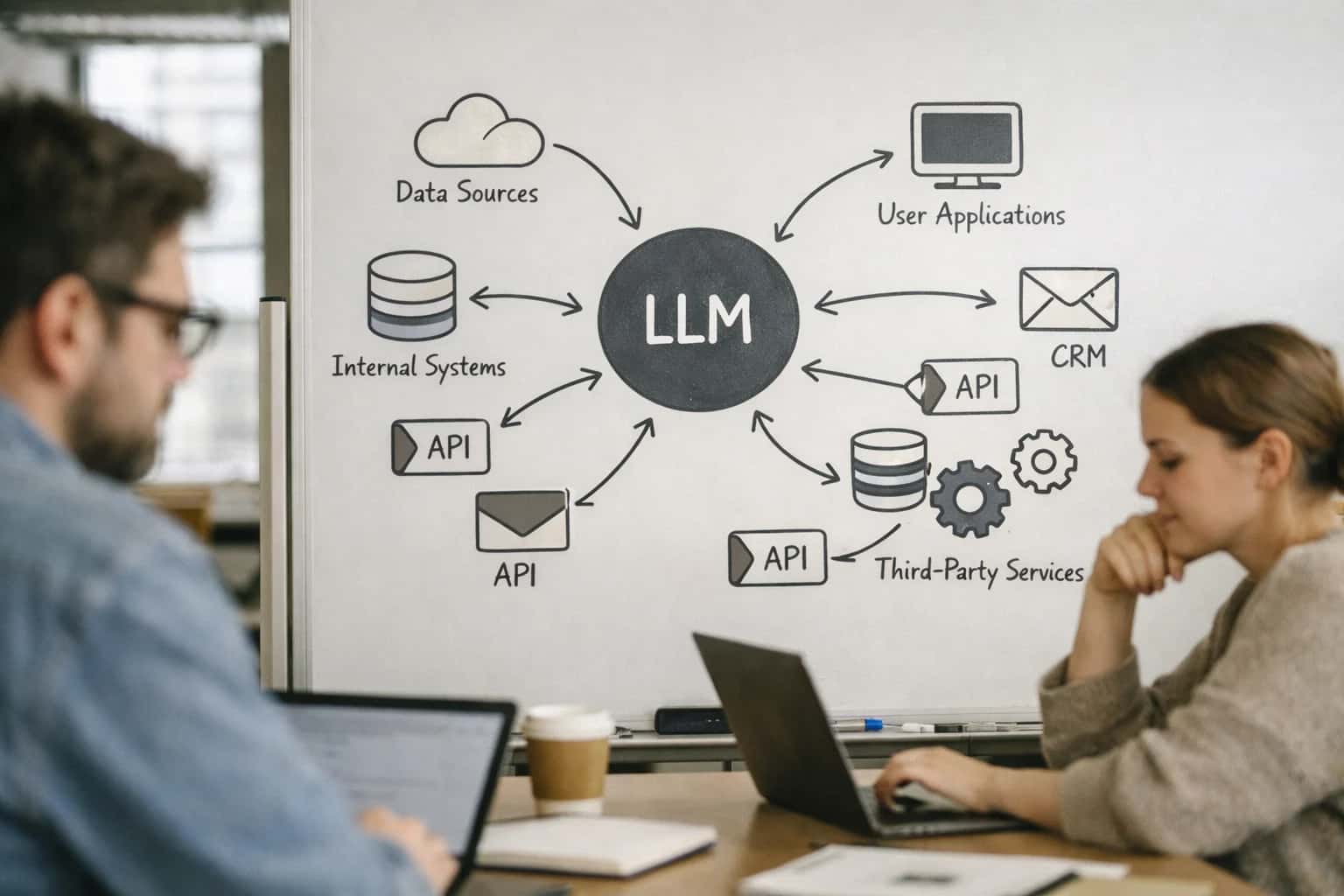
Where AI Fits into Vagaro's Review Workflow
A technical blueprint for integrating AI directly into Vagaro's review aggregation and management surfaces to automate feedback processing.
For managers, the core value is AI-generated response drafting. When a new review is posted, the integration triggers a workflow that analyzes the comment and client history, then generates a context-aware, brand-appropriate draft reply. For positive reviews, it personalizes thanks and may suggest a loyalty reward. For critical feedback, it drafts a professional, empathetic acknowledgment and an offer to discuss offline, often referencing the specific service mentioned. These drafts are pushed into a moderation queue within Vagaro or a connected system, where a manager can review, edit, and post with one click, cutting response time from days to hours.
Beyond individual reviews, the AI performs aggregate trend analysis. By processing review corpus data over weekly or monthly periods, it identifies emerging themes—like repeated mentions of a specific technician or a new service—and surfaces these insights as automated reports. This can flag training opportunities or highlight successful initiatives. Rollout is phased: starting with passive categorization and reporting, then adding draft generation for manager approval, ensuring human oversight is maintained. Governance focuses on audit logs of all AI-generated content and regular calibration of sentiment models against business-specific feedback.
Key Vagaro Surfaces for AI Integration
The Review Feed and Sentiment Engine
Vagaro's review system aggregates client feedback from multiple sources, including its own platform and external sites. This centralized feed is the primary surface for AI integration. An AI agent can be connected via Vagaro's API to ingest new reviews in real-time, perform granular sentiment analysis, and categorize feedback beyond simple star ratings.
Key Integration Points:
GET /business/reviewsAPI endpoint to pull recent reviews with metadata (client name, service, staff member, date).- Webhook subscription for
review.createdevents to trigger immediate AI processing. - Review text and rating fields serve as the input for sentiment models, which can detect frustration, praise, or specific mentions (e.g., "wait time," "stylist Sarah").
Automated categorization allows managers to instantly see trends—like recurring complaints about booking or praise for a particular service—without manually reading every comment.
High-Value AI Use Cases for Vagaro Reviews
Integrating AI with Vagaro's review system transforms unstructured feedback into actionable insights and automated workflows. These use cases connect to Vagaro's API to read reviews, analyze sentiment, and trigger follow-up actions within the platform.
Sentiment Triage & Priority Routing
AI analyzes incoming review text and star ratings to categorize sentiment (positive, neutral, negative) and urgency. Critical negative reviews are flagged and routed to a manager's dashboard or Slack channel via webhook, while positive reviews are queued for thank-you responses. This ensures high-priority issues are addressed within hours, not days.
Automated Response Drafting
For each review, an AI agent generates a context-aware, brand-aligned response draft. It pulls in client name, service provider, and specific service mentioned from Vagaro's client and appointment APIs to personalize the reply. Managers can edit and post with one click, cutting response drafting time from 10+ minutes to under 60 seconds per review.
Trend Analysis for Service Improvement
AI clusters review themes (e.g., 'wait time,' 'stylist skill,' 'cleanliness') and maps them to specific services, staff, and locations over time. This creates a searchable knowledge base of feedback trends accessible via a dashboard, helping owners identify systemic issues (like a recurring complaint about a specific service) and track the impact of corrective actions.
Reputation Score & Recovery Workflows
AI calculates a dynamic reputation score per location or staff member based on review volume, sentiment, and recency. When a score dips below a threshold, it automatically triggers a recovery workflow in Vagaro, such as sending a personalized discount offer to recent clients of that staff member or scheduling a check-in call from a manager.
Staff Performance & Coaching Insights
AI anonymizes and aggregates review feedback linked to individual staff members (where appropriate) to provide private coaching reports. It highlights strengths ('clients love your color technique') and actionable growth areas based on specific feedback, which managers can use for targeted training, integrated with Vagaro's staff performance modules.
Review-Generated Marketing Content
AI extracts compelling quotes and success stories from 5-star reviews. It then formats them for social media posts, website testimonials, or email campaign snippets, tagging the relevant service and staff member. This content can be pushed to Vagaro's marketing tools or external platforms, turning organic praise into powerful social proof.
Example AI-Powered Review Workflows
These workflows demonstrate how to connect AI agents to Vagaro's review data and communication APIs to automate feedback analysis, response drafting, and trend identification. Each pattern includes the trigger, data flow, AI action, and system update.
Trigger: A new review is posted via Vagaro's API or webhook (review.created).
Data Pulled: The AI agent fetches the review text, star rating, client name (if permitted), service/staff tagged, and the client's recent visit history from Vagaro's Client and Appointment APIs.
AI Action: A sentiment analysis model classifies the review as Positive, Constructive, or Critical. For non-positive reviews, the agent extracts key themes (e.g., "wait time," "service quality," "front desk") and generates a severity score.
System Update: The review is tagged with the sentiment and themes in a connected database (or via a custom field if Vagaro's API allows). A Slack/Teams alert is sent to the manager for critical reviews, including a one-line summary and a link to the full review in Vagaro.
Human Review Point: The manager reviews the alert and decides on the response path within Vagaro's interface.
Implementation Architecture & Data Flow
A production-ready blueprint for connecting AI sentiment analysis to Vagaro's review and client management workflows.
The integration connects to Vagaro's Review API and Client API to create a closed-loop system. New reviews are ingested via webhook or a scheduled sync, where an AI model performs multi-label sentiment analysis—categorizing feedback by service type, staff member, facility, and sentiment polarity. This enriched data is written back to a dedicated custom field on the client's profile and to a centralized AI Review Dashboard object, creating a searchable knowledge base of client sentiment linked directly to service history and staff performance records.
For actionable workflows, the system monitors for high-priority patterns: a negative sentiment tagged with a specific service triggers an automated alert in Vagaro's Internal Messaging module for the manager. Concurrently, a response drafting agent generates a context-aware reply using the client's history and the review details, presenting it for manager approval within the dashboard. For positive reviews, the system can automatically initiate a Thank You & Share workflow via Vagaro's Email Marketing or SMS features, encouraging the client to post their feedback on social platforms.
Rollout is phased, starting with read-only analysis and reporting to establish baseline metrics and tune categorization models. Governance is maintained through a human-in-the-loop approval step for all automated communications and a weekly audit log of AI-generated categorizations versus manual overrides. This ensures the AI augments manager oversight without bypassing it, building trust and allowing for continuous model refinement based on real business feedback.
Code & Payload Examples
Ingesting Reviews via Webhook
Vagaro can send new review data to an external AI service via a configured webhook. This example shows a Python FastAPI endpoint that receives the payload, extracts the review text, and calls an LLM for sentiment and category classification.
pythonfrom fastapi import FastAPI, Request from pydantic import BaseModel import httpx app = FastAPI() class VagaroReview(BaseModel): review_id: str business_id: str client_name: str rating: int review_text: str service_name: str date: str @app.post("/webhook/vagaro/review") async def handle_review(request: Request): payload = await request.json() review = VagaroReview(**payload) # Call LLM for analysis analysis_prompt = f""" Review: {review.review_text} Rating: {review.rating}/5 Service: {review.service_name} Categorize sentiment (Positive, Neutral, Critical) and primary topic (Service Quality, Staff Friendliness, Cleanliness, Pricing, Wait Time, Other). Return JSON: {{"sentiment": "", "topic": "", "urgency_score": 1-5}} """ async with httpx.AsyncClient() as client: llm_response = await client.post( "https://api.openai.com/v1/chat/completions", headers={"Authorization": f"Bearer {OPENAI_KEY}"}, json={ "model": "gpt-4o-mini", "messages": [{"role": "user", "content": analysis_prompt}], "temperature": 0 } ) analysis = llm_response.json() # Store analysis with review_id for later retrieval # ... return {"status": "processed", "review_id": review.review_id}
This pattern allows real-time processing as reviews are submitted, enabling immediate alerting for critical feedback.
Realistic Time Savings & Operational Impact
A comparison of manual review processes versus an AI-integrated workflow for Vagaro, showing realistic time savings and operational improvements for salon and spa managers.
| Workflow Step | Manual Process (Before AI) | AI-Assisted Process (After AI) | Key Notes |
|---|---|---|---|
Review Collection & Aggregation | Daily manual check of multiple sites (Google, Yelp, Vagaro) | Automated daily sync and ingestion via Vagaro API/webhooks | Ensures no missed reviews; data centralized instantly |
Sentiment & Topic Categorization | Manager reads and mentally tags each review (5-10 mins each) | AI auto-tags sentiment (Positive/Neutral/Negative) and key topics (Service, Staff, Ambiance) | Eliminates subjective bias; enables consistent trend analysis |
Priority Triage & Alerting | Manager must identify urgent negative reviews needing same-day response | AI flags high-priority negative reviews and sends instant alerts to manager | Reduces risk of reputation damage from delayed response |
Response Draft Generation | Manager crafts each response from scratch, referencing past templates | AI generates a personalized, brand-aligned draft response for manager approval | Cuts drafting time by 70%; manager edits and approves in seconds |
Trend Analysis & Reporting | Monthly manual spreadsheet compilation to spot service issues | AI provides weekly automated reports on sentiment trends, top complaints, and staff mentions | Shifts analysis from reactive to proactive; identifies improvement areas faster |
Feedback Loop to Staff | Inconsistent; relies on manager remembering to share feedback in meetings | AI auto-generates anonymized positive shout-outs and constructive feedback snippets for team huddles | Creates a consistent, data-driven coaching culture |
Review Response Rate Tracking | Manual tracking or not tracked at all | AI dashboard shows real-time response rates, time-to-respond, and sentiment improvement over time | Provides clear metrics for performance and accountability |
Governance, Security & Phased Rollout
A structured approach to deploying AI for review management within Vagaro, ensuring control, compliance, and measurable impact.
Architecture & Data Governance: The integration connects to Vagaro's Reviews API and Client data objects via a secure, dedicated service account with scoped permissions (read:reviews, read:client_profiles). Sentiment analysis and categorization models run in a private Inference Systems environment, where all review text is processed ephemerally—no client PII is stored long-term. AI-generated response drafts are written to a secure queue for manager approval before being posted back to Vagaro via its Reply API, creating a full audit trail. This pattern keeps sensitive feedback data within your controlled workflow while leveraging AI for analysis and draft generation.
Phased Rollout for Risk Mitigation: Start with a pilot phase targeting a single location or service category. Configure the AI to categorize reviews and generate response drafts, but require manual posting. This allows managers to evaluate accuracy and tone. In the expansion phase, enable automated posting for low-risk, high-sentiment reviews (e.g., 5-star feedback) while holding negative or neutral reviews for manual review. Finally, a full-scale phase introduces trend analysis dashboards, alerting managers to recurring service or staff issues mentioned across locations, using aggregated, anonymized data from the Reviews API.
Security & Compliance Posture: The integration is designed for businesses subject to data privacy regulations. All API calls are encrypted in transit, and access is logged. The AI service does not train on your proprietary client data. For multi-location businesses, role-based access controls (RBAC) can be mirrored from Vagaro, ensuring a franchise owner only sees drafts and trends for their specific locations. This governance model allows you to scale AI-driven reputation management while maintaining the operational trust and data isolation required in the salon and spa industry.
Enabling Efficiency, Speed & Accuracy
Intelligent Analysis, Decision & Execution
We build AI systems for teams that need search across company data, workflow automation across tools, or AI features inside products and internal software.
Talk to Us
Search across company data
Give teams answers from docs, tickets, runbooks, and product data with sources and permissions.
Useful when people spend too long searching or get different answers from different systems.

Automate internal workflows
Use AI to route work, draft outputs, trigger actions, and keep approvals and logs in place.
Useful when repetitive work moves across multiple tools and teams.

Add AI to products and internal tools
Build assistants, guided actions, or decision support into the software your team or customers already use.
Useful when AI needs to be part of the product, not a separate tool.
Frequently Asked Questions
Common technical and operational questions about integrating AI sentiment analysis and response automation with Vagaro's review management system.
The integration connects via Vagaro's REST API and leverages its webhook system for real-time processing.
- Data Ingestion: The AI system polls the
/reviewsAPI endpoint on a scheduled basis (e.g., every 15 minutes) to fetch new reviews. For immediate processing, Vagaro can be configured to send areview.createdwebhook payload directly to your AI endpoint. - Context Enrichment: Each review payload includes the client ID, service ID, staff ID, and rating. The AI system makes additional API calls to fetch related data, such as the client's service history and the staff member's profile, to provide context for sentiment analysis.
- Secure Storage: Review text and metadata are temporarily stored in a secure, encrypted vector database (like Pinecone or Weaviate) for analysis, but are not retained beyond the processing and response drafting workflow unless explicitly configured for trend analysis.

About the author
Prasad Kumkar
CEO & MD, Inference Systems
Prasad Kumkar is the CEO & MD of Inference Systems and writes about AI systems architecture, LLM infrastructure, model serving, evaluation, and production deployment. Over 5+ years, he has worked across computer vision models, L5 autonomous vehicle systems, and LLM research, with a focus on taking complex AI ideas into real-world engineering systems.
His work and writing cover AI systems, large language models, AI agents, multimodal systems, autonomous systems, inference optimization, RAG, evaluation, and production AI engineering.
Partnered with leading AI, data, and software stack.





How We Work
Custom AI workflows for your Business
One-fit-all AI don't work for modern businesses. At Inferensys, we aim to understand your business & custom requirements; which we use to define most efficient agentic workflows, the data, and the tools for your business.
01
Review the use case
We understand the task, the users, and where AI can actually help.
Read more02
Pick the right approach
We define what needs search, automation, or product integration.
Read more03
Build the first useful version
We implement the part that proves the value first.
Read more04
Improve from there
We add the checks and visibility needed to keep it useful.
Read moreThe first call is a practical review of your use case and the right next step.
Talk to Us