AI integrates into salon payment processing by connecting to two primary data streams via the platform's APIs: the transaction log and the real-time payment gateway webhook. For fraud detection, an AI model continuously scores incoming card-not-present transactions (like online pre-payments or gift card purchases) by analyzing patterns against historical client behavior, IP geolocation, and typical purchase amounts. This risk score is appended to the transaction object in platforms like Zenoti or Fresha, allowing for automated rules—such as holding high-risk transactions for manual review or triggering step-up authentication—without disrupting the front-desk workflow. For in-person payments at the POS, the same integration can flag anomalous tip amounts or split-tender scenarios for quick staff verification.

Integration
AI for Payment Processing in Salon Software
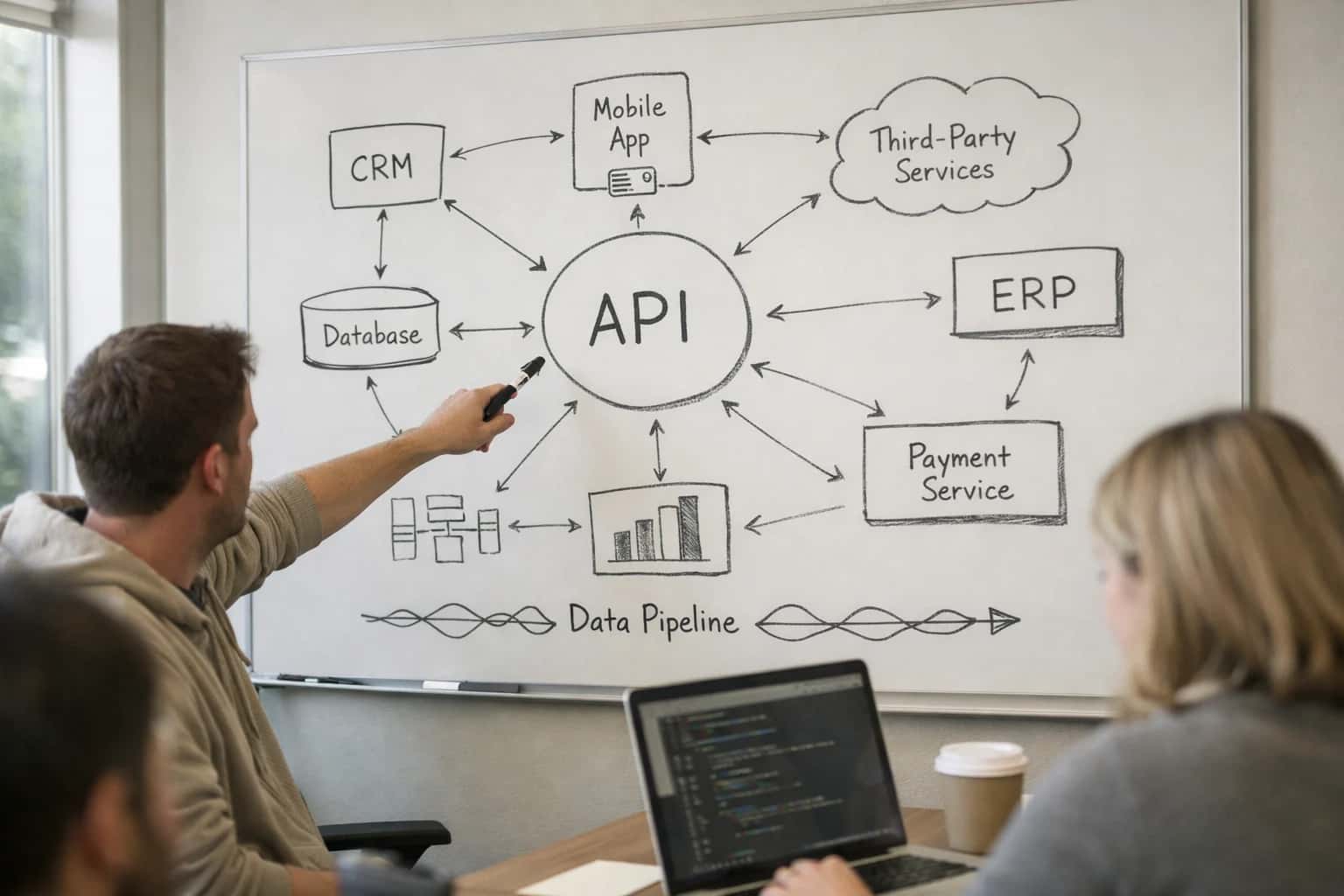
Where AI Fits in Salon Payment Processing
A technical blueprint for embedding AI fraud detection and smart tip suggestions directly into the checkout flow of salon POS systems.
Smart tip suggestion is a predictive layer added to the final checkout screen. By calling an AI service with the transaction context—including service total, therapist, client's historical tipping average, and even service duration from the appointment record—the system can generate a context-aware, personalized tip range (e.g., 18%, 22%, 25%). This is surfaced via the POS interface or the client-facing payment terminal. The implementation typically involves a lightweight microservice that subscribes to the pre-transaction event, enriches it with client data from the CRM module, and returns the suggestion payload in milliseconds. This not only improves client experience but can increase average tip amounts by providing socially anchored, reasonable options.
Rollout requires a phased approach: start with monitoring-only fraud detection to tune model accuracy, then progress to automated holds for only the highest-confidence fraud signals. For tip suggestions, A/B testing different AI models against control groups is crucial to measure uplift. Governance is key; all AI-scored transactions must be logged with the reasoning (e.g., "high velocity from new client") in an audit trail linked to the payment record. Since payment data is highly sensitive, the AI service must operate within the salon platform's existing security and compliance perimeter, never storing raw PAN data. For a deeper dive on securing these data flows, see our guide on /integrations/api-integration-with-salon-platforms.
Integration Surfaces in Salon POS Systems
The Core Data Source
The payment processing module in salon software like Zenoti, Vagaro, or Fresha maintains a detailed transaction log. This is the primary integration surface for AI. Each record typically includes:
- Transaction ID, timestamp, and terminal ID
- Client ID linked to the guest profile
- Service and product SKUs with line-item amounts
- Payment method (card, cash, gift card, etc.)
- Tip amount and gratuity type
- Staff member who processed the transaction
- Gateway response codes and authorization details
AI integration connects here via the platform's reporting API or webhook events (e.g., transaction.completed). This real-time or batch data feed powers downstream fraud detection and tip suggestion models. The implementation must handle idempotency and respect the platform's rate limits to avoid disrupting live checkout flows.
High-Value AI Use Cases for Salon Payments
Integrating AI directly into your salon or spa POS and payment gateway workflows can automate risk review, personalize the checkout experience, and reduce manual financial operations. These patterns connect to transaction logs, client profiles, and inventory data via platform APIs.
AI-Powered Fraud Detection
Deploy real-time AI models that analyze transaction patterns (amount, frequency, client history) against your payment gateway logs to flag high-risk charges. Automatically trigger step-up authentication or hold transactions for manual review via the POS interface, reducing chargebacks.
Smart Tip Suggestions
At checkout, an AI agent uses the service type, therapist performance metrics, client historical tipping behavior, and regional averages—pulled from the platform's data—to generate personalized, context-aware tip amounts on the POS screen, improving staff earnings consistency.
Automated Payment Reconciliation
An AI workflow matches daily settlement files from your payment processor (Stripe, Square) against completed transactions in your salon software (e.g., Fresha, Zenoti). It flags discrepancies for review and posts reconciled totals, cutting manual bookkeeping time.
Dynamic Payment Routing
For multi-location or franchise operations, AI determines the optimal payment gateway or merchant account based on location, card type, and cost, routing transactions via the platform's API. This minimizes processing fees and simplifies centralized reporting.
Post-Transaction Upsell Automation
Immediately after a card is run, trigger an AI-generated, personalized offer (e.g., a discount on a retail product used during the service) delivered via SMS or email through the platform's comms API. Uses the just-completed service data and client purchase history.
Subscription & Membership Billing Audits
AI monitors recurring payment runs within platforms like Vagaro or Zenoti. It identifies failed payments, analyzes patterns (expired cards, insufficient funds), and automatically triggers the platform's dunning sequences or suggests alternative payment methods to the client.
Example AI-Powered Payment Workflows
These concrete workflows show how AI can be integrated into the payment processing layer of salon and spa management platforms like Fresha, Zenoti, Mangomint, and Vagaro. Each pattern connects to the platform's transaction APIs, payment gateway webhooks, and client data to automate fraud detection, optimize tips, and streamline checkout.
Trigger: A payment is initiated via the platform's API for an online booking, gift card purchase, or package sale.
Workflow:
- The AI agent intercepts the transaction payload before final authorization.
- It enriches the risk score by pulling related context via platform APIs:
- Client's booking history and average transaction value.
- Device fingerprint and IP location from the session.
- Recent failed payment attempts on the same card.
- A lightweight model evaluates the transaction against known fraud patterns (e.g., velocity, mismatched billing).
- Action: The agent returns a
risk_scoreand recommendation.LOW_RISK: Transaction proceeds normally.MEDIUM_RISK: Triggers a step-up authentication (e.g., SMS code) via the platform's comms API.HIGH_RISK: Places a hold on the transaction and creates an alert ticket in the platform's internal notes for manager review.
- All decisions and scores are logged to the client's profile or a dedicated audit table for compliance.
Integration Points: Payment gateway webhook listener, client history API, internal alerting system.
Implementation Architecture: Data Flow & APIs
A technical blueprint for wiring AI fraud detection and tip suggestion models into the payment processing flow of platforms like Fresha, Zenoti, and Vagaro.
The integration connects at the transaction API layer, intercepting payment events before they are finalized with the gateway (e.g., Stripe, Square). A typical flow: 1) The salon software's POS module sends a POST /transactions payload containing amount, client_id, service_items, and payment_method. 2) This payload is routed through an AI middleware service (hosted by Inference Systems) via a webhook or API gateway. 3) The AI service runs two parallel models: a fraud scoring model analyzing transaction velocity, client history anomalies, and device fingerprints, and a tip suggestion model considering service type, therapist, historical client generosity, and local averages. 4) Results are returned as a structured JSON response (e.g., { "fraud_risk_score": 0.12, "suggested_tip_percentages": [18, 20, 22] }) to the POS system within milliseconds, allowing it to display smart tip options or flag the transaction for staff review before submission to the payment processor.
For fraud detection, the AI model requires read-only access to historical transaction logs and client profiles via the platform's reporting APIs (e.g., Zenoti's GET /reports/transactions). This enables the model to establish a behavioral baseline. The tip suggestion engine integrates with the service catalog and staff performance modules to understand context—for instance, suggesting a higher tip range for a complex color service performed by a master stylist. All AI inferences are logged with a correlation ID back to the original transaction for audit trails and model performance monitoring. The architecture is designed to be fail-open; if the AI service is unreachable, the POS falls back to standard tip defaults and proceeds with the payment, ensuring no disruption to checkout.
Rollout is typically phased: starting with a pilot location where AI suggestions are shown to staff but not enforced, allowing for calibration and gathering consent for data usage. Governance controls include role-based access to fraud flags (manager-only alerts) and configurable thresholds for automatic transaction holds. This integration does not store raw payment card data; it operates on transaction metadata and relies on the salon platform's PCI-compliant tokenization. For a deeper dive on securing these data flows, see our guide on API Integration with Salon Platforms.
Code & Payload Examples
Real-Time Transaction Scoring
Integrate AI fraud detection by adding a webhook handler between your salon POS and payment gateway. When a transaction is initiated, the POS sends key details to your AI service for scoring before final authorization.
Typical Payload from POS:
json{ "transaction_id": "TXN_789012", "client_id": "CLIENT_456", "amount": 245.75, "payment_method": "card_on_file", "card_last_four": "4321", "client_history": { "total_visits": 3, "avg_ticket": 180.50, "days_since_last_visit": 45 }, "location_id": "SALON_01", "timestamp": "2024-05-15T14:30:00Z" }
Your AI service returns a risk score and recommendation. A low-risk score proceeds to charge; a high-risk score can trigger a step-up authentication or alert staff.
Realistic Operational Impact & Time Savings
This table shows the tangible impact of integrating AI fraud detection and smart tip suggestions into the payment processing flow of salon and spa POS systems like Fresha, Zenoti, and Vagaro.
| Metric | Before AI | After AI | Notes |
|---|---|---|---|
Fraudulent transaction review | Manual batch review, 2-4 hrs/week | Real-time scoring & alerts, <15 min/week | AI flags high-risk transactions for human review, reducing false positives |
Tip suggestion personalization | Static % prompts or manual entry | Context-aware, personalized % ranges | Uses service type, client history, and average ticket to suggest relevant amounts |
Chargeback investigation prep | Manual log compilation, 30-60 min/case | Automated evidence packet generation, 5-10 min/case | AI aggregates transaction logs, client history, and comms into a single report |
Payment method optimization | Manual analysis of gateway fees | AI-driven routing suggestions | Analyzes historical data to suggest cost-effective gateways for large transactions |
Tip reconciliation for commissions | Manual allocation from pooled tips, 1-2 hrs/pay period | Automated attribution to services/staff | AI parses transaction data to assign tips accurately, integrated with payroll |
Checkout flow duration | Standard prompts, potential for hesitation | Streamlined, personalized prompts | Reduces cognitive load for front desk, leading to faster client turnover |
Pilot to production rollout | Custom dev for each rule, 6-8 weeks | Configurable models & API integration, 2-4 weeks | Leverages pre-built connectors for major payment gateways (Stripe, Square) and salon platform APIs |
Governance, Security & Phased Rollout
A secure, governed implementation plan for adding AI to your salon's payment processing.
Integrating AI into payment workflows requires a zero-trust data architecture. Our approach treats the salon management platform (e.g., Fresha, Zenoti, Vagaro) as the system of record, with AI acting as a stateless decision engine. We connect via secure, scoped API keys to the platform's transaction logs and payment gateway webhooks (like Stripe or Square). The AI agent never stores raw cardholder data; it receives anonymized transaction metadata (amount, timestamp, client ID) and returns a risk score or tip suggestion. All decisions are logged back to a custom audit object within the platform for a complete lineage from API call to action.
A phased rollout is critical for managing risk and measuring impact. We recommend a three-stage deployment: 1) Shadow Mode: The AI analyzes live transaction data but its outputs are only logged, not acted upon. This builds a baseline for fraud detection accuracy and tip suggestion acceptance rates. 2) Guardrail Mode: AI suggestions are presented to staff at the POS as prompts (e.g., "Flag for manager review" or "Suggested tip: 20%"), requiring a human to approve or override. 3) Automated Mode: For low-risk, high-confidence decisions—like applying a standard tip suggestion to a loyal client—actions are executed automatically via the platform's API, with a mandatory post-transaction notification sent to a manager dashboard for oversight.
Governance is built into the integration layer. Role-based access controls (RBAC) in the salon software dictate which staff roles can view AI flags or modify automated rules. A weekly model performance review is automated, comparing AI fraud flags against actual chargebacks and analyzing tip suggestion uptake. This allows owners to tune model confidence thresholds directly within the platform's settings. For multi-location chains, policies can be set globally but tuned per location based on historical data, ensuring the AI adapts to the risk profile and clientele of a high-end spa versus a neighborhood salon.
Enabling Efficiency, Speed & Accuracy
Intelligent Analysis, Decision & Execution
We build AI systems for teams that need search across company data, workflow automation across tools, or AI features inside products and internal software.
Talk to Us
Search across company data
Give teams answers from docs, tickets, runbooks, and product data with sources and permissions.
Useful when people spend too long searching or get different answers from different systems.

Automate internal workflows
Use AI to route work, draft outputs, trigger actions, and keep approvals and logs in place.
Useful when repetitive work moves across multiple tools and teams.

Add AI to products and internal tools
Build assistants, guided actions, or decision support into the software your team or customers already use.
Useful when AI needs to be part of the product, not a separate tool.
Frequently Asked Questions
Technical questions about implementing AI for fraud detection and smart tipping within salon and spa point-of-sale systems like Fresha, Zenoti, and Vagaro.
The AI agent acts as a middleware layer between your salon software and the payment processor (e.g., Stripe, Square). It analyzes transaction data in real-time via webhooks or by querying the platform's transaction log API.
Typical Integration Flow:
- Trigger: A payment is initiated at the salon POS.
- Context Pull: The AI system receives a payload with transaction amount, client history, payment method, IP address (if online), and time of day.
- Model Action: A pre-trained model scores the transaction for risk (e.g., high amount for new client, atypical time).
- System Update: Based on a configurable threshold, the system can:
- Approve: Allow the charge to proceed normally.
- Flag: Place a hold and alert a manager via the platform's internal messaging or a Slack webhook.
- Require Step-Up: Trigger a 3D Secure or additional verification step via the gateway's API.
- Audit: All decisions and scores are written back to a custom field in the transaction record or a separate audit log for review.
This requires read/write API access to your salon platform's transaction objects and a webhook endpoint to receive events from your payment gateway.

About the author
Prasad Kumkar
CEO & MD, Inference Systems
Prasad Kumkar is the CEO & MD of Inference Systems and writes about AI systems architecture, LLM infrastructure, model serving, evaluation, and production deployment. Over 5+ years, he has worked across computer vision models, L5 autonomous vehicle systems, and LLM research, with a focus on taking complex AI ideas into real-world engineering systems.
His work and writing cover AI systems, large language models, AI agents, multimodal systems, autonomous systems, inference optimization, RAG, evaluation, and production AI engineering.
Partnered with leading AI, data, and software stack.





How We Work
Custom AI workflows for your Business
One-fit-all AI don't work for modern businesses. At Inferensys, we aim to understand your business & custom requirements; which we use to define most efficient agentic workflows, the data, and the tools for your business.
01
Review the use case
We understand the task, the users, and where AI can actually help.
Read more02
Pick the right approach
We define what needs search, automation, or product integration.
Read more03
Build the first useful version
We implement the part that proves the value first.
Read more04
Improve from there
We add the checks and visibility needed to keep it useful.
Read moreThe first call is a practical review of your use case and the right next step.
Talk to Us