AI integration for Highspot focuses on three core surfaces: Deal Rooms, Content Analytics, and the User Activity Stream. The goal is to transform passive engagement data—like which battle cards a buyer viewed, how long they spent on a pricing page, or which stakeholders downloaded a case study—into actionable intelligence for the sales rep. This requires connecting to Highspot's APIs to ingest event data (views, downloads, shares) and metadata (content tags, deal stage, user roles), then applying models to detect patterns, predict interest levels, and surface relevant follow-up actions directly within the seller's workflow.

Integration
AI Integration with Highspot Buyer Engagement
A technical guide to architecting AI that analyzes buyer engagement signals within Highspot deal rooms, predicts interest levels, identifies key stakeholders, and recommends next-best actions for sales reps.
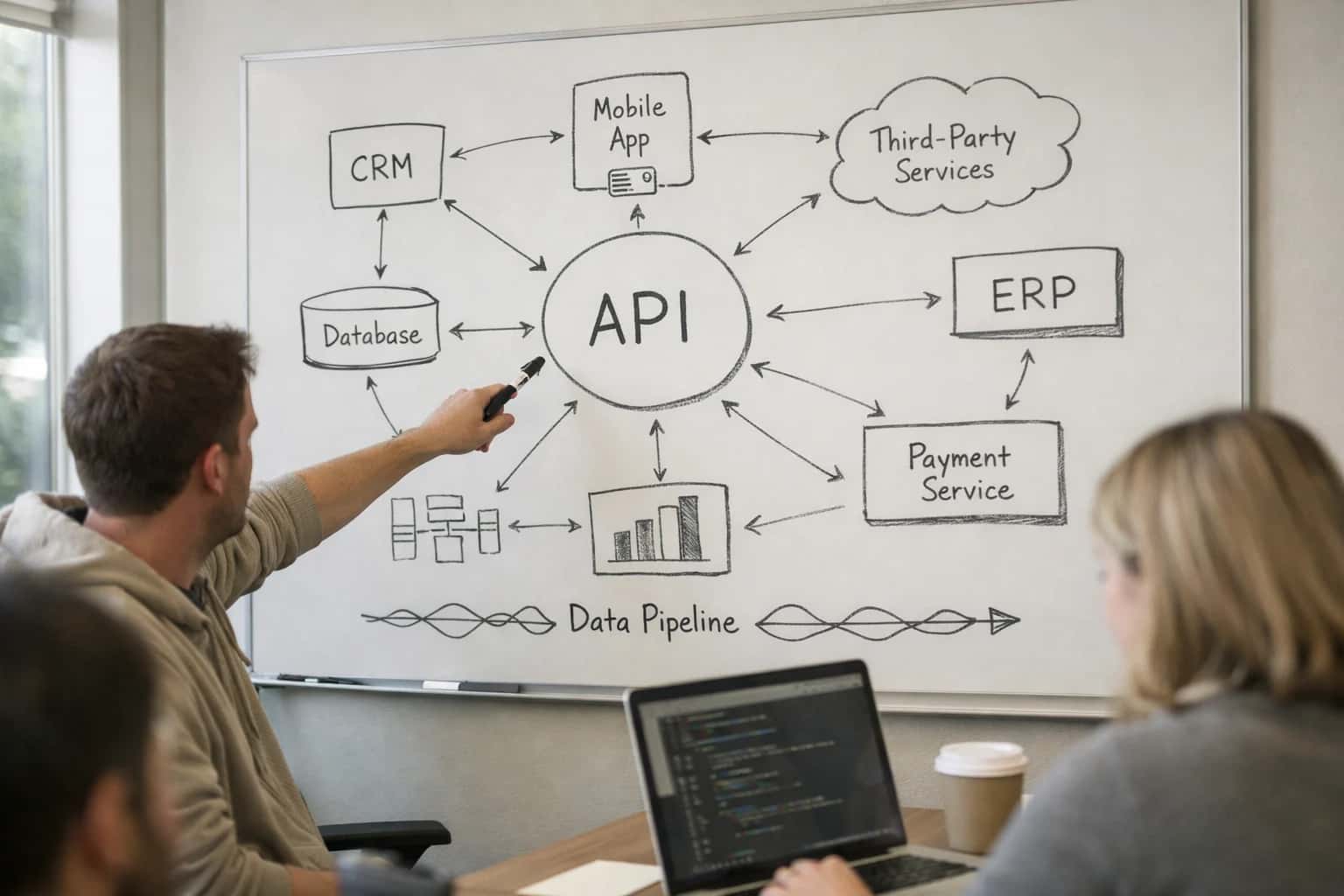
ARCHITECTURE AND IMPLEMENTATION
Where AI Fits into Highspot's Buyer Engagement Workflow
A technical blueprint for embedding AI into Highspot's deal rooms and analytics to automate buyer signal analysis and next-step recommendations.
A typical implementation involves a lightweight middleware service that subscribes to Highspot webhooks for real-time activity. This service enriches the raw event data with context from your CRM (e.g., Salesforce opportunity stage, account industry) before passing it to an AI orchestration layer. Here, models perform tasks like:
- Stakeholder Mapping & Influence Scoring: Identifying which personas (e.g., Economic Buyer, Technical Evaluator) are actively engaged and predicting their influence on the deal.
- Content Gap Analysis: Comparing engaged assets against a deal's profile to recommend missing content (e.g., "This technical stakeholder viewed the overview but hasn't seen the security whitepaper").
- Next-Best-Action Generation: Synthesizing signals to produce concise, context-aware recommendations like "Schedule a demo with the technical team next week; they've reviewed all evaluation docs" or "Send a follow-up email referencing the ROI calculator they spent 8 minutes on." These insights are then written back to Highspot via custom widgets or notes within the deal room, and can also trigger alerts in Slack or Microsoft Teams.
Rollout should be phased, starting with a pilot on a single sales team. Governance is critical: all AI-generated recommendations should be logged with an audit trail, and a human-in-the-loop review step is recommended initially to build trust and refine models. The integration must respect existing Highspot permission models—insights should only be visible to users with access to the underlying deal room. The final architecture creates a closed-loop system where seller actions (sending recommended content, scheduling meetings) feed back into the model, continuously improving prediction accuracy for Highspot-driven deal execution.
ARCHITECTING INTELLIGENT BUYER ENGAGEMENT
Key Highspot Surfaces for AI Integration
The Core Engagement Surface
Deal Rooms are the primary interface for buyer-seller collaboration in Highspot. AI integration here focuses on analyzing engagement patterns to predict deal health and automate next steps.
Key Integration Points:
- Activity Stream API: Monitor document views, downloads, and time-spent metrics per stakeholder.
- Content Interaction Events: Track which battle cards, proposals, or case studies each buyer role engages with.
- Room Analytics: Use webhook payloads to stream engagement data to an external AI service for real-time scoring.
AI Workflow Example: An AI model consumes engagement signals (e.g., CFO reviewed pricing tab but skipped case studies) to generate a "Buyer Interest Score" and trigger an alert in Salesforce for the rep to schedule a finance-focused follow-up.
HIGHSPOT INTEGRATION PATTERNS
High-Value AI Use Cases for Buyer Engagement
Integrating AI with Highspot transforms static deal rooms into intelligent engagement hubs. These patterns leverage buyer activity data to predict intent, personalize interactions, and automate seller follow-up.
01
Predictive Engagement Scoring
Analyze patterns in buyer document views, time spent, and download sequences within a Highspot deal room. An AI model scores overall engagement and predicts deal stall risk, triggering alerts in the CRM for timely rep intervention.
Batch -> Real-time
Insight delivery
02
Stakeholder Role & Interest Mapping
Use AI to infer stakeholder roles (e.g., Economic Buyer, Technical Evaluator) and individual interest levels based on their unique content consumption paths in the deal room. Automatically surfaces this map to the seller in Slack or Teams for targeted outreach.
1 sprint
To implement
03
Dynamic Content Curation
Build an AI agent that monitors real-time engagement and automatically adds or highlights the most relevant case studies, battle cards, or spec sheets to the deal room. Uses RAG over your content library to match assets to expressed buyer pains.
Hours -> Minutes
Content assembly
04
Next-Best-Action for Reps
Integrate with CRM and calendar to provide AI-generated next steps. Example: 'Buyer A reviewed pricing twice but skipped the implementation guide. Recommend sending a personalized email with a customer success story and offer a technical deep-dive call.'
Same day
Actionable insight
05
Automated Deal Room Health Reports
Replace manual check-ins with AI-generated weekly summaries for sales managers. Reports highlight engagement trends, identify inactive stakeholders, and correlate content usage with pipeline stage progression, all pulled via Highspot APIs.
Hours -> Minutes
Report generation
06
Competitive Signal Detection
Deploy NLP to analyze comments and questions left in Highspot deal rooms. Flag mentions of competitor names or features and automatically serve the seller with the most up-to-date competitive battle card or objection handler from the library.
Real-time
Signal detection
HIGHSPOT BUYER ENGAGEMENT
Example AI-Powered Workflows
These workflows demonstrate how AI can be integrated with Highspot's deal rooms and engagement analytics to transform raw buyer activity into predictive insights and automated next steps for sales reps.
Trigger: A buyer interacts with content in a Highspot deal room (e.g., views a pricing page, spends >2 minutes on a case study).
Context/Data Pulled:
- The specific asset viewed, time spent, and download status from Highspot's Engagement API.
- Historical opportunity data (stage, age, size) from the integrated CRM (Salesforce/Microsoft Dynamics).
- Past engagement patterns for similar deals that won vs. lost.
Model or Agent Action: A lightweight ML model (e.g., XGBoost) or a rules-based LLM agent analyzes the new signal against the historical pattern. It calculates a delta to the existing deal score and generates a reason code.
System Update or Next Step:
The updated score and reason ("Increased engagement from economic buyer on ROI assets") are written back to a custom field in the CRM. If the score drops below a threshold, an alert is created in the sales team's Slack channel via webhook.
Human Review Point: The score is a recommendation. The sales manager reviews the alert and context before deciding to intervene.
A BLUEPRINT FOR INTELLIGENT DEAL ROOMS
Implementation Architecture: Data Flow & System Design
A technical overview of how AI models connect to Highspot's data and APIs to analyze buyer engagement and drive seller actions.
The integration architecture connects to two primary data surfaces within Highspot: the Deal Room API for real-time engagement signals (document views, time spent, stakeholder activity) and the Content Analytics API for historical asset performance. An event-driven pipeline ingests this data, enriching it with account context from the CRM (e.g., Salesforce opportunity stage, stakeholder roles). This unified feed powers a core AI service that runs two key models: a buyer interest classifier predicting deal momentum and a stakeholder analysis engine identifying champions, blockers, and information gaps based on content consumption patterns.
The system's intelligence is delivered back to the seller through two main channels. First, via Highspot Custom Actions or Webhooks, triggering in-app alerts and populating deal room dashboards with AI-generated insights like "Key stakeholder engaged with pricing guide" or "Interest score dipping—suggest sending case study." Second, through a seller copilot interface (often a Slack/MS Teams bot or a CRM sidebar) that provides proactive, atomic next-best-action recommendations, such as Send the 'ROI Calculator' to the CFO or Schedule a follow-up call with the engaged champion next week. All recommendations include an audit trail linking back to the source engagement data.
Rollout follows a phased approach, starting with a pilot on a single deal room type (e.g., enterprise sales). Governance is critical: all AI-generated insights are initially presented as suggestions requiring seller confirmation before any automated action (like sending content) is taken. A feedback loop captures seller overrides, which continuously retrain the interest prediction model. The architecture is designed for resilience, using queued processing for API calls to respect Highspot rate limits and a vector store to cache and rapidly retrieve similar engagement patterns across historical deals, improving recommendation relevance over time.
HIGHSPOT BUYER ENGAGEMENT
Code & Payload Examples
Ingest & Process Engagement Events
Use Highspot's Activity API to stream buyer interactions (views, downloads, time spent) from deal rooms. This payload is processed by an AI service to calculate engagement scores and identify key stakeholders.
python# Example: Fetch recent deal room activity for AI processing import requests # Highspot API call to get activity for a specific deal room response = requests.get( 'https://api.highspot.com/api/v1/activities', headers={'Authorization': 'Bearer YOUR_ACCESS_TOKEN'}, params={ 'spot_id': 'deal_room_123', 'limit': 100, 'activity_types': 'content_viewed,content_downloaded' } ) activities = response.json()['items'] # Structure payload for AI engagement analysis ai_payload = { "deal_id": "OPP-001", "stakeholders": [ { "email": "[email protected]", "activities": [ { "content_title": "Product ROI Case Study", "action": "viewed", "duration_seconds": 142, "timestamp": "2024-05-15T10:30:00Z" } ] } ] } # Send to AI service for scoring # ai_service.analyze_engagement(ai_payload)
This data powers predictions on buyer interest levels and surfaces which content is resonating.
AI-POWERED BUYER ENGAGEMENT SIGNALS
Realistic Time Savings & Business Impact
How AI integration transforms manual analysis of Highspot deal room activity into predictive insights and automated actions.
| Metric | Before AI | After AI | Notes |
|---|---|---|---|
Stakeholder interest scoring | Manual review of page views & time spent | Automated scoring & trend alerts | AI flags surging/dropping interest for 5+ stakeholders per deal |
Content gap identification | Rep intuition or post-call discovery | Proactive alerts on unviewed key assets | Highlights missing engagement on battle cards or case studies before next meeting |
Next-best-action recommendation | Manager-led deal review sessions | AI-suggested follow-ups based on engagement patterns | Recommends sending a specific case study or scheduling a demo with a technical stakeholder |
Deal risk prediction | Qualitative forecast based on rep sentiment | Quantitative risk score from engagement velocity | Combines content engagement decay with CRM stage duration for early stall warnings |
Battle card relevance refresh | Quarterly manual reviews by product marketing | Automated alerts when competitor content views spike | Triggers review of specific battle card sections, not entire library |
Executive briefing prep | 4-6 hours to assemble deck and data | 1-2 hours with AI-generated summary of engagement history | Auto-generates a one-pager of what each exec has consumed and key questions they might ask |
Onboarding to deal room insights | 2-3 weeks for new reps to learn patterns | First-week access to AI-copilot explaining signals | AI explains why certain content is recommended based on similar deal patterns |
IMPLEMENTING AI WITH CONTROL
Governance, Security & Phased Rollout
A practical guide to deploying AI within Highspot with appropriate controls, security, and a phased approach to maximize adoption and ROI.
Integrating AI into Highspot's buyer engagement workflows requires careful governance, especially when handling sensitive deal data and generating automated insights. A secure implementation typically involves:
- API Authentication & RBAC: Leveraging Highspot's API with OAuth 2.0 and scoped permissions to ensure AI services only access the specific deal rooms, content, and analytics data they are authorized for.
- Data Flow Architecture: Processing engagement signals (e.g., document views, time spent) through a secure middleware layer where data is anonymized or pseudonymized for model inference before insights are written back to Highspot or the CRM.
- Audit Trails: Logging all AI-generated actions—such as a predicted interest score or a recommended next-best action—within a separate audit system, linking them to the source user, deal, and model version for full traceability.
A phased rollout is critical for managing risk and proving value. We recommend starting with a controlled pilot focused on a single, high-impact workflow:
- Phase 1: Insight Generation (Read-Only). Deploy AI models to analyze historical deal room engagement and generate predictive interest scores and stakeholder maps. These insights are surfaced in a separate dashboard or a custom Highspot widget for a pilot sales team, allowing validation without altering core workflows.
- Phase 2: Assisted Recommendations. Once the insights are trusted, integrate AI-driven next-best-action recommendations directly into the Highspot deal room interface. This could be a "Suggested Content" panel or a task for the rep, all with a clear "AI Suggested" label and an option for human override.
- Phase 3: Automated Workflow Triggers. For mature use cases, enable AI to trigger automated workflows, such as creating a task in Salesforce when buyer engagement drops or auto-curating a new content bundle for a deal stage change. This stage requires robust approval workflows and sandbox testing before production deployment.
Governance is an ongoing discipline, not a one-time setup. Establish a cross-functional AI Steering Group with members from Sales Ops, Enablement, IT, and Legal to:
- Review and approve new AI use cases before development.
- Monitor model performance for drift or bias, especially in predictions affecting deal prioritization.
- Define a clear human-in-the-loop policy for critical actions, ensuring reps retain final decision authority.
- Manage the lifecycle of AI-generated content or insights within Highspot, including archiving stale recommendations.
This structured approach ensures your AI integration delivers actionable intelligence while maintaining the security, compliance, and trust required for enterprise sales environments.
Enabling Efficiency, Speed & Accuracy
Intelligent Analysis, Decision & Execution
We build AI systems for teams that need search across company data, workflow automation across tools, or AI features inside products and internal software.
Talk to Us
Search across company data
Give teams answers from docs, tickets, runbooks, and product data with sources and permissions.
Useful when people spend too long searching or get different answers from different systems.
Enterprise searchRAGPermissions
Read more
Automate internal workflows
Use AI to route work, draft outputs, trigger actions, and keep approvals and logs in place.
Useful when repetitive work moves across multiple tools and teams.
AI agentsWorkflow automationGovernance
Read more
Add AI to products and internal tools
Build assistants, guided actions, or decision support into the software your team or customers already use.
Useful when AI needs to be part of the product, not a separate tool.
AI integrationDecision supportModel routing
Read moreIMPLEMENTATION DETAILS
Frequently Asked Questions
Technical questions for architects and sales operations leaders planning AI integration with Highspot's Buyer Engagement data.
The integration uses Highspot's REST API and webhook system to create a secure, event-driven data pipeline.
Typical Data Flow:
- Event Trigger: A buyer action occurs in a Highspot Deal Room (e.g., document view, time spent, content share).
- Webhook Payload: Highspot sends a structured JSON payload to a secure endpoint. This payload contains the activity type, user ID, content ID, timestamp, and deal/opportunity context.
- Context Enrichment: The AI service receives the webhook and immediately queries the CRM (e.g., Salesforce) via its API to pull related deal data: stage, amount, stakeholder roles, past communications.
- Vectorization & Analysis: The combined context (Highspot activity + CRM data) is processed. Engagement signals are normalized and fed into a prediction model (often a lightweight classifier or regression model) to score interest level and predict next steps.
- System Update: Results are written back via API to a custom object in the CRM or to a dedicated analytics dashboard. A summary alert can be posted to Slack or Microsoft Teams for the sales rep.
Key APIs Used:
GET /api/v2/activitiesfor historical batch analysis.POST /api/v2/webhooksto subscribe to real-time events.GET /api/v2/spotlightsand/dealsto understand content and deal context.
Security: All calls use OAuth 2.0 with scoped permissions, and PII is hashed or pseudonymized before model processing.

About the author
Prasad Kumkar
CEO & MD, Inference Systems
Prasad Kumkar is the CEO & MD of Inference Systems and writes about AI systems architecture, LLM infrastructure, model serving, evaluation, and production deployment. Over 5+ years, he has worked across computer vision models, L5 autonomous vehicle systems, and LLM research, with a focus on taking complex AI ideas into real-world engineering systems.
His work and writing cover AI systems, large language models, AI agents, multimodal systems, autonomous systems, inference optimization, RAG, evaluation, and production AI engineering.
LinkedIn
Limited slotsGet a Free AI Consultation
Partnered with leading AI, data, and software stack.





How We Work
Custom AI workflows for your Business
One-fit-all AI don't work for modern businesses. At Inferensys, we aim to understand your business & custom requirements; which we use to define most efficient agentic workflows, the data, and the tools for your business.
01
Review the use case
We understand the task, the users, and where AI can actually help.
Read more02
Pick the right approach
We define what needs search, automation, or product integration.
Read more03
Build the first useful version
We implement the part that proves the value first.
Read more04
Improve from there
We add the checks and visibility needed to keep it useful.
Read moreThe first call is a practical review of your use case and the right next step.
Talk to Us