Secure AI integration in regulated industries (financial services, healthcare, pharma) requires a zero-trust data architecture that treats the sales enablement platform as a governed surface, not a data lake. This means AI models operate on a need-to-know basis, accessing content and engagement data through secure APIs and webhooks, with all generated outputs logged back to the platform's audit trail. For example, an AI agent generating a battle card in Highspot would pull only approved, version-controlled source materials from a designated library, and the final card's creation, edits, and shares are recorded in Highspot's native activity logs, maintaining a complete chain of custody.

Integration
AI Integration for Secure Sales Enablement
A technical blueprint for integrating AI into Seismic, Highspot, and Showpad with enterprise-grade security, compliance, and governance controls. Learn how to automate content, coaching, and analytics workflows while maintaining full auditability and data protection.
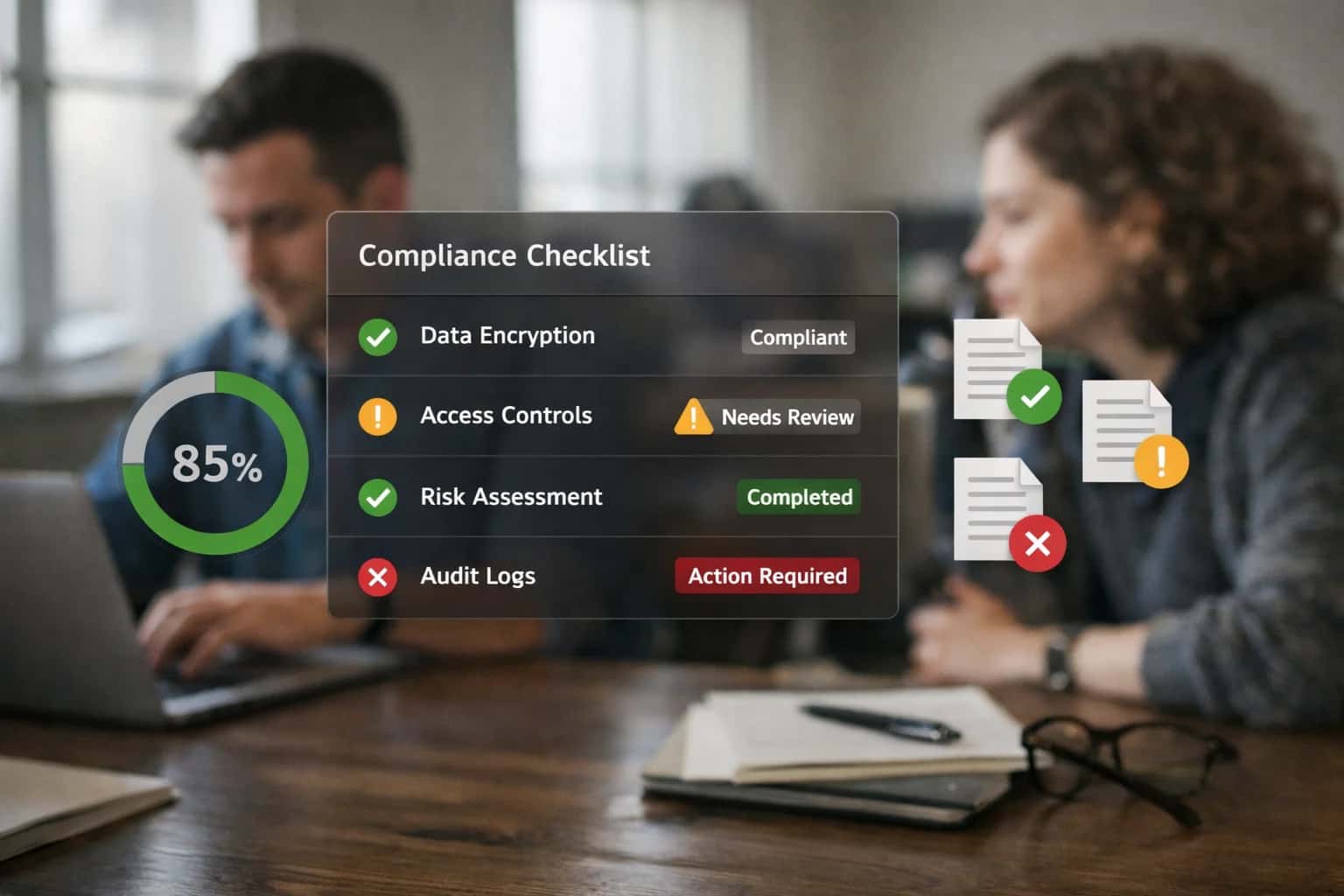
ARCHITECTURE & GOVERNANCE
Where Secure AI Fits in Regulated Sales Enablement
A technical blueprint for integrating AI into Seismic, Highspot, and Showpad with enterprise-grade security, compliance, and audit controls.
Implementation focuses on three key surfaces: the content management system (CMS), the user activity pipeline, and the administrative control plane. In Seismic, this means using its APIs to tag and classify new assets with AI, but writing all metadata and generated summaries back to Seismic's structured fields for compliance review. For Showpad, AI can analyze coaching session recordings, but the feedback and scores are appended to the existing coaching record, inheriting its existing permissions and retention policies. The AI layer itself is deployed in the customer's VPC or a compliant cloud tenant, with data never persisting in external model training environments.
Rollout is phased, starting with read-only AI analysis (e.g., content gap analysis, stale asset detection) that poses no compliance risk, then progressing to assisted generation (drafting content within a human-in-the-loop approval workflow in the platform), and finally to prescriptive automation (dynamic content recommendations). Each phase requires updating the platform's data processing agreements (DPAs) and configuring role-based access controls (RBAC) to ensure only authorized users can trigger or approve AI actions. Governance is maintained by instrumenting the AI service to log all prompts, context data, and outputs to a SIEM or dedicated LLMOps platform like Weights & Biases or Arize AI, creating a parallel audit trail for model behavior and drift detection.
ARCHITECTURE FOR GOVERNED AI
Secure Integration Surfaces by Platform
Core Content Repositories
Integrate AI directly with the central content libraries in Seismic, Highspot, and Showpad. This surface governs how AI accesses and enriches sales assets under strict compliance controls.
Key Integration Points:
- Asset Metadata APIs: Use platform APIs to read and write structured metadata (tags, categories, compliance flags) for AI-driven classification and lifecycle management.
- Document Ingestion Webhooks: Trigger AI workflows when new assets are uploaded—automatically generating summaries, extracting key claims, and checking for policy violations.
- Version Control Systems: Ensure AI suggestions reference only the latest approved asset versions, with audit trails logging any AI-generated draft or modification.
Security Controls: Implement role-based access (RBAC) so AI models only process content the authenticated user is permitted to view. All AI interactions with content libraries must be logged for compliance audits (e.g., FINRA, HIPAA in relevant industries).
FOR SALES ENABLEMENT PLATFORMS
High-Value, Secure AI Use Cases
Practical AI integration patterns for Seismic, Highspot, and Showpad that enhance seller productivity while enforcing strict data security, compliance, and audit controls required for enterprise sales.
01
Secure Content Recommendation Engine
Implement an AI layer that analyzes CRM opportunity stage, buyer role, and engagement history to recommend the most relevant, compliant asset from Seismic or Highspot. Uses role-based access control (RBAC) to enforce content permissions and logs all recommendations to an audit trail for compliance reviews.
Batch -> Real-time
Recommendation latency
02
Automated Battle Card Maintenance
Deploy an AI agent that monitors competitive news, earnings calls, and win/loss interviews. It automatically drafts updates for battle cards in Highspot or Showpad, flagging them for legal/compliance review before publishing. Ensures competitive intelligence is current without manual scraping.
1 sprint
Update cycle reduction
03
Compliant Call Prep Assistant
Build an AI workflow that pulls data from the CRM and conversation intelligence tools to generate a personalized briefing document in the seller's Highspot or Seismic workspace. The system redacts sensitive data based on deal permissions and creates an immutable log of all generated materials for regulatory purposes.
Hours -> Minutes
Prep time
04
Governed Content Generation & Summarization
Integrate secure LLMs with your Seismic or Showpad content library to automatically generate first drafts of proposals or summarize lengthy product sheets for sellers. All outputs are watermarked as 'AI-generated' and routed through a human-in-the-loop approval workflow before being marked as compliant for use.
Same day
Draft turnaround
05
Intelligent Deal Room Curation
Create AI-powered Highspot deal rooms that dynamically curate content based on detected buyer interest and stage. The system tracks all content views and downloads within the deal room, feeding analytics back to the CRM while maintaining a full audit log of buyer engagement for security and forecasting.
Manual -> Automated
Content curation
06
Secure, Semantic Asset Search
Implement a Retrieval-Augmented Generation (RAG) system over your Seismic or Showpad content library, enabling natural language search (e.g., 'assets for cost-conscious manufacturing buyers'). The search index is built from a secure vector database, and all queries are permission-filtered based on the user's role and content entitlements.
Keyword -> Semantic
Search relevance
IMPLEMENTATION PATTERNS
Secure AI Workflow Examples
Concrete, secure automation flows for integrating AI into Seismic, Highspot, and Showpad. Each workflow details the trigger, data handling, AI action, and system update, with explicit governance controls.
Trigger: A new competitor announcement is detected via a monitored RSS feed or news API.
Context/Data Pulled:
- The system authenticates via OAuth 2.0 to the sales enablement platform's API (e.g., Highspot's Content API).
- It retrieves the existing battle card template and associated compliance tags.
- It fetches the raw announcement text and any related product documentation from a secure internal wiki.
Model or Agent Action: A governed LLM call is made with a strict system prompt instructing it to:
- Extract key features, pricing, and positioning from the announcement.
- Compare against a predefined list of our differentiators stored in a vector database.
- Generate draft sections for "Our Strengths," "Key Objections," and "Conversation Starters."
- Crucially: The prompt enforces a "do not hallucinate" rule and requires citations from the source text.
System Update or Next Step:
- The draft is written to a secure object (e.g., a
DraftBattleCardrecord) in the enablement platform via API, flagged withstatus: pending_review. - An audit log entry is created, recording the source materials, model used, timestamp, and generating user/service account.
- A workflow notification is sent to the designated product marketing manager in Slack or Teams for review and approval.
Human Review Point: Mandatory. The AI-generated draft cannot be published without a human reviewer modifying its status to approved. All drafts and their audit trails are retained for compliance.
GOVERNANCE AND COMPLIANCE CONTROLS
Secure Implementation Architecture
A technical blueprint for integrating AI into sales enablement platforms while enforcing strict data security, auditability, and compliance guardrails.
Production AI integrations for platforms like Seismic, Highspot, and Showpad must be architected with a zero-trust data model. This means implementing a secure proxy layer that sits between the enablement platform's APIs and the AI service (e.g., OpenAI, Anthropic). This layer is responsible for data redaction, PII scrubbing, and role-based access control (RBAC) before any content or user data is sent for processing. For instance, when an AI agent generates a battle card summary, the request should be stripped of internal opportunity IDs, customer names, and financials unless explicitly permitted by the user's entitlements and the content's classification.
All AI-generated outputs and user interactions must be logged to an immutable audit trail. This includes the original user query, the redacted prompt sent to the model, the raw model response, any post-processing applied, and the final content delivered back to the enablement platform (e.g., a new asset in Seismic). These logs should be linked to the user's session and the specific content object (like a Highspot Play or a Showpad Coach module) to support compliance reviews and model performance monitoring. For regulated industries, this architecture supports e-discovery and fulfills requirements for demonstrating control over AI-assisted content creation.
Rollout follows a phased, human-in-the-loop approval workflow. Initial integrations might only allow AI to suggest content tags or generate first drafts, which are then routed through existing platform approval chains (e.g., Seismic's content review workflows) before publication. As trust is built, automated checks for compliance keywords or competitive claims can be added. The entire system should be deployed in the customer's cloud environment (AWS, Azure, GCP) to maintain data sovereignty, with model endpoints and vector databases (like Pinecone or Weaviate) provisioned within the same VPC as the sales enablement platform to minimize latency and data egress.
IMPLEMENTATION BLUEPRINT
Secure Code and Payload Patterns
Secure API Authentication & Token Management
Sales enablement platforms like Seismic, Highspot, and Showpad expose REST APIs for integration, but handling authentication securely is critical. Use OAuth 2.0 with client credentials or authorization code flows, never storing secrets in client-side code.
Implement a secure token service that:
- Caches and automatically refreshes access tokens using refresh tokens.
- Logs all token issuance and usage for audit trails.
- Enforces strict scopes (e.g.,
content.read,analytics.write) to adhere to the principle of least privilege.
For AI services calling these APIs, use service accounts with narrowly defined permissions. Rotate credentials regularly and monitor for anomalous access patterns, especially when AI agents perform automated content searches or updates.
AI-ENHANCED SECURITY AND GOVERNANCE
Realistic Time Savings and Operational Impact
How AI integration with governance controls impacts key sales enablement workflows, balancing automation with compliance.
| Workflow | Before AI | After AI | Key Governance Notes |
|---|---|---|---|
New Asset Review & Tagging | Manual review by enablement team (1-2 days) | AI-assisted classification & compliance pre-screening (2-4 hours) | AI flags potential compliance issues; final approval and tagging remain manual. |
Content Search & Retrieval | Keyword-based search, manual filtering for relevance | Semantic search with compliance-aware ranking | Search results are filtered based on user role, geography, and content certification status. |
Battle Card Updates | Quarterly manual refresh by product marketing | AI-monitored triggers for updates, drafts suggested changes | All AI-suggested changes are logged and require marketing approval before publishing. |
Personalized Content Bundle Creation | Manual assembly by seller or SE for key deals | AI-generated draft bundles from approved library | Bundles are assembled only from pre-approved assets; usage is logged to an audit trail. |
Coaching Feedback on Recorded Pitches | Manager review, feedback delayed by days | AI provides initial analysis on messaging & tone | AI analysis is for coaching only; no scoring or permanent record without manager review and approval. |
Regulatory Document Summarization | Legal/Compliance team creates summaries (1 week+) | AI generates first-draft summaries for review | Summaries are watermarked as 'AI-Assisted' and must be validated by compliance before sharing. |
User Access & Permission Audits | Quarterly manual audit by platform admin | AI identifies anomalous access patterns for review | AI flags potential issues; all permission changes require manual admin action with documented rationale. |
ARCHITECTING FOR ENTERPRISE CONTROL
Governance, Compliance, and Phased Rollout
A practical guide to implementing AI in Seismic, Highspot, and Showpad with enterprise-grade security, auditability, and controlled adoption.
Integrating AI into sales enablement platforms like Seismic, Highspot, and Showpad requires a governance-first architecture. This means implementing strict controls at the data layer: all AI model calls should be routed through a secure gateway that enforces role-based access control (RBAC) to content libraries, logs all prompts and completions for audit trails, and redacts sensitive fields (e.g., PII, deal-specific financials) before data leaves the platform's environment. For regulated industries, this often involves deploying a private inference endpoint and configuring the integration to only process content from designated, pre-approved libraries.
A phased rollout is critical for adoption and risk management. Start with a read-only pilot focused on low-risk, high-value workflows, such as using AI to tag and categorize new assets in the Showpad content library or generating semantic search indexes for Highspot. This phase validates the technology, establishes performance baselines, and builds trust. Phase two introduces assistive generation, like AI-drafted battle card updates in Highspot or meeting briefing summaries in Seismic, with a mandatory human-in-the-loop review and approval step before any AI-generated content is published or shared with sellers.
For full-scale deployment, integrate AI into live workflows like dynamic content recommendations in Seismic Playbooks or real-time coaching feedback in Showpad. At this stage, implement continuous monitoring to track content usage patterns, model drift in recommendation quality, and user feedback loops. Establish a clear governance council with representatives from Sales Enablement, Legal, Compliance, and IT to review AI-generated content policies, approve new use cases, and manage the lifecycle of integrated models. This structured approach ensures the AI augments seller productivity without introducing compliance or brand risk.
Enabling Efficiency, Speed & Accuracy
Intelligent Analysis, Decision & Execution
We build AI systems for teams that need search across company data, workflow automation across tools, or AI features inside products and internal software.
Talk to Us
Search across company data
Give teams answers from docs, tickets, runbooks, and product data with sources and permissions.
Useful when people spend too long searching or get different answers from different systems.
Enterprise searchRAGPermissions
Read more
Automate internal workflows
Use AI to route work, draft outputs, trigger actions, and keep approvals and logs in place.
Useful when repetitive work moves across multiple tools and teams.
AI agentsWorkflow automationGovernance
Read more
Add AI to products and internal tools
Build assistants, guided actions, or decision support into the software your team or customers already use.
Useful when AI needs to be part of the product, not a separate tool.
AI integrationDecision supportModel routing
Read moreIMPLEMENTATION & GOVERNANCE
FAQ: Secure AI for Sales Enablement
Technical and security questions for integrating AI with Seismic, Highspot, and Showpad while maintaining strict data governance, compliance, and audit controls.
We implement a zero-trust data pipeline for AI integrations, ensuring sensitive sales data never leaves your controlled environment unnecessarily.
Key Security Patterns:
- Data Masking & Filtering at Source: Before any data is sent to an external LLM API (e.g., OpenAI, Anthropic), we use middleware to strip PII, financials, and other sensitive fields defined by your compliance team. This happens at the API connector level (e.g., Salesforce-to-AI bridge).
- Private Endpoints & VPC Peering: For cloud-hosted models, we configure private endpoints. For platforms like Seismic or Highspot hosted in your VPC, we keep the entire AI inference loop within your network using containerized models (e.g., via SageMaker, Azure ML, or self-hosted Ollama).
- Role-Based Context Windows: The AI agent's "context" (the data it sees) is dynamically scoped based on the user's CRM permissions. A manager might see aggregated team data, while a rep only sees their own opportunities.
Example Payload Filtering:
json// Original CRM payload for call prep { "opportunity": { "id": "0063x00000A1B2C3D", "name": "Acme Corp Expansion", "amount": 250000, "account": { "name": "Acme Corp", "billing_street": "123 Main St", // PII - REMOVED "billing_city": "Anytown" // PII - REMOVED }, "contacts": [ { "name": "Jane Doe", "email": "[email protected]" } // PII - REMOVED ] } } // Filtered payload sent to LLM { "opportunity": { "id": "HASHED_ID_XYZ123", "name": "Client Expansion Project", // Anonymized "stage": "Proposal", "key_challenges": ["Need to demonstrate ROI", "Security review pending"] // Non-PII context only } }
This ensures the model generates relevant insights without exposing raw sensitive data.

About the author
Prasad Kumkar
CEO & MD, Inference Systems
Prasad Kumkar is the CEO & MD of Inference Systems and writes about AI systems architecture, LLM infrastructure, model serving, evaluation, and production deployment. Over 5+ years, he has worked across computer vision models, L5 autonomous vehicle systems, and LLM research, with a focus on taking complex AI ideas into real-world engineering systems.
His work and writing cover AI systems, large language models, AI agents, multimodal systems, autonomous systems, inference optimization, RAG, evaluation, and production AI engineering.
LinkedIn
Limited slotsGet a Free AI Consultation
Partnered with leading AI, data, and software stack.





How We Work
Custom AI workflows for your Business
One-fit-all AI don't work for modern businesses. At Inferensys, we aim to understand your business & custom requirements; which we use to define most efficient agentic workflows, the data, and the tools for your business.
01
Review the use case
We understand the task, the users, and where AI can actually help.
Read more02
Pick the right approach
We define what needs search, automation, or product integration.
Read more03
Build the first useful version
We implement the part that proves the value first.
Read more04
Improve from there
We add the checks and visibility needed to keep it useful.
Read moreThe first call is a practical review of your use case and the right next step.
Talk to Us