For platform administrators, AI integration targets high-volume, repetitive tasks tied to the platform's user and content lifecycle. This includes automating user onboarding/offboarding workflows by syncing with your HRIS (like Workday or BambooHR) to provision or deactivate accounts, assign role-based permissions, and enroll new hires in default learning paths. AI can also manage content permissions and governance by analyzing asset metadata and usage patterns to suggest or automatically apply access controls, flag outdated materials for archival, and identify duplicate assets across libraries.

Integration
AI Integration for Sales Platform Administration
A technical blueprint for automating the administrative overhead of sales enablement platforms (Seismic, Highspot, Showpad, Mindtickle) using AI. Reduce manual work in user lifecycle management, content permissions, reporting, and adoption monitoring.
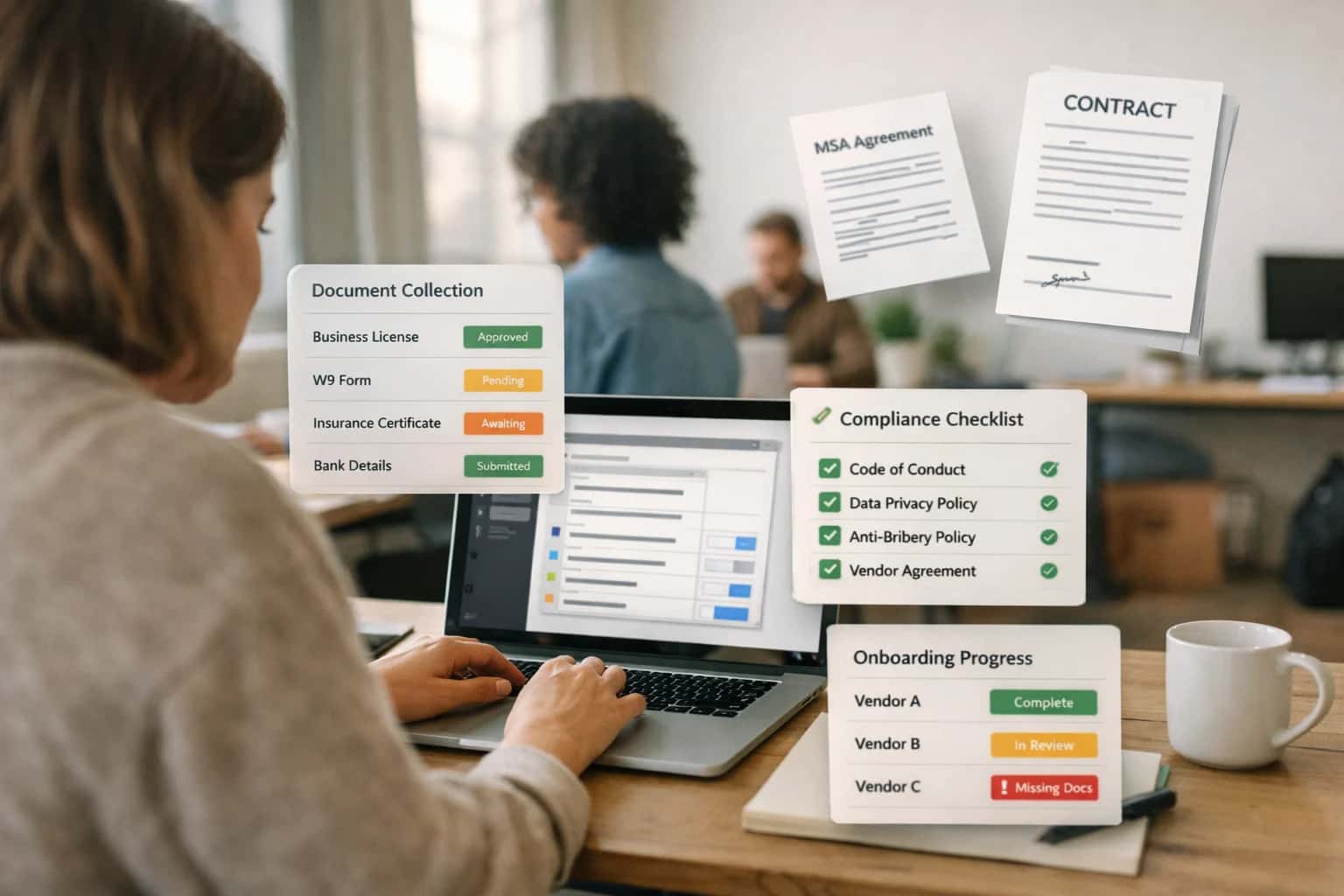
AUTOMATING PLATFORM OPERATIONS
Where AI Fits into Sales Enablement Platform Administration
A technical blueprint for using AI to automate administrative workflows in Seismic, Highspot, Showpad, and Mindtickle.
Implementation typically involves connecting the enablement platform's administrative APIs to an orchestration layer. For example, an AI agent can listen for user.created webhooks from your HRIS, call the Seismic or Highspot API to create the user profile, then trigger a series of tasks in Mindtickle to assign initial training. For reporting, AI can be configured to run scheduled queries against platform analytics endpoints, synthesize the data, and generate executive summaries on adoption rates, content engagement hotspots, or license utilization—surfacing anomalies like low-activity users or underperforming content folders that require manual intervention.
Rollout should start with a single, high-impact workflow like automated user provisioning or weekly adoption dashboards. Governance is critical: all AI-driven administrative actions should be logged to an audit trail, and sensitive operations (like bulk permission changes) should route through an approval queue or require a human-in-the-loop confirmation. This approach transforms the admin role from manual configuration and reactive reporting to managing an intelligent automation layer that handles routine operations, freeing up capacity for strategic platform optimization and change management.
SALES ENABLEMENT PLATFORMS
Administrative Surfaces for AI Integration
Automating User Lifecycle Operations
AI can automate the most time-consuming administrative tasks: user onboarding, offboarding, and permission management. For platforms like Seismic, Highspot, Showpad, and Mindtickle, this involves integrating with your HRIS (Workday, BambooHR) or identity provider (Okta, Microsoft Entra) via SCIM or custom APIs.
Key AI Workflows:
- Onboarding: An AI agent ingests a new hire's role, territory, and product focus from the HRIS. It automatically provisions the user in the enablement platform, assigns them to the correct groups, and enrolls them in role-specific learning paths and content collections in Mindtickle or Seismic.
- Permission Audits: AI periodically reviews user access against role changes or offboarding events flagged in the HRIS, triggering automated deprovisioning workflows to maintain security and compliance.
- Dynamic Group Management: Based on CRM data (e.g., new product assignment in Salesforce), AI can automatically add or remove sellers from content permission groups in Highspot or Showpad, ensuring they always have access to relevant battle cards and playbooks.
SALES ENABLEMENT PLATFORMS
High-Value AI Use Cases for Platform Admins
For administrators of Seismic, Highspot, Showpad, and Mindtickle, AI integration automates the operational heavy lifting of user management, content governance, and adoption analytics, freeing you to focus on strategic enablement.
01
Automated User Lifecycle Management
Connect AI to your HRIS (Workday, BambooHR) and identity provider (Okta) to automate user onboarding/offboarding workflows. AI agents can provision platform access, assign role-based content permissions, and populate user profiles—reducing manual setup from hours to minutes and ensuring compliance.
Hours -> Minutes
Setup time per user
02
Intelligent Content Permissioning & Audits
Use AI to analyze content sensitivity, regional compliance rules, and team hierarchies to suggest and enforce permission sets. Automate quarterly access reviews by flagging inactive users or over-permissioned assets, generating audit-ready reports for security and legal teams.
Batch -> Continuous
Compliance monitoring
03
Predictive Platform Health & Adoption Dashboards
Go beyond native analytics. Build an AI layer that ingests usage logs from all platforms to predict adoption risks. Identify teams with low content engagement, correlate training completion with CRM activity, and automatically alert managers with tailored intervention recommendations.
Reactive -> Proactive
Insight delivery
04
AI-Powered Content Library Operations
Automate the tagging, categorization, and lifecycle management of sales assets. AI models can scan new uploads to Seismic or Highspot, apply metadata, identify duplicates or outdated versions, and recommend archival—keeping the library searchable and relevant with minimal admin effort.
1 sprint
Monthly cleanup saved
05
Dynamic Learning Path Orchestration
For Mindtickle admins, use AI to create adaptive learning journeys. Analyze assessment results and content consumption patterns to dynamically adjust training modules for each seller, ensuring onboarding and continuous training are personalized and efficient, maximizing platform ROI.
Static -> Adaptive
Training delivery
06
Cross-Platform Configuration Sync
Orchestrate configuration changes (e.g., new sales play, product launch) across Seismic, Highspot, and Showpad via AI workflows. An AI agent can interpret a change brief, execute API calls to update playbooks, content hubs, and coaching modules in parallel, ensuring consistency and saving days of manual work.
Days -> Hours
Rollout coordination
AUTOMATE PLATFORM OPERATIONS
Example AI-Powered Administrative Workflows
For administrators of Seismic, Highspot, Showpad, and Mindtickle, AI can automate time-consuming operational tasks, reduce manual errors, and provide proactive insights into platform health and user adoption. Below are concrete workflows that integrate AI directly into administrative consoles and backend processes.
Trigger: A new user is created in the HRIS (e.g., Workday) or a termination event is logged.
AI Agent Action:
- The agent receives the webhook payload and validates the user's role (e.g., Account Executive, Sales Manager).
- It calls the sales enablement platform's Admin API to check for an existing user.
- For onboarding: The agent executes a sequence:
- Creates the user account with role-based permissions.
- Assigns the user to the correct teams, groups, or territories.
- Enrolls them in mandatory initial learning paths in Mindtickle or Showpad.
- Adds them to relevant content distribution lists in Seismic or Highspot.
- Sends a personalized welcome email with platform links and initial tasks.
- For offboarding: The agent:
- Revokes platform access and archives the user profile.
- Reassigns ownership of their active content (e.g., personal decks in Seismic) to their manager.
- Logs the completion of the workflow to an audit trail.
Human Review Point: The agent can be configured to send a summary report to the admin for final approval before executing offboarding steps, especially for managerial roles.
AUTOMATING PLATFORM OPERATIONS
Implementation Architecture: Connecting AI to Admin APIs
A technical blueprint for integrating AI into the administrative workflows of sales enablement platforms to automate user management, content governance, and adoption analytics.
The core of this integration connects AI agents to the administrative APIs of platforms like Seismic, Highspot, Showpad, and Mindtickle. Key surfaces include:
- User & Permission APIs: For automating onboarding/offboarding workflows, role-based access control (RBAC) updates, and license management.
- Content Management APIs: To programmatically tag, categorize, archive, or set expiration dates on assets based on AI analysis of usage and relevance.
- Analytics & Event APIs: To stream user activity, content engagement, and training completion data into a central warehouse for AI-powered adoption analysis.
- Webhook Listeners: To trigger AI workflows in response to platform events, such as a new user creation or a content upload requiring classification.
Implementation typically involves a middleware orchestration layer (e.g., using n8n or a custom service) that:
- Polls or receives events from the enablement platform's APIs.
- Routes tasks to specialized AI agents—a user management agent calling the Okta API for provisioning, a content governance agent using a vision model to audit asset compliance, or an analytics agent running anomaly detection on platform usage.
- Executes approved actions back through the admin API, such as archiving an outdated battle card or assigning a new user to a learning path.
- Logs all actions with a full audit trail for governance, crucial for regulated industries like financial services or pharma.
Rollout should be phased, starting with low-risk, high-volume tasks like automated user onboarding ticket triage or content tagging. Governance is critical: establish clear approval gates for any AI-driven admin action (e.g., a human-in-the-loop review for permission changes) and implement rigorous monitoring for the AI orchestration layer itself. The result shifts administrative work from reactive, manual tasks to a proactive, exception-handling model, freeing enablement teams to focus on strategy rather than platform operations.
ADMINISTRATOR WORKFLOWS
Code and Payload Examples
Automating Onboarding & Offboarding
Administrators can use AI to automate user provisioning and deprovisioning across Seismic, Highspot, and Showpad by integrating with HRIS systems like Workday or BambooHR. A webhook-triggered workflow listens for user.created or user.terminated events, then calls the respective platform's User Management API to create or deactivate accounts, assign role-based permissions, and enroll users in default learning paths.
This reduces manual setup from hours to minutes and ensures compliance by automatically revoking access. The AI can also analyze the new user's role and territory to personalize their initial content library and training assignments.
Example Webhook Payload (HRIS → Orchestrator):
json{ "event": "user.terminated", "user_id": "emp_78910", "email": "[email protected]", "effective_date": "2024-05-15", "platforms": ["seismic", "highspot"] }
AI FOR PLATFORM ADMINISTRATION
Realistic Time Savings and Operational Impact
How AI integration automates core administrative workflows in sales enablement platforms, freeing admins from manual tasks to focus on strategic enablement.
| Administrative Task | Before AI | After AI | Key Notes |
|---|---|---|---|
User Onboarding/Offboarding | Manual account creation, group assignment, and content permissioning | Automated provisioning based on HRIS sync and role templates | Reduces setup errors; ensures immediate platform access for new hires |
Content Permission Audits | Quarterly manual review of user groups and asset access | Continuous, policy-driven monitoring with anomaly alerts | Maintains compliance; identifies stale permissions proactively |
Usage & Adoption Reporting | Weekly manual data pulls and spreadsheet analysis | Automated dashboard generation with anomaly highlighting | Shifts focus from report building to interpreting insights and acting on them |
Stale Content Identification | Manual quarterly review based on last-modified date | AI-driven analysis of engagement signals and relevance scoring | Targets archiving of truly unused assets, preserving library quality |
Platform Health Monitoring | Reactive support tickets from users experiencing issues | Proactive alerts on system performance and user error patterns | Reduces downtime and user frustration; improves overall platform reliability |
Training Assignment & Tracking | Manual assignment of learning paths and follow-up on completion | Dynamic path assignment based on role/gap analysis with automated nudges | Increases completion rates; personalizes development at scale |
Support Ticket Triage | Manual categorization and routing of admin support requests | AI-assisted classification and initial response drafting | Accelerates resolution for common issues; allows admins to handle complex cases |
ADMINISTRATIVE CONTROL AND SAFE DEPLOYMENT
Governance, Security, and Phased Rollout
A practical framework for deploying AI tools to sales enablement administrators with proper oversight, security, and a low-risk rollout.
For platform administrators, AI integrations must operate within the existing user and content permission models of Seismic, Highspot, Showpad, or Mindtickle. This means any AI agent or automation should inherit its access rights from the underlying platform's roles (e.g., Admin, Content Manager, Group Leader) and respect folder-level content permissions. For example, an AI that generates usage reports should only surface data for the groups and users the administrator is authorized to see. API calls for user provisioning or content tagging must be executed with appropriate service accounts and logged to the platform's native audit trail for full traceability.
A phased rollout is critical for administrative tools. Start with read-only analytics and reporting use cases. Deploy an AI agent that ingests platform activity logs to identify adoption issues—like users who haven't logged in for 30 days or content folders with zero engagement—and generates summary reports. This provides immediate value without modifying system state. Phase two introduces assistive automation, such as an AI copilot that suggests user onboarding templates or content tagging schemas based on library analysis, but requires administrator approval before execution. The final phase enables controlled write-back operations, like using AI to automatically offboard users based on HR system signals or archive outdated assets, governed by a multi-step approval workflow within the platform.
Security is paramount. All AI interactions with the platform's APIs should use OAuth 2.0 with the principle of least privilege, and any sensitive data processed by models (e.g., user PII in reports) must be handled in accordance with your data residency and privacy policies. Implement a human-in-the-loop review step for any AI-generated administrative action, such as bulk permission changes, and maintain a separate audit log of all AI-initiated activities. This controlled approach allows administrators to harness AI for operational efficiency—reducing manual report generation from hours to minutes and proactively managing platform health—while maintaining the governance and security posture required for enterprise sales enablement platforms.
Enabling Efficiency, Speed & Accuracy
Intelligent Analysis, Decision & Execution
We build AI systems for teams that need search across company data, workflow automation across tools, or AI features inside products and internal software.
Talk to Us
Search across company data
Give teams answers from docs, tickets, runbooks, and product data with sources and permissions.
Useful when people spend too long searching or get different answers from different systems.
Enterprise searchRAGPermissions
Read more
Automate internal workflows
Use AI to route work, draft outputs, trigger actions, and keep approvals and logs in place.
Useful when repetitive work moves across multiple tools and teams.
AI agentsWorkflow automationGovernance
Read more
Add AI to products and internal tools
Build assistants, guided actions, or decision support into the software your team or customers already use.
Useful when AI needs to be part of the product, not a separate tool.
AI integrationDecision supportModel routing
Read moreAI INTEGRATION FOR SALES ENABLEMENT ADMINISTRATION
Frequently Asked Questions
Common technical and operational questions about implementing AI to automate administrative workflows in Seismic, Highspot, Showpad, and Mindtickle.
AI can orchestrate user lifecycle management by connecting to your identity provider (e.g., Okta, Azure AD) and the enablement platform's Admin APIs.
Typical Workflow:
- Trigger: A new hire is provisioned in the HRIS (e.g., Workday) or a user is deactivated in the IdP.
- AI Agent Action: An AI agent interprets the event, determines the correct user profile, license tier, and content permissions based on role (e.g., "Enterprise AE", "Sales Manager").
- System Updates: The agent executes API calls to:
- Seismic/Highspot: Create user, assign to correct groups/workspaces, apply content permission templates.
- Showpad: Enroll in appropriate learning tracks and coaching groups.
- Mindtickle: Add to relevant learning paths and certification programs.
- Human Review Point: For offboarding, the agent can generate a report of the user's content and data for archival, flagging any ownership transfers needed for an admin to approve.
Key Benefit: Reduces manual admin work from 30+ minutes per user to near-zero, ensuring consistency and immediate access for new sellers.

About the author
Prasad Kumkar
CEO & MD, Inference Systems
Prasad Kumkar is the CEO & MD of Inference Systems and writes about AI systems architecture, LLM infrastructure, model serving, evaluation, and production deployment. Over 5+ years, he has worked across computer vision models, L5 autonomous vehicle systems, and LLM research, with a focus on taking complex AI ideas into real-world engineering systems.
His work and writing cover AI systems, large language models, AI agents, multimodal systems, autonomous systems, inference optimization, RAG, evaluation, and production AI engineering.
LinkedIn
Limited slotsGet a Free AI Consultation
Partnered with leading AI, data, and software stack.





How We Work
Custom AI workflows for your Business
One-fit-all AI don't work for modern businesses. At Inferensys, we aim to understand your business & custom requirements; which we use to define most efficient agentic workflows, the data, and the tools for your business.
01
Review the use case
We understand the task, the users, and where AI can actually help.
Read more02
Pick the right approach
We define what needs search, automation, or product integration.
Read more03
Build the first useful version
We implement the part that proves the value first.
Read more04
Improve from there
We add the checks and visibility needed to keep it useful.
Read moreThe first call is a practical review of your use case and the right next step.
Talk to Us