This integration focuses on two primary data flows. First, campaign-to-content synchronization: AI monitors active campaigns in Marketo or HubSpot Marketing Hub—tracking target segments, key messages, and promoted assets—and automatically tags or surfaces corresponding materials in Seismic or Highspot. This ensures a seller searching for 'Q3 enterprise cloud migration' gets battle cards and case studies tied to that exact campaign, not generic content. Second, content-to-campaign feedback: AI analyzes content usage data from sales enablement platforms (downloads, shares, time spent) and feeds it back into marketing automation to score campaign engagement and refine audience segments, creating a closed-loop system.

Integration
AI Integration for Marketing and Sales Alignment
Architect an AI layer that connects marketing automation platforms to sales enablement systems, ensuring sellers use content aligned with active campaigns, buyer intent, and messaging.
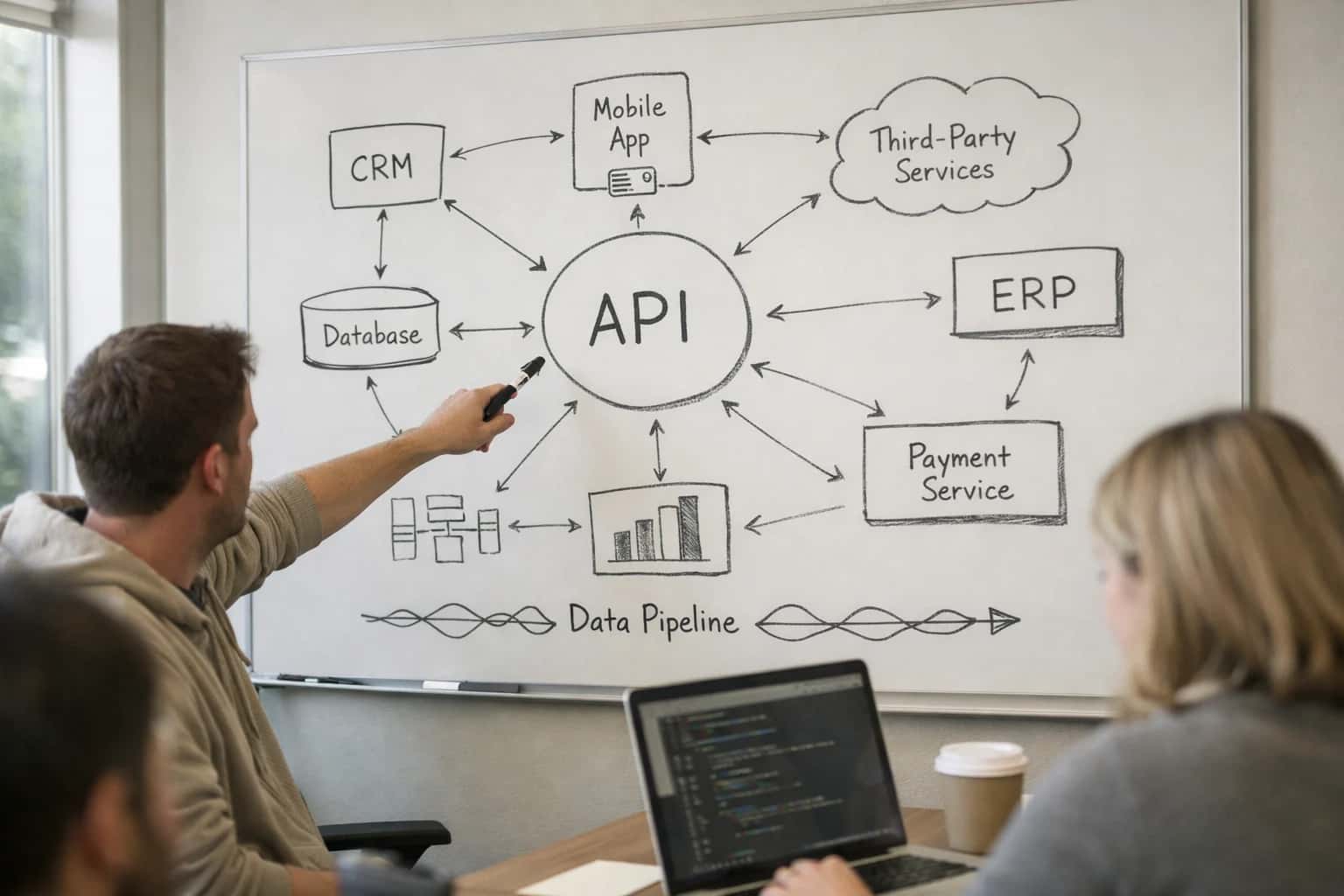
ARCHITECTING MARKETING-SALES ALIGNMENT
The AI Bridge Between Marketing Campaigns and Seller Content
A technical blueprint for connecting AI between marketing automation (Marketo, HubSpot) and sales enablement (Seismic, Highspot) to ensure sellers use content aligned with active campaigns.
Implementation requires orchestrating APIs and webhooks between systems. A central integration layer, often built with a workflow engine like n8n or a custom service, ingests campaign metadata and asset libraries. It uses LLMs to perform semantic matching, mapping campaign themes to enablement content beyond simple keyword tags. For example, a campaign about 'reducing operational overhead' can be matched to case studies discussing 'IT automation' and 'staff efficiency.' This layer then writes these associations back to the sales enablement platform's metadata schema via its REST API, making them available for search and recommendation engines. Critical governance includes an approval workflow for AI-suggested mappings and audit logs tracking which campaign triggered which content update.
Rollout should be phased, starting with a single high-impact campaign and a pilot sales segment. Use the integration to power a dynamic content hub in Seismic or a smart deal room in Highspot that automatically populates with campaign-relevant assets based on the opportunity's industry or source. Measure success through leading indicators like the percentage of campaign-tagged assets used in seller interactions and lagging indicators like influenced pipeline velocity. This architecture turns the often-manual, error-prone process of marketing-sales content alignment into a real-time, data-driven workflow, ensuring sellers are always equipped with the most current and contextually relevant messaging.
ARCHITECTURAL BLUEPRINT
Where AI Connects: Marketing and Sales Enablement Touchpoints
Automating Asset Alignment with Active Campaigns
AI bridges the gap between marketing automation platforms (Marketo, HubSpot) and sales enablement content libraries (Seismic, Highspot). The integration monitors active campaign themes, target segments, and messaging to automatically tag, recommend, and surface the most relevant sales assets.
Key Workflow: When a new campaign launches in Marketo, an AI agent analyzes the campaign brief and target persona. It then queries the Seismic content library via API, using semantic search to find matching case studies, battle cards, and email templates. These assets are automatically assembled into a campaign-specific folder or playlist for the sales team, with usage instructions generated for sellers. This ensures sellers use on-message materials, reducing content sprawl and accelerating campaign ramp-up.
BRIDGING MARKETING AUTOMATION AND SALES ENABLEMENT
High-Value Use Cases for AI-Powered Alignment
Aligning marketing campaigns with seller execution requires real-time data flow and intelligent orchestration. These use cases show where an AI layer can automate the handoff, ensuring sellers use the right content at the right time.
01
Campaign-Aware Content Recommendations
Integrate AI with Marketo/HubSpot and Seismic/Highspot to analyze active campaign audiences and goals. The system automatically surfaces the most relevant battle cards, email templates, and case studies within the seller's workflow, tagged to the specific campaign. This moves content selection from manual search to context-driven suggestion.
Batch -> Real-time
Content sync
02
Automated Battle Card Generation
When marketing launches a new campaign or product update, an AI workflow ingests the press release, messaging docs, and competitive briefs. It then generates a first-draft battle card in Highspot or Seismic, complete with key talking points, objection handlers, and linked assets. This cuts the enablement cycle from days to hours.
Days -> Hours
Enablement speed
03
Closed-Loop Content Performance
Bridge CRM opportunity data with content usage logs from sales enablement platforms. An AI model correlates specific asset usage with deal stage progression and win rates. It provides marketing with actionable feedback on which campaign materials are actually influencing deals, informing future content strategy.
04
Dynamic Playbook Assembly
For complex, multi-touch campaigns, AI assembles personalized sales playbooks in Seismic or Showpad. It pulls in campaign messaging, target account intelligence, relevant case studies, and email sequences based on the deal's industry and stage. Sellers get a tailored guide instead of a generic folder.
1 sprint
Setup time saved
05
Real-Time Messaging Alignment
Analyze seller-generated content (emails, proposals) against approved campaign messaging using AI. The system flags deviations or outdated claims and suggests compliant, on-brand alternatives from the central library. This ensures consistency and reduces compliance risk in regulated industries.
06
Predictive Content Gaps
Monitor seller search queries in Seismic/Highspot and deal stage stalls in the CRM. AI identifies patterns where sellers are looking for content that doesn't exist—predicting content gaps before they block deals. It automatically generates requests to marketing for assets on specific topics or competitor responses.
Proactive
Issue detection
BRIDGING MARKETING AUTOMATION AND SALES ENABLEMENT
Example AI Orchestration Workflows
These workflows illustrate how an AI orchestration layer can synchronize data and actions between marketing platforms (like Marketo or HubSpot) and sales enablement platforms (like Seismic or Highspot), ensuring sellers use content aligned with active campaigns and buyer intent.
Trigger: A sales rep opens an opportunity record in the CRM for a target account.
AI Orchestration Flow:
- The AI agent queries the CRM for the account's industry, segment, and any associated marketing campaign IDs.
- It calls the marketing automation platform's API (e.g., Marketo) to fetch the active campaign's core messaging, target personas, and approved assets.
- The agent performs a semantic search across the sales enablement platform's content library (e.g., Seismic), using the campaign messaging and opportunity context as the query.
- It ranks assets not just by generic relevance, but by their alignment with the specific campaign's goals and stage.
System Update: A dynamic content widget within the CRM or enablement platform surfaces the top 3-5 campaign-aligned assets (e.g., a specific case study, a campaign-themed one-pager) with an explanation: "Recommended for ACME Corp, aligned with 'Cloud Migration Q2' campaign."
Human Review Point: The sales rep selects which assets to use or share, providing implicit feedback that trains the recommendation model.
BRIDGING MARKETING AUTOMATION AND SALES ENABLEMENT
Implementation Architecture: Data Flow, APIs, and the AI Layer
A technical blueprint for connecting marketing campaign data to sales enablement platforms, ensuring sellers use content aligned with active messaging.
The core integration pattern involves a central AI orchestration layer that consumes real-time data from marketing automation platforms (Marketo, HubSpot) and sales enablement systems (Seismic, Highspot). This layer uses webhooks and API listeners to capture key events: a new campaign launch in Marketo, a content publish in Seismic, or a seller viewing a deal room in Highspot. The AI model's primary job is entity resolution—mapping campaign attributes (target audience, value proposition, offer) to the relevant content objects, playbooks, and battle cards within the seller's enablement platform. This creates a dynamic, context-aware content graph.
Implementation requires bi-directional APIs and a shared context cache. For example, when a seller in Seismic opens an opportunity record synced from Salesforce, the system calls the AI layer with the opportunity's Industry and Deal Stage. The AI layer queries the marketing platform's API for active campaigns targeting that industry, retrieves the approved messaging, and then calls Seismic's Content API to filter and rank assets tagged with those themes. The result is a personalized "Campaign-Aligned Content" widget injected into the seller's workflow. Conversely, content usage data from Highspot (e.g., which battle card was shared) is sent back to the marketing platform to measure campaign influence.
Rollout focuses on phased workflows. Start with a read-only "campaign intelligence" overlay in the enablement platform, showing sellers which active campaigns relate to their accounts. Next, automate the tagging of new content in Seismic or Highspot with campaign IDs upon upload, using AI to analyze the asset's text and imagery. The final phase enables dynamic assembly: using AI to generate a first-draft email sequence in the seller's inbox by pulling approved campaign copy from HubSpot and relevant case studies from Showpad, ready for personalization. Governance is critical; all AI-suggested content must be traceable to its source campaign and include manual approval gates for net-new generated materials before they enter the seller's library.
BRIDGING MARKETING AUTOMATION AND SALES ENABLEMENT
Code and Payload Examples
Real-Time Content Tagging
When a new campaign is launched in Marketo or HubSpot, a webhook triggers an AI workflow to tag relevant assets in Seismic or Highspot. This ensures sellers immediately see content aligned with active messaging.
python# Example: Webhook handler for campaign activation from flask import Flask, request import requests app = Flask(__name__) @app.route('/webhook/campaign-activated', methods=['POST']) def handle_campaign_webhook(): data = request.json campaign_id = data['campaignId'] campaign_name = data['name'] target_segments = data['targetAudience'] # 1. Fetch campaign brief from marketing automation campaign_brief = fetch_campaign_brief(campaign_id) # 2. Use LLM to extract key themes and keywords themes = llm_extract_themes(campaign_brief) # 3. Query sales enablement API for relevant content relevant_assets = query_sales_enablement_api( platform="seismic", filters={"tags": themes, "status": "active"} ) # 4. Apply new campaign tag to matched assets for asset in relevant_assets: tag_asset_with_campaign(asset['id'], campaign_name) return {'status': 'processed', 'assets_tagged': len(relevant_assets)}
This automation keeps the sales content library dynamically synchronized with marketing initiatives, eliminating manual tagging delays.
MARKETING AND SALES ALIGNMENT
Realistic Operational Impact and Time Savings
How an AI integration layer between marketing automation (Marketo, HubSpot) and sales enablement (Seismic, Highspot) changes daily workflows, reduces manual coordination, and accelerates campaign-to-rep execution.
| Workflow | Before AI | After AI | Key Notes |
|---|---|---|---|
Campaign asset distribution to sellers | Manual email blasts and Slack channel updates | Automated, context-aware push to seller libraries | Assets tagged and routed based on seller territory and segment |
Content relevance verification for active deals | Seller manually searches or asks marketing | AI suggests top 3 assets from enablement platform | Uses CRM opportunity stage and buyer role as context |
Messaging gap identification | Quarterly content audits and win/loss interviews | Weekly automated analysis of content usage vs. win rates | Flags underperforming assets and emerging competitor themes |
Personalized battle card assembly | Rep or manager builds from multiple sources | AI drafts first version using campaign briefs and product docs | Human review required for final approval and compliance |
Campaign performance feedback loop | End-of-quarter business review meetings | Automated weekly digest of content engagement by campaign | Shows which assets sellers used and how they influenced deals |
New seller onboarding to active campaigns | Manual training session and resource list | AI-curated 30-day learning path with campaign-specific assets | Dynamically adjusts based on seller role and region |
Competitive response time | Days to research and update battle cards | Hours to draft updates using ingested market intelligence | Marketing approves final version before publishing to enablement platform |
ARCHITECTING A CONTROLLED DEPLOYMENT
Governance, Security, and Phased Rollout
A secure, governed rollout is critical for AI integrations that bridge sensitive marketing and sales systems.
Implementing an AI layer between Marketo/HubSpot and Seismic/Highspot requires strict data governance. The integration must respect existing CRM object permissions, content library access controls, and campaign segmentation rules. AI agents should operate with service accounts that have explicitly scoped API permissions—for example, read-only access to campaign performance data in Marketo and write access only to specific content metadata fields in Seismic. All AI-generated content suggestions or campaign alignments should be logged with an audit trail linking the suggestion to the source data, model version, and triggering user or event for compliance and explainability.
A phased rollout mitigates risk and proves value. Start with a read-only analysis phase: deploy AI to analyze the gap between active marketing campaigns and the content being used by sellers in Seismic, generating visibility reports without taking action. Next, move to a human-in-the-loop recommendation phase: surface AI-aligned content suggestions within Highspot deal rooms, requiring a seller to manually accept and attach the asset. Finally, enable controlled automation: allow the AI to automatically tag new Seismic assets with relevant, active campaign IDs from HubSpot, but only after approval from a marketing operations manager via a dedicated queue in Slack or Microsoft Teams.
Security is paramount when connecting systems holding customer PII and proprietary sales intelligence. All data in transit between platforms and the AI layer must be encrypted. Consider a zero-trust data processing model where sensitive data (e.g., lead scores, opportunity amounts) is not persisted in the AI service's vector stores unless anonymized or aggregated. Use webhooks and event-driven architectures to keep data flows ephemeral. Establish a model governance council with stakeholders from marketing ops, sales enablement, and IT to review new AI use cases, monitor for prompt drift or model hallucination in content recommendations, and approve the expansion of automated workflows.
Enabling Efficiency, Speed & Accuracy
Intelligent Analysis, Decision & Execution
We build AI systems for teams that need search across company data, workflow automation across tools, or AI features inside products and internal software.
Talk to Us
Search across company data
Give teams answers from docs, tickets, runbooks, and product data with sources and permissions.
Useful when people spend too long searching or get different answers from different systems.
Enterprise searchRAGPermissions
Read more
Automate internal workflows
Use AI to route work, draft outputs, trigger actions, and keep approvals and logs in place.
Useful when repetitive work moves across multiple tools and teams.
AI agentsWorkflow automationGovernance
Read more
Add AI to products and internal tools
Build assistants, guided actions, or decision support into the software your team or customers already use.
Useful when AI needs to be part of the product, not a separate tool.
AI integrationDecision supportModel routing
Read moreIMPLEMENTATION AND ARCHITECTURE
Frequently Asked Questions
Technical questions for architects and operations leaders planning an AI layer to synchronize marketing campaigns with seller content.
The core architecture involves a central orchestration layer (often a lightweight service or workflow engine) that:
- Listens for campaign triggers from marketing platforms (Marketo, HubSpot) via webhooks for events like
campaign.launched,segment.updated, orasset.published. - Enriches context by pulling related campaign details, target personas, key messaging, and approved assets from the marketing platform's API.
- Maps to sales content by querying the sales enablement platform's API (Seismic, Highspot) using semantic search/RAG to find existing assets tagged for relevant products, industries, or pain points.
- Executes alignment actions, which typically include:
- Automated content collections: Creating or updating a content playlist or deal room in the seller's platform with the new campaign assets and messaging.
- Seller notifications: Sending an alert via email, Slack, or in-platform notification with a campaign brief and links to the curated content.
- Metadata synchronization: Writing campaign tags (
campaign_id: Q2-Enterprise-Security) back to the relevant assets in the sales enablement platform for future search and reporting.
This flow ensures sellers have contextually relevant, campaign-aligned content without manual searching or assembly.

About the author
Prasad Kumkar
CEO & MD, Inference Systems
Prasad Kumkar is the CEO & MD of Inference Systems and writes about AI systems architecture, LLM infrastructure, model serving, evaluation, and production deployment. Over 5+ years, he has worked across computer vision models, L5 autonomous vehicle systems, and LLM research, with a focus on taking complex AI ideas into real-world engineering systems.
His work and writing cover AI systems, large language models, AI agents, multimodal systems, autonomous systems, inference optimization, RAG, evaluation, and production AI engineering.
LinkedIn
Limited slotsGet a Free AI Consultation
Partnered with leading AI, data, and software stack.





How We Work
Custom AI workflows for your Business
One-fit-all AI don't work for modern businesses. At Inferensys, we aim to understand your business & custom requirements; which we use to define most efficient agentic workflows, the data, and the tools for your business.
01
Review the use case
We understand the task, the users, and where AI can actually help.
Read more02
Pick the right approach
We define what needs search, automation, or product integration.
Read more03
Build the first useful version
We implement the part that proves the value first.
Read more04
Improve from there
We add the checks and visibility needed to keep it useful.
Read moreThe first call is a practical review of your use case and the right next step.
Talk to Us