In specialty retail—where visual merchandising, brand presentation, and staff expertise directly drive conversion—AI integrations connect to three primary surfaces within your execution platform: audit modules, task and communication workflows, and image/document repositories. For fashion and electronics, this means deploying computer vision models against planogram and fixture photos uploaded to audit forms to score compliance at the SKU level, and using NLP to analyze open-ended notes from mystery shops or customer feedback for sentiment and recurring service issues. The integration typically sits as a middleware layer that subscribes to platform webhooks (e.g., audit.submitted, task.completed) via their REST APIs, processes the data, and pushes enriched insights—like an automated compliance score or a prioritized coaching alert—back into custom fields or as a new task for the district manager.

Integration
AI Integration for Specialty Retail Execution
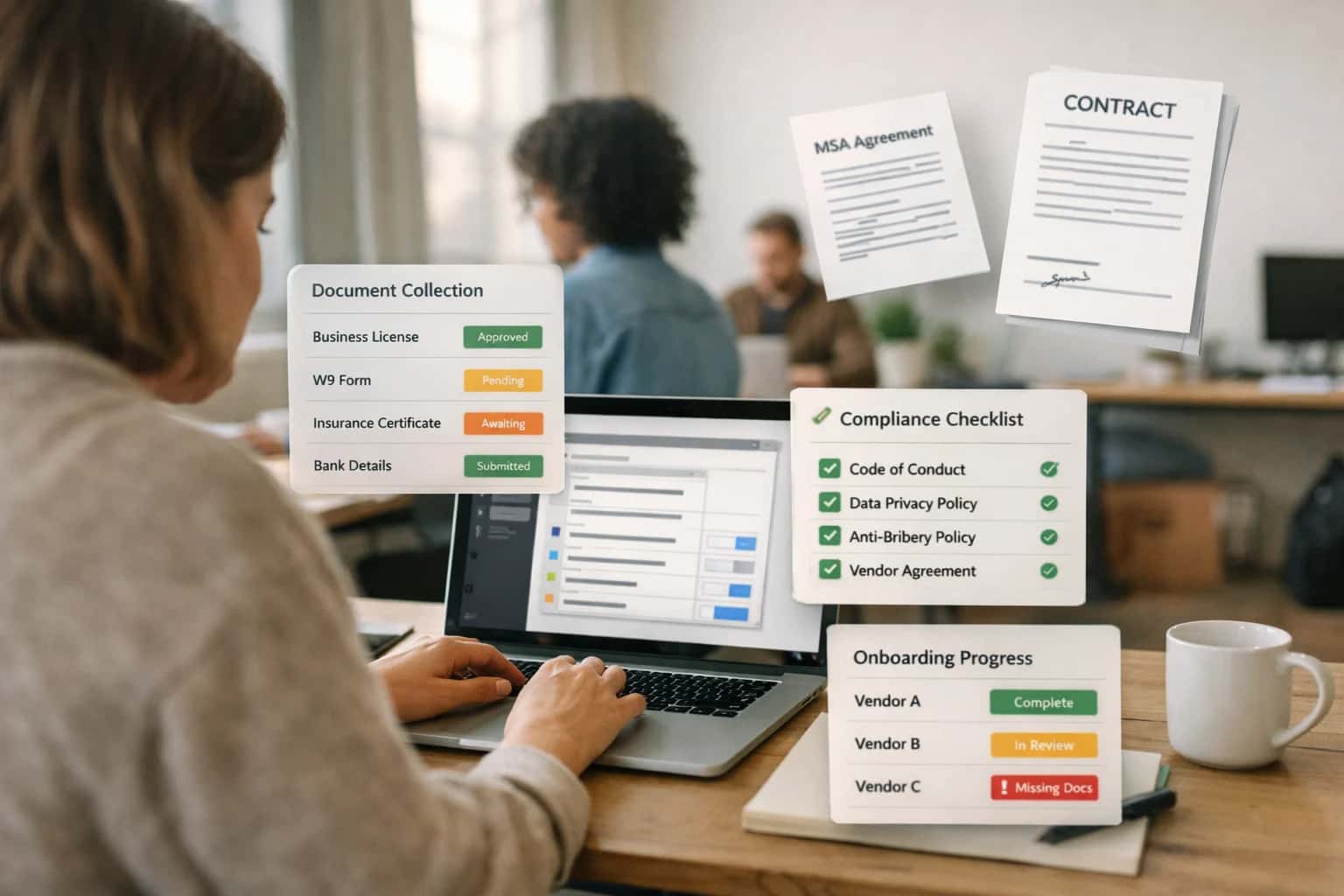
Where AI Fits into Specialty Retail Execution
A practical blueprint for integrating AI into specialty retail workflows to analyze visual compliance, staff knowledge, and customer service data from platforms like Repsly, Zipline, YOOBIC, and Movista.
High-value workflows include automated visual merchandising analysis, where AI compares in-store shelf images against golden templates to flag out-of-stocks, misplaced items, or poor signage in near-real-time, triggering a corrective work order in Movista or Repsly. Another is staff knowledge assessment, where an LLM analyzes responses to product knowledge quizzes or role-play scenarios submitted via Zipline, identifying knowledge gaps and automatically assigning micro-training modules in a connected LMS. For customer service, AI can synthesize data from service audits, NPS comments, and call logs to generate a per-store experience score and root-cause analysis, moving review cycles from weekly manual aggregation to daily automated insights.
Rollout should start with a single high-impact workflow—like visual compliance for a key product launch—piloted in a controlled region. Governance is critical: all image processing should be configured to blur faces and PII, and AI-generated scores should include confidence metrics and a human review loop for exceptions before affecting performance dashboards. The end architecture should feed these AI-enriched insights not only back into the execution platform but also into connected systems like your CRM (e.g., enriching account records in Salesforce with store execution health) and BI tools (e.g., populating a Tableau dashboard with predictive compliance risk scores), creating a closed-loop system where field data directly informs strategic planning and resource allocation.
AI Integration Touchpoints Across Retail Execution Platforms
Analyzing Shelf Execution and Visual Compliance
For fashion, electronics, and specialty retail, visual merchandising is a primary KPI. AI can integrate directly with the photo and audit modules of platforms like Repsly, YOOBIC, and Movista to automate analysis.
Key Integration Points:
- Photo Submission Workflows: Ingest images from store audit forms via platform webhooks.
- Compliance Scoring: Use computer vision models to compare shelf images against golden-standard planograms, flagging out-of-stocks, misplaced items, or incorrect pricing.
- Automated Task Creation: Trigger corrective work orders within the platform when a compliance threshold is breached, assigning them to the appropriate field rep or store manager.
Example Workflow:
- A rep submits a store audit via the mobile app, including photos of a display.
- An AI service, called via the platform's API, scores the image for compliance.
- If the score is below 90%, the integration automatically creates a high-priority task in the rep's queue to rectify the issue, citing the specific SKU and violation.
High-Value AI Use Cases for Specialty Retail
Specialty retail—from fashion and electronics to sporting goods and beauty—requires precise execution to protect brand equity and drive conversion. These AI integrations connect directly to platforms like Repsly, Zipline, YOOBIC, and Movista to automate analysis, provide real-time guidance, and turn field data into actionable intelligence.
Visual Merchandising Compliance
Analyze in-store photos from audit workflows to automatically score planogram compliance, window display quality, and promotional setup. AI flags deviations (e.g., incorrect signage, out-of-place items) and generates corrective work orders in the execution platform, reducing manual review from a regional manager's weekly batch task to a daily automated report.
Context-Aware Field Guidance
Integrate with platforms like Zipline to provide reps with a dynamic, AI-powered copilot. The system analyzes store history, open tasks, and recent audit scores to suggest prioritized next-best-actions, such as 'Address the safety hazard flagged in Audit #452 before the district visit.' Guidance surfaces directly in the mobile workflow.
Staff Knowledge & Service Audits
Process audio transcripts or written notes from mystery shops and service audits submitted via the execution platform. Use NLP to assess product knowledge accuracy, sentiment, and script adherence, generating quantified scores and specific coaching recommendations for store managers within their existing performance dashboards.
Promotional Effectiveness Analysis
Correlate execution data (e.g., proof-of-display compliance from Repsly) with local POS data. AI models identify which in-store promotional activities actually drive sales lift for specific SKUs, generating insights for marketing and trade promotion teams to optimize future spend and field instructions.
Competitive Intelligence Synthesis
Automate the analysis of field-collected data on competitor pricing, promotions, and merchandising. AI extracts key insights from rep notes and photos, synthesizing a weekly competitive briefing for category managers that highlights share-of-shelf changes and pricing threats, directly from the execution platform's data lake.
Hyper-Local Assortment Support
Use AI to analyze local store execution data (sell-through, shelf voids) alongside demographic and sales data. The system recommends store-specific assortment adjustments, such as increasing sizes or adding niche brands, and creates actionable tasks in the retail platform for the buyer or regional manager to review and execute.
Example AI-Enhanced Workflows
For fashion, electronics, and other specialty retail, AI can transform field-collected data into immediate, actionable intelligence. These workflows show how to connect AI models to platforms like Repsly, Zipline, YOOBIC, and Movista to automate analysis, guide staff, and improve operational consistency.
Trigger: A field rep completes a store visit in the execution platform, uploading photos of displays, mannequins, and signage.
Context Pulled: The AI system ingests the visit record, including the store ID, scheduled planogram, and the newly uploaded images via the platform's webhook or REST API.
AI Action: A multi-modal model analyzes each image against the brand's visual standards and the specific planogram for that store. It identifies:
- Correct product placement and adjacency.
- Pricing and signage accuracy.
- Mannequin styling and accessory compliance.
- Overall visual appeal and cleanliness.
System Update: The AI generates a structured compliance score (e.g., 92%) and a detailed exception report. This is posted back to the visit record in the execution platform via API, automatically creating follow-up tasks for the rep or store manager to address specific issues like a missing price tag or mis-styled mannequin.
Human Review Point: High-severity exceptions (e.g., a competitor's product displayed) are flagged for immediate district manager review within the platform's alerting system before tasks are assigned.
Typical Implementation Architecture
A secure, event-driven architecture for adding AI intelligence to specialty retail workflows without disrupting existing platforms.
The integration typically connects via the platform's REST APIs and webhook subscriptions. For a platform like Repsly or YOOBIC, this means listening for events such as audit_submitted, task_completed, or image_uploaded. When a store audit is completed in the field, the platform sends the structured data (scores, checklists) and unstructured assets (agent notes, compliance photos) to a secure processing queue. An AI orchestration layer then routes this payload: computer vision models analyze shelf imagery for planogram compliance and out-of-stocks, while an LLM processes the textual notes to extract themes, flag exceptions, and generate a concise summary.
Processed insights are written back to the execution platform using its native object models. For instance, an AI-generated compliance summary and risk score can be appended to the original audit record as a custom field. Critical exceptions, like a failed safety check or a repeated merchandising violation, automatically trigger the creation of a follow-up corrective action task assigned to the district manager or a vendor within the platform's workflow engine. For specialty retail, this is where contextual knowledge matters—the system can reference brand-specific visual guidelines for a fashion retailer or technical specification documents for an electronics store to make assessments more accurate.
Governance is managed through a central control plane. All AI interactions are logged with full audit trails, linking source audit IDs to generated insights. Human-in-the-loop review steps can be configured for high-risk flags before tasks are auto-assigned. The architecture is designed for incremental rollout: you might start by automating analysis for a single audit type (e.g., visual merchandising) in 50 pilot stores, then scale to omnichannel compliance and predictive analytics across all locations. This approach keeps the retail team's primary interface unchanged while delivering AI-driven speed and consistency to their back-office analysis.
Code and Payload Examples
Analyzing Shelf Images for Compliance
Integrate computer vision models with your retail execution platform (e.g., Repsly, YOOBIC) to automatically score planogram compliance from field-uploaded shelf images. The typical flow involves a webhook from the platform triggering an analysis job, returning structured scores and exception flags.
Example Payload (Platform → AI Service):
json{ "audit_id": "AUD-78910", "store_code": "STORE-555", "image_urls": [ "https://cdn.repsly.com/audits/78910/photo1.jpg", "https://cdn.repsly.com/audits/78910/photo2.jpg" ], "metadata": { "expected_sku": "ELEC-1001", "category": "Consumer Electronics", "campaign_id": "HOLIDAY-2025" } }
Return Payload (AI Service → Platform): The service returns a compliance score, detected SKUs, and flags for out-of-stocks or incorrect placement, which can auto-create a corrective task in the platform.
Realistic Time Savings and Operational Impact
How AI integration for platforms like Repsly, Zipline, and YOOBIC transforms manual, reactive workflows into assisted, proactive operations for fashion, electronics, and specialty retail.
| Metric | Before AI | After AI | Notes |
|---|---|---|---|
Visual Merchandising Compliance Review | Manual photo review (2-4 hours/store) | AI-assisted scoring & exception flagging (15-30 mins/store) | Human final approval remains; focuses on flagged exceptions only. |
Staff Knowledge Assessment Analysis | District manager reads all open-ended survey responses | Sentiment & theme extraction with summary report | Managers review AI-generated insights, not raw data. |
Customer Service Audit Triage | Reactive review of low scores after weekly close | Real-time anomaly detection & alerting for critical drops | Enables same-day coaching instead of next-week review. |
Promotional Execution Reporting | Manual compilation of audit data into slides (1-2 days) | Automated report generation with natural language insights | Regional leads receive actionable summaries in minutes. |
Planogram vs. Reality Gap Analysis | Side-by-side manual comparison of shelf images to PDFs | Computer vision auto-detection of out-of-stocks & misplacements | Generates corrective work orders in Movista or Repsly automatically. |
Root Cause Identification for Compliance Breaches | Manual correlation of audit scores, notes, and photos | AI correlates multi-modal data to suggest probable causes | Shifts focus from data gathering to decision-making. |
New Product Launch Ramp-Up Tracking | Weekly manual check of launch checklist completion | AI monitors completion velocity & flags lagging stores | Brand managers intervene in days, not weeks. |
Competitive Intelligence Synthesis | Field notes on competitor displays sit in unstructured notes | AI extracts pricing, promotion, and placement themes | Feeds structured insights into category management dashboards. |
Governance, Security, and Phased Rollout
A practical guide to deploying AI for visual merchandising and staff audits with secure, governed workflows.
Integrating AI into specialty retail execution requires a clear data governance model. Start by identifying the specific data objects and surfaces within your platform (e.g., Repsly audit records, YOOBIC task photos, Zipline communication logs) that will feed the AI. Establish role-based access controls (RBAC) to ensure only authorized users can trigger AI analysis or view sensitive outputs. For visual analysis of planogram compliance or product placement, implement on-the-fly redaction for any incidental PII captured in store images before processing. All AI-generated insights—such as compliance scores or exception flags—should be written back to the platform as annotated audit trails, creating a transparent lineage from raw data to AI recommendation.
A phased rollout mitigates risk and builds confidence. Phase 1 could target a single, high-value workflow: automating the analysis of visual merchandising photos for a specific apparel brand or electronics category. Deploy AI as a background process that enriches audit records without altering core user workflows. Phase 2 introduces proactive alerts, such as flagging stores with recurring compliance gaps for manager review. Phase 3 integrates AI-driven recommendations directly into field agent workflows, like suggesting corrective actions within Zipline's task lists. Each phase should include a human-in-the-loop review step for AI outputs, allowing district managers to validate or override suggestions, ensuring model accuracy improves with real-world feedback.
Security is paramount when processing store imagery and staff assessment data. Ensure your AI integration uses zero-data retention policies for processed images and employs encrypted payloads between your retail execution platform and inference endpoints. For implementations involving connected systems (e.g., pushing insights to a BI tool like Power BI or a CRM like Salesforce), use service accounts with minimal scopes and audit all data flows. Finally, establish a continuous monitoring dashboard for the AI service itself, tracking accuracy, latency, and cost per analysis to ensure the integration delivers sustainable operational value without unexpected overhead.
Enabling Efficiency, Speed & Accuracy
Intelligent Analysis, Decision & Execution
We build AI systems for teams that need search across company data, workflow automation across tools, or AI features inside products and internal software.
Talk to Us
Search across company data
Give teams answers from docs, tickets, runbooks, and product data with sources and permissions.
Useful when people spend too long searching or get different answers from different systems.

Automate internal workflows
Use AI to route work, draft outputs, trigger actions, and keep approvals and logs in place.
Useful when repetitive work moves across multiple tools and teams.

Add AI to products and internal tools
Build assistants, guided actions, or decision support into the software your team or customers already use.
Useful when AI needs to be part of the product, not a separate tool.
Frequently Asked Questions
Practical questions for retail operations, IT, and field leadership evaluating AI integration with platforms like Repsly, Zipline, YOOBIC, and Movista.
Secure integration typically follows this pattern:
- Authentication & API Gateway: Use the platform's OAuth 2.0 or API keys, managed through a secure secrets vault. All calls are routed through a dedicated integration layer (like an API gateway) for logging, rate limiting, and security policy enforcement.
- Data Extraction: Pull data via REST APIs or webhooks. For high-volume image analysis (e.g., visual merchandising), use batch exports to cloud storage (AWS S3, Azure Blob) rather than real-time API calls.
- Processing & PII Handling: Data is sent to a secure AI processing environment. A pre-processing step should redact or hash any inadvertent PII from field notes or image metadata before model inference.
- Result Ingestion: AI-generated insights (compliance scores, exception flags, summaries) are posted back to the platform via its API, often creating new tasks, updating custom object records, or appending notes to audits.
Key Consideration: Ensure your AI vendor supports private cloud or VPC peering deployments to keep data within your controlled network environment.

About the author
Prasad Kumkar
CEO & MD, Inference Systems
Prasad Kumkar is the CEO & MD of Inference Systems and writes about AI systems architecture, LLM infrastructure, model serving, evaluation, and production deployment. Over 5+ years, he has worked across computer vision models, L5 autonomous vehicle systems, and LLM research, with a focus on taking complex AI ideas into real-world engineering systems.
His work and writing cover AI systems, large language models, AI agents, multimodal systems, autonomous systems, inference optimization, RAG, evaluation, and production AI engineering.
Partnered with leading AI, data, and software stack.





How We Work
Custom AI workflows for your Business
One-fit-all AI don't work for modern businesses. At Inferensys, we aim to understand your business & custom requirements; which we use to define most efficient agentic workflows, the data, and the tools for your business.
01
Review the use case
We understand the task, the users, and where AI can actually help.
Read more02
Pick the right approach
We define what needs search, automation, or product integration.
Read more03
Build the first useful version
We implement the part that proves the value first.
Read more04
Improve from there
We add the checks and visibility needed to keep it useful.
Read moreThe first call is a practical review of your use case and the right next step.
Talk to Us