Retail execution platforms like Repsly, Zipline, YOOBIC, and Movista capture critical last-mile data—shelf voids, damaged goods, delivery exceptions, and promotional compliance—but this intelligence is often siloed from upstream supply chain systems. An AI integration acts as a real-time bridge, analyzing field audit results, task notes, and image evidence to predict delays, recommend alternative routing, and trigger corrective workflows before they impact store-level availability.

Integration
AI Integration for Retail Supply Chain Visibility
Connect AI to retail execution platforms like Repsly, Zipline, YOOBIC, and Movista to analyze shelf voids, distribution issues, and store audit data. Predict supply delays and recommend alternative routing by linking field execution with upstream logistics.
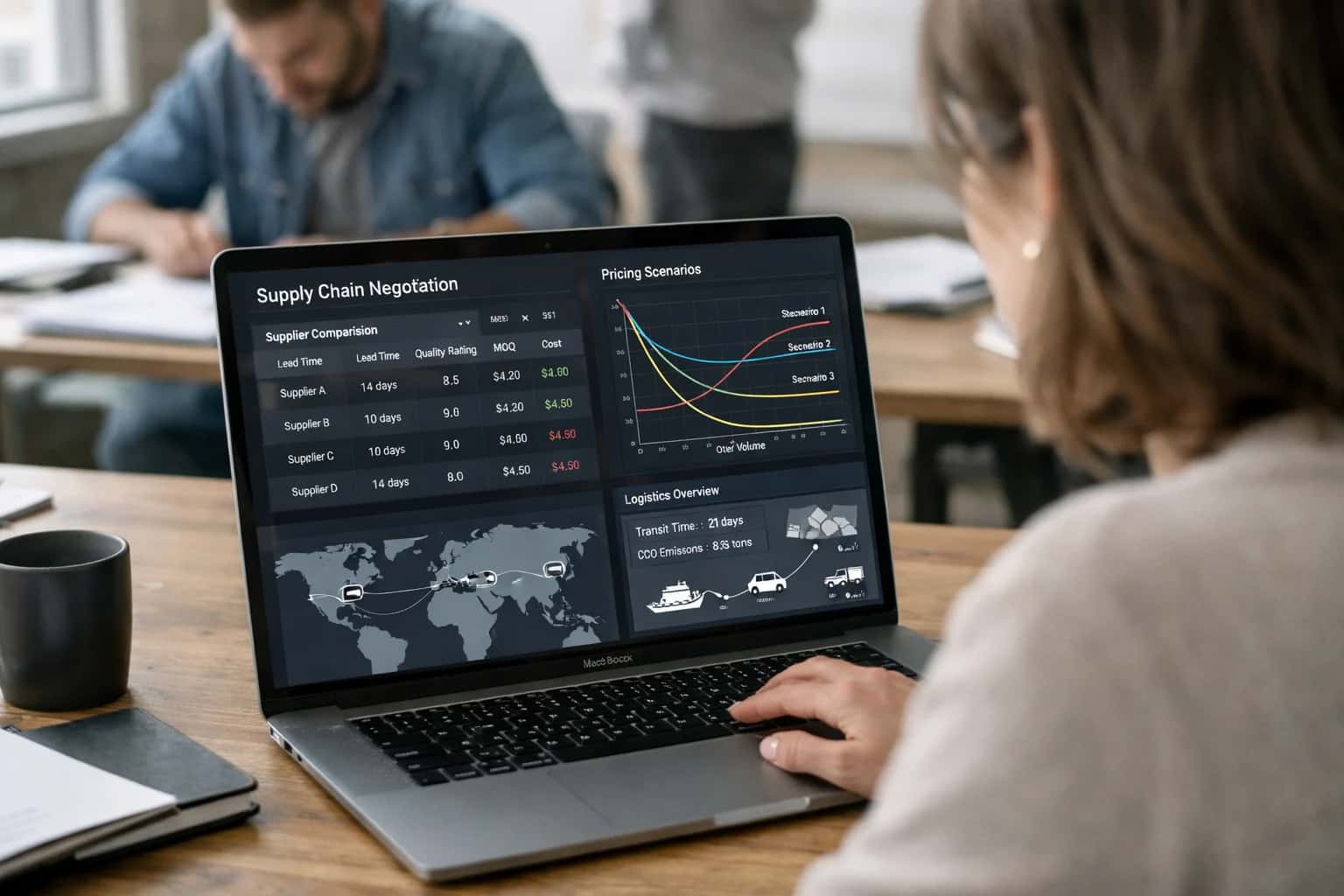
RETAIL SUPPLY CHAIN OPERATIONS
Bridging the Last-Mile Visibility Gap with AI
Connect AI to retail execution platforms for predictive supply chain insights, turning field data into proactive logistics actions.
Implementation involves connecting to the platform's REST APIs or webhook endpoints to stream audit events and task data. An AI agent processes this unstructured data to classify issues (e.g., out-of-stock, late_delivery, damaged_pallet) and enrich records with predicted impact scores. These scored events can then be pushed to Transportation Management Systems (Oracle TMS, SAP TM), Warehouse Management Systems (Manhattan Active, Blue Yonder), or directly to carrier portals via orchestration workflows, reducing manual triage from hours to minutes. For example, a photo of an empty shelf for a high-velocity SKU can trigger an AI-generated alert to the distribution center, suggesting a priority replenishment and updating the estimated time of arrival in the store manager's task list.
Rollout requires a phased approach: start with a single high-impact issue category like perishable goods delivery exceptions, instrument the AI to monitor related audit forms and notes, and connect the output to a single logistics system. Governance is critical; implement RBAC to control which roles can view AI recommendations and establish a human-in-the-loop approval step for high-cost actions like expedited shipping. This integration transforms retail execution platforms from passive data collectors into active nodes in a responsive supply network, providing operations leaders with the visibility to move from reactive firefighting to predictive orchestration. For a technical blueprint on connecting these platforms, see our guide on AI Integration for Retail Execution Platform APIs.
INTEGRATION SURFACES
Where AI Connects to Retail Supply Chain Visibility
Real-Time Data Ingestion Points
AI models connect directly to the REST APIs and webhooks of platforms like Repsly, YOOBIC, and Movista to process field data as it's captured. This enables immediate analysis of shelf voids, out-of-stock photos, and distribution issue reports submitted by reps.
Key integration surfaces include:
- Audit/Visit Completion Webhooks: Trigger AI analysis the moment a store audit is submitted.
- Photo & Note Endpoints: Pull unstructured image and text data for computer vision and NLP processing.
- Task & Exception APIs: Read newly created follow-up tasks and enrich them with AI-generated context or priority scores.
This real-time connection turns field observations into actionable supply chain signals within minutes, not days.
RETAIL EXECUTION DATA INTEGRATION
High-Value AI Use Cases for Supply Chain Visibility
Connect AI to your retail execution platforms (Repsly, Zipline, YOOBIC, Movista) to transform field-collected data on shelf voids, compliance, and store conditions into predictive signals for upstream supply chain and logistics teams.
01
Predictive Out-of-Stock Alerts
AI analyzes daily store audit photos and notes from platforms like Repsly or YOOBIC to detect early-stage shelf voids. It correlates this with POS data and shipment schedules to predict a stock-out before the store reports it, triggering automated replenishment requests to the warehouse or distributor.
Days -> Hours
Lead time improvement
02
Distribution Exception Triage & Re-routing
When a field report in Zipline or Movista flags a delivery issue (e.g., wrong product, damaged pallets), an AI agent classifies the exception, extracts key details, and checks real-time carrier capacity. It then recommends alternative routing or prioritizes re-shipments within the TMS, minimizing store impact.
Manual -> Automated
Exception workflow
03
Promotional Compliance to Supply Forecast
AI evaluates proof-of-execution data (planogram compliance, display setup) from retail audits to measure promotional launch velocity. This real-time compliance score is fed into demand forecasting models to adjust short-term production and distribution plans, preventing over/under-supply for campaign items.
Reactive -> Proactive
Forecast adjustment
04
Vendor Performance & On-Time Delivery Scoring
Continuously score vendor performance by linking execution platform data on shelf availability and merchandising compliance with ASN/GTIN data from the WMS. AI identifies patterns of late deliveries or quality issues by vendor and SKU, automating scorecard updates and triggering vendor review workflows.
05
Cross-Dock & Warehouse Labor Planning
Using AI-predicted store-level demand signals from audit data, the system forecasts inbound receipt volumes and outbound shipment priorities. It outputs optimized labor schedules and task assignments to the WMS or workforce management system, aligning warehouse operations with field-level needs.
Batch -> Real-time
Planning cycle
06
Recall & Lot Traceability Workflow Automation
In a recall event, AI instantly queries all retail execution platform data for sightings of affected LOT numbers, UPCs, or products based on field audit photos and notes. It automates store-level communication tasks in Zipline or Repsly and generates a confirmed exposure report for regulators in hours, not days.
FROM REACTIVE TO PREDICTIVE OPERATIONS
Example AI-Enhanced Supply Chain Workflows
These workflows demonstrate how AI can connect retail execution platform data (shelf voids, distribution issues) with upstream logistics and ERP systems to create a closed-loop, predictive supply chain. Each flow is triggered by field data and results in a system update or recommended action.
Trigger: A field rep using Repsly or YOOBIC submits a store audit with a photo flagged as an out-of-stock for a high-velocity SKU.
AI Action:
- Context Retrieval: An AI agent is triggered via webhook. It pulls:
- The SKU, store location, and timestamp from the audit.
- Recent POS sales data for that SKU at that store from the data lake.
- The most recent inbound shipment and on-hand inventory records for that SKU/store from the ERP (e.g., SAP, NetSuite).
- Analysis & Enrichment: An LLM analyzes the combined data to draft a root cause hypothesis:
Hypothesis: Sales velocity exceeded forecast. Last shipment received 5 days ago, current system on-hand is 2, but sales in last 48hrs were 15. Likely a forecasting error, not a warehouse fulfillment issue.
System Update: The enriched alert—with the hypothesis, supporting data, and a confidence score—is posted back to the retail execution platform as a comment on the original audit. It is also routed as a high-priority ticket to the demand planner's queue in the ERP or planning system.
Human Review Point: The demand planner reviews the AI's hypothesis and data before adjusting the forecast or initiating a manual rush order.
FROM EXECUTION DATA TO SUPPLY CHAIN INTELLIGENCE
Implementation Architecture: Data Flow and System Connections
A practical blueprint for connecting AI-powered retail execution insights to upstream logistics and planning systems.
The integration connects AI analysis from your retail execution platform (Repsly, Zipline, YOOBIC, or Movista) to supply chain systems via a secure middleware layer. Execution data—such as shelf void reports, promotional compliance photos, and distribution issue flags—is processed in near-real-time. An AI agent classifies events (e.g., out-of-stock, late delivery, damaged goods), extracts key entities like SKU, store ID, and timestamp, and enriches them with contextual data from your ERP or WMS. This creates a unified supply chain signal that is pushed to downstream systems via webhooks or API calls.
High-value workflows include: Predictive Delay Alerts where AI correlates a spike in out-of-stock flags for a specific SKU across multiple stores with carrier performance data to predict regional delivery delays, triggering proactive notifications in your Transportation Management System (TMS). Automated Re-routing Recommendations where AI analyzes store-level urgency (based on sales velocity and on-hand inventory) and suggests dynamic re-allocation of in-transit inventory within your Warehouse Management System (WMS). Root-Cause Workflow Triggers where AI links a compliance audit failure (e.g., incorrect pallet configuration) directly to a specific distribution center and automates the creation of a corrective action task in your quality management platform.
Rollout is typically phased, starting with a single high-impact signal like out-of-stock from a pilot region. Governance requires mapping data ownership: execution data resides with retail ops, while logistics data is owned by supply chain teams. Implement role-based access controls (RBAC) in the middleware to ensure analysts can see insights but not raw carrier performance data. Audit logs should track all AI-generated recommendations and human overrides for continuous model improvement. For a deeper technical dive on connecting these platforms, see our guide on Retail Execution Platform APIs.
INTEGRATION PATTERNS
Code and Payload Examples
Real-Time Alert Generation
This pattern uses AI to analyze incoming execution data (like shelf void reports from Repsly) and correlate it with external logistics feeds to predict and alert on potential delays before they impact store availability.
A Python service listens for webhooks from the retail execution platform, processes the data with a pre-trained model, and posts actionable alerts back to a designated channel or dashboard.
python# Example: Processing a shelf void alert from Repsly API import requests from inference_client import InferenceClient def handle_rep_sly_webhook(payload): # Extract store ID, SKU, and timestamp from audit data store_id = payload['location']['id'] sku = payload['audit_item']['sku'] audit_time = payload['created_at'] # Call AI service to predict restock delay ai_client = InferenceClient() prediction = ai_client.predict_delay( store_id=store_id, sku=sku, event_time=audit_time, external_feeds=['weather', 'carrier_eta'] ) # If high-risk delay predicted, create alert in operations dashboard if prediction['risk_level'] == 'high': alert_payload = { 'title': f"Predicted Delay for {sku} at Store {store_id}", 'message': prediction['reason'], 'recommended_action': 'Expedite from alternate DC or notify store manager.', 'platform_surface': 'execution_dashboard', 'priority': 'P1' } requests.post(OPERATIONS_ALERT_URL, json=alert_payload)
AI-ENHANCED SUPPLY CHAIN VISIBILITY
Realistic Operational Impact and Time Savings
This table illustrates the operational impact of integrating AI with retail execution platforms (e.g., Repsly, Zipline) and upstream logistics systems to predict and mitigate supply chain disruptions.
| Workflow / Metric | Before AI | After AI | Notes |
|---|---|---|---|
Shelf Void Detection to Root Cause Analysis | Manual correlation across systems (2-4 hours) | Automated link to distribution data (<15 mins) | AI cross-references execution platform photos with shipment logs and carrier ETAs |
Exception Alert to Actionable Recommendation | Email alerts require manual triage (next-day review) | Prioritized alerts with suggested reroutes (real-time) | System flags high-priority stores and proposes alternative fulfillment paths |
Weekly Out-of-Stock Forecast | Historical sales trend analysis (static, low accuracy) | Predictive model using audit scores & logistics signals (dynamic) | Incorporates real-time execution compliance as a leading indicator |
Vendor Performance Reporting | Monthly manual compilation from disparate reports | Automated scorecards triggered by audit exceptions | AI correlates on-shelf availability gaps with vendor delivery patterns |
Store Replenishment Request Routing | Standard FIFO or manual priority assignment | AI-optimized routing based on urgency & impact | Considers promotional calendar, historical sales, and current shelf compliance |
Regional Manager Visibility into Delays | Reactive calls from store managers | Proactive dashboard with predicted risk scores | Highlights clusters of stores at risk before sales are impacted |
Corrective Action Workflow Initiation | Manual task creation after issue is confirmed | Automated task generation in execution platform | AI creates follow-up audits or comms tasks for field teams based on predicted resolution path |
ARCHITECTING FOR PRODUCTION
Governance, Security, and Phased Rollout
A practical blueprint for deploying AI-driven supply chain visibility with controlled risk and measurable impact.
A production-ready integration connects AI models to your retail execution platform (e.g., Repsly, Zipline) and upstream logistics systems via secure APIs and webhooks. The core architecture involves: 1) a real-time ingestion layer for shelf-void alerts, delivery exceptions, and audit photos; 2) an AI processing service that correlates this execution data with shipment ETAs and carrier feeds using predictive models; and 3) an action engine that posts recommended alternate routes or expedite requests back to your Transportation Management System (TMS) or Warehouse Management System (WMS). All data flows are logged, with PII stripped at ingestion, and model outputs are versioned for audit trails.
Rollout follows a phased, value-driven approach. Phase 1 (Pilot) connects AI to a single distribution lane and 50 stores, focusing on high-confidence predictions for out-of-stocks linked to known carrier delays. Impact is measured by reduction in manual follow-up calls. Phase 2 (Scale) expands to regional corridors, adds more data sources (e.g., weather APIs, port congestion feeds), and begins automated work order creation in platforms like Movista for preemptive merchandising support. Phase 3 (Optimization) introduces closed-loop learning, where the outcomes of AI-recommended actions (e.g., did the alternate route prevent the stockout?) are fed back to retrain and improve model accuracy.
Governance is non-negotiable. We implement role-based access controls (RBAC) so only authorized planners can override AI recommendations. A human-in-the-loop approval step is configured for high-cost routing changes. All predictions and their business rationale are stored alongside the original platform data, enabling explainability for stakeholders. Regular model performance reviews check for drift against key metrics like prediction accuracy and false-positive rates. This structured approach ensures the AI augments planner judgment without introducing unmanaged risk, turning fragmented signals into a reliable, automated visibility layer.
Enabling Efficiency, Speed & Accuracy
Intelligent Analysis, Decision & Execution
We build AI systems for teams that need search across company data, workflow automation across tools, or AI features inside products and internal software.
Talk to Us
Search across company data
Give teams answers from docs, tickets, runbooks, and product data with sources and permissions.
Useful when people spend too long searching or get different answers from different systems.
Enterprise searchRAGPermissions
Read more
Automate internal workflows
Use AI to route work, draft outputs, trigger actions, and keep approvals and logs in place.
Useful when repetitive work moves across multiple tools and teams.
AI agentsWorkflow automationGovernance
Read more
Add AI to products and internal tools
Build assistants, guided actions, or decision support into the software your team or customers already use.
Useful when AI needs to be part of the product, not a separate tool.
AI integrationDecision supportModel routing
Read moreIMPLEMENTATION QUESTIONS
FAQ: AI for Retail Supply Chain Visibility
Practical answers for retail operations and supply chain leaders evaluating AI to connect field execution data with upstream logistics for better visibility and proactive response.
AI acts as the intelligence layer between your retail execution platform and supply chain systems. The typical integration flow is:
- Trigger: A field rep in Repsly, YOOBIC, or Movista completes a store audit, logs a shelf void, or uploads a photo of an empty display.
- Context Pull: An AI agent, triggered via the platform's webhook, pulls the audit data, including SKU, store ID, timestamp, and any unstructured notes or images.
- AI Action: The agent uses computer vision (for images) and NLP (for notes) to classify the issue (e.g.,
out-of-stock,distribution delay,planogram deviation). It then queries connected systems (ERP, TMS, WMS) to check inventory levels at the DC, shipment status, and recent deliveries to that store. - System Update: Based on the analysis, the AI updates the retail execution platform with a root cause (e.g., "DC stockout, next shipment ETA 48h") and can automatically create a follow-up task for the rep or manager. It may also trigger an alert in the TMS (like Oracle TMS or SAP TM) to prioritize a reroute or expedite a shipment.
- Human Review: For high-impact or ambiguous cases, the AI can flag the issue for a supply chain planner's review within a connected dashboard, providing its reasoning and recommended action.

About the author
Prasad Kumkar
CEO & MD, Inference Systems
Prasad Kumkar is the CEO & MD of Inference Systems and writes about AI systems architecture, LLM infrastructure, model serving, evaluation, and production deployment. Over 5+ years, he has worked across computer vision models, L5 autonomous vehicle systems, and LLM research, with a focus on taking complex AI ideas into real-world engineering systems.
His work and writing cover AI systems, large language models, AI agents, multimodal systems, autonomous systems, inference optimization, RAG, evaluation, and production AI engineering.
LinkedIn
Limited slotsGet a Free AI Consultation
Partnered with leading AI, data, and software stack.





How We Work
Custom AI workflows for your Business
One-fit-all AI don't work for modern businesses. At Inferensys, we aim to understand your business & custom requirements; which we use to define most efficient agentic workflows, the data, and the tools for your business.
01
Review the use case
We understand the task, the users, and where AI can actually help.
Read more02
Pick the right approach
We define what needs search, automation, or product integration.
Read more03
Build the first useful version
We implement the part that proves the value first.
Read more04
Improve from there
We add the checks and visibility needed to keep it useful.
Read moreThe first call is a practical review of your use case and the right next step.
Talk to Us