AI integration for promotion effectiveness operates at the intersection of two core data streams within platforms like Repsly, Zipline, YOOBIC, and Movista: the audit/compliance data (photos, checklists, notes) proving execution, and the sales/POS data showing the resulting lift. The integration typically connects via the platform's REST APIs or webhook listeners to ingest new audit submissions and store-level sales files. An AI model then processes the unstructured audit evidence—using computer vision for planogram compliance in images and NLP for promotion note analysis—to generate a quantifiable execution score. This score is correlated with the sales delta for that store and promotion period, moving analysis from a manual, anecdotal review to an automated, store-by-store impact assessment.

Integration
AI Integration for Retail Promotion Effectiveness
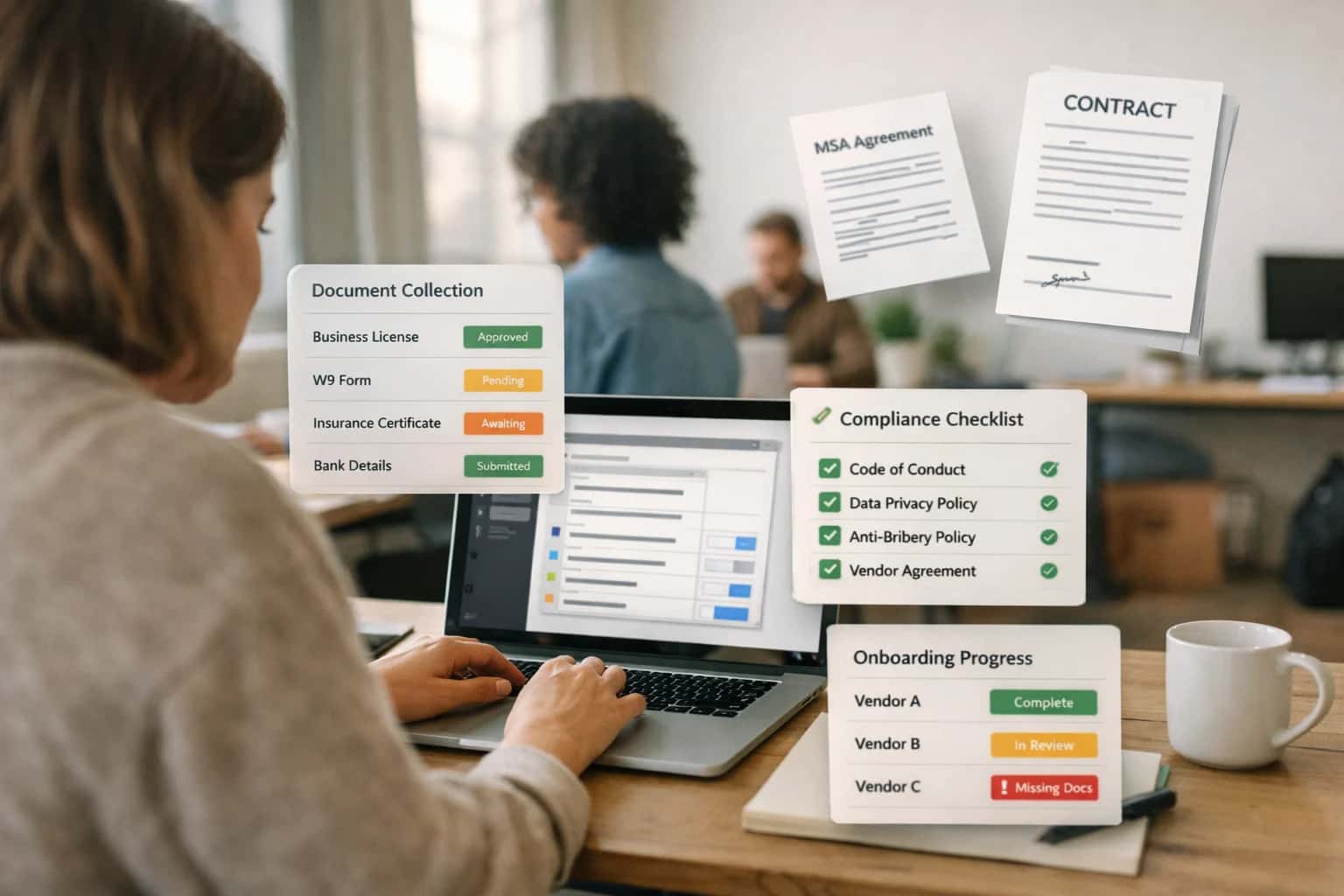
Where AI Fits in Retail Promotion Effectiveness
Connect AI models directly to your retail execution platform to measure promotion compliance and correlate it with sales impact.
The high-value workflow is automated insight generation for trade promotion and marketing teams. For example, when a field rep submits a promotion audit in Repsly, the system can automatically: analyze the photo for correct signage placement and product facings; parse the rep's notes for competitor activity or out-of-stocks; score the overall execution; and match this against the store's weekly sales data. Within minutes, a dashboard or alert is generated showing which promotions drove the highest ROI, which stores underperformed due to poor execution versus weak demand, and what the root causes were (e.g., 'Missing display in 30% of stores correlated with 15% lower sales lift'). This allows teams to reallocate trade spend, trigger follow-up tasks for underperforming stores, and refine promotion playbooks based on what actually worked.
Rollout requires careful data governance. You must establish a clean, store-level identifier (like a GLN or custom ID) that consistently links audit records in the execution platform with sales records from your POS or ERP. The AI model's confidence thresholds for image and text analysis should be calibrated to minimize false positives—often starting with high-confidence flags for manual review before full automation. Implement audit trails for all AI-generated scores and insights to ensure traceability for vendor chargeback discussions or internal performance reviews. A phased approach begins with a single promotion category or region, validating the AI's correlation findings against manual analysis before scaling. For a deeper technical blueprint, see our guide on AI Integration for Retail Execution Platform APIs.
Integration Points Across Retail Execution Platforms
Audit & Compliance Data Surfaces
AI models integrate directly with the audit and task completion data within platforms like Repsly, YOOBIC, and Movista. This is the primary source for measuring promotion effectiveness.
Key integration points:
- Audit Submission Webhooks: Trigger AI analysis when a store audit is submitted, passing the structured results (scores, checklists) and unstructured data (rep notes, photo evidence).
- Photo & Image APIs: Access uploaded shelf images to perform computer vision analysis for proof-of-execution, out-of-stock detection, and planogram compliance.
- Task & Action APIs: Read follow-up tasks generated from failed audits to understand corrective timelines and closure rates.
The AI correlates this execution data with point-of-sale (POS) lift data to calculate the actual ROI of a promotion, moving beyond simple compliance scoring to impact measurement.
High-Value AI Use Cases for Promotion Effectiveness
Move beyond simple audit completion rates. Use AI to analyze promotion execution data from platforms like Repsly, Zipline, and YOOBIC, correlate it with sales lift, and generate prescriptive insights that drive ROI for marketing and trade promotion teams.
Automated Compliance Scoring & Root Cause Analysis
AI analyzes audit photos, notes, and checklists to score promotion execution (e.g., correct signage, product placement). It automatically flags non-compliance and uses NLP to identify common root causes (e.g., 'missing collateral,' 'staff untrained'), generating summary reports for district managers.
Sales Lift Correlation Engine
Integrates promotion compliance scores from your retail execution platform with POS/sales data. AI models quantify the sales impact of perfect execution versus poor compliance for specific promotions, providing clear ROI evidence to justify field investment.
Predictive Compliance Risk Scoring
Uses historical audit data, store attributes, and rep performance to predict which stores or promotions are at high risk of non-compliance before the audit happens. Alerts are pushed to field managers in platforms like Zipline for preemptive coaching visits.
Automated Proof-of-Execution & Claim Processing
For CPG manufacturers, AI validates field-collected proof (photos, scans) against promotion contracts. It automates the generation of compliant proof-of-execution packages and can trigger workflows in connected systems to initiate vendor funding or chargeback claims.
Promotion Performance Dashboard Automation
AI aggregates compliance and sales lift data across hundreds of stores and promotions. It automatically generates executive-ready dashboards and natural-language summaries, highlighting top-performing regions, underperforming promotions, and recommended actions.
Personalized Field Rep Guidance
An AI agent integrates with platforms like Repsly or Movista. Based on a store's historical compliance gaps and current promotion calendar, it provides reps with a prioritized task list and contextual guidance (e.g., 'Focus on endcap setup for Promotion X at Store Y').
Example AI-Powered Promotion Effectiveness Workflows
These workflows show how AI models connect to platforms like Repsly, YOOBIC, and Movista to automate the measurement and analysis of promotion execution, turning field audit data into actionable insights for marketing and trade teams.
Trigger: A field representative completes a store visit audit in Repsly, including photos and notes for a specific promotional campaign.
Data Pulled: The AI integration fetches the audit record, including:
- Structured data (checklist scores, SKU counts)
- Unstructured data (rep notes, photo metadata)
- Campaign context (promotion ID, planogram reference, store location)
AI Action: A multi-modal model analyzes the submission:
- Computer Vision: Scores planogram compliance and promotional material placement from uploaded images.
- NLP: Extracts key themes and exceptions from rep notes (e.g., "display damaged," "stock in backroom").
- Rule Engine: Applies business logic to calculate a composite compliance score (e.g., 85% compliant).
System Update: The AI agent updates the audit record in the retail execution platform with:
- The calculated compliance score and confidence level.
- Structured exception tags (e.g.,
material_missing,incorrect_placement). - A natural-language summary of findings.
Next Step: If the score falls below a defined threshold (e.g., <70%), the system automatically creates a corrective action task for the district manager within the platform, linking to the failed audit.
Implementation Architecture: Data Flow and Model Layer
A production-ready blueprint for connecting AI models to retail execution platforms to measure promotion effectiveness.
The integration architecture connects to platforms like Repsly, YOOBIC, or Movista via their REST APIs and webhook endpoints. The core data flow ingests three key objects: audit submissions (including photos and notes), promotion calendars, and point-of-sale (POS) sales lift data. An orchestration layer (e.g., an AI agent or workflow engine) first processes audit images and text using computer vision and NLP models to extract structured compliance metrics—such as promotional material placement, shelf tag accuracy, and display integrity—against the planned promotion guidelines. This structured output is then joined with temporal sales data within a processing pipeline to calculate correlation scores.
The model layer typically employs a lightweight regression or causal inference model (not a black-box LLM) to estimate the sales impact attributable to execution quality, controlling for variables like store location and baseline sales. Results—promotion effectiveness scores, compliance gaps, and ROI estimates—are written back to the retail execution platform via API, creating new custom objects or enriching existing audit records. This allows marketing and trade promotion managers to view AI-generated insights directly within their familiar YOOBIC dashboard or Repsly report, triggering workflows like assigning follow-up tasks to underperforming stores or adjusting future promotion plans.
For governance, the pipeline includes audit logging of all AI inferences, human review loops for low-confidence predictions, and RBAC to ensure only authorized roles (e.g., Regional Directors) can view sensitive performance scores. Rollout is phased: start with a pilot region, validate model accuracy against manual analysis, and then scale. This architecture ensures insights are grounded, actionable, and integrated without disrupting existing field operations. For teams building custom models, see our guide on AI Integration for Retail Execution RAG Implementation to leverage historical playbooks and manuals for even richer context.
Code and Payload Examples
Ingesting Promotion Audit Data
AI models need structured access to field audit data. This typically involves polling the platform's REST API for recent audit submissions or setting up a webhook listener for real-time processing. The key data points include store ID, auditor, timestamp, promotion ID, compliance score, and any photo evidence URLs.
Below is a Python example using the requests library to fetch audit data from a typical retail execution platform API, filtering for a specific promotion campaign.
pythonimport requests import pandas as pd # Configuration API_BASE_URL = "https://api.retail-platform.com/v1" API_KEY = "your_api_key_here" PROMOTION_ID = "PROMO_2024_SPRING" headers = { "Authorization": f"Bearer {API_KEY}", "Content-Type": "application/json" } # Fetch audits for the target promotion params = { "promotion_id": PROMOTION_ID, "date_from": "2024-03-01", "limit": 100 } response = requests.get( f"{API_BASE_URL}/audits", headers=headers, params=params ) audit_data = response.json()["data"] # Convert to DataFrame for analysis df_audits = pd.DataFrame(audit_data) print(f"Fetched {len(df_audits)} audit records for analysis.")
Realistic Time Savings and Business Impact
How AI integration transforms the manual, lagging process of measuring promotion effectiveness into a proactive, insight-driven workflow within your retail execution platform.
| Workflow Stage | Before AI (Manual Process) | After AI (Integrated Analysis) | Key Impact & Notes |
|---|---|---|---|
Promotion Compliance Scoring | Manual review of 100s of store audit photos and notes per promotion; takes 2-3 days for a regional rollout. | Automated scoring of planogram adherence and display placement via CV/NLP; results in <1 hour. | Enables same-day corrective action. Human review shifts to exception handling only. |
Sales Lift Correlation | Spreadsheet analysis weeks after promotion ends, correlating POS data with incomplete compliance data. | Real-time model correlating daily sales data with AI-scored compliance; identifies effective stores in <24 hours. | Marketing can adjust in-flight promotions. Provides clear ROI evidence for trade spend. |
Insight Report Generation | Analyst spends 1-2 days compiling slides for post-promotion review with marketing and sales. | Automated, narrative report generated daily/weekly highlighting top/bottom performers and root causes. | Frees analyst for strategic work. Consistent, data-driven reporting for stakeholder alignment. |
Exception & Alert Routing | District managers manually sift through audit reports to find non-compliance; issues identified reactively. | AI flags stores with significant deviations and auto-creates corrective tasks in the platform for field teams. | Reduces time-to-action from days to hours. Ensures follow-up is systematic, not ad-hoc. |
Promotion Planning Input | Next promotion plans based on historical sales data alone, lacking execution quality context. | Future plans incorporate AI-derived insights on which promotion mechanics drove compliance and sales lift. | Improves forecast accuracy and promotional ROI. Data-driven negotiation with retailers. |
Vendor Performance Tracking | Quarterly manual review of vendor co-op compliance based on sampled audits. | Continuous, automated scorecard of vendor execution against contract terms, updated with each store visit. | Enables proactive vendor management. Supports claim-back processes with evidence. |
Executive Dashboard Updates | Static weekly dashboards require manual data pulls and lack explanatory context. | Dynamic dashboards in connected BI tools (e.g., Power BI) with AI-generated trend summaries and alerts. | Leadership gets proactive, explainable insights. Shifts focus from monitoring to decision-making. |
Governance, Security, and Phased Rollout
A production-grade AI integration for promotion effectiveness requires a governance-first approach, balancing insight generation with data security and operational stability.
Data Access and Model Governance: The integration operates by pulling promotion calendars, store audit results (including photos and notes), and POS lift data via the retail execution platform's APIs (e.g., Repsly's REST API, YOOBIC's webhooks). A critical first step is establishing role-based access controls (RBAC) to ensure AI models only process data for authorized regions, brands, or user groups. All AI-generated insights—such as correlation scores between audit compliance and sales lift—are written back to custom objects or audit trails within the platform, maintaining a clear lineage from raw data to AI recommendation for auditability.
Phased Rollout for Measured Impact: A successful implementation follows a phased approach:
- Pilot (4-6 stores): Connect AI models to a single promotion campaign. Validate data pipelines, measure baseline manual analysis time, and calibrate model accuracy against ground-truth outcomes.
- Controlled Expansion (1 region): Scale to all promotions within a single region or category. Introduce the insights dashboard to marketing and trade promotion teams, integrating feedback loops to refine alert thresholds and report formats.
- Enterprise Scale: Roll out across all regions and categories. At this stage, automate the generation of weekly promotion effectiveness briefings and integrate anomaly alerts (e.g., 'Promotion X shows high compliance but no sales lift') into existing operational workflows in platforms like Zipline for field manager follow-up.
Security and Compliance Posture: Field-collected data often contains store imagery and operational notes. Our integration architecture ensures PII is filtered or anonymized before processing. AI models are deployed in your controlled cloud environment (Azure, AWS, GCP) or via a secure, SOC 2-compliant inference endpoint. All data in transit is encrypted, and we implement strict data retention policies aligned with your platform's native settings. For global retailers, the architecture supports data residency requirements, processing EU data within EU boundaries, for example.
Enabling Efficiency, Speed & Accuracy
Intelligent Analysis, Decision & Execution
We build AI systems for teams that need search across company data, workflow automation across tools, or AI features inside products and internal software.
Talk to Us
Search across company data
Give teams answers from docs, tickets, runbooks, and product data with sources and permissions.
Useful when people spend too long searching or get different answers from different systems.

Automate internal workflows
Use AI to route work, draft outputs, trigger actions, and keep approvals and logs in place.
Useful when repetitive work moves across multiple tools and teams.

Add AI to products and internal tools
Build assistants, guided actions, or decision support into the software your team or customers already use.
Useful when AI needs to be part of the product, not a separate tool.
Frequently Asked Questions
Practical questions for retail operations, marketing, and IT leaders evaluating AI integration to measure promotion effectiveness using platforms like Repsly, Zipline, YOOBIC, and Movista.
The integration typically connects via the platform's REST APIs and webhooks. Here’s the standard data flow:
- Trigger: A field audit or task completion event is sent from the platform (e.g., Repsly) to your AI service via a webhook.
- Context Pull: The AI service fetches the relevant audit data, including:
- Structured fields (store ID, auditor, timestamp, checklist scores).
- Unstructured data (agent notes, photo URLs of displays).
- AI Analysis: Models process this data:
- Computer Vision: Analyzes photos for planogram compliance, correct promotional material placement, and stock levels.
- NLP: Parses notes for mentions of competitor activity or execution issues.
- Correlation Engine: Links the compliance score with point-of-sale (POS) data for that store/time period to calculate sales lift.
- System Update: Results are pushed back to the platform as:
- A custom field on the audit record (e.g.,
AI_Compliance_Score: 92%). - A new insight or alert for the district manager.
- A summarized data point sent to a connected BI tool (e.g., Power BI) for executive reporting.
- A custom field on the audit record (e.g.,
- Human Review Point: Low-confidence analyses or severe discrepancies are flagged for manager review within the platform's task queue before final scoring.

About the author
Prasad Kumkar
CEO & MD, Inference Systems
Prasad Kumkar is the CEO & MD of Inference Systems and writes about AI systems architecture, LLM infrastructure, model serving, evaluation, and production deployment. Over 5+ years, he has worked across computer vision models, L5 autonomous vehicle systems, and LLM research, with a focus on taking complex AI ideas into real-world engineering systems.
His work and writing cover AI systems, large language models, AI agents, multimodal systems, autonomous systems, inference optimization, RAG, evaluation, and production AI engineering.
Partnered with leading AI, data, and software stack.





How We Work
Custom AI workflows for your Business
One-fit-all AI don't work for modern businesses. At Inferensys, we aim to understand your business & custom requirements; which we use to define most efficient agentic workflows, the data, and the tools for your business.
01
Review the use case
We understand the task, the users, and where AI can actually help.
Read more02
Pick the right approach
We define what needs search, automation, or product integration.
Read more03
Build the first useful version
We implement the part that proves the value first.
Read more04
Improve from there
We add the checks and visibility needed to keep it useful.
Read moreThe first call is a practical review of your use case and the right next step.
Talk to Us