Retail execution platforms like Repsly, Zipline, YOOBIC, and Movista generate a high-velocity stream of semi-structured data: audit scores, task completions, geo-tagged photos, free-text notes, and exception reports. While valuable for operational dashboards, this raw data is often trapped in platform silos, limiting its use for predictive modeling, cross-functional analytics, and enterprise AI initiatives. The integration pattern involves establishing a real-time data pipeline that extracts, transforms, and loads (ETL) this data into a centralized cloud data lake like Snowflake, Databricks, or Google BigLake, but with a critical enhancement: injecting AI processing before the load stage to create analytics-ready features.

Integration
AI Integration for Retail Data Lake Connectivity
Streamline the flow of AI-enriched field data from retail execution platforms into your cloud data lake to build scalable analytics, predictive models, and enterprise AI applications.
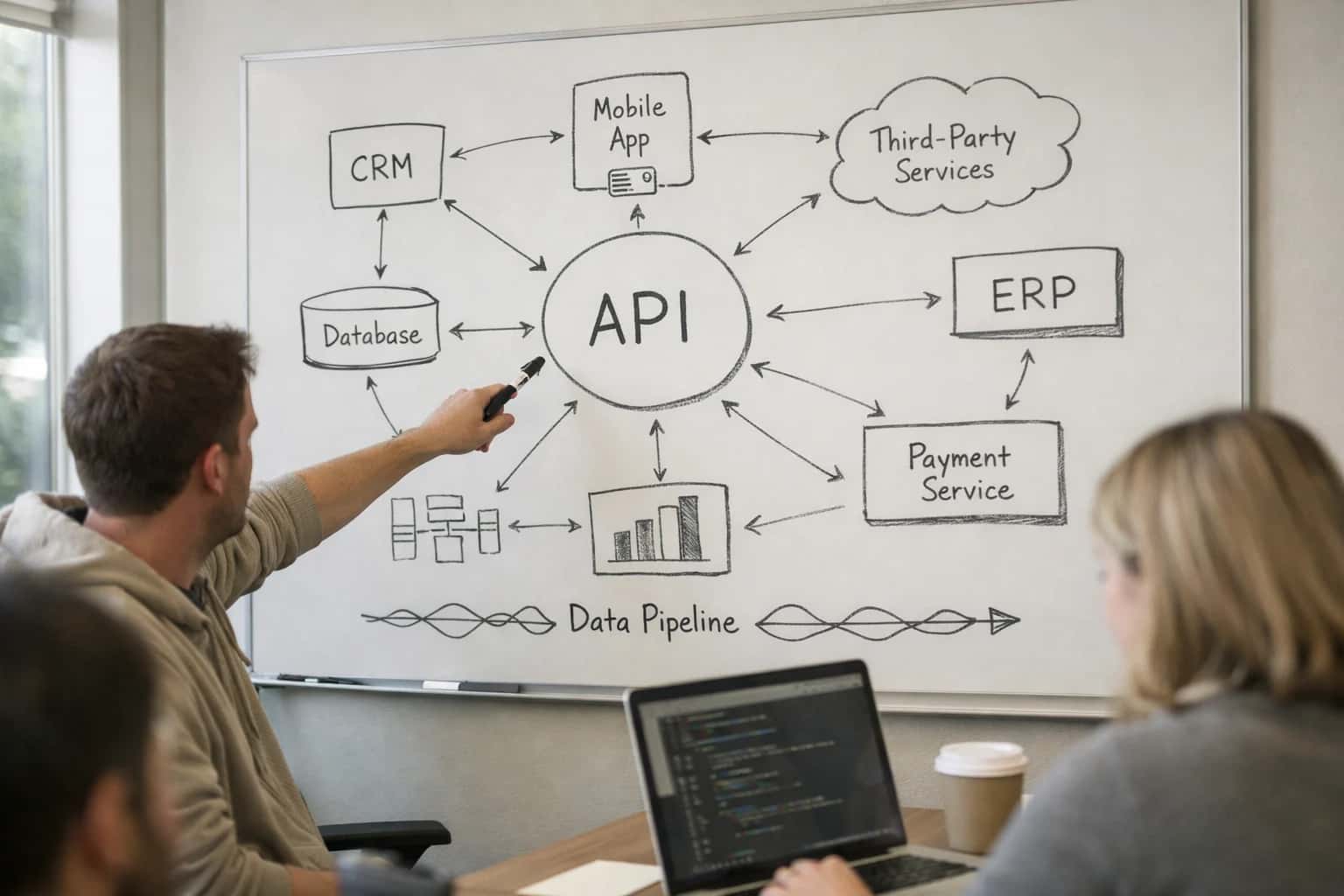
ARCHITECTURE PATTERN
From Raw Field Data to AI-Ready Analytics in Your Data Lake
A technical blueprint for streaming AI-enriched data from retail execution platforms into a cloud data lake to power advanced analytics and machine learning.
The implementation typically uses the platform's webhooks and REST APIs to stream events (e.g., audit_submitted, task_completed) to a middleware layer. Here, AI models perform enrichment in-flight: NLP classifies free-text notes into standard issue categories (e.g., stockout, planogram_deviation, safety_concern), computer vision models analyze uploaded images for compliance scoring or object detection, and anomaly detection flags outlier submissions. This enriched payload—now containing structured, tagged, and scored fields—is then written to the data lake as parquet or delta tables. This creates a single source of truth where data scientists can build models on store_compliance_risk_score or merchandising_effectiveness_index without manual preprocessing.
Governance and rollout require careful planning. Start by instrumenting a single high-value data stream, such as audit completions from Repsly, to validate the pipeline's latency, cost, and data quality. Implement RBAC at the data lake layer to control access to PII (e.g., employee names in notes) and ensure AI-generated tags include audit trails linking them to the source record and model version. This architecture not only feeds traditional BI tools but also creates a scalable feature store for machine learning, enabling use cases like predicting next-week compliance breaches based on historical execution trends and enabling advanced analytics across your entire retail portfolio. For related technical patterns, see our guides on AI Integration for Retail Execution Platform APIs and AI Integration for Retail Data Enrichment.
AI-READY DATA FOR ADVANCED ANALYTICS
Key Data Streams from Retail Execution Platforms
Audit & Compliance Data
This stream includes structured checklist results, photo evidence, and unstructured notes from store audits. AI models process this data to automate scoring, flag exceptions, and generate root-cause summaries.
Key AI Use Cases:
- Automated Scoring: Apply computer vision to shelf images for planogram compliance and out-of-stock detection.
- Exception Triage: Use NLP on auditor notes to categorize issues (e.g., 'safety', 'merchandising', 'cleanliness') and route corrective tasks.
- Trend Analysis: Aggregate audit scores over time to predict compliance risk at the store, district, or vendor level.
For data lake ingestion, this typically involves batch exports of completed audit records via platform APIs, including metadata like store ID, auditor, timestamp, and the raw JSON of question/answer pairs. AI enrichment adds fields like auto_score, exception_category, and summary before the record is written to your lake.
RETAIL EXECUTION DATA
High-Value Use Cases for AI-Enriched Data Lakes
Streaming AI-enriched data from platforms like Repsly, Zipline, YOOBIC, and Movista into a cloud data lake (Snowflake, Databricks) creates a unified intelligence layer for advanced analytics, predictive modeling, and automated decision support at enterprise scale.
01
Predictive Compliance Risk Scoring
Ingest raw audit scores, image metadata, and completion rates from retail execution platforms. Apply ML models to predict future compliance breaches by store, region, or audit type. Output risk scores and leading indicators to the data lake for proactive intervention dashboards and automated alerting to district managers.
Reactive → Proactive
Risk Management
02
Cross-Platform Performance Benchmarking
Unify execution data from multiple platforms (Repsly for audits, Zipline for communications) into a single schema within the data lake. Use AI to normalize KPIs, create composite performance scores, and benchmark stores or regions against each other, controlling for variables like format, location, and tenure.
Silos → Unified View
Data Consolidation
03
Root Cause Analysis at Scale
Pipe unstructured field notes, photo captions, and exception reports into the lake. Use LLMs to perform thematic analysis, extract common failure modes (e.g., 'planogram misalignment', 'staffing shortage'), and correlate them with quantitative metrics. Store enriched, tagged findings for downstream correlation with sales or inventory data.
Weeks → Hours
Insight Generation
04
Automated Executive Reporting
Trigger nightly batch jobs that query the enriched data lake, apply NLP to generate narrative summaries of weekly performance, highlight top/bottom performers, and flag emerging trends. Output structured JSON and natural language reports ready for consumption in BI tools like Power BI or Tableau, eliminating manual slide creation.
Batch → Real-time
Report Freshness
05
Training & Coaching Impact Modeling
Join AI-enriched execution data (e.g., post-audit performance deltas) with LMS completion records from systems like Docebo or Cornerstone. Build ML models in Databricks to quantify the impact of specific training modules on field compliance and productivity, enabling data-driven investment in enablement programs.
Guessing → Measuring
ROI Clarity
06
Demand Signal Enhancement for Supply Chain
Enrich traditional sell-through data from the ERP with AI-analyzed execution signals from the lake—like out-of-stock flags from shelf images or promotional compliance scores. Create enhanced demand forecasts and anomaly detection models that react to in-store conditions, not just historical shipments.
Lagging → Leading
Forecast Inputs
RETAIL DATA LAKE CONNECTIVITY
Example AI-Enrichment and Data Lake Workflows
These workflows illustrate how to stream AI-enriched data from platforms like Repsly, Zipline, YOOBIC, and Movista into a cloud data lake (e.g., Snowflake, Databricks). Each pattern transforms raw field data into structured, analytics-ready assets for machine learning and business intelligence.
Trigger: A field rep submits a completed digital store audit in Repsly or YOOBIC, including photos, notes, and scored checklists.
Workflow:
- A webhook from the retail execution platform sends the raw audit payload to an ingestion service.
- An AI agent processes the unstructured components:
- Computer Vision Model: Analyzes shelf photos to detect out-of-stocks, planogram deviations, and promotional material placement.
- NLP Model: Extracts key themes, sentiment, and specific issues from the rep's free-text notes.
- The agent merges the AI-generated metadata (e.g.,
out_of_stock_count: 3,planogram_compliance_score: 0.85,primary_issue: "blocked fire exit") with the original structured scores. - The enriched JSON record is written to a
raw_audits_enrichedtable in the data lake, partitioned by date and region. - A downstream process flags audits with high-risk AI findings (e.g., safety violations) and creates a high-priority task in the retail platform for follow-up.
Data Lake Impact: Creates a queryable history of visual and textual audit insights, enabling trend analysis on compliance root causes over thousands of stores.
FROM RAW AUDITS TO ANALYTICS-READY INSIGHTS
Implementation Architecture: Event-Driven Enrichment Pipelines
A production blueprint for streaming AI-enriched retail execution data into cloud data platforms like Snowflake or Databricks.
A scalable integration starts by treating platforms like Repsly, Zipline, YOOBIC, and Movista as event sources. Instead of batch exports, you configure webhooks on key objects—audit_submitted, task_completed, photo_uploaded—to push raw JSON payloads to a secure ingestion endpoint. This creates a real-time feed of store visits, compliance checks, and field notes. The pipeline's first job is to normalize this data across different platform schemas into a common retail_execution_event model, preserving critical context like store_id, rep_id, audit_form_id, and timestamps.
The enrichment layer is where AI adds value. Each event is processed through a series of stateless services: Computer Vision models analyze attached images for planogram compliance or out-of-stocks, generating structured scores. NLP services parse open-ended notes and comments, extracting themes, sentiment, and actionable items. A Retrieval-Augmented Generation (RAG) system can ground responses in playbooks or past resolutions. The output is a set of enriched attributes—anomaly_score, compliance_summary, extracted_issues—appended to the original event. This enriched payload is then streamed into your cloud data lake via Kafka, Kinesis, or a direct write to Delta Lake/Parquet.
Governance and rollout require careful orchestration. Start with a single event type (e.g., audit submissions) and a pilot region to validate data quality and AI accuracy. Implement idempotent processing and dead-letter queues to handle retries. Use role-based access in the data lake to control who can query the enriched datasets. The final architecture enables analytics teams to build models on a unified feed of AI-processed field data, moving from reactive reporting to predictive insights—like forecasting compliance risk or correlating execution scores with sales lift—all within the same analytics environment used for other enterprise data.
AI-ENRICHED DATA PIPELINES
Code and Payload Examples
Real-Time Event Capture
Retail execution platforms like Repsly, Zipline, and YOOBIC can push audit completion, task status, and photo upload events via webhooks. This Python FastAPI endpoint receives the payload, validates it, and places it on a queue for AI processing. The key is to handle high-volume event streams during peak field activity hours.
pythonfrom fastapi import FastAPI, HTTPException, BackgroundTasks from pydantic import BaseModel from datetime import datetime import json import boto3 app = FastAPI() sqs = boto3.client('sqs') QUEUE_URL = os.getenv('AUDIT_EVENT_QUEUE') class AuditEvent(BaseModel): platform: str # e.g., 'repsly', 'zipline' event_type: str # 'audit_submitted', 'task_completed' store_id: str user_id: str payload: dict # Contains form data, image URLs, notes timestamp: datetime def queue_for_ai_processing(event: AuditEvent): """Place event on SQS for async AI analysis.""" message_body = json.dumps(event.dict()) sqs.send_message(QueueUrl=QUEUE_URL, MessageBody=message_body) @app.post('/webhook/retail-audit') async def receive_audit_webhook( event: AuditEvent, background_tasks: BackgroundTasks ): # Validate webhook signature (platform-specific) # Enrich with metadata (region, client_id) background_tasks.add_task(queue_for_ai_processing, event) return {'status': 'queued', 'event_id': event.store_id}
RETAIL DATA LAKE CONNECTIVITY
Operational Impact: Before and After AI Enrichment
This table compares the operational reality of managing retail execution data before and after implementing AI-powered enrichment and streaming into a cloud data lake (e.g., Snowflake, Databricks).
| Metric | Before AI | After AI | Notes |
|---|---|---|---|
Field Data Structure | Unstructured notes, images, and CSV exports | Enriched, tagged, and vectorized records | LLMs categorize free-text notes and extract entities for dimensional modeling. |
Analytics Latency | Days to weeks for consolidated reporting | Near-real-time insights available | Streaming pipelines push AI-enriched data to the lake as audits are completed. |
Data Preparation Effort | Manual mapping and cleaning by analysts | Automated schema alignment and quality checks | AI handles variance in platform APIs and field naming conventions. |
Advanced Model Inputs | Limited to structured KPIs only | Rich features from image analysis and sentiment | Computer vision scores from shelf photos and NLP on rep notes become model-ready features. |
Cross-Platform Unification | Manual stitching of data from Repsly, Zipline, YOOBIC | Federated entity resolution across platforms | AI resolves store IDs, rep IDs, and SKUs to a single view of truth in the lake. |
Root Cause Analysis | Reactive, manual correlation of issues | Proactive anomaly linking and hypothesis generation | AI correlates audit failures, task completion rates, and external factors to suggest causes. |
Data Governance & Lineage | Spreadsheet-based tracking of data sources | Automated lineage from source platform to AI model | Each enriched record is tagged with its source, transformation logic, and consumption path for audit. |
ARCHITECTING FOR SCALE AND CONTROL
Governance, Security, and Phased Rollout
A practical blueprint for securely streaming AI-enriched retail execution data to your cloud data lake while maintaining governance and enabling controlled adoption.
A production integration between retail execution platforms like Repsly, Zipline, or YOOBIC and a cloud data lake (Snowflake, Databricks, BigQuery) requires a layered security model. This typically involves:
- API-layer authentication using platform-specific OAuth or API keys, managed via a secrets vault.
- Row-level security (RLS) applied at ingestion, tagging data with
store_id,region, andtenant_idbefore it lands in the lake. - PII detection and masking for unstructured field notes and image metadata using pre-ingestion AI models to comply with GDPR/CCPA.
- Immutable audit logs tracking every data extraction, enrichment step, and load event for full lineage from the store audit to the analytics dashboard.
Rollout follows a phased, value-driven approach to de-risk the implementation:
- Phase 1: Pilot a Single Data Stream
Connect one high-value data object (e.g.,
audit_resultsfrom Repsly) to a dedicated sandbox in your data lake. Use lightweight AI enrichment, such as sentiment scoring on auditor notes, to demonstrate quick wins. - Phase 2: Expand to Core Workflows
Integrate additional entities (
tasks,visit_summaries,photo_evidence) and apply more complex AI—like computer vision for planogram compliance or anomaly detection on score trends. Begin feeding enriched datasets to a BI tool like Power BI or Looker for a pilot group of regional managers. - Phase 3: Scale and Automate Connect all retail execution platforms across the portfolio. Implement automated data quality checks and AI-driven alerting for pipeline failures. Establish a governance workflow where new AI model outputs or data fields require review by a central data council before being promoted to production analytics.
Governance is critical for maintaining trust in AI-generated insights. Establish a prompt registry and model card for each enrichment step (e.g., "Compliance Risk Scorer") to document its purpose, training data, and known limitations. Use your data lake's native capabilities (like Snowflake's Data Governance or Databricks Unity Catalog) to manage access controls, ensuring that AI-enriched fields such as predicted_risk_score are only visible to authorized roles. This controlled, phased approach turns your data lake into a scalable, governed intelligence layer for retail operations, without disrupting day-to-day field activities.
Enabling Efficiency, Speed & Accuracy
Intelligent Analysis, Decision & Execution
We build AI systems for teams that need search across company data, workflow automation across tools, or AI features inside products and internal software.
Talk to Us
Search across company data
Give teams answers from docs, tickets, runbooks, and product data with sources and permissions.
Useful when people spend too long searching or get different answers from different systems.
Enterprise searchRAGPermissions
Read more
Automate internal workflows
Use AI to route work, draft outputs, trigger actions, and keep approvals and logs in place.
Useful when repetitive work moves across multiple tools and teams.
AI agentsWorkflow automationGovernance
Read more
Add AI to products and internal tools
Build assistants, guided actions, or decision support into the software your team or customers already use.
Useful when AI needs to be part of the product, not a separate tool.
AI integrationDecision supportModel routing
Read moreRETAIL DATA LAKE CONNECTIVITY
Frequently Asked Questions
Practical questions for data engineering and analytics teams building AI-ready data pipelines from retail execution platforms to cloud data lakes.
A production pipeline typically follows this pattern:
- Trigger & Ingestion: Retail execution platforms (Repsly, Zipline, YOOBIC) emit events via webhooks or push data to an API endpoint upon audit completion, task update, or image upload. An ingestion service (e.g., AWS Lambda, Azure Function) captures these payloads.
- AI Enrichment Layer: The raw JSON payload is routed to an asynchronous processing queue. AI services (LLMs for note analysis, CV models for image scoring) enrich the data, adding fields like
compliance_summary,sentiment_score, orplanogram_deviation_flag. - Structured Output: Enriched records are written to a staging area (e.g., S3, ADLS Gen2) in a structured format (Parquet/Delta Lake) partitioned by
platform_source,retailer_id, anddate. - Data Lake Registration: A process (e.g., Apache Spark job, Databricks Workflow) registers the new data into the lakehouse's metastore (Unity Catalog, AWS Glue), making it queryable in Snowflake or Databricks.
- Downstream Consumption: Analytics teams and ML models consume the enriched datasets via SQL or direct DataFrame reads for dashboards, predictive models, and automated reporting.
Key integration points are the platform's webhook configuration and REST API for historical backfill.

About the author
Prasad Kumkar
CEO & MD, Inference Systems
Prasad Kumkar is the CEO & MD of Inference Systems and writes about AI systems architecture, LLM infrastructure, model serving, evaluation, and production deployment. Over 5+ years, he has worked across computer vision models, L5 autonomous vehicle systems, and LLM research, with a focus on taking complex AI ideas into real-world engineering systems.
His work and writing cover AI systems, large language models, AI agents, multimodal systems, autonomous systems, inference optimization, RAG, evaluation, and production AI engineering.
LinkedIn
Limited slotsGet a Free AI Consultation
Partnered with leading AI, data, and software stack.





How We Work
Custom AI workflows for your Business
One-fit-all AI don't work for modern businesses. At Inferensys, we aim to understand your business & custom requirements; which we use to define most efficient agentic workflows, the data, and the tools for your business.
01
Review the use case
We understand the task, the users, and where AI can actually help.
Read more02
Pick the right approach
We define what needs search, automation, or product integration.
Read more03
Build the first useful version
We implement the part that proves the value first.
Read more04
Improve from there
We add the checks and visibility needed to keep it useful.
Read moreThe first call is a practical review of your use case and the right next step.
Talk to Us