The integration architecture typically involves a middleware layer that ingests real-time data streams from smart water meters (e.g., Flume, Phyn, Moen) or building management systems. This layer runs AI models that analyze flow patterns, pressure changes, and usage anomalies to distinguish between normal activity and potential leaks. When a high-confidence leak is detected, the system uses the PM platform's API—such as AppFolio's Work Order API, Yardi Voyager's Service Management suite, or Entrata's Maintenance API—to automatically create a high-priority work order. The ticket is populated with critical context: suspected location (unit, common area, main line), severity score, and historical consumption graphs for the technician.

Integration
AI Integration for Water Leak Detection AI
Architect AI systems that analyze smart water meter data in real-time, detect leak patterns, and automatically create high-priority maintenance tickets in your property management platform.
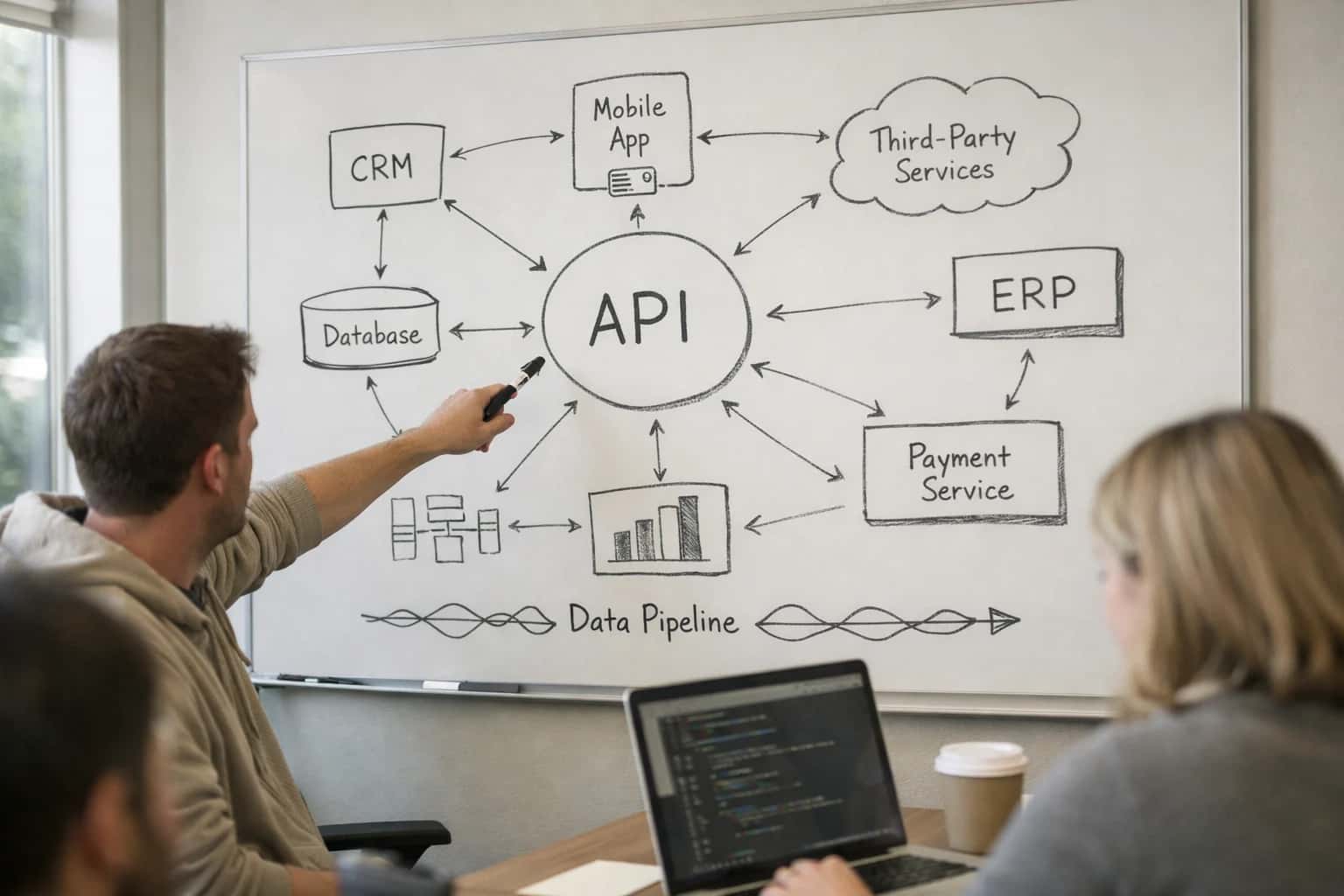
ARCHITECTURE & ROLLOUT
From Silent Leaks to Automated Action
Integrating AI-driven water leak detection with your property management platform transforms raw sensor data into prioritized maintenance action.
For production rollout, we recommend a phased approach: start with a pilot building where IoT infrastructure is already deployed. The AI model is first tuned on historical data to establish baseline patterns and reduce false positives. Integration is then tested in a monitoring-only mode, where the system generates alerts in a dashboard without creating tickets. Once confidence thresholds are met, the workflow is activated to create tickets automatically. Governance is maintained through a human-in-the-loop approval queue for the first 30 days and by setting strict rules (e.g., only create tickets for leaks exceeding 1 gallon per hour outside of known usage windows). All automated actions are logged with a full audit trail back to the raw sensor data.
This integration shifts maintenance from reactive to predictive. Instead of discovering a leak days later from a tenant call or a massive utility spike, property teams receive a work order often within minutes of the anomaly starting. This can prevent thousands of dollars in water damage, mold remediation, and lost rent. The system also contributes to sustainability goals by identifying inefficiencies. For portfolios with hundreds of units, the ROI extends beyond damage prevention to include reduced emergency callouts, lower insurance premiums, and improved resident satisfaction through proactive care.
ARCHITECTURE FOR REAL-TIME LEAK DETECTION
Where AI Connects: Data Sources & PM Platform Touchpoints
Ingesting Real-Time Flow Data
Leak detection AI requires a continuous stream of granular water usage data. Integration typically connects to:
- Smart Water Meters: Direct API connections to meters from providers like Badger, Neptune, or Kamstrup, pulling interval data (e.g., gallons per minute, hourly consumption).
- Building Management Systems (BMS): For commercial properties, BMS platforms like Siemens Desigo or Johnson Controls Metasys provide flow sensor data from main lines and sub-zones.
- Submetering Networks: Systems from vendors like WATERGY or MetroMax aggregate data from individual unit submeters via cellular or LoRaWAN networks, crucial for multifamily leak isolation.
- Utility Data Feeds: For properties without smart meters, AI can process bulk CSV exports or use screen scraping (with consent) from utility provider portals to establish baseline consumption patterns.
The AI pipeline validates, timestamps, and normalizes this data into a unified stream for pattern analysis, often using a message queue (e.g., Apache Kafka) to handle high-volume, real-time ingestion.
INTEGRATION PATTERNS
High-Value Use Cases for AI-Powered Leak Detection
Integrating AI with smart water meters and property management platforms transforms passive data into proactive maintenance. These use cases detail where to connect the AI layer, the workflows it enables, and the operational impact for property teams.
01
Real-Time Anomaly Detection & Ticket Creation
AI continuously analyzes smart meter data streams, identifying abnormal flow patterns indicative of leaks. Upon detection, it automatically creates a high-priority maintenance ticket in the connected PM platform (e.g., AppFolio, Yardi), attaching the meter ID, unit number, and flow graph. This shifts response from batch review to real-time intervention.
Batch -> Real-time
Detection speed
02
Leak Severity Triage & Technician Dispatch
The AI classifies leak severity (e.g., minor drip vs. major burst) based on flow rate, duration, and location data. It then prioritizes the ticket and suggests the appropriate vendor or in-house technician skill set. This logic is pushed into the PM platform's dispatch module, optimizing first-time fix rates and resource allocation.
Hours -> Minutes
Triage & routing
03
Vacant Unit & Common Area Monitoring
For vacant units or common areas (laundry rooms, pools), AI establishes a baseline for expected zero flow. Any detected usage triggers an immediate alert and work order, preventing undetected damage during turnover or in unoccupied spaces. This integration relies on the PM platform's unit status and common area asset registers.
Prevent major loss
Primary benefit
04
Historical Analysis for Preventive Maintenance
AI aggregates historical leak events and meter data from the PM platform's work order history. It identifies patterns and correlates them with appliance age or plumbing infrastructure, generating predictive maintenance schedules. These schedules are created as future-dated, low-priority tickets in the PM platform to prevent recurring issues.
Reactive -> Proactive
Maintenance mode
05
Resident Communication & Billing Support
When a leak is confirmed in a tenant-occupied unit, the AI workflow can trigger an automated, personalized notification via the PM platform's resident portal. It can also flag the event for the accounting module to support utility billback or lease charge processes, ensuring accurate cost recovery and transparent communication.
Automated workflow
Communication & ops
06
Portfolio-Wide Water Efficiency Reporting
AI analyzes leak data across an entire portfolio, benchmarking properties and identifying systemic issues. It generates reports that feed into the PM platform's portfolio analytics dashboard, helping asset managers make capital planning decisions for plumbing upgrades and substantiating ESG/water conservation initiatives.
Data-driven decisions
Strategic insight
WATER LEAK DETECTION
Example AI Workflows: From Sensor to Closed Ticket
These workflows detail how AI integrates smart water meter data with your Property Management Platform (AppFolio, Yardi, Entrata, MRI) to detect, triage, and resolve leak events automatically.
Trigger: Incoming 15-minute interval water consumption data from smart meters via IoT platform webhook.
Context Pulled: AI system queries the PM platform API for:
- Unit/tenant occupancy status.
- Historical water usage for the unit (last 30-day baseline).
- Any active "Plumbing" or "Water" category work orders for the unit.
AI Action: A lightweight model compares current flow against the baseline, flagging sustained, low-level flow (e.g., a running toilet) or sudden spikes (e.g., burst supply line). It classifies severity (Low, High, Critical) based on flow rate and duration.
System Update: For High/Critical severity, the AI agent calls the PM platform's work order API to create a ticket with:
- Title:
[AUTO] Suspected Water Leak - Unit 205 - Description: Includes flow rate data, anomaly pattern, and severity.
- Priority: Set to
EmergencyorHigh. - Category:
Plumbing. - Attachments: Link to consumption graph.
Human Review Point: Property manager receives an immediate SMS/email alert from the PM platform about the new high-priority ticket.
FROM SENSOR TO TICKET
Implementation Architecture: Data Flow & System Design
A production-ready blueprint for connecting smart water meter data to your property management platform to detect leaks and automate high-priority maintenance.
The integration architecture is built around a central AI inference service that acts as middleware between IoT data streams and your property management (PM) platform's work order API. The core data flow is: 1) Ingestion – Smart meter data (e.g., from Flume, Phyn, or building management systems) flows via secure webhooks or scheduled API pulls into a time-series database. 2) Analysis – A trained model continuously analyzes consumption patterns for each unit, flagging anomalies like continuous low-flow (a running toilet) or sudden high-flow bursts (a pipe break). 3) Enrichment – The service enriches the alert with context from the PM platform, such as unit number, resident contact info, and recent maintenance history, by calling APIs from AppFolio, Yardi Voyager, Entrata, or MRI Software. 4) Action – It then automatically creates a high-priority maintenance ticket in the connected PM platform, pre-populating the description with the suspected issue, severity score, and relevant meter data.
For a reliable rollout, the system design must include key operational components: a queueing layer (e.g., RabbitMQ) to handle ingestion spikes, a vector database to store and retrieve similar historical leak patterns for model comparison, and a human-in-the-loop approval step configurable by property. Critical tickets can be auto-created, while lower-confidence alerts can be routed to a property manager's dashboard for review. The integration connects at the maintenance module level, using the platform's native API to create work orders, assign vendors, and trigger automated resident notifications, ensuring the workflow feels native to onsite teams.
Governance is centered on audit trails and model feedback. Every auto-generated ticket is tagged with the source inference ID, allowing teams to track detection accuracy and close the loop by marking tickets as 'confirmed leak' or 'false positive.' This feedback is used to retrain the model. Implementation begins with a pilot on a subset of metered units, focusing on integrating the data pipeline and establishing baseline patterns before enabling full automation. The goal is not to replace maintenance staff but to shift their focus from detection to resolution, turning potential multi-day leaks into same-day repairs.
INTEGRATION PATTERNS
Code & Payload Examples
Ingesting IoT Telemetry
Water leak detection begins with ingesting and normalizing raw telemetry from smart water meters, IoT valves, and moisture sensors. Data arrives via MQTT, REST APIs, or cloud integrations (e.g., Flume, Phyn, Moen). The AI pipeline must normalize this data into a standard schema before analysis.
Example Payload (Normalized):
json{ "device_id": "flume_001", "property_id": "APT_203", "timestamp": "2024-05-15T14:30:00Z", "metric_type": "water_flow", "value": 2.5, "unit": "gallons_per_minute", "metadata": { "source_system": "Flume API", "confidence": 0.95 } }
This normalized record is then streamed to a time-series database and the real-time detection model.
SMART WATER METER INTEGRATION
Realistic Operational Impact & Time Savings
This table illustrates the tangible operational improvements when AI-driven leak detection is integrated with smart water meters and your Property Management platform's maintenance module.
| Workflow / Metric | Before AI Integration | After AI Integration | Implementation Notes |
|---|---|---|---|
Leak Detection & Alerting | Manual review of meter reads or tenant reports (often after visible damage) | Real-time anomaly detection from smart meter data; alerts generated within minutes | AI model ingests interval data (e.g., every 15 mins) and flags abnormal flow patterns indicative of leaks |
Maintenance Ticket Creation | Manual entry by staff after phone call/email; prone to delays and data entry errors | Fully automated, high-priority ticket creation via PM platform API with meter data attached | Ticket includes suspected location (unit/building), flow rate data, and auto-assigns to 'Emergency' category |
Initial Triage & Dispatch | Staff must call tenant, assess severity, and locate issue before dispatching | AI provides probable source (e.g., running toilet vs. pipe burst) and urgency score for dispatcher | Human dispatcher reviews AI recommendation; dispatch time reduced by prioritizing true emergencies |
Average Time to Identify Leak | Days to weeks (until bill spike or tenant report) | Same day, often within hours of leak onset | Critical for preventing minor leaks from becoming major, costly repairs |
Water Damage & Repair Costs | High; prolonged leaks lead to mold, structural damage, and large insurance claims | Significantly reduced; early detection limits damage scope and repair complexity | Primary ROI driver is avoided capital repair costs and lower insurance premiums over time |
Resident Communication | Reactive; manager contacts resident after problem is reported or discovered | Proactive; automated notification to resident and manager upon detection, with next steps | Message template includes instructions (e.g., 'Please check under sink in Unit 203') to facilitate early mitigation |
Data Analysis for Portfolio Trends | Manual, quarterly review of water bills to spot outliers | Automated monthly reports on leak frequency, cost savings, and high-risk assets | AI identifies properties with recurring issues, enabling preventive plumbing upgrades |
CONTROLLED DEPLOYMENT FOR CRITICAL INFRASTRUCTURE
Governance, Security & Phased Rollout
Integrating AI into physical building systems requires a deliberate, secure, and phased approach to manage risk and ensure operational reliability.
A production-grade leak detection integration is built as a secure middleware layer that sits between your smart water meters (IoT platforms like Flume, Phyn, or Moen) and your property management platform (AppFolio, Yardi, Entrata, or MRI). This layer ingests raw meter data via secure APIs or MQTT streams, runs the AI detection models, and only creates a high-priority work order in the PM platform via its native API when a leak pattern is confirmed. This architecture ensures the PM platform's core data and workflows remain untouched by the AI's continuous analysis, and all actions are logged with a clear audit trail linking the alert to the source data and model inference.
Governance starts with model validation and alert tuning. Before connecting to live properties, the AI models are calibrated against historical leak and normal usage data specific to your portfolio's plumbing types and unit configurations. Critical governance controls include:
- Confidence Thresholds: Setting strict confidence scores required before creating a ticket (e.g., >95% for automatic creation, 80-95% for manager review).
- Alert Suppression Rules: Preventing duplicate tickets for the same leak event and implementing quiet periods after a maintenance dispatch.
- Human-in-the-Loop (HITL) Gates: For initial phases or high-value assets, configuring the system to send an alert to an operations manager for approval before the ticket is automatically created in the PM platform. All model inputs, inferences, and resulting platform actions are logged to a separate data store for performance monitoring, drift detection, and compliance reporting.
A phased rollout is essential for managing change and proving value. We recommend a three-phase approach:
- Pilot Phase (1-2 properties): Deploy in monitoring-only mode. The AI analyzes data and generates internal reports and dashboards showing detected anomalies, but does not create tickets in the PM platform. This validates detection accuracy and tunes thresholds without disrupting operations.
- Controlled Automation Phase (Portfolio segment): Enable automatic ticket creation for a defined set of units or a single asset class. Implement HITL gates for all alerts. Integrate the workflow with the PM platform's maintenance module, ensuring tickets include AI-generated details like probable source (toilet, irrigation, fixture), estimated flow rate, and severity.
- Full Scale & Optimization: Roll out across the portfolio. Shift to fully automated creation for high-confidence leaks, using the accumulated data to refine dispatch logic (e.g., prioritizing leaks in vacant units first). Integrate findings back into preventive maintenance schedules within the PM platform and begin correlating leak events with specific vendor performance for continuous improvement.
Enabling Efficiency, Speed & Accuracy
Intelligent Analysis, Decision & Execution
We build AI systems for teams that need search across company data, workflow automation across tools, or AI features inside products and internal software.
Talk to Us
Search across company data
Give teams answers from docs, tickets, runbooks, and product data with sources and permissions.
Useful when people spend too long searching or get different answers from different systems.
Enterprise searchRAGPermissions
Read more
Automate internal workflows
Use AI to route work, draft outputs, trigger actions, and keep approvals and logs in place.
Useful when repetitive work moves across multiple tools and teams.
AI agentsWorkflow automationGovernance
Read more
Add AI to products and internal tools
Build assistants, guided actions, or decision support into the software your team or customers already use.
Useful when AI needs to be part of the product, not a separate tool.
AI integrationDecision supportModel routing
Read moreIMPLEMENTATION BLUEPRINT
Frequently Asked Questions
Practical questions for architects and operations leaders planning to integrate AI-driven water leak detection with their property management platform.
The system ingests continuous flow data from smart water meters (e.g., from manufacturers like Flume, Phyn, or MeterHero) via their APIs or a central IoT platform. An AI model analyzes this stream in real-time, looking for patterns indicative of leaks:
- Continuous Flow Detection: Identifies water running for extended periods when no fixture use is expected (e.g., overnight).
- Low-Flow Leak Patterns: Detects small, consistent usage that suggests a dripping faucet or running toilet.
- Pressure Anomalies: Correlates data with pressure sensors to identify sudden drops that may indicate a pipe burst.
- Usage Benchmarking: Compares a unit's current usage against its own historical patterns and similar units to flag outliers.
When a high-confidence leak pattern is identified, the system packages the evidence (timestamp, flow rate graph, unit ID) and triggers the next workflow step.

About the author
Prasad Kumkar
CEO & MD, Inference Systems
Prasad Kumkar is the CEO & MD of Inference Systems and writes about AI systems architecture, LLM infrastructure, model serving, evaluation, and production deployment. Over 5+ years, he has worked across computer vision models, L5 autonomous vehicle systems, and LLM research, with a focus on taking complex AI ideas into real-world engineering systems.
His work and writing cover AI systems, large language models, AI agents, multimodal systems, autonomous systems, inference optimization, RAG, evaluation, and production AI engineering.
LinkedIn
Limited slotsGet a Free AI Consultation
Partnered with leading AI, data, and software stack.





How We Work
Custom AI workflows for your Business
One-fit-all AI don't work for modern businesses. At Inferensys, we aim to understand your business & custom requirements; which we use to define most efficient agentic workflows, the data, and the tools for your business.
01
Review the use case
We understand the task, the users, and where AI can actually help.
Read more02
Pick the right approach
We define what needs search, automation, or product integration.
Read more03
Build the first useful version
We implement the part that proves the value first.
Read more04
Improve from there
We add the checks and visibility needed to keep it useful.
Read moreThe first call is a practical review of your use case and the right next step.
Talk to Us