AI integration for lease audits connects directly to the Lease Administration or Document Management modules in platforms like AppFolio, Yardi, Entrata, and MRI Software. The core workflow is an automated pipeline: a scheduled agent or webhook-triggered process extracts active lease PDFs from the platform's storage, uses a specialized document intelligence model to parse hundreds of pages, and maps critical data points—option periods, rent escalations, co-tenancy clauses, CPI adjustments, and critical dates—back into structured custom fields or audit reports within the system. This turns a manual, multi-week review process into a nightly batch job that flags anomalies for human review.

Integration
AI Integration for Lease Audit Automation
Deploy AI to automatically audit active lease files in your property management platform for critical dates, rent escalations, and complex clauses, generating prioritized reports for asset managers.
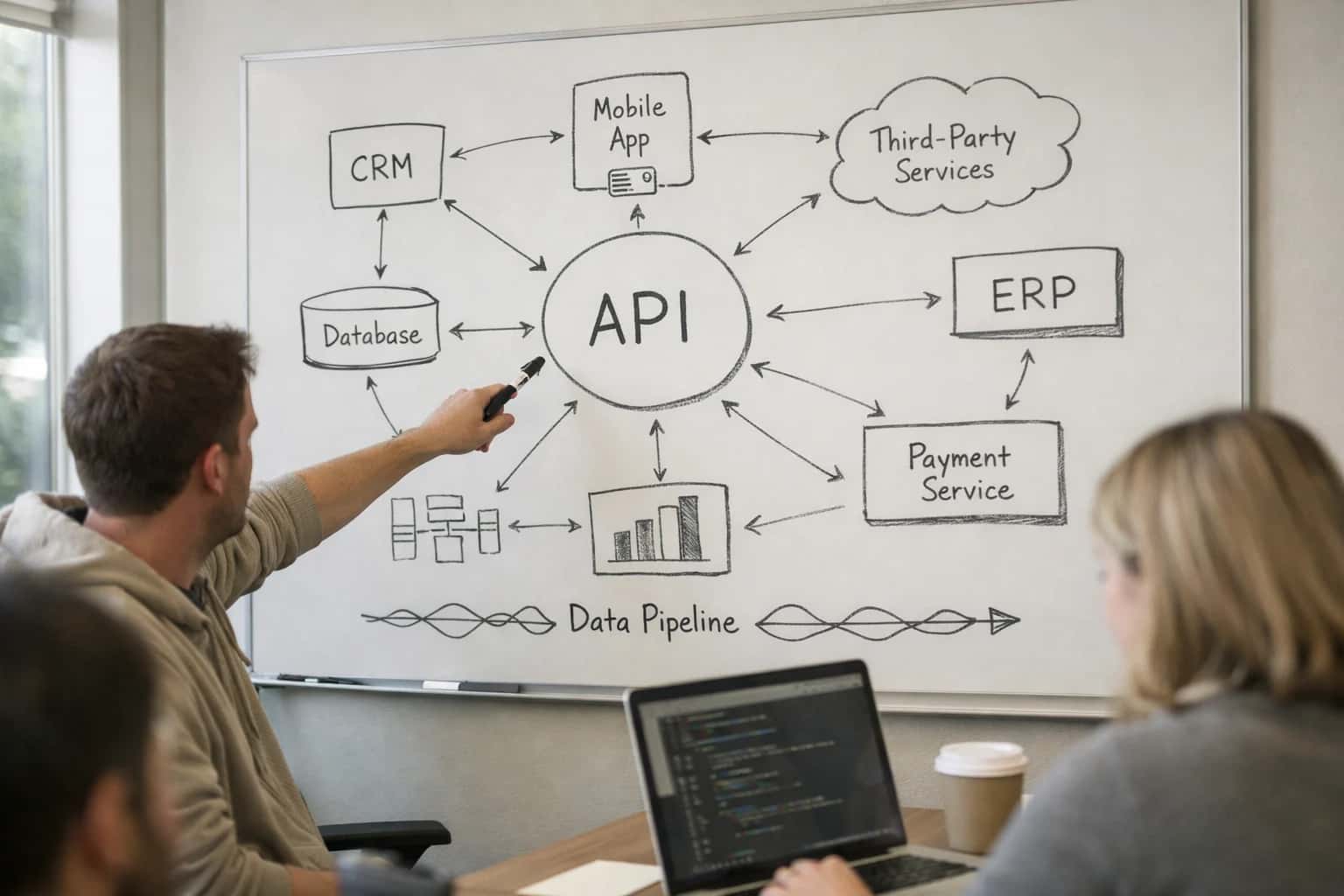
ARCHITECTURE & ROLLOUT
Where AI Fits into Lease Audits
A practical blueprint for integrating AI into your property management platform to automate lease abstraction, compliance checks, and financial exposure analysis.
Implementation requires a secure middleware layer that handles the document processing, maintains an audit trail of all extracted clauses, and pushes structured findings via the PM platform's REST APIs. High-value use cases include:
- Automated Rent Roll Validation: Cross-referencing abstracted rent amounts and escalation logic against actual billed amounts in the accounting module.
- Portfolio-Wide Exposure Reporting: Aggregating co-tenancy and continuous operation clauses across a retail portfolio to model revenue risk.
- Renewal & Option Forecasting: Populating a dashboard with upcoming critical dates, triggering automated workflows in the platform's CRM or task manager for asset managers. The business impact is measured in audit cycle time reduction (weeks to days) and the prevention of missed revenue or costly oversights from buried lease terms.
Rollout is typically phased, starting with a pilot on a single asset class (e.g., office leases) to tune the AI's extraction accuracy for your specific lease templates. Governance is critical: a human-in-the-loop review step is maintained for the first 90 days, with the AI's confidence scores and extracted clauses logged for QA. The final architecture is a resilient service that syncs with the PM platform's data model, ensuring audit findings are actionable within the existing workflow of portfolio analysts and asset managers, not siloed in a separate tool.
LEASE AUDIT AUTOMATION
Connecting AI to Your Property Management Platform
Ingesting and Structuring Lease Files
The first step is programmatically extracting lease data from your property management platform. This involves connecting to document storage APIs (like AppFolio's Documents endpoint or Yardi's DocumentService) to retrieve active lease PDFs.
AI document intelligence models then process these files to extract key fields:
- Critical Dates: Commencement, expiration, option exercise deadlines.
- Financial Terms: Base rent, escalations (CPI, fixed %), operating expense (CAM) caps.
- Critical Clauses: Co-tenancy, continuous operation, exclusive use, renewal options.
The extracted data is normalized into a structured JSON schema and linked back to the specific unit and tenant records in the PM platform via its unique IDs. This creates an AI-auditable, queryable lease ledger.
python# Example payload for extracted lease clause { "platform_lease_id": "APT-2023-0456", "clause_type": "rent_escalation", "extracted_text": "Base rent shall increase by 3% annually on each anniversary of the Commencement Date.", "structured_data": { "escalation_type": "fixed_percentage", "percentage": 3.0, "trigger_date": "anniversary" }, "confidence_score": 0.97 }
AUTOMATED COMPLIANCE & PORTFOLIO INTELLIGENCE
High-Value AI Lease Audit Use Cases
Manual lease audits are slow, error-prone, and struggle to scale. These AI-powered workflows connect directly to your property management platform to extract, analyze, and report on critical lease terms, turning static documents into a dynamic, actionable compliance engine.
01
Automated Critical Date Extraction & Alerts
AI scans active lease files in AppFolio, Yardi, or MRI to identify and extract key dates (expirations, option windows, rent review dates, co-tenancy deadlines). The system creates structured records, sets calendar alerts, and triggers automated workflows for portfolio managers 90 days in advance.
Same day
Audit cycle time
02
Rent Escalation & CPI Clause Validation
AI parses rent adjustment language, calculates upcoming escalations based on embedded formulas or CPI indices, and flags clauses with ambiguous terms. It generates a reconciliation-ready report for asset managers, ensuring no revenue is left on the table and preventing tenant billing disputes.
Batch -> Real-time
Clause analysis
03
Co-Tenancy & Continuous Operation Monitoring
For retail portfolios, AI maps tenant covenants against vacancy and sales data. It automatically detects potential co-tenancy breaches or continuous operation violations, alerting managers to proactive lease enforcement or renegotiation opportunities before tenant claims arise.
1 sprint
Risk identification
04
CAM/Operating Expense Audit Support
AI cross-references lease language on recoverable expenses with actual vendor invoices and general ledger codes from the PM platform. It flags non-compliant charges, calculates tenant-specific allocations, and prepares defensible audit packages, streamlining the annual reconciliation process.
Hours -> Minutes
Charge validation
05
Portfolio-Wide Clause Benchmarking
Extracts and categorizes clauses (e.g., subletting rights, repair obligations, renewal options) across hundreds of leases. Delivers a normalized dashboard showing clause prevalence and variance, empowering acquisitions and legal teams to standardize future language and identify outlier liabilities.
06
Lease Abstraction & Data Population
AI processes newly executed lease PDFs, extracting key financial and legal terms into structured data fields. It then pushes this data via API into the corresponding lease records in Yardi Voyager or MRI Software, eliminating manual data entry and ensuring the system of record is immediately accurate.
Hours -> Minutes
Abstraction time
IMPLEMENTATION PATTERNS
Example AI Lease Audit Workflows
These workflows detail how AI agents connect to your property management platform's APIs to audit active lease files, identify critical dates, flag non-standard clauses, and generate actionable reports for asset managers.
Trigger: Nightly batch job or a new lease document upload via webhook.
Data Pull: The agent queries the PM platform's lease module API for all active leases. For each lease, it retrieves the lease document (PDF) from the linked document management system and the structured lease data (commencement date, expiration date, option periods).
Agent Action:
- Uses a document intelligence model to extract all date-related clauses from the lease PDF, including:
- Rent escalation dates and percentages
- Option exercise deadlines (renewal, expansion, termination)
- Co-tenancy or sales volume kick-out dates
- CAM reconciliation deadlines
- Cross-references extracted dates with the structured data to fill gaps.
- Calculates actionable deadlines (e.g., "Option to renew must be exercised 90 days prior to expiration").
System Update: Creates a structured audit record in a dedicated database. For dates requiring action within the next 120 days, the agent creates a high-priority task or calendar event in the PM platform's task module, assigned to the asset manager, with a link to the source clause.
Human Review Point: The system flags any date where the extracted value conflicts with the structured data field for manual review.
FROM LEASE PDFS TO ACTIONABLE REPORTS
Implementation Architecture: Data Flow & APIs
A secure, automated pipeline that extracts, analyzes, and reports on critical lease data directly within your property management platform.
The integration is built on a serverless workflow that connects your PM platform's document storage (e.g., AppFolio's Document Manager, Yardi Voyager's Document Storage, MRI's Document Imaging) to a dedicated AI processing layer. The typical data flow is: 1) A webhook or scheduled job identifies newly uploaded lease PDFs. 2) Documents are securely transferred to a processing queue. 3) An AI document intelligence service extracts key fields—critical dates, rent escalations, option periods, co-tenancy clauses, and renewal terms—using a combination of OCR, layout analysis, and fine-tuned language models. 4) Extracted, structured data is validated and then written back to the PM platform via its REST API, creating or updating custom objects (e.g., Lease Audit records) linked to the original property and lease file.
For production, the architecture includes a human-in-the-loop review dashboard for low-confidence extractions, ensuring accuracy before updates are committed. Audit trails are maintained by logging all extraction actions, source file hashes, and user approvals. The final output is an actionable report generated within the platform, often surfaced in a portfolio-level dashboard or pushed to asset managers via automated email/Slack alerts, highlighting leases requiring immediate attention, upcoming option deadlines, or rent review opportunities.
Rollout is phased, starting with a pilot on a subset of lease types (e.g., office NNN leases) to tune extraction models before scaling. Governance is critical: the system must be configured with role-based access controls aligned with the PM platform's permissions, ensuring only authorized users can trigger audits or view sensitive financial clauses. This architecture turns a manual, quarterly review process into a continuous, automated compliance and asset management tool.
IMPLEMENTATION PATTERNS
Code & Payload Examples
Ingesting & Parsing Lease Files
The first step is extracting structured data from lease PDFs stored in the PM platform. This typically involves a scheduled job that queries for new or modified documents, downloads them via the platform's API, and sends them to a document intelligence service.
Key API Calls:
- List files in the
Lease Documentsfolder or module. - Download file binary via a signed URL or direct blob.
- Update the lease record's metadata with processing status.
Example Payload to Document AI Service:
json{ "file_bytes": "base64_encoded_pdf", "extraction_schema": { "fields": ["lease_start_date", "lease_end_date", "option_periods", "base_rent", "escalation_clauses", "co_tenancy_triggers"], "confidence_threshold": 0.85 } }
The response contains extracted values and source text citations, which are then written back to a custom audit object or external database for analysis.
LEASE AUDIT AUTOMATION
Realistic Time Savings & Business Impact
How AI integration transforms the manual, error-prone process of auditing lease files into a structured, accelerated workflow, freeing asset managers for strategic review.
| Audit Task | Manual Process | AI-Assisted Process | Impact & Notes |
|---|---|---|---|
Initial Document Review | 2-4 hours per lease file | 5-10 minutes per file | AI extracts key clauses, dates, and obligations from PDFs into structured data. |
Critical Date Identification | Manual calendar entry and tracking | Automated date extraction and alert creation | Reduces missed options, renewals, and rent escalations; alerts sync to PM platform. |
Rent & Escalation Validation | Cross-reference spreadsheets and ledgers | Automated reconciliation against rent roll | Flags discrepancies between lease terms and billed amounts for investigation. |
Co-Tenancy & Continuous Operation Review | Manual clause reading for portfolio | Batch analysis and risk scoring | Identifies at-risk tenants and triggers compliance workflows for asset managers. |
Audit Report Generation | Days to compile findings into reports | Same-day, standardized report generation | AI populates report templates with extracted data and highlights for human review. |
Portfolio-Wide Trend Analysis | Quarterly manual analysis | Ongoing, automated dashboard updates | Provides real-time visibility into lease expiration cliffs, option concentrations, and portfolio risk. |
Actionable Workflow Creation | Manual task creation in PM platform | Automated ticket and task generation | High-priority findings (e.g., missing certificates) automatically create follow-up tasks for property teams. |
ARCHITECTING CONTROLLED, AUDITABLE AI WORKFLOWS
Governance, Security, and Phased Rollout
A production-ready lease audit integration requires a security-first architecture and a phased rollout that builds trust with asset management and legal teams.
The integration architecture treats the property management platform (AppFolio, Yardi, Entrata, MRI) as the system of record. AI agents operate as a middleware layer, using secure API service accounts with scoped permissions—typically read-only for lease documents and financial tables, and write access only to a dedicated AI_Audit_Report custom object or note field. All document processing occurs in a secure, isolated environment; extracted lease data (critical dates, escalation clauses, co-tenancy terms) is never used to train public models and is encrypted in transit and at rest. An immutable audit log records every document processed, the AI's extracted findings, and the human reviewer who approved or amended each result, creating a defensible chain of custody for compliance.
A successful rollout follows a phased, risk-managed approach:
- Phase 1: Pilot on Historical Leases. Run the AI audit on a closed set of expired or renewed leases where the ground truth is known. This validates accuracy, tunes extraction prompts for your specific lease templates, and socializes the output format with asset managers.
- Phase 2: Parallel Run on Active Portfolio. For 30-60 days, run the AI audit in parallel with manual processes. The AI generates reports into a staging area in the PM platform, allowing teams to compare results without impacting operational workflows. This phase builds confidence and captures edge cases.
- Phase 3: Integrated Workflow with Human-in-the-Loop. Integrate the AI as a button or scheduled job within the PM platform's lease module. The system generates a draft audit report, flags high-risk clauses or imminent dates, and routes it via an approval workflow to the assigned asset manager for review and sign-off before finalization.
Governance is maintained through continuous monitoring and clear ownership. Key performance indicators (extraction accuracy for dates, clause recall rate) are tracked in a dashboard. A quarterly review with legal and operations refines the AI's rule set for new lease language or market terms. This structured approach ensures the AI augments—rather than replaces—human expertise, turning a quarterly manual slog into a consistent, auditable, and scalable operational process. For related technical patterns, see our guide on Property Management Platform APIs.
Enabling Efficiency, Speed & Accuracy
Intelligent Analysis, Decision & Execution
We build AI systems for teams that need search across company data, workflow automation across tools, or AI features inside products and internal software.
Talk to Us
Search across company data
Give teams answers from docs, tickets, runbooks, and product data with sources and permissions.
Useful when people spend too long searching or get different answers from different systems.
Enterprise searchRAGPermissions
Read more
Automate internal workflows
Use AI to route work, draft outputs, trigger actions, and keep approvals and logs in place.
Useful when repetitive work moves across multiple tools and teams.
AI agentsWorkflow automationGovernance
Read more
Add AI to products and internal tools
Build assistants, guided actions, or decision support into the software your team or customers already use.
Useful when AI needs to be part of the product, not a separate tool.
AI integrationDecision supportModel routing
Read moreWORKFLOW AND INTEGRATION QUESTIONS
Implementation FAQ: AI Lease Audit Automation
Practical questions for technical teams and asset managers evaluating AI-powered lease audit automation. Covers integration patterns, data handling, rollout, and governance for AppFolio, Yardi, Entrata, and MRI Software.
The integration uses the platform's secure APIs to pull lease documents and associated metadata. The typical flow is:
- Authentication & Scope: The AI system authenticates using OAuth 2.0 or API keys with permissions scoped to read documents from specific portfolios or properties.
- Document Retrieval: It calls the PM platform's document storage API (e.g., AppFolio's
FilesAPI, Yardi Voyager'sDocumentendpoints) to fetch active lease PDFs. - Context Enrichment: For each lease, it pulls related data via other APIs to provide context:
- Property details (address, unit, square footage)
- Tenant contact and entity information
- Historical payment and work order data (for occupancy validation)
- Secure Processing: Documents are streamed directly to the AI processing layer; they are not permanently stored in the AI system unless configured for audit trails. All data is encrypted in transit and at rest.
This creates a read-only integration that respects the platform's data governance and does not alter source documents.

About the author
Prasad Kumkar
CEO & MD, Inference Systems
Prasad Kumkar is the CEO & MD of Inference Systems and writes about AI systems architecture, LLM infrastructure, model serving, evaluation, and production deployment. Over 5+ years, he has worked across computer vision models, L5 autonomous vehicle systems, and LLM research, with a focus on taking complex AI ideas into real-world engineering systems.
His work and writing cover AI systems, large language models, AI agents, multimodal systems, autonomous systems, inference optimization, RAG, evaluation, and production AI engineering.
LinkedIn
Limited slotsGet a Free AI Consultation
Partnered with leading AI, data, and software stack.





How We Work
Custom AI workflows for your Business
One-fit-all AI don't work for modern businesses. At Inferensys, we aim to understand your business & custom requirements; which we use to define most efficient agentic workflows, the data, and the tools for your business.
01
Review the use case
We understand the task, the users, and where AI can actually help.
Read more02
Pick the right approach
We define what needs search, automation, or product integration.
Read more03
Build the first useful version
We implement the part that proves the value first.
Read more04
Improve from there
We add the checks and visibility needed to keep it useful.
Read moreThe first call is a practical review of your use case and the right next step.
Talk to Us