The integration surface begins with the Wrike Request Form. When a user submits a request, the form's JSON payload—containing the request title, description, and any custom field responses—is sent via a Wrike webhook to a dedicated AI processing queue. An AI agent analyzes the natural language description to perform three core functions: classify the project type (e.g., 'Marketing Campaign,' 'IT Infrastructure Upgrade'), estimate initial effort (in story points or days), and extract key entities like stakeholders, desired due dates, or budget mentions mentioned in the text.

Integration
AI Integration for Wrike Request Forms
Architectural blueprint for connecting AI to Wrike's request intake layer to automate project classification, effort estimation, and folder setup, reducing manual triage from hours to minutes.
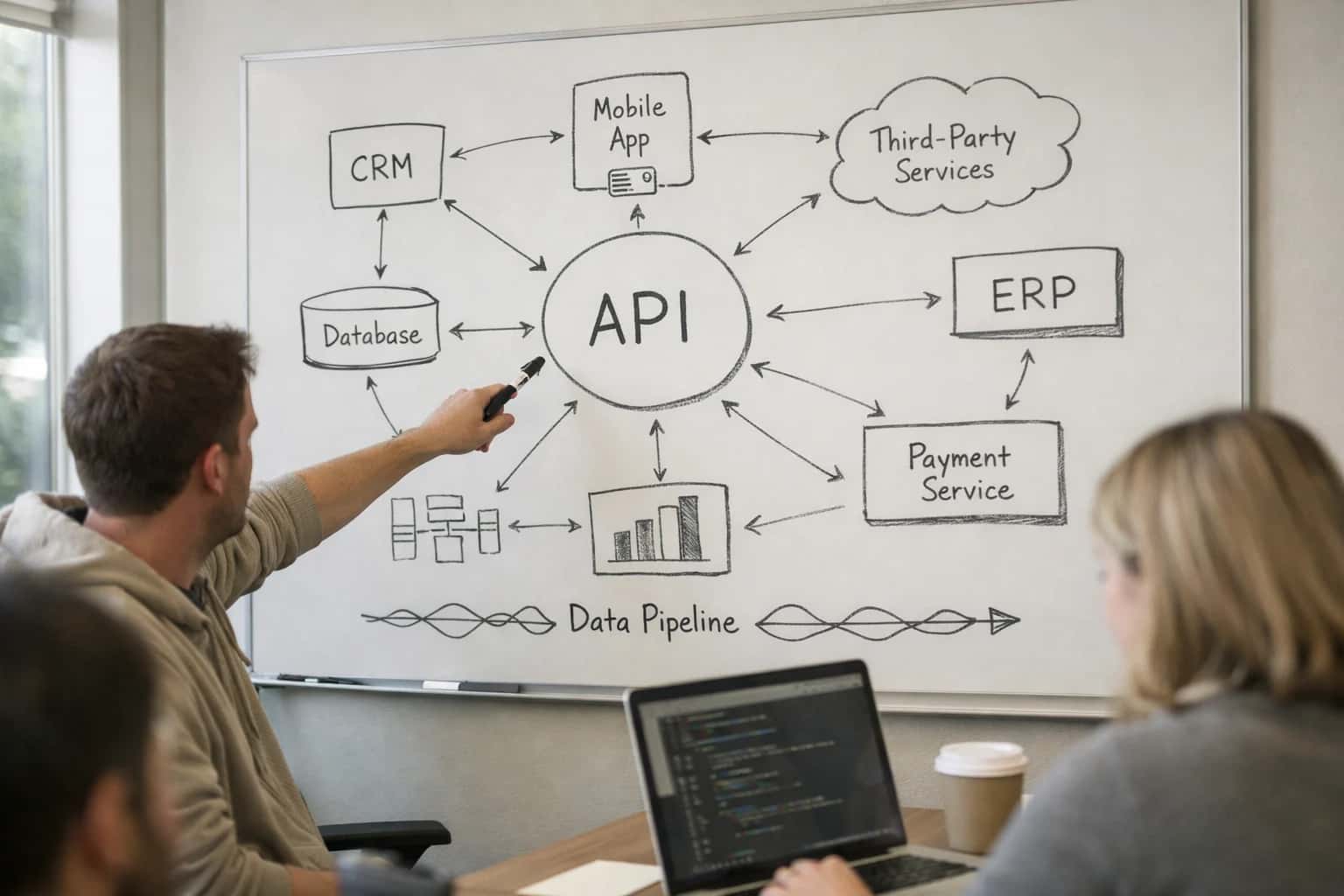
ARCHITECTURE FOR AUTOMATED PROJECT SETUP
Where AI Fits into Wrike's Request Intake Workflow
A practical guide to embedding AI agents directly into Wrike's request forms to analyze submissions, classify work, and auto-populate projects.
The AI's output is then mapped back into Wrike's data model via the Wrike API. This automates the project creation step defined in the form's Blueprint. The AI can intelligently set custom fields (e.g., Project Type, Priority Score, Estimated Effort), populate the task description with a structured summary, assign the new folder or task to the correct user group based on classification, and even create subtasks from a standardized template. For example, a request for a 'new product launch page' could trigger the creation of a 'Web Development' folder with pre-populated subtasks for Design, Copy, and QA, all within seconds of form submission.
Governance is maintained through a human-in-the-loop approval step for high-effort or high-cost classifications before the project is fully created. The AI's classification confidence score and reasoning can be written to a hidden custom field for audit. This pattern turns a manual, variable intake process into a consistent, analyzed workflow, reducing administrative setup from hours to minutes and ensuring new work enters the system with richer, actionable metadata from day one. For a deeper dive on orchestrating these automations, see our guide on AI Integration for Wrike Automation.
ARCHITECTURE FOR INTELLIGENT REQUEST FORMS
Key Integration Surfaces in Wrike for AI
The Primary AI Entry Point
Wrike's Request Forms are the ideal surface for initial AI integration, acting as a structured intake layer. When a form is submitted, the raw text from fields like "Project Description" or "Business Need" can be sent in real-time to an AI model via a webhook.
The AI analyzes the submission to:
- Classify the request type (e.g., Marketing Campaign, IT Infrastructure, Product Launch).
- Extract key entities like stakeholders, desired deadlines, and budget mentions.
- Estimate effort based on historical project data and the complexity of the description.
This analysis then drives the automated population of Wrike's custom fields upon project or folder creation, turning an unstructured request into a richly tagged, actionable work item.
INTELLIGENT INTAKE AUTOMATION
High-Value AI Use Cases for Wrike Request Forms
Transform static Wrike request forms into intelligent intake systems. By integrating AI at the point of submission, you can auto-classify requests, estimate effort, populate project structures, and route work—dramatically reducing manual triage and setup time.
01
Request Classification & Routing
Analyzes the free-text description in a Wrike request form to automatically classify the project type (e.g., 'Marketing Campaign,' 'IT Infrastructure,' 'Product Bug'). The AI then sets the appropriate custom fields, folder location, and assigns the request to the correct team or project manager based on historical patterns.
Batch -> Real-time
Routing speed
02
Effort & Complexity Scoring
Reads the submission text and any attached briefs to generate an initial effort estimate (e.g., Small, Medium, Large, Epic). The AI populates a custom field with this score and can auto-set a preliminary timeline or point value, giving PMs a data-driven starting point for capacity planning.
1 sprint
Planning acceleration
03
Blueprint & Folder Auto-Population
Triggers a Wrike Blueprint based on the AI's classification. The AI doesn't just launch the template—it pre-populates custom fields, task descriptions, and subtasks within the newly created project using details extracted from the request form, turning a blank template into a 80% complete project plan.
Hours -> Minutes
Setup time
04
Requirement & Acceptance Criteria Drafting
Parses vague or high-level requests to generate a structured list of implied requirements and draft acceptance criteria. This output is written into the description of the newly created master task or a dedicated subtask, providing immediate clarity and reducing the back-and-forth needed to define scope.
05
Duplicate & Similar Request Detection
As a request is submitted, the AI semantically searches existing Wrike projects and tasks for similar work. If a potential duplicate or highly related initiative is found, it alerts the submitter and the PM, suggests linking the requests, and can prevent the creation of redundant work streams.
06
Compliance & Policy Pre-Check
Scans request text and attached documents for keywords or concepts that trigger compliance reviews (e.g., 'PII,' 'GDPR,' 'new vendor'). The AI can then automatically add required approval steps, tag legal or security stakeholders, and append a compliance checklist to the project, ensuring governance is baked in from day one.
Same day
Risk mitigation
IMPLEMENTATION PATTERNS
Example AI-Powered Request Workflows
These workflows demonstrate how AI can transform Wrike request forms from simple intake tools into intelligent orchestration engines. Each pattern uses the form submission as a trigger, analyzes the unstructured text, and executes a series of automated actions to accelerate project setup.
Trigger: A new request is submitted via a Wrike request form.
Context Pulled: The AI agent retrieves the full request form data, including the description, custom field values (e.g., budget range, department), and any attached files.
AI Action: A classification model analyzes the submission text to:
- Determine the primary project type (e.g., "Marketing Campaign," "Product Launch," "IT Infrastructure Upgrade").
- Assess complexity based on keywords, requested timeline, and budget.
- Identify key stakeholders mentioned or implied.
System Update: Based on the classification, the agent:
- Selects the appropriate pre-configured Wrike Blueprint and applies it, auto-creating the project folder with its full task hierarchy.
- Populates custom fields like
Project Type,Complexity Score, andEstimated Tier. - Tags the project with relevant labels and adds identified stakeholders as followers.
Human Review Point: The project manager receives a notification with the AI's classification rationale and the auto-created structure for a quick review before kickoff.
AI-POWERED REQUEST INTAKE
Implementation Architecture: Data Flow & System Design
A production-ready blueprint for connecting AI to Wrike's request forms to automate project setup and classification.
The integration architecture centers on Wrike's Request Forms API and webhook system. When a user submits a request form, a webhook payload containing the raw submission text and metadata is sent to a secure endpoint. An AI agent, built on a framework like LangChain or CrewAI, immediately processes this payload. The agent performs three core functions: classifying the project type (e.g., 'Marketing Campaign,' 'IT Infrastructure,' 'Product Launch'), extracting key parameters (e.g., estimated effort in story points or days, required departments, priority signals), and generating a structured data object. This object maps directly to Wrike's data model, specifying values for custom fields like Project Type, Estimated Effort, Complexity Score, and Initial Priority.
The processed data is then written back to Wrike via its REST API to create and configure the new project or folder. The system automatically populates the pre-defined custom fields, assigns the task to the appropriate folder structure or workflow (e.g., a 'Marketing' space), and can even trigger follow-up automations—like adding a standard set of subtasks from a Blueprint or notifying a specific user group via Wrike's automation engine. For governance, all AI decisions are logged with the original prompt, model reasoning, and confidence scores in an audit trail, allowing for easy review and model tuning. The entire flow—from submission to configured project—typically executes in seconds, turning a manual triage and setup process that could take hours into an immediate, consistent operation.
Rollout is phased, starting with a pilot request form in a non-critical area. The AI's classification and field population are initially set to 'Advisory Mode,' where its suggestions are presented to a human approver within Wrike before auto-application. This builds trust and provides a feedback loop for prompt refinement. Once validated, the system shifts to full automation, with a human-in-the-loop override maintained for low-confidence scores or specific flagged keywords. This architecture ensures the integration enhances Wrike's native capabilities without disrupting existing workflows, providing immediate value in request throughput and data quality while maintaining full operational control.
IMPLEMENTATION PATTERNS
Code & Payload Examples
Ingesting Form Submissions
When a Wrike request form is submitted, it triggers a webhook to your integration endpoint. This handler validates the payload, extracts the unstructured text from the request description, and prepares it for AI processing. The key is to capture all relevant custom field IDs and the new folder/task ID for later updates.
pythonimport json from flask import request, Response def handle_wrike_webhook(): """Example webhook handler for new Wrike request forms.""" data = request.json # Validate webhook signature (omitted for brevity) # Extract core submission data task_id = data['taskId'] folder_id = data['folderId'] description = data.get('description', '') custom_fields = data.get('customFields', []) # Map custom fields by title for easy reference field_map = {cf['title']: cf['id'] for cf in custom_fields} # Prepare payload for AI analysis service ai_payload = { "task_id": task_id, "folder_id": folder_id, "raw_text": description, "field_mapping": field_map } # Place in queue for async processing queue_ai_analysis(ai_payload) return Response(status=202) # Accepted for processing
AI-ENHANCED REQUEST INTAKE
Realistic Time Savings & Operational Impact
How AI integration transforms manual request processing in Wrike, from submission to structured project creation.
| Workflow Stage | Before AI | After AI | Implementation Notes |
|---|---|---|---|
Request Form Submission | Unstructured text entry | Guided, context-aware input | AI suggests field values as user types |
Initial Triage & Classification | Manual review by PMO (15-30 min) | Automatic classification & routing (<1 min) | AI analyzes text to set project type, priority, and assignee group |
Custom Field Population | Manual data entry from email/chat | Auto-populated from submission analysis | AI extracts entities (e.g., client name, budget mentions) to fill Wrike custom fields |
Effort & Timeline Estimation | Back-and-forth with requester | Preliminary AI-generated estimate | Model references historical similar tasks; human PM finalizes |
Folder/Project Structure Creation | Manual template application | AI-recommended Blueprint selection | System suggests a Wrike Blueprint based on project type and complexity |
Stakeholder Notification | Manual email or @mention | Automated, personalized update | AI drafts initial comment with summary and next steps for the assigned team |
Overall Intake Cycle Time | Hours to next business day | Minutes to same-day | Reduces PMO queue, accelerates project kickoff |
ARCHITECTING FOR CONTROL AND ADOPTION
Governance, Security, and Phased Rollout
A production-ready AI integration for Wrike request forms requires a deliberate approach to data security, user governance, and incremental rollout to ensure value and trust.
The integration architecture treats Wrike as the system of record, with AI acting as a stateless pre-processor. When a form is submitted, the payload (including text, attachments, and custom field values) is securely routed via a webhook to a dedicated processing queue. The AI service, which can be hosted in your VPC or a compliant cloud, analyzes the submission without persisting Wrike data long-term. Key outputs—like a predicted Project Type, estimated Effort Level, and auto-populated custom fields such as Suggested Folder and Priority Score—are written back to the newly created Wrike task or project via the Wrike API using the original submitter's or a service account's context, maintaining a clear audit trail in Wrike's activity stream.
Governance is enforced at multiple layers: Role-Based Access Control (RBAC) in Wrike determines which users or groups trigger AI processing, often gated by a custom checkbox field like "AI Analysis Requested." The AI's confidence scores and reasoning can be written to hidden custom fields (e.g., AI_Confidence_Score, AI_Classification_Reasoning) for administrator review and model monitoring. For sensitive requests, the system can be configured for human-in-the-loop approval, where AI suggestions are placed in a Pending Review status, requiring a manager or operations lead to approve the auto-populated fields before the project is fully configured and tasks are assigned.
A phased rollout is critical for adoption and tuning. Start with a pilot group and a single, high-volume request form, such as "New Marketing Campaign." Initially, run the AI in shadow mode, where it analyzes submissions and logs its predictions without modifying Wrike, allowing you to compare its performance against human operators. In Phase 2, enable the AI to write to non-critical custom fields for pilot users, providing a side-by-side comparison view. Finally, full automation can be rolled out by form type, with continuous monitoring of key metrics like reduction in manual triage time, classification accuracy, and user feedback collected via a simple Wrike custom field or a linked survey. This measured approach de-risks the implementation and builds organizational confidence in the AI-assisted workflow.
Enabling Efficiency, Speed & Accuracy
Intelligent Analysis, Decision & Execution
We build AI systems for teams that need search across company data, workflow automation across tools, or AI features inside products and internal software.
Talk to Us
Search across company data
Give teams answers from docs, tickets, runbooks, and product data with sources and permissions.
Useful when people spend too long searching or get different answers from different systems.
Enterprise searchRAGPermissions
Read more
Automate internal workflows
Use AI to route work, draft outputs, trigger actions, and keep approvals and logs in place.
Useful when repetitive work moves across multiple tools and teams.
AI agentsWorkflow automationGovernance
Read more
Add AI to products and internal tools
Build assistants, guided actions, or decision support into the software your team or customers already use.
Useful when AI needs to be part of the product, not a separate tool.
AI integrationDecision supportModel routing
Read moreIMPLEMENTATION DETAILS
Frequently Asked Questions
Common technical and operational questions about building AI-powered Wrike request forms that analyze submissions, classify projects, estimate effort, and auto-populate fields.
The workflow is triggered via a Wrike webhook on form submission. The AI system receives the raw submission text (title, description, attachments) via API.
- Data Ingestion: The system extracts text from the submitted form fields and any attached documents (PDFs, Word docs) using OCR or text parsing.
- Context Enrichment: It can optionally pull related context from Wrike, such as the requester's folder history or similar past projects, using the Wrike API.
- Model Processing: A multi-step AI agent or a single LLM call with a structured prompt analyzes the text to:
- Classify the request type (e.g., "Marketing Campaign," "IT Infrastructure," "Bug Fix").
- Extract key entities: desired due date, budget mentions, stakeholders, required resources.
- Estimate effort/complexity (e.g., "Small," "Medium," "Large") based on historical data or heuristic rules.
- Output Structuring: The analysis is formatted into a JSON payload matching Wrike's custom field schema for the target project or folder.

About the author
Prasad Kumkar
CEO & MD, Inference Systems
Prasad Kumkar is the CEO & MD of Inference Systems and writes about AI systems architecture, LLM infrastructure, model serving, evaluation, and production deployment. Over 5+ years, he has worked across computer vision models, L5 autonomous vehicle systems, and LLM research, with a focus on taking complex AI ideas into real-world engineering systems.
His work and writing cover AI systems, large language models, AI agents, multimodal systems, autonomous systems, inference optimization, RAG, evaluation, and production AI engineering.
LinkedIn
Limited slotsGet a Free AI Consultation
Partnered with leading AI, data, and software stack.





How We Work
Custom AI workflows for your Business
One-fit-all AI don't work for modern businesses. At Inferensys, we aim to understand your business & custom requirements; which we use to define most efficient agentic workflows, the data, and the tools for your business.
01
Review the use case
We understand the task, the users, and where AI can actually help.
Read more02
Pick the right approach
We define what needs search, automation, or product integration.
Read more03
Build the first useful version
We implement the part that proves the value first.
Read more04
Improve from there
We add the checks and visibility needed to keep it useful.
Read moreThe first call is a practical review of your use case and the right next step.
Talk to Us