AI integrates with Asana by connecting to its REST API and listening to webhooks for real-time events on tasks, projects, and portfolios. The primary surfaces for AI are custom fields (for structured scoring and metadata), task descriptions/comments (for natural language analysis), and dependencies/timelines (for predictive modeling). An AI agent acts as a background user, reading these data points to generate insights and then writing back via API—updating custom fields like AI Health Score or Predicted Delay, posting summary comments, or even creating follow-up subtasks.

Integration
AI Integration for Asana Project Tracking
Embed AI agents as virtual project managers in Asana to automate progress tracking, update timelines, and nudge owners—turning manual status chasing into proactive, intelligent orchestration.
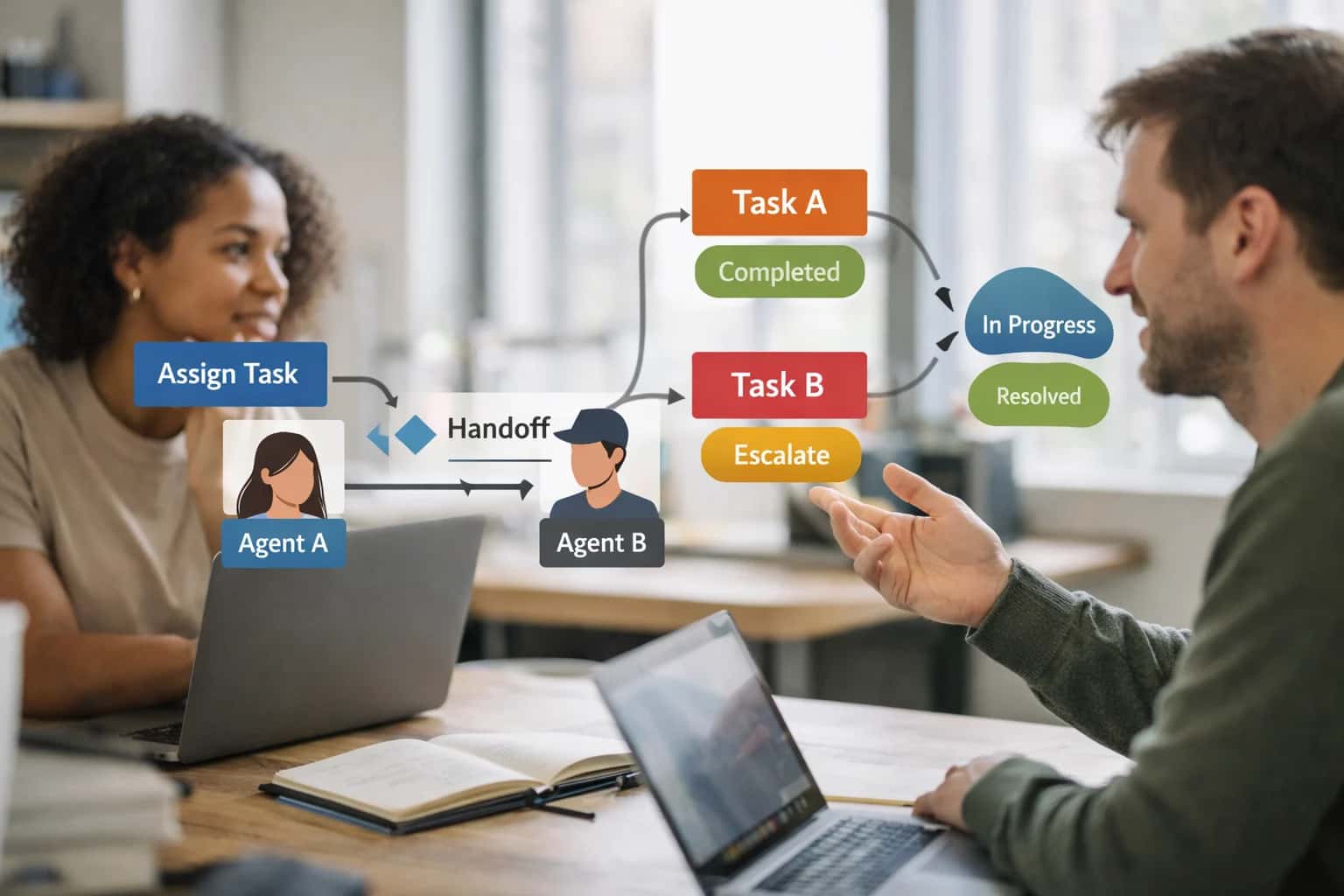
ARCHITECTURE & ROLLOUT
Where AI Fits into Asana Project Tracking
A practical blueprint for embedding AI agents into Asana's data model to automate status, predict timelines, and act as a virtual project manager.
Implementation typically involves a middleware service that subscribes to Asana events (e.g., task.updated, project.status_changed). This service routes payloads to specialized AI workflows: a tracking agent analyzes progress against milestones in the Timeline view; a nudging agent scans for stale tasks or overdue updates and posts @mentions; and a forecasting agent uses dependency graphs and historical completion data to simulate project end dates. Results are written back to dedicated custom fields, enabling Rules and Automations to trigger alerts or adjust workflows without manual intervention.
Rollout should be phased, starting with a single project or team. Governance is critical: establish clear audit trails for AI-generated updates, implement human-in-the-loop approvals for significant timeline changes, and use Asana's Portfolio permissions to control which projects the AI can access. The goal isn't to replace the project manager but to automate the repetitive tracking and reporting tasks, turning days of manual updates into continuous, real-time visibility.
ARCHITECTURAL BLUEPRINT FOR AI AGENTS
Key Integration Surfaces in Asana
The Core Objects for AI Context
AI agents need structured access to Asana's primary data model to function as virtual project managers. The key objects are:
- Tasks: The fundamental unit of work. AI can read/write
name,notes,due_on,assignee,custom_fields, andtags. This is the primary surface for status nudges, timeline updates, and priority adjustments. - Projects: Containers for tasks. AI can monitor
due_date,current_status, andcustom_fieldsat the project level to track overall health against milestones. - Sections: Represent workflow stages (e.g., "To Do", "In Progress", "Done"). AI can analyze task movement between sections to infer progress velocity and potential bottlenecks.
- Portfolios: Aggregations of projects for portfolio-level oversight. AI can synthesize data from multiple projects to generate executive summaries and investment prioritization insights.
Integration is achieved via the Asana API, where AI agents perform GET operations to gather context and PUT/POST operations to make updates, often triggered by webhooks or scheduled runs.
VIRTUAL PROJECT MANAGER AGENTS
High-Value AI Use Cases for Asana Tracking
Integrate AI agents directly into Asana's data model via its API to automate status tracking, generate predictive insights, and enhance project coordination without manual oversight.
01
Automated Status & Timeline Updates
An AI agent monitors task due dates, completion percentages, and dependency columns, then automatically updates project timelines and sends proactive nudges to owners. It writes back revised dates to custom fields and posts summaries in task comments.
Hours -> Minutes
Status consolidation
02
Predictive Risk Detection Engine
Analyzes task descriptions, comments, custom fields, and historical delay patterns to score project risk. Flags high-risk items in a dedicated 'Risk Portfolio' and suggests mitigation steps, using Asana's API to create follow-up tasks.
Batch -> Real-time
Risk monitoring
03
Intelligent Capacity Planning
Connects to Asana's Workload view and custom resource fields to forecast team bandwidth. The AI model analyzes upcoming tasks, estimates effort, and recommends optimal assignment or start date adjustments to prevent overallocation.
1 sprint
Planning lead time
04
AI-Powered Stakeholder Reporting
Automatically generates narrative-driven progress reports by synthesizing data from Portfolios, Goals, and custom fields. Tailors detail level by stakeholder role and posts PDF summaries or sends scheduled email digests via Asana integrations.
Same day
Report generation
05
Smart Triage for Asana Forms
An AI layer sits behind Asana Forms to analyze natural language submissions. It classifies requests, auto-populates custom fields (e.g., priority, estimated effort), assigns to the correct team, and sets up initial task dependencies.
Minutes -> Seconds
Request routing
06
Document Intelligence for Attachments
Processes files attached to Asana tasks (briefs, specs, meeting notes) to extract key deliverables, dates, and action items. Creates subtasks, updates custom fields, and posts summaries, turning static documents into structured project data.
Manual -> Automated
Data extraction
IMPLEMENTATION PATTERNS
Example AI-Powered Tracking Workflows
These workflows illustrate how AI agents can be embedded into Asana's data model via its API and webhooks to automate tracking, analysis, and proactive management. Each pattern is designed to be triggered by specific events, leverage structured context, and update Asana with intelligent insights or actions.
Trigger: A scheduled daily cron job or a webhook on milestone task updates.
Context Pulled: The AI agent fetches:
- The milestone task, its due date, and completion status.
- All preceding dependent tasks (via Asana's dependency API) and their statuses.
- Custom fields for
Priority,Owner, and% Complete. - Recent comments and attachments on the milestone and its dependencies.
AI Action: A model analyzes the aggregated data to:
- Calculate a predictive
Health Score(0-100) based on completion velocity of dependencies and time remaining. - Generate a concise
Status Summarynoting key blockers, on-track items, and confidence level. - Predict a revised
Forecasted Dateif the current pace indicates a delay.
System Update: The agent writes back to the milestone task via the Asana API:
- Updates a custom
Health Scorenumber field. - Posts the
Status Summaryas a comment, tagging the project manager. - Optionally adjusts a
Forecasted Completiondate field.
Human Review Point: If the Health Score drops below a defined threshold (e.g., 70), the agent can automatically create a follow-up subtask for the project manager titled "Review Milestone Risk" and link it to the milestone.
VIRTUAL PROJECT MANAGER AGENT
Implementation Architecture & Data Flow
A production-ready AI integration for Asana connects to its API and webhooks to create an autonomous agent that monitors, analyzes, and acts on project data.
The integration architecture is event-driven, centered on Asana's webhooks for tasks, projects, and custom fields. When a task is updated, completed, or commented on, a webhook payload is sent to a secure endpoint. This triggers an AI agent which fetches the full context—including the task's custom fields, dependencies, subtasks, and project timeline—via the Asana API. The agent's core function is to analyze this data against predefined rules and historical patterns to determine if a milestone is at risk, a timeline needs adjustment, or an owner requires a nudge.
The agent's intelligence is grounded in Asana's data model. It uses custom fields like Priority, % Complete, Estimated Effort, and Risk Score as structured inputs. For example, it can calculate a task's "slack time" by analyzing its due date, dependencies, and the completion status of predecessors. If risk is detected, the agent performs a series of automated actions: it can update a Project Health custom field on the parent project, post a comment tagging the task owner with a contextual reminder, or even create a follow-up "mitigation" task in a dedicated Risk portfolio. All actions are logged in Asana as system-generated comments for a full audit trail.
Rollout is typically phased, starting with a single pilot project. Governance is managed through a configuration layer that defines which projects and portfolios the agent monitors, the severity thresholds for alerts, and approval workflows for any automated timeline changes. The agent operates with a human-in-the-loop for significant changes; for instance, it may suggest a new due date in a comment, requiring a project manager to approve it via a simple reaction. This architecture ensures the AI augments the team without disrupting existing processes, turning manual tracking from a daily chore into a continuous, automated background process.
ASANA API INTEGRATION PATTERNS
Code & Payload Examples
Automating Status Updates via Task Analysis
This pattern uses the Asana API to fetch a task with its custom fields and comments, analyzes the content for progress, and writes back an updated status. It's the core of a virtual project manager agent.
Typical Flow:
- Webhook triggers on task comment or custom field change.
- Agent fetches task details via
GET /tasks/{task_gid}. - LLM analyzes description, latest comments, and attached files.
- Agent determines if status should move from 'Today' to 'In Progress' or 'Waiting on Feedback'.
- API call updates the task's
custom_fieldsorassignee_status.
pythonimport asana import openai # Initialize clients client = asana.Client.access_token('ASANA_PAT') openai.api_key = 'OPENAI_KEY' def analyze_and_update_task(task_gid): # Fetch task with expand parameters task = client.tasks.get_task(task_gid, opt_fields=['name', 'notes', 'custom_fields', 'assignee_status', 'html_notes']) # Prepare context for LLM context = f"Task: {task['name']}\nDescription: {task.get('notes', '')}\n" # Add custom field values (e.g., 'Blocked', 'Priority') for field in task.get('custom_fields', []): context += f"{field['name']}: {field.get('display_value', 'N/A')}\n" # LLM analysis prompt prompt = f"""Analyze this task update. Return JSON: {{\"status_recommendation\": \"today\", \"in_progress\", \"waiting\", or \"done\", \"confidence\": 0-1, \"summary\": \"brief reason\"}}""" response = openai.chat.completions.create( model="gpt-4o-mini", messages=[{"role": "user", "content": prompt + context}] ) analysis = json.loads(response.choices[0].message.content) # Update Asana based on analysis if analysis['confidence'] > 0.7: update_payload = {"assignee_status": analysis['status_recommendation']} client.tasks.update_task(task_gid, update_payload) return analysis
AI-ASSISTED PROJECT MANAGEMENT
Realistic Time Savings & Operational Impact
How AI integration for Asana transforms manual coordination and reporting tasks, freeing project managers for strategic oversight.
| Workflow | Before AI | After AI | Key Considerations |
|---|---|---|---|
Weekly Status Reporting | Manual synthesis across 5-10 projects (2-4 hours) | Automated narrative generation (15-20 minutes) | AI drafts report; PM reviews and finalizes for accuracy and nuance |
Milestone Health Tracking | Manual review of dependencies and comments (1-2 hours) | Automated risk scoring & proactive alerts (Real-time) | AI flags 'at-risk' milestones; PM investigates and intervenes |
Task Prioritization & Assignment | Manual backlog grooming based on intuition (1 hour weekly) | AI-assisted scoring using custom fields & business rules (15 minutes) | AI suggests priority; final assignment and sequencing done by team lead |
Stakeholder Update Communications | Manual drafting and distribution of tailored emails (30-45 mins per stakeholder) | AI-generated, role-specific summaries scheduled for delivery (5 mins setup) | Templates and tone are configured once; AI personalizes content from live project data |
Project Timeline Analysis | Manual Gantt chart review for critical path changes (1 hour) | AI monitors timeline shifts and predicts downstream impact (Real-time alerts) | AI provides 'what-if' analysis; PM approves any schedule adjustments |
Meeting Preparation & Follow-up | Manual review of past tasks and notes (30 mins pre-meeting) | AI summarizes relevant context and suggests agenda topics (5 mins) | AI pulls from comments and task history; PM curates the final agenda |
Capacity Planning & Workload Forecasting | Manual cross-referencing of Workload view and project plans (2-3 hours monthly) | AI-driven forecast models suggest optimal allocation (30 mins review) | AI uses historical data and custom fields; PM makes final staffing decisions |
ARCHITECTING FOR CONTROL AND ADOPTION
Governance, Security & Phased Rollout
A production AI integration for Asana requires a deliberate approach to security, data governance, and user adoption to ensure value is delivered without disrupting core operations.
Start with a sandbox environment and a pilot team. Before any wide rollout, deploy the AI agent against a dedicated Asana project or portfolio with a controlled team. Use Asana's API with a service account scoped to this pilot workspace. This isolates the AI's read/write actions, allowing you to audit its behavior—tracking which tasks it updates, what timeline changes it proposes, and which custom fields it modifies—before granting broader access. Implement a webhook queue to capture all AI-initiated changes for review and rollback capability.
Govern access and data flow through Asana's permission model. The AI agent should operate under a dedicated Asana user or service account with explicitly defined project and portfolio memberships. Never grant organization-wide admin rights. Structure the integration so the agent only ingests data from projects it is explicitly added to, respecting Asana's native privacy controls. For any external processing (e.g., using an LLM for analysis), ensure data is anonymized or pseudonymized before leaving your environment, and implement strict data retention policies for cached project context.
Adopt a phased rollout focused on specific, high-value workflows. Begin with a single, deterministic use case like automated status summarization. Configure the agent to analyze completed tasks and comments in a specific project daily and post a summary to a dedicated "AI Status" custom text field. Once validated, expand to predictive workflows, such as timeline risk detection. Here, the agent can analyze task dependencies and due dates, flagging potential delays in a "Risk Score" custom dropdown field. Each phase should include a human-in-the-loop review step, where the AI's proposed updates or flags are presented to the project manager for approval via an Asana task or form before being committed.
Establish clear ownership and operational monitoring. Designate an integration owner responsible for monitoring the AI agent's performance metrics—like accuracy of its status summaries or precision of its risk flags—directly within Asana dashboards. Use Asana's built-in audit log API to track all agent activity. Create a dedicated "AI Operations" project in Asana to manage incidents, track performance against service-level objectives (SLOs), and log user feedback. This ensures the integration remains a managed, value-adding component of your project management stack, not a black-box automation.
Enabling Efficiency, Speed & Accuracy
Intelligent Analysis, Decision & Execution
We build AI systems for teams that need search across company data, workflow automation across tools, or AI features inside products and internal software.
Talk to Us
Search across company data
Give teams answers from docs, tickets, runbooks, and product data with sources and permissions.
Useful when people spend too long searching or get different answers from different systems.
Enterprise searchRAGPermissions
Read more
Automate internal workflows
Use AI to route work, draft outputs, trigger actions, and keep approvals and logs in place.
Useful when repetitive work moves across multiple tools and teams.
AI agentsWorkflow automationGovernance
Read more
Add AI to products and internal tools
Build assistants, guided actions, or decision support into the software your team or customers already use.
Useful when AI needs to be part of the product, not a separate tool.
AI integrationDecision supportModel routing
Read moreIMPLEMENTATION BLUEPRINT
Frequently Asked Questions
Practical questions for technical teams planning to add AI agents and workflows into Asana's project tracking ecosystem.
You'll use a service account with a Personal Access Token (PAT) or OAuth 2.0, scoped to the specific projects and workspaces the AI needs to access.
Typical setup:
- Create a dedicated Asana service user (e.g., "AI Project Manager") and add it to relevant projects.
- Generate a PAT with
projects:read,tasks:read,tasks:write, andprojects:writescopes. - Store the token securely in a secrets manager (e.g., AWS Secrets Manager, HashiCorp Vault).
- Implement the AI service to call the Asana API, using the token for authentication. Rate limits are 150 requests per minute per token.
- Use webhooks for real-time triggers. Subscribe to events like
task.added,task.changed, orproject.status_changedto have the AI agent react immediately.
For production, we recommend OAuth 2.0 with a refresh token flow for better auditability and token rotation. All API calls should be logged for an audit trail.

About the author
Prasad Kumkar
CEO & MD, Inference Systems
Prasad Kumkar is the CEO & MD of Inference Systems and writes about AI systems architecture, LLM infrastructure, model serving, evaluation, and production deployment. Over 5+ years, he has worked across computer vision models, L5 autonomous vehicle systems, and LLM research, with a focus on taking complex AI ideas into real-world engineering systems.
His work and writing cover AI systems, large language models, AI agents, multimodal systems, autonomous systems, inference optimization, RAG, evaluation, and production AI engineering.
LinkedIn
Limited slotsGet a Free AI Consultation
Partnered with leading AI, data, and software stack.





How We Work
Custom AI workflows for your Business
One-fit-all AI don't work for modern businesses. At Inferensys, we aim to understand your business & custom requirements; which we use to define most efficient agentic workflows, the data, and the tools for your business.
01
Review the use case
We understand the task, the users, and where AI can actually help.
Read more02
Pick the right approach
We define what needs search, automation, or product integration.
Read more03
Build the first useful version
We implement the part that proves the value first.
Read more04
Improve from there
We add the checks and visibility needed to keep it useful.
Read moreThe first call is a practical review of your use case and the right next step.
Talk to Us