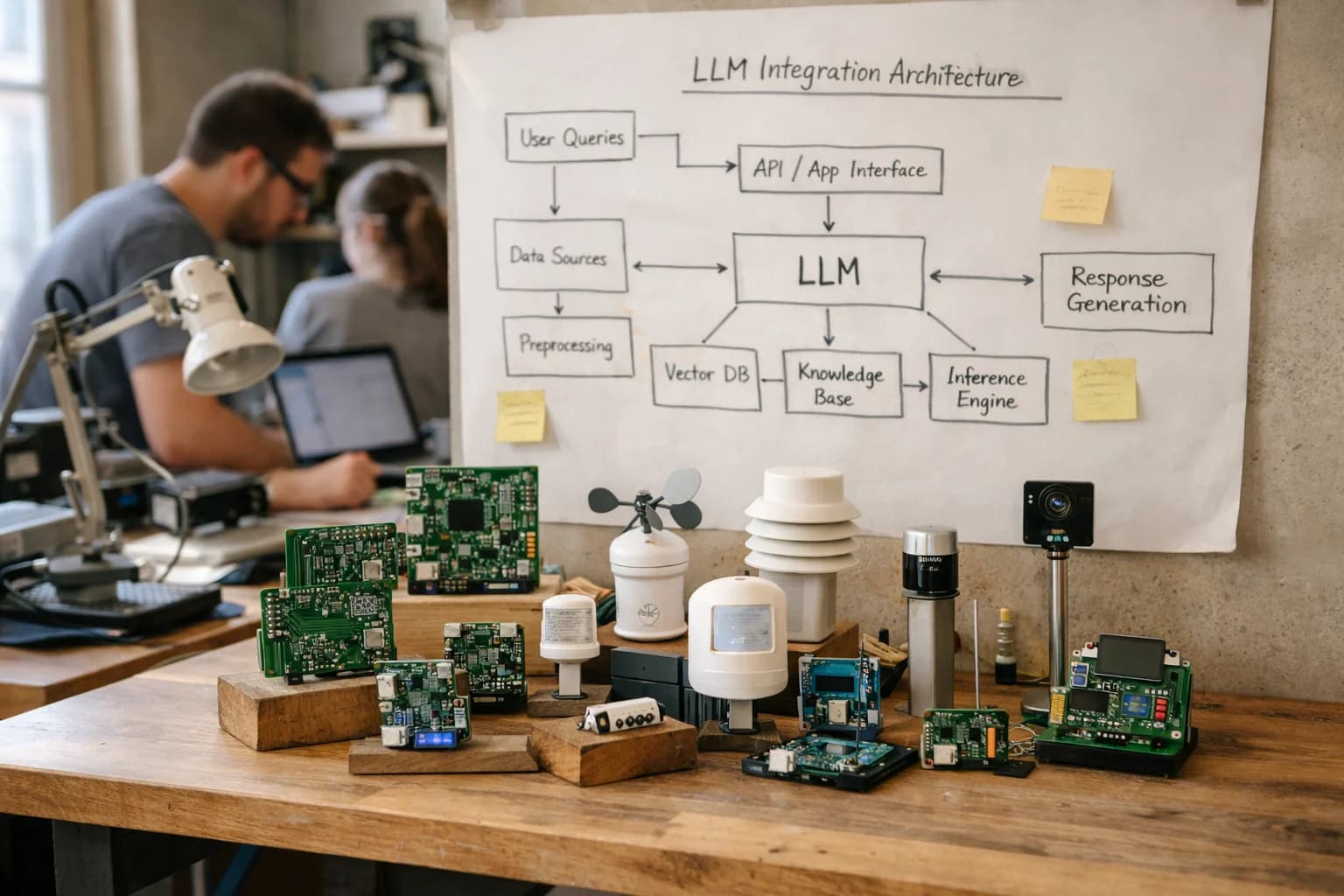
Connect operational IoT and sensor data to your PLM-managed digital twin. Use AI to compare as-designed vs. as-built performance, detect anomalies, and recommend design improvements within Siemens Teamcenter, PTC Windchill, or Dassault 3DEXPERIENCE.
Closing the Loop Between Design and Operation with AI
Bridge the gap between as-designed and as-built performance by feeding operational IoT data into your PLM-managed digital twin.
A PLM digital twin is only as valuable as its data. This integration connects real-time operational feeds—from IoT sensors, SCADA systems, MES, and field service platforms—into the authoritative product record within Siemens Teamcenter, PTC Windchill, or Dassault Systèmes 3DEXPERIENCE. The goal is to create a living, performance-validated model where the as-designed BOM, tolerances, and simulation assumptions are continuously compared against as-built telemetry, wear patterns, and failure data.
The implementation typically involves an event-driven architecture: sensor data streams are ingested, normalized, and time-stamped. AI models then analyze this data against the digital twin's expected performance envelopes. Key workflows include:
Anomaly Detection & Root Cause Analysis: Flagging deviations from simulated performance and correlating them to specific components or assemblies in the PLM BOM.
Predictive Maintenance Triggers: Converting wear patterns into actionable work orders and linking them back to the affected part's 3D model and service manual in the PLM vault.
Design Validation Feedback: Automatically generating structured reports that show where real-world performance diverges from FEA/CFD simulations, feeding directly into Engineering Change Order (ECO) workflows for the next revision.
Rollout requires careful data governance. You must establish a clear schema for mapping sensor IDs to PLM item masters and define thresholds for what constitutes a 'significant' deviation worthy of a design review. Start with a pilot on a single high-value product line or critical subsystem. The result isn't just a dashboard—it's a closed-loop system where operational intelligence directly informs future design improvements, reducing costly over-engineering and unanticipated field failures.
SURFACE AREAS
Where AI Connects to Your PLM Digital Twin
Ingesting Operational Data into the Digital Twin
The digital twin's value depends on continuous, high-fidelity data from the as-built product. AI connects at the ingestion layer to validate, cleanse, and contextualize incoming telemetry.
Key Integration Points:
PLM Event Listeners: Configure webhooks or service bus listeners on PLM objects (e.g., ItemRevision, Dataset) to trigger AI pipelines when a new digital twin instance is created for a serialized asset.
IoT Platform Connectors: AI agents act as a bridge between platforms like PTC ThingWorx, Siemens MindSphere, or Azure IoT Hub and the PLM system, mapping sensor streams to the correct product structure nodes in Teamcenter or Windchill.
Data Validation & Anomaly Detection: Before data is committed, AI models run real-time checks for sensor malfunctions, missing values, or physically impossible readings, flagging data quality issues for engineering review.
This ensures the twin is fed reliable "as-operated" data, forming the foundation for accurate performance comparison.
PLM INTEGRATION PATTERNS
High-Value AI Use Cases for the Digital Twin
Integrate AI directly into your PLM-managed digital twin to close the loop between design and operation. These use cases feed IoT and sensor data back into the engineering environment, enabling continuous product improvement.
01
Anomaly Detection & Root Cause Analysis
Continuously compare as-designed performance parameters against real-time sensor streams from deployed assets. AI flags deviations (e.g., vibration, temperature) and correlates them back to specific subsystems, materials, or assembly processes in the PLM record, suggesting probable root causes for engineering review.
Weeks -> Hours
Fault diagnosis
02
Predictive Maintenance & Service BOM Updates
Use operational data to predict component failures before they occur. AI automatically generates service advisories and recommends updates to the maintenance BOM and intervals within the PLM system. This ensures field service teams and spare parts logistics are aligned with actual wear patterns.
Reactive -> Proactive
Service model
03
Design Validation & Requirement Feedback
Automatically validate if in-service performance meets original design requirements and simulation models stored in PLM. AI analyzes fleet-wide data to identify systemic performance gaps (e.g., efficiency, durability) and generates feedback tickets linked to specific requirements or CAD models for the next design cycle.
Fleet-wide validation
Data scale
04
As-Built Configuration Drift Tracking
Track how individual asset configurations diverge from the released product definition in PLM due to field modifications, repairs, or part substitutions. AI maintains a live "as-maintained" twin, flagging configuration drift that may impact performance, compliance, or future upgrades for engineering approval.
Manual logs -> Automated sync
Record accuracy
05
Performance-Based Design Optimization
Aggregate operational data (e.g., environmental conditions, usage intensity) across a product fleet. AI identifies correlations between design variables and in-field outcomes, suggesting data-driven opportunities for weight reduction, material changes, or feature enhancements in future revisions, directly within the PLM change workflow.
Intuition -> Data
Design input
06
Warranty & Quality Loop Closure
Connect field failure reports and warranty claims to the digital twin. AI classifies failure modes, maps them to specific components in the PLM bill of materials, and triggers quality workflows (CAPA). This closes the loop from customer incident back to engineering change and supplier quality management.
Months -> Days
Quality feedback cycle
IMPLEMENTATION PATTERNS
Example AI-Driven Digital Twin Workflows
These workflows illustrate how AI agents, connected to IoT streams and PLM data, create a responsive, self-optimizing digital twin. Each pattern is triggered by real-world data, compares as-designed vs. as-built states, and drives a tangible action back into the PLM or operational system.
Trigger: Anomaly detection from vibration sensors on a rotating assembly in the field exceeds threshold.
Context Pulled:
The AI agent queries the PLM (e.g., Teamcenter) using the serial number to retrieve:
The as-designed 3D model and bill of materials (BOM).
Original simulation data (FEA/CFD) for that component.
Historical service records and previous failure modes.
It concurrently analyzes the real-time telemetry stream for patterns.
Agent Action:
Correlates the sensor anomaly with specific design features (e.g., a bearing housing resonance frequency).
Compares current performance against simulated performance envelopes.
Generates a hypothesis: "Increased vibration aligns with a known simulation margin for Thermal Growth Case B."
System Update:
Automatically creates a preliminary Engineering Change Request (ECR) in the PLM.
The ECR is pre-populated with:
Linked sensor data graphs.
Reference to the original simulation run.
A suggested design modification (e.g., "Increase fillet radius R2 from 3mm to 5mm").
Routes the ECR to the responsible design engineer and reliability team.
Human Review Point: The engineer reviews the AI-generated evidence and hypothesis before converting the ECR to a formal Engineering Change Order (ECO).
CLOSING THE LOOP BETWEEN DESIGN AND OPERATIONS
Implementation Architecture: Data Flow & System Wiring
A practical blueprint for connecting IoT data streams to your PLM-managed digital twin, enabling AI-driven performance analysis and design feedback.
The core architecture establishes a bidirectional data flow between your operational technology (OT) layer and the PLM system. IoT sensor data from physical assets—capturing parameters like temperature, vibration, cycle time, and energy consumption—is streamed via an industrial gateway (e.g., Kepware, PTC ThingWorx) or MQTT broker into a time-series data lake. Concurrently, the as-designed digital twin model—including the 3D geometry, material properties, and expected performance envelopes—is extracted from the PLM system (e.g., Siemens Teamcenter's Active Workspace or a PTC Windchill CAD Document) via its REST or SOA APIs. This creates the foundational comparison: the theoretical design state versus the real-world operational state.
An AI processing pipeline, typically orchestrated with tools like Apache Airflow or Prefect, ingests these synchronized data streams. Machine learning models compare the as-designed simulation results (often stored in PLM-linked systems like ANSYS or SIMULIA) against the aggregated as-built sensor data. Discrepancies—such as a motor running 15% hotter than simulated—trigger an analysis agent. This agent uses a RAG (Retrieval-Augmented Generation) system over the PLM knowledge base to retrieve similar historical issues, related service bulletins, and component specifications. It then generates a structured finding: a potential root cause (e.g., "inadequate cooling fin design"), impacted PLM items (e.g., Motor_Assembly-100A), and a preliminary recommendation (e.g., "Review CFD simulation for airflow path Block-47").
This finding is posted back to the PLM system as a structured Change Request or Problem Report object via API, initiating a governed workflow. The AI agent can auto-populate critical metadata: linking to the specific sensor data batch, tagging the relevant product configuration, and suggesting assignees based on the component's design owner from the PLM item master. For rollout, we implement a phased approach: starting with a single asset line, establishing data quality checks at the gateway, and incorporating a human-in-the-loop review step before any AI-generated findings auto-create change requests. Governance is maintained through immutable audit logs of all data ingested, AI inferences made, and subsequent PLM transactions, ensuring full traceability for compliance and continuous model improvement.
PLATFORM SURFACES
Code & Payload Examples
Ingesting Sensor Data into the Digital Twin
This surface involves streaming time-series data from operational assets (e.g., CNC machines, test rigs, field sensors) into the PLM-managed digital twin. The goal is to create a live, as-built performance record linked to the as-designed product definition.
Key Integration Points:
PLM APIs: Use REST/SOAP APIs from Teamcenter or Windchill to create or update 'As-Built Instance' objects, attaching sensor data payloads as linked datasets or properties.
IoT Platforms: Ingest streams from platforms like PTC ThingWorx, Siemens MindSphere, or Azure IoT Hub.
Payload Structure: The payload must map sensor IDs to PLM part numbers or serial numbers, enabling traceability back to the product structure.
This JSON would be posted to a PLM API endpoint (e.g., POST /api/v1/asbuilt) to log a performance snapshot against the digital twin.
DIGITAL TWIN OPERATIONS
Realistic Operational Impact & Time Savings
This table illustrates the tangible improvements in speed, accuracy, and decision-making when AI analyzes IoT/sensor data against the PLM-managed digital twin.
Operational Workflow
Before AI Integration
After AI Integration
Implementation Notes
Anomaly Detection in As-Built Performance
Manual review of sensor dashboards; issues found in weekly reports.
Automated alerts for deviations from digital twin baseline within hours.
AI models trained on historical failure modes; requires initial calibration period.
Root Cause Analysis for Performance Drift
Engineering team conducts manual data correlation over 2-3 days.
AI suggests probable causes (e.g., component wear, environmental factors) in under an hour.
Links sensor streams to PLM part records and maintenance history for context.
Design Improvement Recommendation
Relies on periodic design reviews and customer feedback cycles (quarterly).
Data-driven suggestions for component redesign or tolerancing fed into PLM change workflows.
Recommendations generated as draft Engineering Change Requests (ECRs) for review.
Maintenance Schedule Optimization
Fixed, calendar-based schedules or reactive repairs.
Predictive maintenance alerts generated, with parts and procedures linked to PLM work orders.
Integrates with CMMS/EAM; requires high-fidelity sensor data for accurate predictions.
As-Designed vs. As-Built Validation Report
Manual compilation from spreadsheets and test data; takes 1-2 weeks per product variant.
Automated report generation comparing digital twin specs to aggregated field data in 4-6 hours.
Manual data entry by engineers to update twin models after physical modifications.
Automated ingestion of approved 'as-maintained' data from service records to keep twin current.
Governed by PLM change control; requires clear rules for automated updates vs. manual review.
Regulatory Compliance & Audit Trail
Manual gathering of test data and performance records for audit submissions.
Continuous monitoring against compliance thresholds; auto-generated evidence packages for audits.
Critical for industries like medical devices and aerospace; audit trail stored in PLM.
IMPLEMENTING AI IN REGULATED ENVIRONMENTS
Governance, Security, and Phased Rollout
A practical framework for deploying AI agents into PLM digital twin workflows with controlled risk and measurable progress.
Integrating AI with a PLM digital twin involves sensitive operational data—IoT streams, sensor telemetry, as-built performance records—that must be governed. A secure architecture typically uses a dedicated integration service layer that sits between the PLM (e.g., Teamcenter, Windchill) and the AI runtime. This layer handles authentication via the PLM's API (SOA or REST), enforces role-based access control (RBAC) to limit which digital twin models and sensor data feeds AI agents can query, and maintains a full audit log of all AI-initiated reads and writes. Data in transit is encrypted, and any AI-generated recommendations or anomaly flags are staged in a secure queue for human-in-the-loop review before being written back to the PLM item record or triggering a change workflow.
A phased rollout mitigates risk and builds organizational trust. Start with a read-only pilot focused on a single product line or assembly. Configure AI agents to analyze historical IoT data against the as-designed digital twin to generate performance deviation reports, but do not auto-create change requests. This Phase 1 validates data pipelines, establishes baseline accuracy for AI predictions, and socializes outputs with engineering and quality teams. Phase 2 introduces controlled write-backs, such as auto-populating a predefined field in the PLM (e.g., Predicted Mean Time Between Failure) or creating a draft Engineering Change Notice (ECN) that requires manual approval. Phase 3 expands to closed-loop workflows, where AI can automatically adjust maintenance schedules in connected CMMS or flag components for redesign based on real-time performance thresholds, all within a gated approval framework defined in the PLM workflow engine.
Governance is continuous. Establish a cross-functional AI steering committee with representatives from engineering, IT security, quality, and operations to review agent performance, false-positive rates, and drift in model predictions. Use the PLM's own versioning and change control to manage the prompts, data mappings, and decision logic that power the AI integration—treating these assets as controlled configuration items. This ensures that as the digital twin evolves, the AI agents' understanding of the product remains synchronized and any modifications are traceable, compliant, and aligned with product lifecycle governance standards.
Enabling Efficiency, Speed & Accuracy
Intelligent Analysis, Decision & Execution
We build AI systems for teams that need search across company data, workflow automation across tools, or AI features inside products and internal software.
PLM DIGITAL TWIN INTEGRATION
Frequently Asked Questions
Common questions about integrating AI with PLM digital twins to connect IoT data, compare as-designed vs. as-built performance, and drive design improvements.
The integration creates a real-time data pipeline from operational systems to the PLM's digital twin representation. Here's the typical workflow:
Trigger & Ingestion: IoT platforms (e.g., PTC ThingWorx, Siemens MindSphere) or plant historians stream time-series sensor data (temperature, vibration, throughput) to a secure data lake.
Context Enrichment: An AI service enriches this raw data by linking each sensor ID to its corresponding PLM Item Master record (e.g., serialized asset, part number) and Manufacturing BOM position.
Model Update: The enriched, contextualized performance data is written back to the PLM system (e.g., Teamcenter, Windchill) via its APIs, updating the 'as-maintained' or 'as-operated' attributes of the digital twin.
Key Integration Points: This requires mapping between:
IoT Asset Hierarchy and PLM Product Structure
Sensor Metadata and PLM Item Attributes
Timestamped telemetry and PLM's temporal versioning system.
About the author
Prasad Kumkar
CEO & MD, Inference Systems
Prasad Kumkar is the CEO & MD of Inference Systems and writes about AI systems architecture, LLM infrastructure, model serving, evaluation, and production deployment. Over 5+ years, he has worked across computer vision models, L5 autonomous vehicle systems, and LLM research, with a focus on taking complex AI ideas into real-world engineering systems.
His work and writing cover AI systems, large language models, AI agents, multimodal systems, autonomous systems, inference optimization, RAG, evaluation, and production AI engineering.
Partnered with leading AI, data, and software stack.
How We Work
Custom AI workflows for your Business
One-fit-all AI don't work for modern businesses. At Inferensys, we aim to understand your business & custom requirements; which we use to define most efficient agentic workflows, the data, and the tools for your business.
The first call is a practical review of your use case and the right next step.