AI integration for NGP VAN compliance reporting focuses on three primary data surfaces: the Contributions module for incoming funds, the Expenditures module for outgoing payments, and the Vendor records for payee information. The core workflow involves an AI agent that monitors these objects via NGP VAN's API or scheduled data exports. For each new transaction, the agent performs a multi-step review: it categorizes the expense using FEC purpose codes, validates contributor information against known databases to flag potential exceedings of individual limits, and cross-references vendor details to ensure proper disclosure. This transforms a manual, error-prone review process—often requiring staff to interpret vague memo lines—into an automated, consistent first pass.

Integration
AI Integration for NGP VAN Compliance Reporting
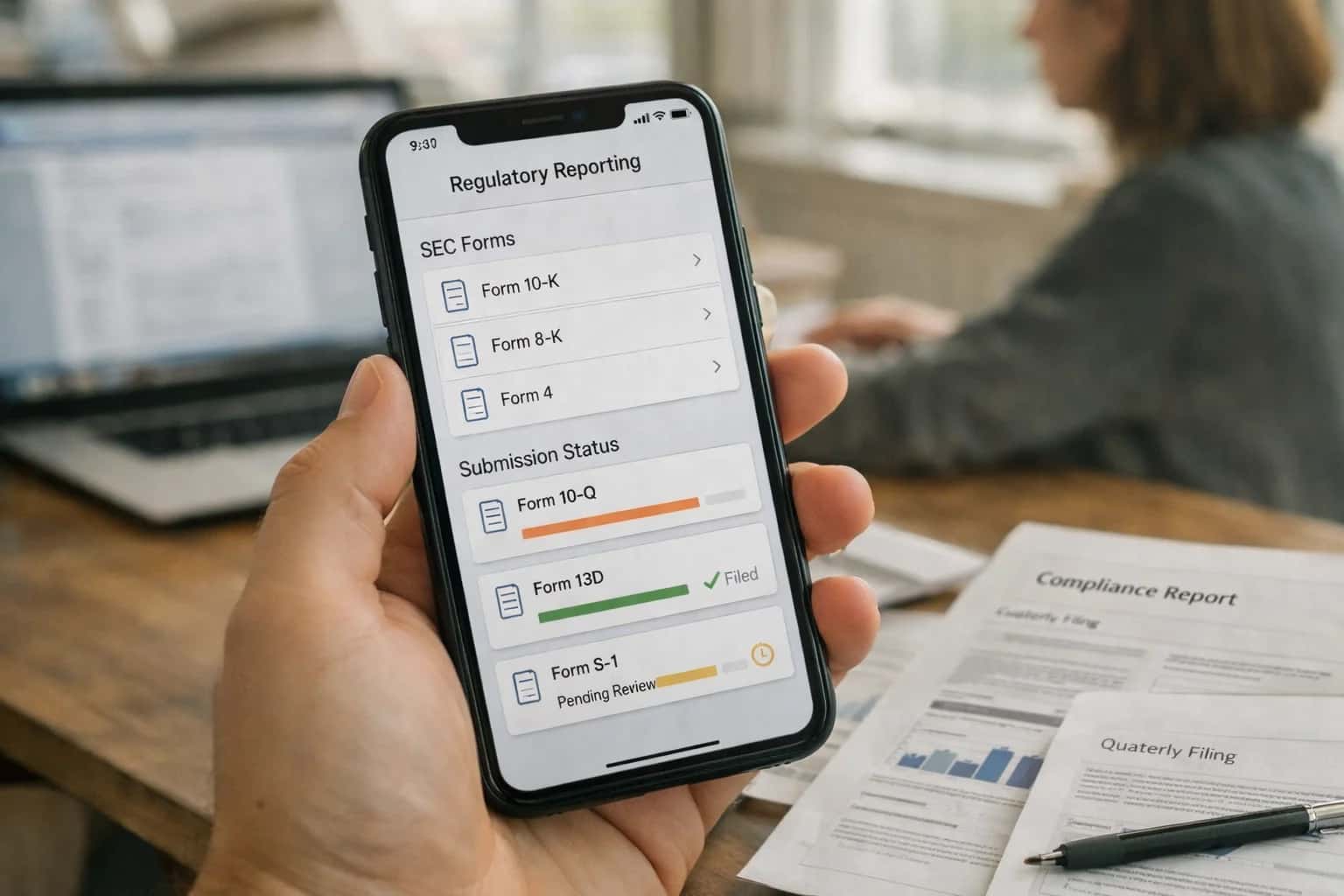
Where AI Fits into NGP VAN Compliance Workflows
A technical blueprint for automating FEC and state campaign finance reporting by connecting AI to NGP VAN's contribution and expenditure data model.
A production implementation typically uses a middleware layer (like a secure queue or workflow engine) to process batches of transactions. The AI system ingests raw NGP VAN records, enriches them with external data (e.g., FEC ID lookups), and applies classification models. Key outputs are: 1) a flagged transactions queue for human review, complete with the AI's reasoning and suggested corrections, and 2) pre-populated report sections (e.g., Schedule A for contributions, Schedule B for expenditures) that can be exported for final submission. Governance is critical; all AI suggestions must be logged with an audit trail, and a human-in-the-loop approval step is required before any data is modified in NGP VAN or submitted to regulators. This architecture reduces the risk of late filings and costly compliance penalties by catching errors early.
Rollout should start with a pilot on one report type (e.g., monthly state filing) and a subset of transactions. The integration points are NGP VAN's REST API for real-time processing or its bulk export/import utilities for batch operations. Success is measured by the reduction in staff hours spent on manual data entry and review, and the increase in accuracy as measured by fewer amendments filed. For teams managing this, consider our related guide on AI Integration for Campaign Finance Platforms for a cross-platform view, or our deep dive on AI Integration for Aristotle Compliance for working with complementary data services.
Key NGP VAN Data Surfaces for AI Integration
The Core Transaction Layer
This surface covers all incoming funds, including individual contributions, PAC donations, and in-kind gifts. Each record contains critical fields for compliance: donor information, amount, date, employer, occupation, and payment method.
AI integration here focuses on automating the categorization and validation of these records. An AI agent can:
- Read and parse scanned check images or PDF receipts using OCR and NLP to auto-populate fields.
- Match contributions to existing donor records in the NGP VAN database, resolving discrepancies in name or address.
- Flag anomalies in real-time, such as potential duplicate contributions, aggregate limit warnings, or missing employer/occupation data required for FEC reports.
- Classify payment types (e.g., credit card, check, wire) and route them to the correct financial reconciliation workflow.
Automating this data entry and review can reduce manual processing from hours to minutes per batch and significantly lower the risk of reporting errors.
High-Value AI Use Cases for NGP VAN Compliance
Move from manual, error-prone compliance processes to AI-driven automation that categorizes transactions, validates data, and generates FEC and state reports directly from NGP VAN's contribution and expenditure records.
Automated Expense Categorization
AI reviews vendor names and memo fields on disbursement records, applying the correct FEC purpose code (e.g., 24K for payroll, 21B for travel). Reduces manual coding time and audit risk by ensuring consistent classification across the campaign.
Contribution Limit & Aggregation Tracking
Real-time AI agent monitors incoming contributions, cross-referencing donor IDs against FEC and state limits. Flags potential overages and aggregates employer-linked contributions automatically, preventing costly compliance violations before reports are filed.
Intelligent Report Drafting & Narrative Generation
AI synthesizes categorized NGP VAN data into draft FEC Form 3X or state-specific reports. Generates required narrative descriptions for itemized expenses and contributions, pulling context from linked voter contact or event records to ensure accuracy.
Anomaly Detection & Audit Trail
Continuously analyzes transaction patterns to flag outliers—like duplicate reimbursements or unusual vendor payments. Creates an immutable AI audit log detailing every automated decision (categorization, flagging) for reviewer sign-off and regulator transparency.
Donor Occupation & Employer Validation
Uses LLMs to standardize and validate free-text Employer and Occupation fields on contribution records—critical for FEC reporting. Suggests corrections, matches to known employer databases, and prompts the compliance team for missing data via automated NGP VAN tasks.
Multi-State Compliance Orchestration
For campaigns operating across jurisdictions, an AI workflow agent ingests NGP VAN data, applies the correct rule set (FEC, CA, TX, etc.), and routes transactions to separate report queues. Manages state-specific thresholds, deadlines, and filing formats from a single source of truth.
Example AI-Powered Compliance Workflows
These workflows illustrate how AI agents can automate the most time-consuming and error-prone steps in campaign finance compliance, connecting directly to NGP VAN's Contribution, Expenditure, and Committee data via its API.
Trigger: A new contribution record is created or updated in NGP VAN via API, webhook, or batch upload.
Workflow:
- Context Pull: The AI agent retrieves the raw contribution data (donor name, address, employer, occupation, amount, date) and fetches the donor's existing contribution history for the election cycle from NGP VAN.
- Agent Action:
- Categorizes the contribution type (e.g., Individual, PAC, Corporate) using the employer/occupation fields and external data lookups.
- Validates address and employer information for completeness.
- Calculates aggregate totals per donor against FEC and relevant state limits.
- Flags potential over-the-limit contributions or suspicious patterns (e.g., multiple small donations from same employer).
- System Update: The agent writes back structured metadata to designated custom fields in NGP VAN:
AI_Contribution_TypeAI_Limit_Status(e.g., "Under Limit", "Approaching Limit - $X Remaining", "Over Limit - Flag for Review")AI_Validation_Notes
- Human Review Point: Contributions flagged as "Over Limit" or with "Suspicious Pattern" are automatically routed to a dedicated queue in NGP VAN's Compliance workspace or trigger an alert to the compliance officer.
Implementation Architecture: Data Flow & System Design
A production-ready architecture for automating FEC and state campaign finance reporting by connecting AI to NGP VAN's contribution and expense data.
The core of the integration is a scheduled workflow that extracts raw contribution and disbursement records from NGP VAN's API endpoints (/contribution and /disbursement objects). This data—including donor information, amounts, dates, and memo fields—is staged in a secure, transient data store. An AI agent then processes each batch, using a fine-tuned classification model to map transactions to standardized FEC expense categories (e.g., Media, Payroll, Travel) and validate contribution limits against known donor histories. For ambiguous entries, the system flags them for human review in a dedicated queue, appending the agent's reasoning and confidence score.
Once categorized, the validated data flows into a report generation module. This module uses the structured output to populate pre-configured report templates (Form 3X, state-specific equivalents). The AI agent also performs anomaly detection, scanning for unusual patterns like round-number contributions from new donors or expenses that deviate from historical averages for a given category. These anomalies are logged with contextual alerts and linked back to the source records in NGP VAN for auditability. The final, human-approved reports are formatted for electronic filing and can be pushed back to NGP VAN as document attachments to the relevant financial cycle record.
Governance is critical. The entire pipeline operates under a strict RBAC (Role-Based Access Control) model, mirroring NGP VAN's permission sets for compliance officers and treasurers. Every AI-suggested classification and edit is logged in an immutable audit trail, capturing the model version, input data, and user approval. The system is designed for phased rollout: starting with a pilot for expense categorization on a single campaign, then scaling to contribution validation and multi-state reporting. This approach minimizes risk, allows for prompt tuning based on real data, and builds trust in the automated workflow before full deployment. For teams managing this complexity, our work on AI Governance and LLMOps Platforms provides the necessary control frameworks.
Code & Payload Examples for Common Tasks
Categorizing Disbursements with AI
A core compliance task is correctly classifying campaign expenses (e.g., Media Buy, Payroll, Travel, Fundraising Costs). NGP VAN's Disbursement objects contain vendor and memo fields, but manual review is slow and error-prone.
An AI agent can be triggered via a webhook when a new disbursement is logged. It reads the memo text, cross-references the vendor name, and suggests a FEC category code. The agent can also flag ambiguous entries for human review, ensuring accuracy before batch uploads to compliance reports.
python# Example: AI Agent for Disbursement Categorization import requests from inference_systems.agents import ComplianceAgent # Webhook payload from NGP VAN (simplified) disbursement_webhook = { "object": "Disbursement", "id": "D-78910", "amount": 2500.00, "vendor": "KVLY Television", "memo": "Q4 ad buy for Fargo district" } # Initialize agent with NGP VAN context agent = ComplianceAgent(platform="ngp_van") # Classify the expense category_result = agent.categorize_expense( vendor=disbursement_webhook["vendor"], memo=disbursement_webhook["memo"] ) # Result includes FEC code, confidence, and flag for review print(category_result) # { # "suggested_category": "Media Advertisement", # "fec_code": "4B", # "confidence": 0.92, # "needs_review": false # }
This workflow reduces manual coding time and improves the consistency of expense reporting across state and FEC filings.
Realistic Time Savings & Operational Impact
How AI integration transforms manual compliance workflows in NGP VAN, focusing on data processing, validation, and report generation.
| Workflow / Metric | Before AI | After AI | Notes |
|---|---|---|---|
Expense Categorization & Coding | Manual review of vendor names/descriptions (2-4 hrs per batch) | AI-assisted auto-tagging with human review (20-30 min per batch) | Uses NGP VAN's disbursement data; human reviews flagged items for FEC code accuracy |
Contribution Validation & Limit Tracking | Weekly spreadsheet cross-check against donor history | Real-time anomaly detection & per-donor aggregate alerts | AI monitors NGP VAN's contribution imports; flags potential over-limits or prohibited contributions |
Data Consolidation for Report Drafting | Manual export/merge of multiple NGP VAN modules (Fundraising, Budget) | Automated pipeline aggregates required fields into a single structured dataset | Pulls from NGP VAN's API; ensures all reportable transactions are captured |
FEC Form Generation (e.g., Form 3X) | Filling PDFs or specialized software manually (1-2 days per report) | AI populates templates from structured data; generates draft for review (2-4 hours) | Outputs a review-ready draft; final submission remains a manual, certified step |
Discrepancy Investigation & Audit Prep | Ad-hoc queries and manual ledger tracing during audit periods | Automated reconciliation reports highlight mismatches between NGP VAN and bank feeds | Proactive anomaly detection reduces last-minute scramble during reporting deadlines |
State-Specific Report Adaptation | Manual adjustment of data format and rules for each state (weeks of research) | AI applies configurable rule sets to transform core NGP VAN data for target states | Requires initial setup per state jurisdiction; thereafter runs as part of the pipeline |
Campaign Finance Staff Capacity | 80% reactive work on data entry and validation close to deadlines | Shift to 60% proactive review, analysis, and strategy support | AI handles repetitive data tasks, allowing staff to focus on exception handling and compliance strategy |
Governance, Security, and Phased Rollout
Integrating AI into NGP VAN for compliance reporting requires a controlled, audit-ready approach to maintain FEC and state regulatory integrity.
A production integration typically involves a dedicated middleware layer that sits between NGP VAN's API and the AI services. This layer handles secure data extraction—pulling contribution records, expense line items, and donor details from NGP VAN's Contributions, Disbursements, and People modules—before passing anonymized or tokenized payloads to the AI for categorization and anomaly detection. All data flows are logged with immutable audit trails, linking each AI-suggested categorization back to the original NGP VAN record ID, user, and timestamp. Role-based access controls (RBAC) ensure only authorized compliance staff can review and approve AI-generated report drafts before they are finalized within NGP VAN's native reporting suite.
Rollout follows a phased, risk-gated model. Phase 1 focuses on read-only analysis of historical data to train and validate the AI's categorization logic against known, correct reports. Phase 2 introduces a human-in-the-loop workflow where the AI pre-fills report fields, but every line requires a compliance officer's review and approval within the NGP VAN interface before submission. Phase 3, enabled only after achieving a high confidence threshold, allows for automated filing of routine, low-risk reports (e.g., recurring operating expenses) while flagging complex or high-value transactions for manual review. This approach reduces manual data entry by 60-80% for standard reports while maintaining a defensible chain of custody for all regulatory submissions.
Security is paramount. All AI processing should occur within your campaign's own cloud environment or a SOC 2 Type II compliant service like Inference Systems, never sending raw, personally identifiable donor data to public LLM endpoints. Data is encrypted in transit and at rest, and AI prompts are engineered to avoid memorization or training on sensitive inputs. Regular compliance audits should compare AI-assisted outputs against a sample of manually prepared reports to monitor for drift and ensure ongoing accuracy. For campaigns operating in multiple states, the system must be configured to apply the correct jurisdiction-specific rules, which can be managed via a rules engine integrated with NGP VAN's state code fields.
Enabling Efficiency, Speed & Accuracy
Intelligent Analysis, Decision & Execution
We build AI systems for teams that need search across company data, workflow automation across tools, or AI features inside products and internal software.
Talk to Us
Search across company data
Give teams answers from docs, tickets, runbooks, and product data with sources and permissions.
Useful when people spend too long searching or get different answers from different systems.

Automate internal workflows
Use AI to route work, draft outputs, trigger actions, and keep approvals and logs in place.
Useful when repetitive work moves across multiple tools and teams.

Add AI to products and internal tools
Build assistants, guided actions, or decision support into the software your team or customers already use.
Useful when AI needs to be part of the product, not a separate tool.
FAQ: Technical & Commercial Questions
Practical answers for campaign finance directors, compliance officers, and technical leads evaluating AI to automate FEC and state report generation from NGP VAN data.
The integration connects at two primary layers within NGP VAN's architecture:
- API Layer for Transactional Data: We use the NGP VAN API (primarily the
ContributionsandDisbursementsendpoints) to pull raw transaction records. This includes donor information, amounts, dates, employer/occupation data, and associated codes (e.g., Fund, Source Code). The AI agent authenticates using OAuth 2.0 and queries for data within the reporting period. - Custom Objects for Compliance Logic: Campaigns often store compliance-specific metadata (e.g., "Report Code," "State Jurisdiction," "Soft vs. Hard Money Flag") in NGP VAN's Custom Objects or via specific Contribution Codes. The AI workflow is configured to read these fields to understand the reporting context.
Typical Data Flow:
- Trigger: Scheduled report cycle or manual initiation.
- Extract: API call fetches all contributions/disbursements for the period, filtered by relevant codes.
- Enrich: AI cross-references transactions against internal rules (e.g., aggregate contribution limits by donor ID) and external data (e.g., FEC committee IDs via a separate lookup).
- Structure: Data is formatted into the required state or FEC electronic filing schema (e.g., .FEC format).
This approach leaves the system of record (NGP VAN) intact, using it as the authoritative source.

About the author
Prasad Kumkar
CEO & MD, Inference Systems
Prasad Kumkar is the CEO & MD of Inference Systems and writes about AI systems architecture, LLM infrastructure, model serving, evaluation, and production deployment. Over 5+ years, he has worked across computer vision models, L5 autonomous vehicle systems, and LLM research, with a focus on taking complex AI ideas into real-world engineering systems.
His work and writing cover AI systems, large language models, AI agents, multimodal systems, autonomous systems, inference optimization, RAG, evaluation, and production AI engineering.
Partnered with leading AI, data, and software stack.





How We Work
Custom AI workflows for your Business
One-fit-all AI don't work for modern businesses. At Inferensys, we aim to understand your business & custom requirements; which we use to define most efficient agentic workflows, the data, and the tools for your business.
01
Review the use case
We understand the task, the users, and where AI can actually help.
Read more02
Pick the right approach
We define what needs search, automation, or product integration.
Read more03
Build the first useful version
We implement the part that proves the value first.
Read more04
Improve from there
We add the checks and visibility needed to keep it useful.
Read moreThe first call is a practical review of your use case and the right next step.
Talk to Us