AI integrates directly into the patient contact records and messaging modules of platforms like McKesson EnterpriseRx, PioneerRx, PrimeRx, and BestRx. The integration typically uses the platform's APIs or database hooks to trigger AI-driven outreach based on prescription status, refill due dates, or clinical flags. Key surfaces include the patient profile's preferred contact channel (SMS, email, IVR), the refill queue for pending actions, and the adherence dashboard for at-risk patients. AI agents can be configured to listen for platform events—like a prescription reaching its last fill date or a patient missing a pickup—and execute personalized communication workflows without manual intervention.

Integration
AI Integration for Pharmacy Management Platform Patient Communication
A technical guide to embedding AI-driven patient communication into McKesson EnterpriseRx, PioneerRx, PrimeRx, and BestRx. Automate refill reminders, adherence nudges, and copay assistance by integrating with platform contact records, prescription data, and messaging APIs.
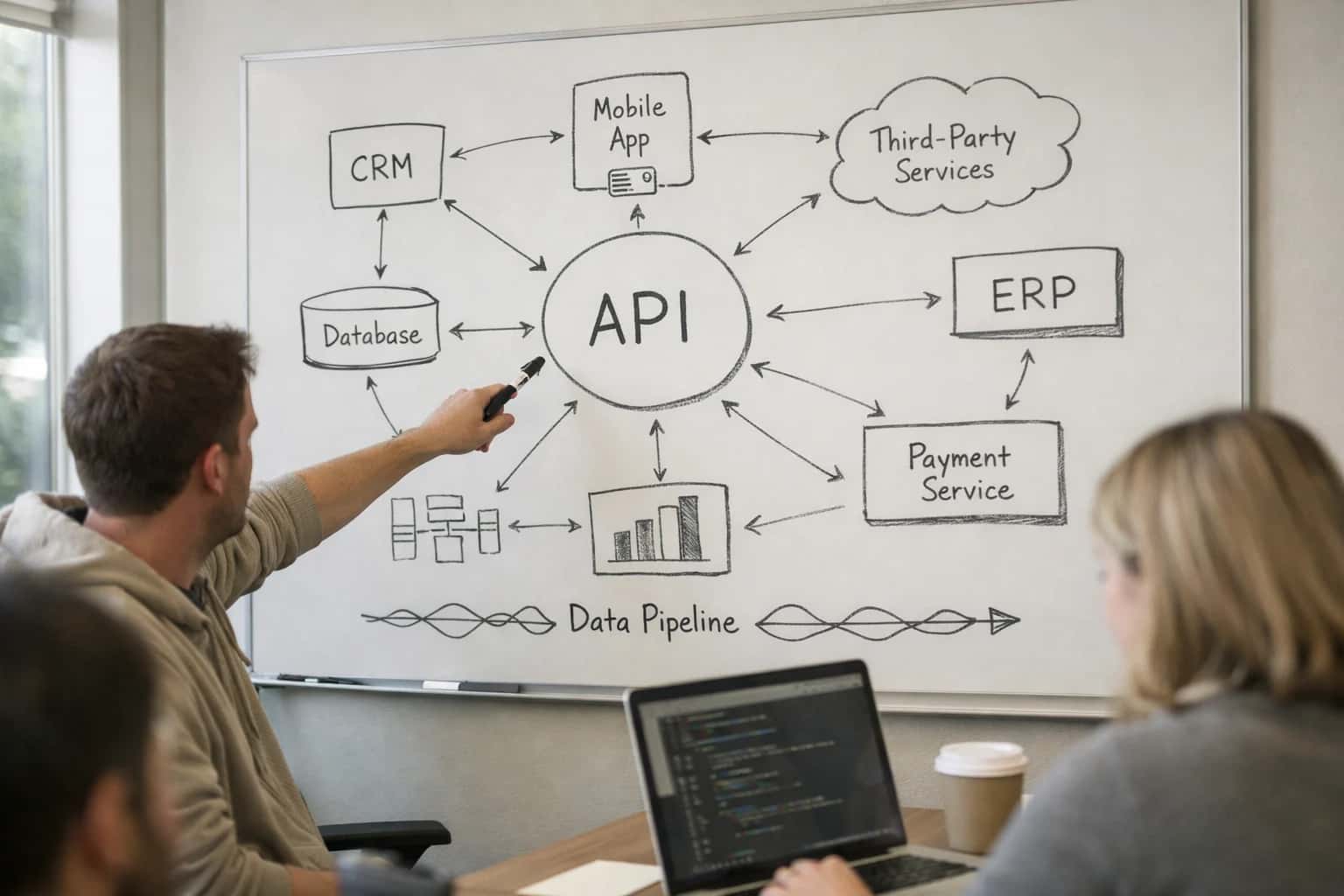
ARCHITECTURE & ROLLOUT
Where AI Fits into Pharmacy Patient Communication
Integrating AI into pharmacy platform communication workflows to automate outreach and improve adherence.
Implementation involves deploying a secure middleware layer that subscribes to platform webhooks (e.g., prescription.verified, refill.ready, patient.no_show). For each event, the AI agent retrieves the relevant patient context—medication name, pharmacy notes, copay amount—and generates a tailored message. For example, an AI agent can draft a refill reminder with a direct refill approval link, a copay assistance alert if a high-cost drug is dispensed, or an adherence check-in for patients with a history of gaps. These messages are then delivered via the pharmacy's existing Twilio, SendGrid, or telephony integration, with outcomes (e.g., patient responded, refill authorized) logged back to a custom field in the platform's patient record for auditability and future personalization.
Rollout should start with a single, high-volume workflow like automated refill reminders, using a pharmacist-in-the-loop approval step for the first 30 days to build trust. Governance requires configuring RBAC so only authorized staff can modify AI prompts or view communication logs, and setting up audit trails for all AI-generated outreach to comply with HIPAA and record-keeping requirements. The goal is not to replace pharmacist-patient relationships but to automate the routine 80% of notifications, freeing staff for complex clinical conversations. A phased approach allows tuning based on patient response rates and reduces disruption to daily pharmacy operations.
PATIENT COMMUNICATION SURFACES
Integration Touchpoints by Platform
Core Data Layer for Personalization
AI-driven communication begins with the patient profile. Integration here involves reading and writing to key objects within the pharmacy platform's database via its API or direct data sync.
Key Fields for AI Context:
- Demographics & Preferences: Preferred contact channel (SMS, email, IVR), language, and communication consent flags.
- Medication History: Active prescriptions, adherence patterns, and refill dates.
- Clinical & Financial Data: Allergies, disease states, copay amounts, and insurance plan details.
Integration Pattern: An AI agent subscribes to platform events (e.g., prescription_entered, refill_due) and enriches its context by querying the patient record. Outbound messages are logged back to the patient's contact history or notes field for a complete audit trail. This ensures every interaction is personalized and grounded in the latest platform data.
PHARMACY PATIENT ENGAGEMENT
High-Value AI Communication Use Cases
Integrate AI agents directly into your pharmacy management platform's contact layer to automate high-touch, high-volume patient interactions. These workflows connect to patient profiles, prescription records, and preferred channels to drive adherence, reduce no-shows, and free up staff for complex care.
01
Intelligent Refill Reminders & Outreach
AI agents monitor the platform's refill queue and patient history to trigger personalized reminders. Instead of batch SMS blasts, the system uses preferred channel logic (SMS, email, IVR) and optimal timing based on past pickup behavior. For chronic medications, it can initiate medication synchronization conversations to align refill dates, reducing pharmacy workload spikes.
Batch -> Real-time
Outreach model
02
Automated Adherence Check-ins & Surveys
Post-dispensation, AI agents conduct automated follow-ups via chat or voice to check for side effects or confusion. For identified adherence gaps (e.g., missed refills), the system escalates with tailored nudges or flags the patient profile for pharmacist outreach. Integrates with platform adherence reporting modules to populate real-world data.
Same day
Intervention timing
03
Copay Assistance Discovery & Enrollment
When a new high-cost prescription is entered, the AI scans the patient's platform eligibility data and cross-references manufacturer savings programs. It can then initiate a guided conversation with the patient to gather consent, pre-fill forms, and submit to savings portals. Status updates are written back to the patient notes field in the platform.
1 sprint
Implementation scope
04
Vaccine Recall & Appointment Scheduling
AI agents query the platform's immunization history and CDC guidelines to identify due/overdue patients. Outreach includes personalized rationale and offers to schedule directly via the platform's appointment book or a linked calendaring system. Manages reminder sequences and updates the patient record upon completion.
Hours -> Minutes
List generation
05
Inbound Call Triage & Simple Q&A
An AI voice agent integrated with the pharmacy's phone system handles common inbound queries: store hours, refill status, ready pickup notifications. It authenticates using data from the platform's patient profile and can perform simple tasks like refill requests, pushing the workflow directly into the platform's queue. Complex calls are warm-transferred with context.
24/7 Coverage
Service capability
06
Discharge & Care Coordination Follow-up
For integrations with hospital EHRs, the AI agent monitors for discharge notifications and proactively contacts the patient to coordinate medication pickup, explain changes, and schedule a medication review. It consolidates information between the EHR feed and the pharmacy platform to provide a unified, guided handoff, reducing readmission risks.
Batch -> Real-time
Workflow trigger
PATIENT ENGAGEMENT AUTOMATION
Example AI-Powered Communication Workflows
These workflows illustrate how AI agents integrate with your pharmacy platform's patient contact records and communication modules to automate high-volume, high-value outreach, reducing manual effort and improving adherence.
Trigger: A prescription in the platform's Refill Queue reaches its Eligibility Date and has a Refills Remaining count > 0.
Context Pulled: AI agent queries the platform's API for:
- Patient's
Preferred Contact Method(SMS, Email, IVR) Medication NameandLast Fill DatePharmacy Phone Numberfor callbackPatient Opt-In Statusfor automated messaging
Agent Action:
- Generates a personalized message using a templated prompt:
code
Patient: {Patient Name} Medication: {Medication} is ready for refill. You can reply YES to confirm, call {Pharmacy Phone}, or manage online. - Sends via the platform's integrated messaging gateway (e.g., Twilio, Amazon Connect).
System Update: If patient replies "YES," the agent:
- Creates a
Refill Taskin the platform's workflow queue for technician processing. - Updates the patient's
Communication Logwith the interaction.
Human Review Point: Any patient reply other than a simple affirmation (e.g., "I have a question") is flagged and routed to a human agent's dashboard with full context.
AI-PATIENT ENGAGEMENT WORKFLOW
Implementation Architecture: Data Flow & System Design
A production-ready blueprint for connecting AI agents to pharmacy platform patient profiles to automate personalized, compliant outreach.
The integration connects to the pharmacy management platform's patient contact module—typically via its REST API or a direct database connection—to access key data objects: PatientProfile, Prescription, RefillHistory, and CommunicationLog. An event-driven architecture is recommended, where a new PrescriptionReady status, a RefillDueDate approaching, or a MissedPickup flag triggers a webhook to the AI orchestration layer. This layer, built with tools like CrewAI or n8n, retrieves the patient's preferred channel (SMS, email, IVR), medication details, and recent interaction history to generate a context-aware message.
The AI agent's prompt is grounded with platform data: "Patient [Name] has [Drug] ready for pickup since [Date]. Last refill was [DaysAgo]. Preferred language is [Language]. Send a reminder via [Channel]." For adherence check-ins, the agent analyzes RefillHistory gaps to draft a follow-up ("We noticed your [Drug] refill is overdue. Any issues?"). For copay assistance, it cross-references the Prescription's NDC with manufacturer savings programs via external APIs, then drafts an opt-in message. All generated messages are logged back to the platform's CommunicationLog with a source: AI_Agent tag for full auditability.
Rollout follows a phased, pharmacist-in-the-loop model. Initial workflows are configured for low-risk, high-volume notifications like refill reminders. Each message template is approved by pharmacy management and includes an opt-out mechanism. The AI's tone and timing rules (e.g., no messages after 8 PM) are codified in the agent's system prompt. Governance is maintained through a weekly review of the CommunicationLog for patient responses and pharmacist overrides, which are used to fine-tune the AI's behavior. This architecture ensures the AI augments the platform's existing communication features without disrupting core workflows, turning manual outreach into a scalable, personalized patient engagement engine.
PATIENT COMMUNICATION INTEGRATION PATTERNS
Code & Payload Examples
Webhook Trigger from Platform Queue
When a prescription enters the refill queue with a status of Eligible or Due, the pharmacy platform can send a webhook payload to your AI orchestration layer. This triggers the patient communication workflow.
json{ "event_type": "prescription.refill_eligible", "timestamp": "2024-05-15T10:30:00Z", "payload": { "patient_id": "PAT-789123", "patient_name": "Jane Doe", "patient_phone": "+15551234567", "patient_email": "[email protected]", "preferred_channel": "SMS", "prescription_id": "RX-456DEF", "drug_name": "Lisinopril 10mg", "refills_remaining": 2, "last_fill_date": "2024-04-15", "pharmacy_store_id": "STORE-101" }, "source_system": "PrimeRx" }
Your AI service receives this payload, checks patient communication preferences and refill history, then generates and dispatches a personalized message via the configured channel (SMS, email, IVR). The response is logged back to the patient's contact record in the platform.
AI-PATIENT ENGAGEMENT
Realistic Time Savings & Operational Impact
This table illustrates the operational impact of integrating AI agents with your pharmacy management platform's patient communication workflows. It focuses on measurable time savings and workflow improvements for pharmacy staff, not on replacing human judgment.
| Communication Workflow | Before AI Integration | After AI Integration | Implementation Notes |
|---|---|---|---|
Refill Reminder Outreach | Manual list generation and batch sending 1-2x daily | AI-triggered, personalized reminders sent in real-time as prescriptions hit refill window | Integrates with platform's refill queue via API; human sets approval rules for message templates |
Medication Adherence Check-Ins | Sporadic phone calls or manual review of refill gaps | Automated, scheduled outreach to patients with missed refills or sync program lapses | AI analyzes platform refill history; escalates complex cases to pharmacist for callback |
Copay Assistance Screening | Manual review of patient profile and external website searches | AI scans platform eligibility data and matches to manufacturer programs, flags opportunities | Agent submits preliminary data to savings portals; pharmacist reviews final application |
Prescription Ready Notifications | Batch SMS/phone calls after product is stocked and labeled | AI sends multi-channel notification (SMS/email) immediately upon status change in platform | Direct webhook from platform's dispensing module; reduces lag between ready status and patient awareness |
Inbound Call Triage for Refills | Pharmacist or technician handles all calls, manually looks up patient profile | IVR or conversational AI handles routine refill requests, checks platform for status, creates queue task | Integrates with platform's telephony or contact record; routes only exceptions to staff |
Vaccine Recall & Health Campaigns | Manual chart review and outbound calling for eligible patients | AI identifies eligible patients from platform profiles, runs targeted multi-wave outreach campaigns | Uses platform's immunization and patient history modules; campaign performance logged back to contact record |
Missed Pick-Up Follow-Up | Visual shelf check or manual report run to identify aged prescriptions | AI automatically flags scripts not picked up after 48 hours, initiates personalized follow-up sequence | Monitors platform's will-call or ready status timestamps; can trigger calls, texts, or system notes |
CONTROLLED DEPLOYMENT FOR REGULATED COMMUNICATIONS
Governance, Compliance & Phased Rollout
A practical approach to implementing AI-driven patient outreach within pharmacy management platforms while maintaining compliance and operational control.
AI agents for patient communication must operate within the pharmacy platform's existing audit trail and data governance model. This means all outbound messages (SMS, email, IVR) are logged as system-generated notes on the patient's contact record, with clear attribution to the AI agent. For platforms like McKesson EnterpriseRx or PioneerRx, this integration is achieved via their API for adding patient notes or communication logs, ensuring a single source of truth. Inbound patient responses are captured via webhook and appended to the same thread, maintaining a complete interaction history for pharmacist review. This design satisfies record-keeping requirements for MTM services and adherence programs.
Rollout follows a phased, risk-managed approach. Phase 1 targets low-risk, high-volume workflows like automated refill-ready notifications, using a human-in-the-loop approval for the first 30 days where the platform queues messages for a pharmacist's quick review before sending. Phase 2 introduces AI-driven adherence check-ins and copay assistance outreach, but limits these to opt-in patient segments defined within the platform's patient groups or tags. Phase 3 expands to conversational AI for handling routine inbound queries (e.g., "is my refill ready?"), which is initially supervised by routing complex questions to a live agent queue within the platform. Each phase includes monitoring key platform metrics like patient response rates, unsubscribe requests, and prescription pickup times.
Compliance is engineered into the agent's logic. Before any communication, the AI checks the platform's patient profile for preferred channel consent flags and HIPAA-sensitive indicators (e.g., confidential communication requests). For refill reminders, the agent verifies the prescription status is 'Ready' and that no clinical holds exist. For adherence messaging, it uses refill history data from the platform to calculate gaps but avoids making clinical inferences, instead prompting the patient to "speak with your pharmacist." All message templates are pre-approved and stored as configuration within your integration layer, not hard-coded into the AI model, allowing for rapid updates without retraining. This controlled architecture ensures the AI augments the pharmacy's workflow without creating new compliance overhead or data silos.
Enabling Efficiency, Speed & Accuracy
Intelligent Analysis, Decision & Execution
We build AI systems for teams that need search across company data, workflow automation across tools, or AI features inside products and internal software.
Talk to Us
Search across company data
Give teams answers from docs, tickets, runbooks, and product data with sources and permissions.
Useful when people spend too long searching or get different answers from different systems.
Enterprise searchRAGPermissions
Read more
Automate internal workflows
Use AI to route work, draft outputs, trigger actions, and keep approvals and logs in place.
Useful when repetitive work moves across multiple tools and teams.
AI agentsWorkflow automationGovernance
Read more
Add AI to products and internal tools
Build assistants, guided actions, or decision support into the software your team or customers already use.
Useful when AI needs to be part of the product, not a separate tool.
AI integrationDecision supportModel routing
Read moreAI-PATIENT COMMUNICATION
Frequently Asked Questions
Practical answers on integrating AI-driven patient engagement into your pharmacy management platform's contact workflows, covering security, implementation, and real-world impact.
Secure integration typically uses a dedicated service account with role-based access control (RBAC) scoped to the pharmacy platform's patient API. The architecture follows a zero-trust model:
- API Gateway & Authentication: AI services authenticate via OAuth 2.0 or API keys, with permissions limited to read patient profiles and write communication logs.
- Data Minimization: The integration pulls only necessary fields:
patient_id,preferred_channel(SMS/email/phone),medication_list,last_refill_date, andopt-in_status. - Audit Trail: Every AI-generated outreach (e.g., a refill reminder) creates a log entry in the platform's patient contact history, tagged with
source: "AI Agent"and a uniqueinteraction_id. - Secure Payload Example:
json{ "patient_id": "P-12345", "action": "send_reminder", "channel": "SMS", "message_template": "refill_reminder_72hr", "variables": { "medication": "Lisinopril 10mg", "ready_date": "2024-10-28" } }
All communication is encrypted in transit, and PHI is never stored permanently in the AI system's vector databases.

About the author
Prasad Kumkar
CEO & MD, Inference Systems
Prasad Kumkar is the CEO & MD of Inference Systems and writes about AI systems architecture, LLM infrastructure, model serving, evaluation, and production deployment. Over 5+ years, he has worked across computer vision models, L5 autonomous vehicle systems, and LLM research, with a focus on taking complex AI ideas into real-world engineering systems.
His work and writing cover AI systems, large language models, AI agents, multimodal systems, autonomous systems, inference optimization, RAG, evaluation, and production AI engineering.
LinkedIn
Limited slotsGet a Free AI Consultation
Partnered with leading AI, data, and software stack.





How We Work
Custom AI workflows for your Business
One-fit-all AI don't work for modern businesses. At Inferensys, we aim to understand your business & custom requirements; which we use to define most efficient agentic workflows, the data, and the tools for your business.
01
Review the use case
We understand the task, the users, and where AI can actually help.
Read more02
Pick the right approach
We define what needs search, automation, or product integration.
Read more03
Build the first useful version
We implement the part that proves the value first.
Read more04
Improve from there
We add the checks and visibility needed to keep it useful.
Read moreThe first call is a practical review of your use case and the right next step.
Talk to Us